
Iran War Forces U.S. to Cancel Major South Korea Military Exercise – The United States has canceled a major military exercise with South Korea because it cannot spare the forces while the conflict with Iran continues.
South Korea’s Marine Corps said on Monday, August 24, that the U.S. Marine Corps will not participate in next month’s Ssangyong amphibious exercise after warning Seoul that American forces were unavailable because of the demands created by the Iran War. The news comes only days after President Donald Trump ordered another major U.S.-South Korean exercise to be dramatically shortened – and as ships and military resources are being moved from the Indo-Pacific toward the Middle East.
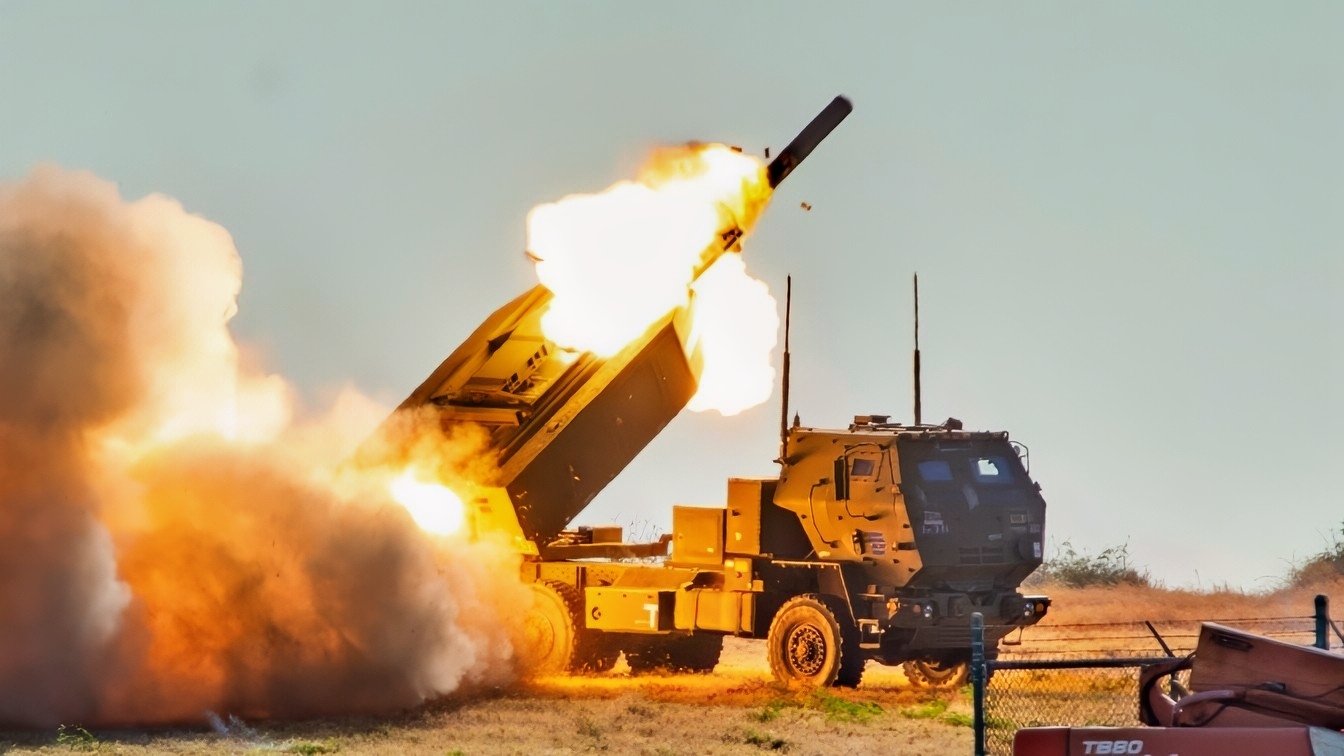
KEKAHA, Hawaii — U.S. Army 3rd Multi-Domain Task Force fires the High Mobility Artillery Rocket System (HIMARS), which can fire traditional rocket artillery rounds or long-range missiles with various payloads, on Pacific Missile Range Facility, Barking Sands, during Exercise Rim of the Pacific (RIMPAC) 2024, July 11. Twenty-nine nations, 40 surface ships, three submarines, 14 national land forces, more than 150 aircraft and 25,000 personnel are participating in RIMPAC in and around the Hawaiian Islands, June 27 to Aug. 1. The world’ s largest international maritime exercise, RIMPAC provides a unique training opportunity while fostering and sustaining cooperative relationships among participants critical to ensuring the safety of sea lanes and security on the world’ s oceans. RIMPAC 2024 is the 29th exercise in the series that began in 1971. (Japanese Ground Self Defense Force Courtesy Photo)
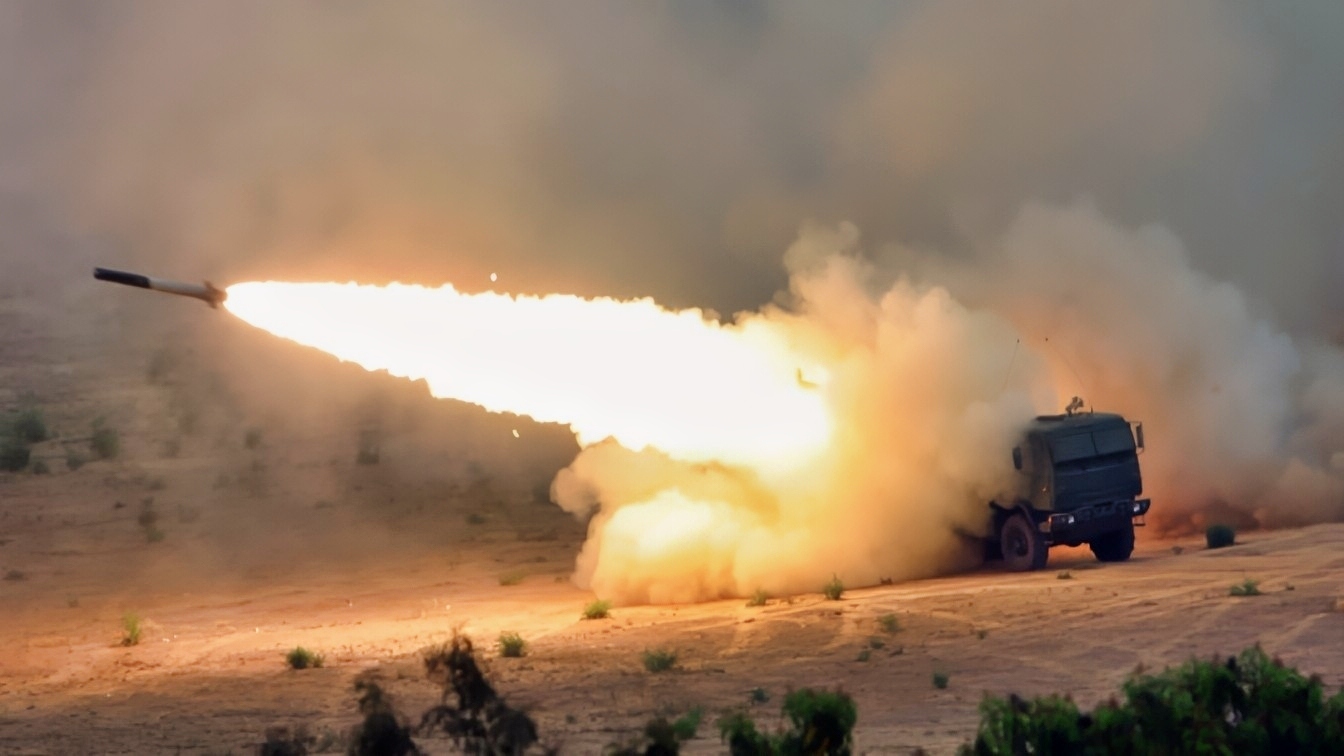
MFOR Rocket Creative Commons Photo
U.S. Marines Pull Out
Ssangyong, meaning “Twin Dragons,” is a biennial amphibious exercise designed to test the ability of American and South Korean forces to conduct large-scale combined operations. Recent iterations have involved thousands of troops, warships, aircraft, amphibious vehicles, and other military assets conducting simulated landings along the South Korean coast.
South Korean Marine Corps spokesman Han Seung-jeon confirmed the change of plans during a news briefing in Seoul on Monday, saying that the decision had been communicated to South Korea two months earlier.
“The US Marine Corps formally notified our forces in June that its ability to deploy forces during this year’s Ssangyong exercise would be constrained due to the situation in the Middle East,” Han said.
The spokesman also said that American and South Korean Marine Corps remain in close consultations over eventually resuming the exercise but could not provide a new date or explain whether alternative training may be organized to compensate for its cancellation. U.S. forces also did not immediately respond to requests from media on Monday.
The Exercise
The exercise was expected to take place in September and would have been conducted at the division level. The previous Ssangyong exercise, held around Pohang on South Korea’s southeastern coast in August and September 2024, involved thousands of U.S. and South Korean personnel for amphibious landings and other combined operations.
The cancellation is also particularly significant because Ssangyong is designed to practice moving large numbers of troops from sea to land during a combat scenario – and that’s precisely the kind of operation that may be required in the event that fighting breaks out in the Korean Peninsula. Without U.S. involvement, it could ultimately contribute to a serious lack of preparedness.
But it’s not the first time the exercise has been complicated by diplomatic issues with Pyongyang.
Ssangyong exercises were suspended in 2018 when Trump pursued negotiations with North Korean leader Kim Jong Un, before the allies then revived the exercise in 2023. Now, it appears the president is once again trying to reduce tensions with Pyongyang in hopes of bringing Kim back to the negotiating table.
Trump Looks to Kim Again
The news may be connected to President Trump’s effort to reopen diplomacy with Kim and preserve U.S. military assets. On August 16, the U.S. president ordered Defense Secretary Pete Hegseth to “substantially reduce” Ulchi Freedom Shield, the annual U.S.-South Korean exercise that began the following day.
Trump said that he was displeased that Washington had agreed to participate and cited both the cost and his “very good relationship” with Kim. He argued that the exercises were an inappropriate and hostile signal to North Korea, which he described as being “unthreatening and respectful” during his time as president. He also made it clear that the decision was influenced by South Korean President Lee Jae Myung’s refusal to join U.S. operations against Iran.
Ulchi Freedom Shield was subsequently shortened from 11 days to five, ending on August 21, with some field training also reduced. Reports also indicate that Trump is now pushing for another meeting with Kim, potentially during an Asia trip around the APEC summit in November.
But Pyongyang has offered little encouragement so far, with Kim’s sister, Kim Yo Jong, stating that the reduced exercises were an “ineffectual goodwill gesture” and insisting that they did not represent a fundamental change in U.S. policy. North Korea then fired around 10 short-range ballistic missiles from the Pyongyang region on August 20.
Iran War Takes Its Toll
Unlike Trump’s decision to shorten the Ulchi Freedom Shield, Seoul says the decision to cancel Ssangyong was specifically due to military resources being stretched too thin by the Iran War.
More than 2,000 U.S. Marines have been transferred from Japan as Washington moves its forces toward the Middle East, while the Japan-based USS George Washington has also been sent to the region to relieve the USS Abraham Lincoln.
The Pentagon is currently attempting to sustain operations against Iran while simultaneously maintaining deterrence against North Korea and China. Trump’s recent decisions have sparked global concern about American reliability, particularly among its Asian partners like Japan and Taiwan.
About the Author: Jack Buckby
Jack Buckby is a British researcher and analyst specializing in defense and national security, based in New York. His work focuses on military capability, procurement, and strategic competition, producing and editing analysis for policy and defense audiences. He brings extensive editorial experience, with a career output spanning over 1,000 articles at 19FortyFive and National Security Journal, and has previously authored books and papers on extremism and deradicalization.


