


Key Points and Summary – USS Nautilus (SSN-571) was the world’s first nuclear-powered submarine and the clearest pivot in undersea warfare since the torpedo.
-The Navy wanted a boat that could stay submerged for weeks, move fast without surfacing, and turn oceans into maneuver space rather than fuel stops.
-Nautilus delivered: a pressurized-water reactor, sustained high underwater speed, and the range to cross oceans on a single core.
-Launched in 1954 and declared “Underway on nuclear power” in 1955, she shattered diesel-era assumptions, transited the North Pole in 1958, and served until 1980.
-Her legacy is everywhere: in global patrol patterns, in reactor safety culture, and in every modern nuclear submarine that followed.
USS Nautilus: The Boat That Brought The Future Below The Waves
World War II proved the submarine’s value but also its prison: diesel-electric boats were deadly only in short bursts. They sprinted on the surface, ducked below to attack, and then came up again to breathe. Early postwar snorkels helped, but a mast at periscope depth still betrayed a boat to radar, sonar, aircraft, and sea state. The Navy wanted something more radical than better batteries. It wanted a submarine that behaved like a true underwater ship—not a surface vessel that occasionally dived.
Nuclear propulsion promised the missing ingredient: endurance. A reactor could boil water for steam without oxygen, driving turbines for months instead of hours. With energy no longer rationed by diesel tanks and battery charge, a submarine could stay deep, move fast, and choose when and where to be found. That shift—constant submergence as the default rather than an exception—would upend antisubmarine warfare, patrol patterns, and strategy itself.
Diesel Boats’ Limits—And What Atomic Power Offered
Diesel-electric boats were masterpieces of stealth management, but physics fenced them in, and still do to this day.
Batteries drained quickly at speed; sustained underwater sprinting was impossible. Even on snorkel, a boat’s mast created a radar-visible signature and sucked in exhaust and spray that punished crews and machinery. The cycle—charge batteries on the surface, submerge to creep, then repeat—dictated tactics and gave adversaries predictable windows to hunt.
Atomic power broke that cycle. A pressurized-water reactor heats sealed-loop water, spins steam turbines, and condenses that steam back into water inside the ship. The system never needs outside air. That meant:
Continuous Submergence: Weeks underwater without snorkeling.
Sustained Underwater Speed: Not a short sprint, but hours at high speed and days at efficient speed, changing the geometry of pursuit.
Electrical Plenty: Reliable power for sonar, navigation, climate control, and desalination, improving sensors and crew endurance.
Strategic Reach: Oceans became routes rather than obstacles; patrol areas widened; timelines compressed.
USS Nautilus would be the first to prove that promise in steel.
Designing USS Nautilus: From Vision To Hardware
Within the Navy, one figure made the leap unavoidable: Hyman G. Rickover. Implacable in standards and relentless in detail, he insisted on a conservative pressurized-water reactor with redundant safety systems and stringent quality control—choices that favored reliability over cutting-edge risk.
Nautilus’s hull reflected a transitional moment. She was sleeker than late-war designs, with a clean bow and reduced topside clutter, but she was not yet the pure teardrop of later boats like USS Albacore and Skipjack. The priority was to get a safe, maintainable reactor to sea quickly and wrap it in a hull that could exploit sustained submerged speed. Key design themes:
Reactor Plant: A Westinghouse-built pressurized-water reactor (S2W) feeding steam to turbines via reduction gears—a layout that set the template for later U.S. boats.
Single-Shaft Propulsion: Optimized to translate reactor output into quiet thrust and simplify machinery arrangement.
Robust Electrical And Auxiliary Systems: Stable power for active sonar, navigation, air purification, and freshwater production—transforming habitability and sensor performance compared with diesel boats.
Crew Spaces Built For Longer Patrols: Air conditioning, fresh water from the plant, and steady electrical power reduced the physical grind that had defined diesel patrols.
Nautilus wasn’t about squeezing the last knot out of a hull form. She was about proving the reactor at sea, safely and repeatably, in an operational submarine.
The Price Of Revolution
Atomic propulsion did not come cheap. Nautilus was a prototype and a warship at once, and the bill reflected both. Costs were distributed across the Navy and the Atomic Energy Commission: the hull and combat systems on one ledger, the reactor development and enrichment pipeline on another. Beyond the steel, the Navy paid in institutions—new training commands, radiological controls, specialized shipyard facilities, and an officer/enlisted pipeline built around reactor operations.
Critics fixated on dollars; Rickover fixated on lifecycle control. He argued that up-front spending on robust components, rigorous quality assurance, and conservative design would pay back in availability and safety over decades. The math proved out: fuel costs over a core’s life were minimal, and while maintenance remained exacting, nuclear boats delivered patrol days diesel boats simply could not.
Launch, Trials, And A Message Heard Around The World
Nautilus slid down the ways in January 1954 and commissioned that fall. On January 17, 1955, she sent a message that read like a curtain rising: “Underway on nuclear power.” Sea trials and early exercises then demonstrated the new reality in front of skeptics. The boat accelerated underwater in ways diesel crews had never seen. She stayed submerged for days at meaningful speed. She outran surface escorts that had always counted on submarines needing air.
These runs weren’t stunts; they were proofs. Tactics, training, and ocean surveillance would have to adjust to an opponent that didn’t surface, didn’t snorkel, and didn’t slow down when the battery needle fell left—because there was no battery needle.
Operational Career: Changing Tactics One Exercise At A Time
Nautilus’s early deployments were as much laboratory as fleet duty. She joined exercises with destroyers and patrol aircraft designed to box submarines at choke points. The results were uncomfortable for the surface side of the house: the new boat could choose the terms of engagement. She could transit faster than sub hunters expected, burst through barriers, or simply go around them while staying deep. The Navy did what good navies do—it learned. Surface groups adjusted sonar tactics, widened search areas, and revamped training to target a submarine that behaved like a fast ship underwater.
She didn’t just lurk near home waters. Nautilus made long cruises to the Mediterranean and North Atlantic, proving the logistics and radiological safety practices needed for global operations. She conducted antisubmarine exercises as the “red” boat, forced new playbooks on escorts, and served as the demonstration model for allies who grasped that a propulsion revolution had arrived.
Historic Firsts That Became Turning Points
Two moments bracket Nautilus’s fame: that first message in 1955, and a under-ice feat that captured the world’s imagination.
Operation Sunshine (1958). After reconnaissance and a weather-tight window, USS Nautilus slipped beneath the Arctic pack and transited the North Pole—the first ship to do so. It wasn’t just a headline. Strategically, it proved that nuclear submarines could cross from ocean to ocean under the ice, ignoring surface choke points and bad weather. It turned the Arctic into maneuver space and forced planners on both sides of the Cold War to treat the pole as a doorway, not a wall.
Other firsts piled up: record submerged passages between ports, under-ice operations that matured navigation and oceanography, and fleet exercises where Nautilus functioned as the “problem” a carrier group had to solve. Every one of those events pushed the Navy’s sonar, tactics, and command-and-control into the nuclear age.
How Nautilus Was Eventually Retired
Technology sprints. By the mid-1960s, submarine design had pivoted to true teardrop hulls, quieting breakthroughs, and newer reactor plants. Nautilus—still effective and historically important—couldn’t match the acoustic discretion or hydrodynamic efficiency of boats like Skipjack, Thresher/Permit, and Sturgeon, much less the missile-armed George Washington class that created the sea-based leg of the nuclear deterrent.
She served usefully into the late 1970s as an operational boat and training platform, then decommissioned in 1980. Rather than scrap her, the Navy did the right thing: made her a museum ship alongside the Submarine Force Library & Museum in Groton, Connecticut. There, with her reactor defueled and systems sealed, she became a classroom for sailors and civilians alike—a tangible through-line from diesel patrols to the modern nuclear fleet.
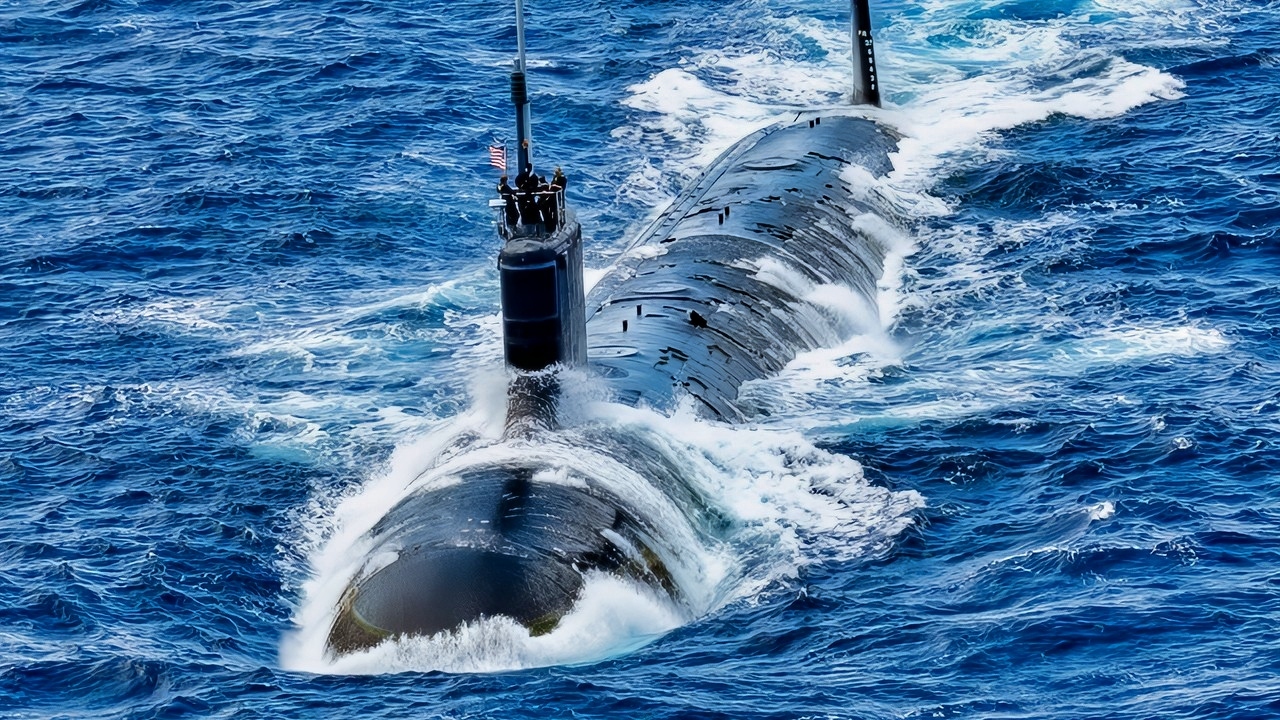
Virginia-class attack submarine USS North Carolina (SSN 777) sails in formation, off the coast of Hawaii during Exercise Rim of the Pacific (RIMPAC) 2024, July 22. Twenty-nine nations, 40 surface ships, three submarines, 14 national land forces, more than 150 aircraft and 25,000 personnel are participating in RIMPAC in and around the Hawaiian Islands, June 27 to Aug. 1. The world’s largest international maritime exercise, RIMPAC provides a unique training opportunity while fostering and sustaining cooperative relationships among participants critical to ensuring the safety of sea lanes and security on the world’s oceans. RIMPAC 2024 is the 29th exercise in the series that began in 1971. (U.S. Navy photo by Mass Communication Specialist 1st Class John Bellino)
The Mark Nautilus Made—On The U.S. Navy And Everyone Else
It’s hard to overstate Nautilus’s ripple effects:
She Changed Antisubmarine Warfare. After USS Nautilus, you could not plan ASW around forcing submarines to surface or snorkel. Search patterns, sonar arrays, and maritime patrol tactics had to assume an opponent that was always submerged, often fast, and sometimes under ice. That shift drove investment in low-frequency sonar, quiet escorts, long-range patrol aircraft, and networks of fixed and mobile sensors.
She Professionalized Nuclear Standards. Rickover’s culture—meticulous documentation, conservative design, relentless training, and an intolerance for shortcuts—became the Navy’s nuclear safety spine. That ethos migrated into shipyards, training commands, and inspection regimes, yielding one of the world’s strongest records in naval reactor safety.
She Redrew The Map. With endurance measured in months and speed that mattered underwater, naval planners treated the Atlantic, Pacific, and Arctic as connected maneuver space. Transit times shrank; patrol patterns widened. Boomer submarines and fast attacks built on that latitude to create the continuous-at-sea deterrent and a global undersea presence that persists to this day.
She Set The Baseline For Design. Even as hull shapes evolved, the essentials USS Nautilus proved—pressurized-water reactors, integrated steam plants, electrically rich auxiliaries, and habitability for long patrols—became standard architecture. Later boats focused on quieting, sensors, and weapons, but the powerplant logic remained.
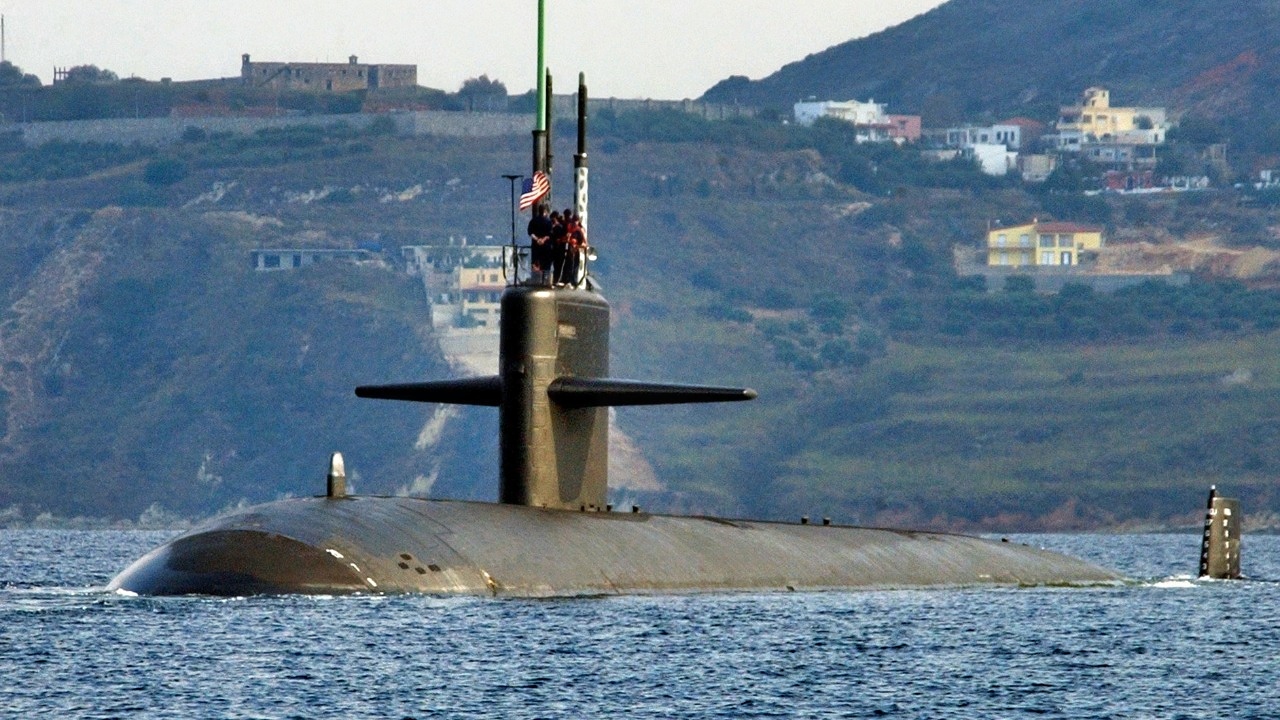
Port bow view showing US Navy (USN) Sailors manning a topside watch aboard the Los Angeles Class Attack Submarine USS NEWPORT NEWS (SSN 750), as the ship departs the harbor at Souda Bay, Crete, Greece following a port visit.
She Moved Allies And Competitors. Every navy that contemplated serious undersea power had to respond. Some built their own nuclear fleets; others doubled down on advanced diesels and air-independent propulsion to claw back endurance. Either way, Nautilus had forced the issue: propulsion was strategy.
Why The First Nuclear Sub Still Matters
Nautilus’s museum hull draws families and veterans for the same reason it draws designers and strategists: you can stand inside and feel the moment of pivot. She is not the quietest or fastest submarine in history; she is the one that made those metrics matter. Her crew’s day-to-day life—steady air, hot showers, reliable electricity—sounds mundane until you remember what diesel patrols were. Comfort isn’t a luxury on long missions; it’s combat power, because rested people make fewer mistakes and complex equipment stays online.
She also demonstrates how technology and organization must mature together. Without Rickover’s training pipeline, shipyard standards, and inspection discipline, a reactor at sea would have been a science project, not a fleet asset. Without an open-minded surface force honing ASW to match, the rest of the Navy would have fallen behind a single successful prototype. The lesson for any era—hypersonics, autonomy, directed energy—is the same: hardware is only half the revolution.
The Bottom Line: USS Nautilus Deserves a Place in the History Books
USS Nautilus was more than the first nuclear submarine; she was the proof that the ocean could be crossed, patrolled, and fought entirely underwater. She answered a question diesel boats could not: what happens when a submarine no longer needs to breathe? The answer reshaped fleets, deterrence, and the mental map of the ocean.
From the day she signaled “Underway on nuclear power” to the moment she slid beneath Arctic ice and touched the top of the world, Nautilus turned possibility into practice. Her retirement in 1980 didn’t close a chapter; it opened a library.
Every American nuclear submarine since—attack or ballistic-missile—traces its lineage to the standards and systems she proved.
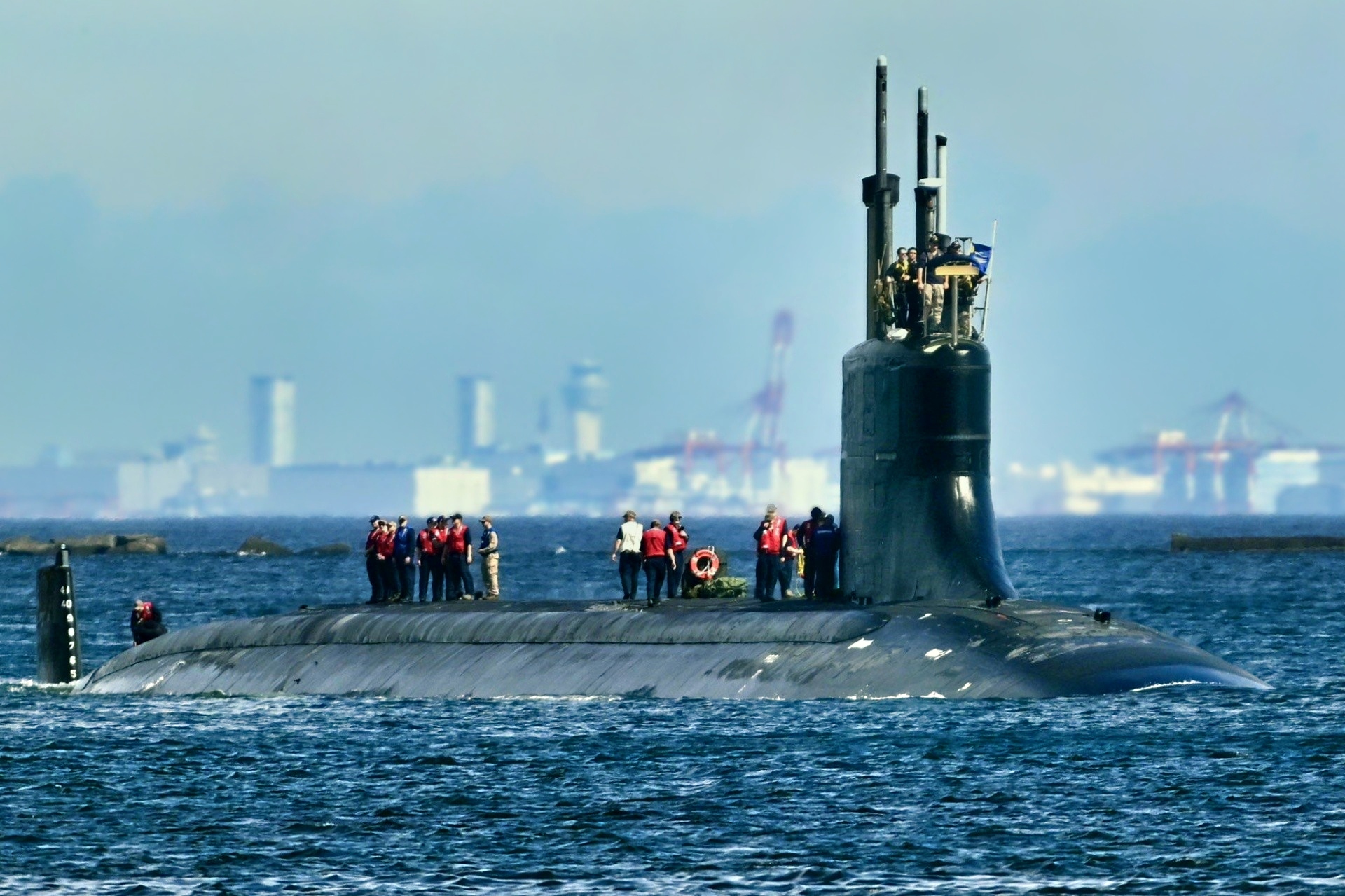
Seawolf-Class Submarine. Image Credit: Creative Commons.
And every navy that operates beneath the waves today, whether by atom or battery, lives in the wake she left.
About the Author: Harry J. Kazianis
Harry J. Kazianis (@Grecianformula) is Editor-In-Chief and President of National Security Journal. He was the former Senior Director of National Security Affairs at the Center for the National Interest (CFTNI), a foreign policy think tank founded by Richard Nixon based in Washington, DC. Harry has over a decade of experience in think tanks and national security publishing. His ideas have been published in the NY Times, The Washington Post, The Wall Street Journal, CNN, and many other outlets worldwide. He has held positions at CSIS, the Heritage Foundation, the University of Nottingham, and several other institutions related to national security research and studies. He is the former Executive Editor of the National Interest and the Diplomat. He holds a Master’s degree focusing on international affairs from Harvard University.
More Military
The Forrestal-Class Aircraft Carriers Have a Message for the U.S. Navy
The Canada-F-35 Divorce Could Have Consequences
The B-58 Hustler Mach 2 Bomber: The Air Force’s Big Blunder?


