

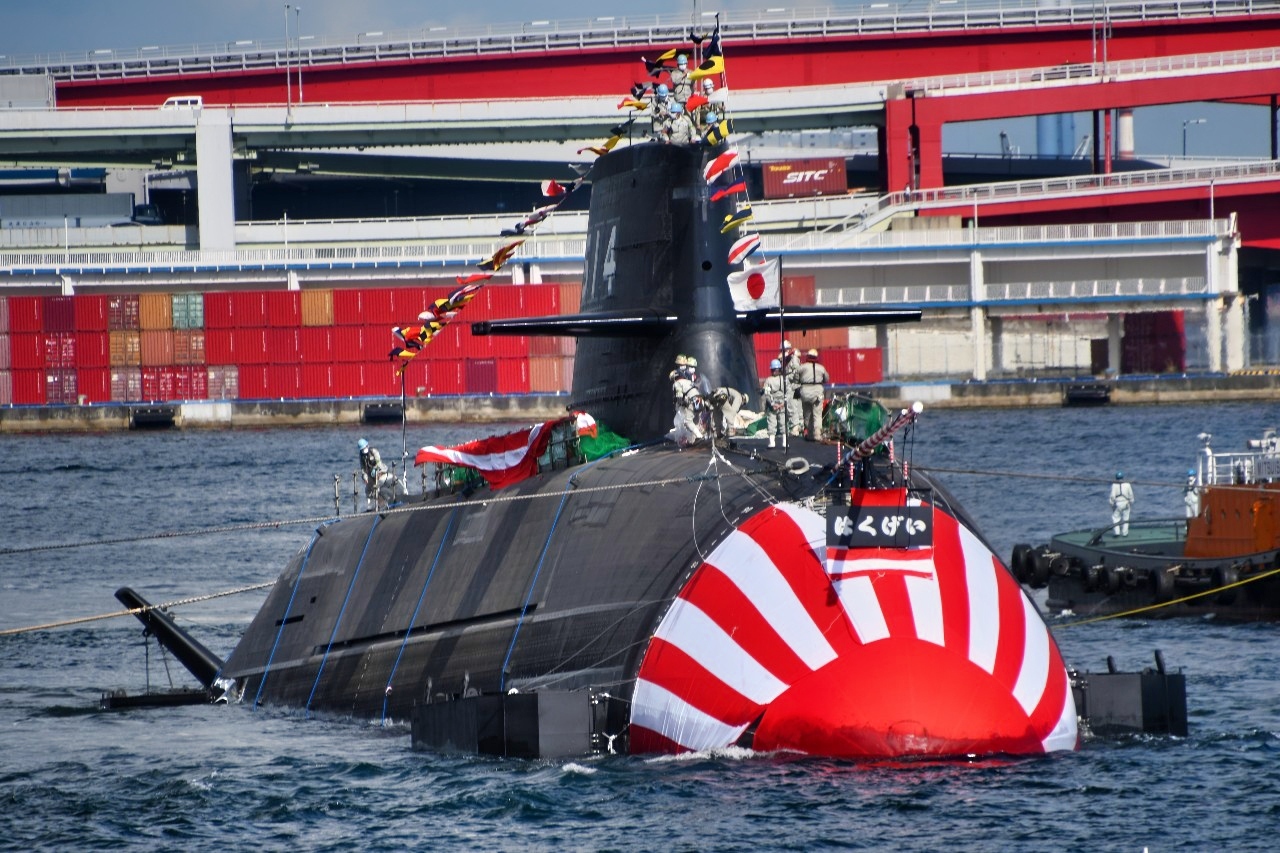
Key Points and Summary – Japan’s Taigei-class submarines are purpose-built for the Indo-Pacific’s decisive geography.
-They replace air-independent propulsion with high-capacity lithium-ion batteries, enabling longer, faster, quieter submerged operations—ideal for the First Island Chain.

New Taigei-Class Submarine From Japan. Image Credit: Creative Commons.
-Taigei inherits lessons from Oyashio and Sōryū but adds a new combat system, refined acoustics, and next-gen sonar, all optimized for China’s expanding fleet and dense ASW surveillance.
-Early boats entered service in 2022–2023, with more building as older hulls retire.
-Operational details stay deliberately quiet, but the concept is clear: hold chokepoints, shadow high-value targets, and feed allied kill chains. Looking ahead, Taigei is a bridge to UUV teaming and longer-range strike debates inside Japan.
Japan’s Taigei-Class Submarine: The Quiet Revolution Tokyo Needed
Study a map and the logic writes itself. Japan sits astride the First Island Chain, the string of islands that can hem in China’s navy or—if neglected—become sluice gates for surface groups and submarines pushing into the wider Pacific.
Every maritime lifeline Japan depends on—energy, food, manufactured parts—threads through chokepoints Beijing studies daily. In that world, the tool you cannot do without is a submarine that can disappear at will, sprint when it matters, and wait—silent and patient—where an adversary least expects it.
The Taigei-class is that tool. It exists because two curves crossed: China’s fleet got bigger, better, and more persistent, while the surveillance grid over the East and South China Seas thickened with satellites, patrol aircraft, seabed sensors, and unmanned systems. The old model—a diesel-electric boat that snorkels to charge and leans on air-independent propulsion (AIP) to loiter—was good, but increasingly predictable. Japan’s answer was a radical trade: dump the Stirling AIP, embrace lithium-ion batteries at scale, and design the rest of the boat around the idea that pure electric is the new advantage.
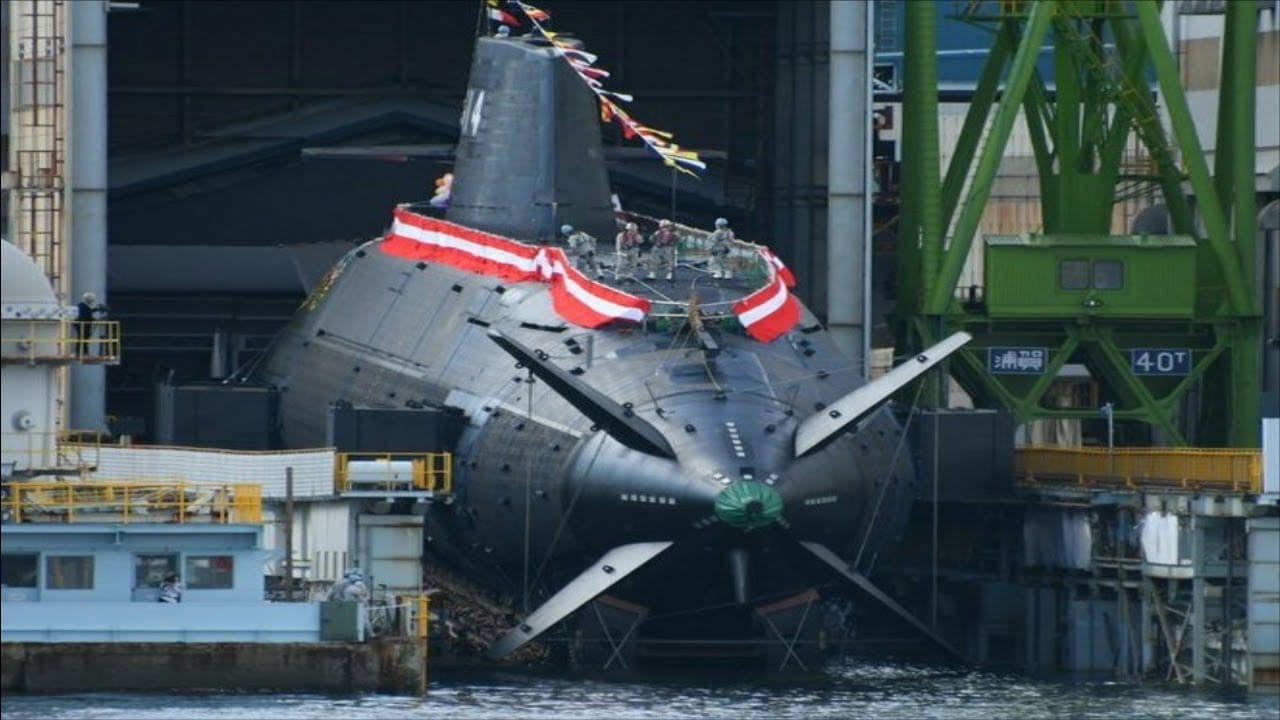
Taigei-Class Submarine from Japan. Image Credit: Creative Commons.
The Lineage: From Uzushio To Oyashio To Sōryū—Then Taigei
Japan’s submarine force is an evolutionary story told in steel and silence. The Uzushio-class of the 1970s adopted a modern teardrop hull and Western-style sonar; Yūshio and Harushio refined quieting and fire control in the Cold War’s endgame. The Oyashio-class arrived with larger hulls and better sensors, setting the table for the leap that made Japan a trendsetter: the Sōryū-class.
Sōryū came in two acts. The early boats used Stirling AIP, allowing very low-speed endurance submerged for days without snorkeling—a huge deal for ambush patrols near chokepoints. The final pair of Sōryū hulls flipped the script, deleting AIP and adopting lithium-ion batteries—a world first for front-line subs. That experiment worked well enough that Japan committed. Taigei is the cleaned-sheet follow-through: a new class built from the keel up to exploit big-battery, high-power electric operations, while folding in the acoustic and sensor gains learned across four decades.
What Taigei-Class Actually Changes Under The Skin
It’s tempting to reduce the Taigei-class to “Sōryū with lithium,” but that misses the point. The class represents a systems-level rethink aimed at the tactics Japan actually uses in the Nansei Shōtō (Ryukyus), the Philippine Sea, and the Kuroshio’s turbulent waters.
First, power. Lithium-ion batteries are not magic, but they transform the trade space. Compared to traditional lead-acid, they can store more energy per kilogram, accept charge faster, and deliver high power for sustained submerged speed without the inefficiency and noise penalties that come with AIP machinery. That means a Taigei can stay down longer between snorts, reposition quickly when a contact of interest appears, and still have the juice to evade or pursue. In an ocean now crowded with passive listeners and active pingers—from P-8s to ship-mounted sonars to seabed arrays—that flexibility is survival.

Taigei-Class Submarine from Japan. Image Credit: Creative Commons.
Second, signatures. Japan’s boatbuilders have spent careers shaving decibels. Taigei benefits from refined hull treatments, rafted machinery, careful flow management around the screw and control surfaces, and lessons learned about how electric loads create telltale noise. The class keeps the X-form stern that gives better authority at low speeds and tight turns—handy near islands and in channels—while improving control law logic to make the boat feel planted when the captain asks for abrupt attitude changes.
Third, perception. A submarine fights with its ears. Taigei carries a new combat system and sonar suite—a spherical bow array paired with refined flank and towed arrays—plus modern masts. The result is better contact sorting in cluttered littoral soundscapes and faster target-motion analysis under pressure. The crew fights a fused picture instead of stovepiped sensors, which matters when seconds mean the difference between a clean firing solution and a guessed-at snapshot.
Finally, people. Every undersea veteran will tell you: habitability is combat power. Taigei folds in crew-centric touches—from better automation to sensible workstation layouts—that reduce fatigue on long submerged stretches. The payoff is more hours in the sweet spot of human performance when it counts.
A Submarine Built For The First Island Chain
Taigei’s concept of operations reads like an answer key to Indo-Pacific geography. The class is optimized for chokepoint control and denial—the Bashi Channel, Miyako Strait, Osumi Strait, and the narrows threaded through the Nansei chain. It can lie silent on battery, drift with minimal hotel loads, then surge quietly to a new patch of water if a convoy route shifts or a Chinese task group angles for blue water.
Because it is battery-first, Taigei is less married to the “crawl on AIP” profile that adversary ASW planners have gamed for twenty years. It can adopt asymmetric rhythms—days of near-stillness punctuated by sudden, silent dashes to reset geometry. Pair that with Japan’s formidable P-1 patrol aircraft, allied P-8s, and seabed sensors, and you get the undersea half of a kill chain that can cue long-range anti-ship fires without a sub ever firing a torpedo. When it does shoot, Taigei’s heavy torpedoes and sea-denial mines give commanders choices beyond a headline-grabbing sink.
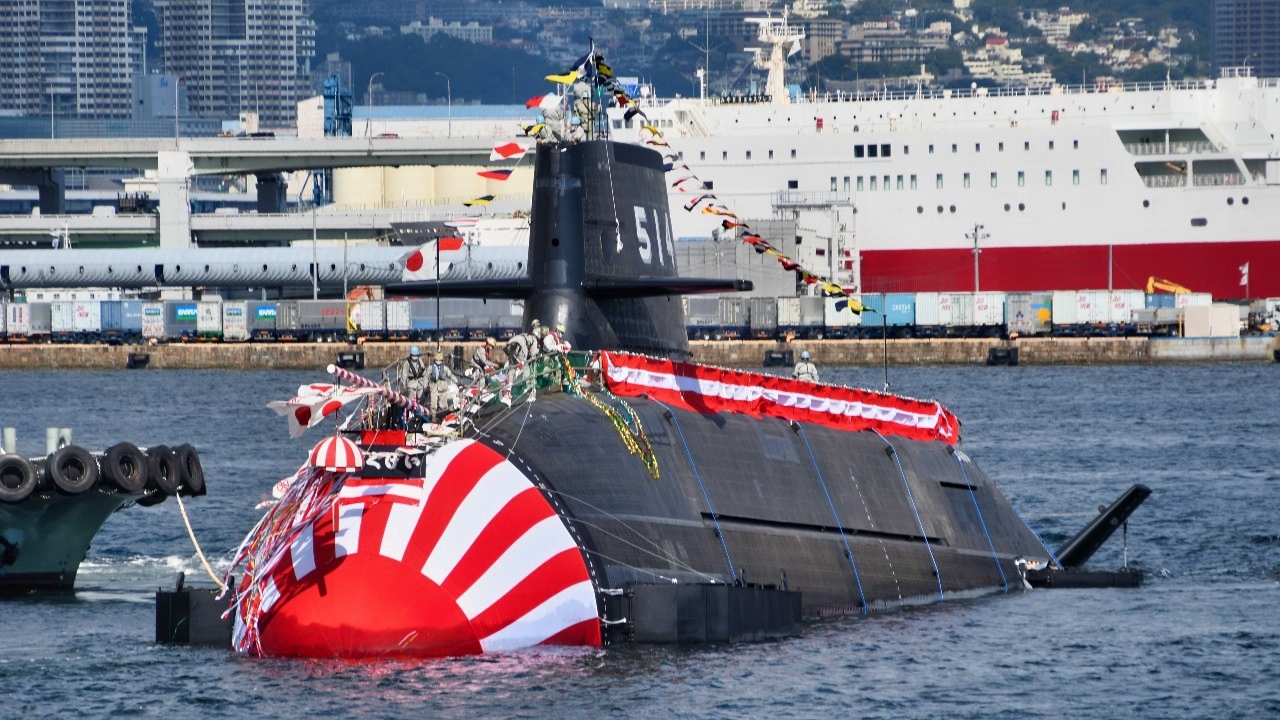
Taigei-Class Submarine Japan Navy. Image Credit: Creative Commons.
There are tradeoffs. Lithium-centric boats still need to snorkel to recharge, and modern airborne radars and ESM are merciless if the crew becomes predictable. Battery chemistry also demands rigorous thermal management and safety protocols. But the calculus is sound: in the contested, sensor-rich seas around Japan, time submerged at useful speed is worth more than AIP endurance at a crawl.
From Launch To Fleet: A Brief History Of The Program
Tokyo did not rush the Taigei-class. It methodically tested the Sōryū battery concept, wrote a follow-on design that folded in years of acoustic notes and crew feedback, and only then pushed steel. The lead boat commissioned in 2022, the second followed in 2023, and subsequent hulls are moving through sea trials and fitting-out. Japan’s production rhythm has long been a quiet national asset: spreading construction between major yards, locking in repeatable work packages, and resisting the temptation to gold-plate every change.
The numbers tell a broader force-design story. For years, Tokyo targeted a 22-submarine force to maintain constant patrols while cycling boats through training and deep maintenance. Taigei isn’t about surging that total; it’s about lifting the quality of each hull as older boats retire. That matches the mission: hold the right water at the right time, not blanket the Pacific.
Operational History of the Taigei-Class: What We Can Infer Without The Hype
Japan does not publish patrol diaries. That secrecy is good practice and good deterrence. Still, naval watchers see patterns. Early Taigei boats spent their first years in workups, then slid into the same drumbeat as their predecessors: coordinated training with U.S. and Australian forces, quiet presence along the Ryukyus and Philippine Sea approaches, and occasional public appearances during fleet reviews to remind curious neighbors what a modern non-nuclear submarine looks like.
The more interesting signal isn’t where the boats go—it’s how the fleet as a whole trains. JMSDF has leaned hard into joint targeting with air and surface forces, rehearsing scenarios in which submarines detect, classify, and hand off. The point is to make every Taigei a sensor and decision node, not just a shooter. That is a mature way to wring strategic effect from a finite number of exquisite hulls.
Why Allies—And Even NATO—Should Care
A Japanese submarine program may feel distant to a Baltic frigate captain, but the implications travel. Taigei-class validates a design path—large-capacity lithium over AIP—that other non-nuclear navies are now studying seriously. In crowded waters where ASW assets proliferate, the ability to sprint quietly and choose when to reveal a mast can be more valuable than ultra-low-speed AIP endurance.
There’s an alliance lesson, too. Japan has built a repeatable, sustainable undersea industrial base that delivers steady improvements without blowing up schedules or budgets. That is exactly what Europe needs as it juggles multiple submarine lines, and what the United States needs as it stretches to build SSNs faster. The cross-pollination isn’t about sharing blueprints; it’s about adopting the discipline that keeps a submarine force modern without boom-bust cycles.
Costs, Numbers, And The Production Squeeze
Undersea power is never cheap. Big lithium batteries, advanced arrays, and low-noise manufacturing push costs per hull firmly into “serious asset” territory. Tokyo’s defense-spending uplift helps, but every yen spent below the waves competes with air and missile defense above them. The force-planning compromise has been stable: fewer, better boats—kept young with methodical replacement.
That model depends on yards and suppliers hitting cadence. Japan’s shipbuilders have been notably conservative about workforce sizing and supplier quality control, precisely because submarine noise performance is manufactured into the hull; you cannot tune it out later. The pay-off is that Taigei’s acoustic standard is baked in at delivery. The vulnerability is the same as every allied program’s: specialized parts, from quiet pumps to mast sensors, ride fragile supply chains. So far, Tokyo has managed the risk by spreading contracts and guarding niche suppliers as if they were military units—in practice, they are.
The Hard Questions: What Keeps Taigei’s Captains Up At Night
No design is a cheat code. Chinese ASW is getting better—more fixed sensors on the seabed, more capable sonars on surface combatants, more patrol aircraft, and a growing interest in unmanned surface and underwater vehicles that can loiter and pounce. The deeper Taigei penetrates into the East China Sea’s contested spaces, the more it will feel the dragnet tighten.
Lithium brings its own demons. Japan’s navy has spent years developing battery safety regimes, from cell packaging to fire suppression, but physics is unforgiving. Training has to be relentless. Tactically, the battery boat’s greatest strength—high-power electric sprint—is seductive. Used carelessly, it invites crews to maneuver more than they should, trading noise for position inside an adversary’s listening field. The culture that kept JMSDF quiet for forty years will need to hold as crews learn what a Taigei can do. The best compliment a captain can pay the boat, and the fleet, is to leave no acoustic trail even when the boat begs to run.
What Comes Next: UUV Teaming, Sensors, And The Strike Debate
Taigei is more than a submarine; it is a platform for where Japan’s undersea force is headed. The most certain future is UUV teaming. A Taigei that can quietly deploy and recover unmanned vehicles—persistent sensors, decoys, miners, or even one-way strike drones—multiplies presence without risking the mothership. The hardware is the easy part; the hard part is writing tactics and rules that make unmanned teammates useful without compromising stealth.
Sensors will keep marching. Expect iterative improvements in low-frequency passive processing, better machine-aided classification in messy littoral soundscapes, and masts that pack more capability into smaller apertures. None of that makes headlines; all of it makes a patrol officer’s job more lethal and less risky.
Then there is the strike question. Japan’s broader defense strategy now includes counterstrike options, and Tokyo is buying Tomahawk for surface launch. Whether any submarine-launched long-range strike enters the picture is an open policy and engineering question. A Taigei that could deliver land-attack shots would be a different political animal. For now, the smarter bet is on torpedoes, mines, and cueing others’ fires—the quiet war Japan likes to fight.

Puget Sound Naval Shipyard, Wash. (Aug. 14, 2003) — Illustration of USS Ohio (SSGN 726) which is undergoing a conversion from a Ballistic Missile Submarine (SSBN) to a Guided Missile Submarine (SSGN) designation. Ohio has been out of service since Oct. 29, 2002 for conversion to SSGN at Puget Sound Naval Shipyard. Four Ohio-class strategic missile submarines, USS Ohio (SSBN 726), USS Michigan (SSBN 727) USS Florida (SSBN 728), and USS Georgia (SSBN 729) have been selected for transformation into a new platform, designated SSGN. The SSGNs will have the capability to support and launch up to 154 Tomahawk missiles, a significant increase in capacity compared to other platforms. The 22 missile tubes also will provide the capability to carry other payloads, such as unmanned underwater vehicles (UUVs), unmanned aerial vehicles (UAVs) and Special Forces equipment. This new platform will also have the capability to carry and support more than 66 Navy SEALs (Sea, Air and Land) and insert them clandestinely into potential conflict areas. U.S. Navy illustration. (RELEASED)
Bottom Line on the Taigei-Class: A Sub That Changes The Math
Taigei exists to make a strategist’s map look different on the day it matters. It gives Japan more submerged time where it chooses, the speed to be where it must, and the ears to know the difference. It is not a talisman; China’s fleet won’t evaporate because Tokyo built a better battery boat. But it is a credible, repeatable answer to the problem all maritime democracies face: how to keep an adversary honest at the exact chokepoints geography assigns you.
If you want to understand deterrence in the Pacific circa 2025, don’t stare at carrier decks. Look under the water, at boats like Taigei-class, and remember that the most important fights are often the ones nobody hears.
About the Author: Harry J. Kazianis
Harry J. Kazianis (@Grecianformula) is Editor-In-Chief and President of National Security Journal. He was the former Senior Director of National Security Affairs at the Center for the National Interest (CFTNI), a foreign policy think tank founded by Richard Nixon based in Washington, DC. Harry has over a decade of experience in think tanks and national security publishing. His ideas have been published in the NY Times, The Washington Post, The Wall Street Journal, CNN, and many other outlets worldwide. He has held positions at CSIS, the Heritage Foundation, the University of Nottingham, and several other institutions related to national security research and studies. He is the former Executive Editor of the National Interest and the Diplomat. He holds a Master’s degree focusing on international affairs from Harvard University.
More Military
World War III: 5 Places It Could Start Right Now
The Challenger 3 Tank Is A Powerhouse with a Number Problem
SR-72 Darkstar Like in Top Gun: Maverick Could Hit 4,000 Miles Per Hour
China’s J-20 Mighty Dragon Stealth Fighter Summed Up in 3 Words
The B-52J Bomber Program Might Be Over (Thanks to the B-21 Raider)


