

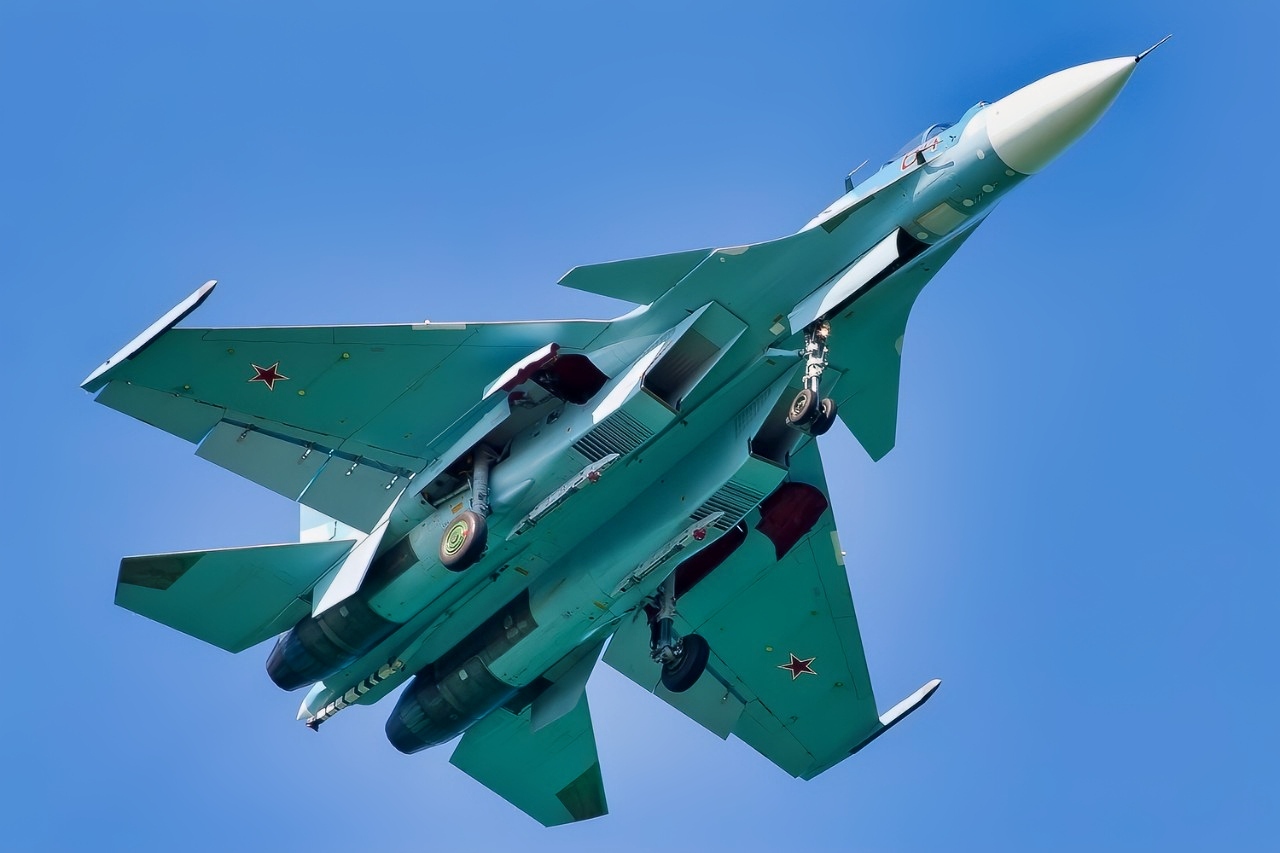
Key Points and Summary – The Su-33 (born Su-27K) is Russia’s aircraft carrier-based Flanker: a big, long-legged air-superiority fighter adapted for the Admiral Kuznetsov.
-Conceived to defend Soviet fleets far from home, it gained canards, folding wings, a strengthened undercarriage, and corrosion protection for deck life.
-After sparse post-Soviet budgets, only a small fleet entered service.
-Its operational record includes Mediterranean cruises, years of Northern Fleet patrols, and limited combat over Syria in 2016–17.
-The jet’s problems are structural—a heavy fighter on a ski-jump carrier—but its potential remains real in air-defense and maritime interception roles.
-Russia has since leaned to the MiG-29K for multirole strike, leaving the Su-33 a capable specialist with a complicated future.
-And, of course, Russia may soon not even have any hope in fielding an aircraft carrier, meaning the Su-33 Flanker’s operational history might be over for good.
Su-33: Russia’s Sea Flanker—Promise, Problems, And A Narrow Path Forward
By the late Cold War, Soviet admirals wanted something their navy had never truly possessed: a blue-water carrier fighter that could range far from shore, keep bombers and maritime patrol aircraft away from surface groups, and protect SSBN bastions in the Barents and Arctic seas.

Sukhoi Su-33 launching from the Admiral Kuznetsov.
Early “aircraft-carrying cruisers” with Yak-38 jump-jets proved too limited for that job. The solution was to put a big, long-range interceptor with modern sensors on a true flight deck.
Enter the Su-27K, which would become the Su-33. The logic was straightforward. Start with the Su-27—already an agile, high-endurance fighter—then navalize it: canards to help at low speeds, folding wings and tailplanes to fit tight hangars, strengthened landing gear and a twin-wheel nose strut for hard landings, corrosion protection for salt air, and a retractable refueling probe for long overwater sorties. The plan was to embark both a heavy Flanker and a lighter MiG-29K on multiple Soviet carriers to cover different roles.
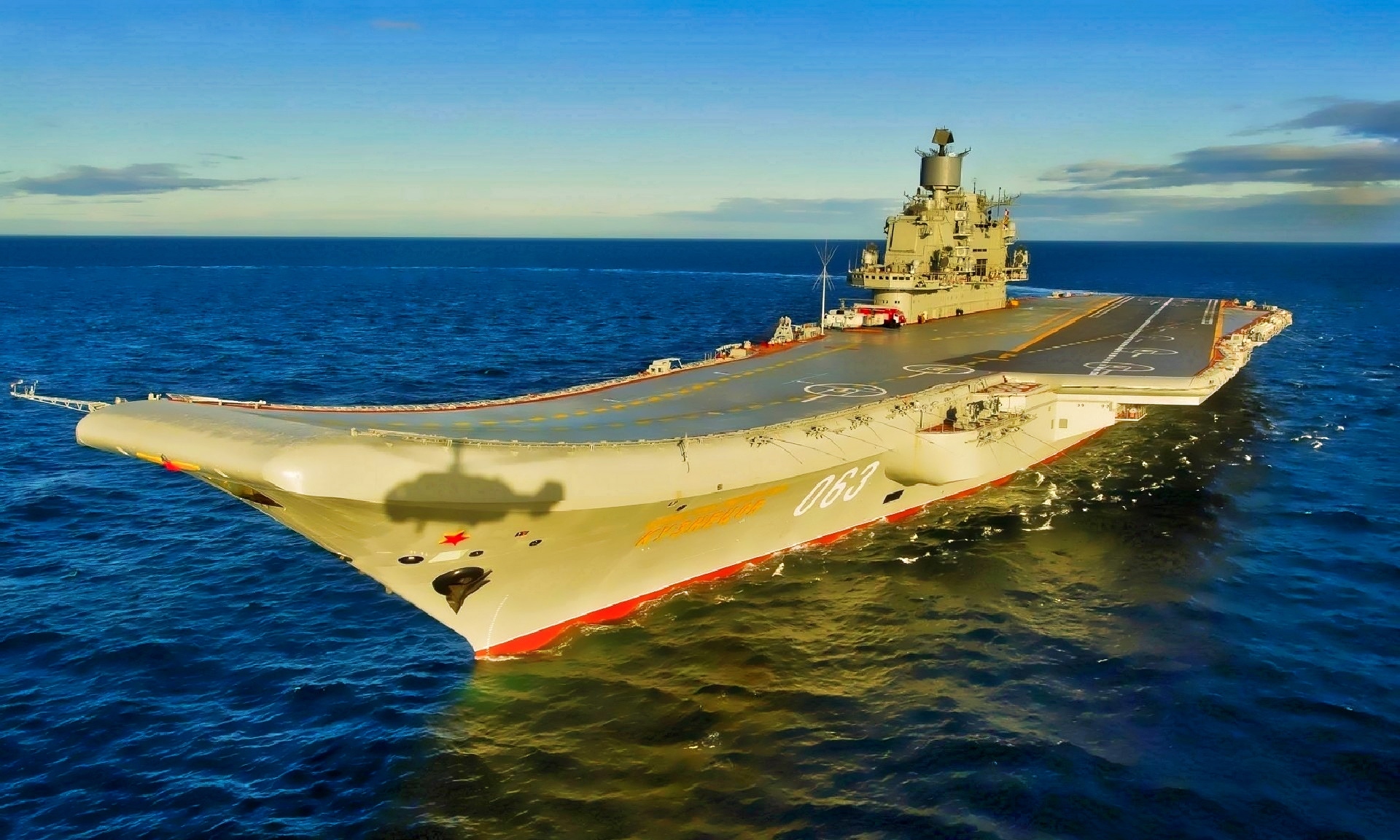
Then reality intruded and mistakes occurred. A decision to abandon steam catapults and adopt a ski-jump STOBAR (Short Take-Off But Arrested Recovery) deck on the new Project 1143.5 carrier (later Admiral Kuznetsov)was locked in a constraint: deck-run takeoffs limit takeoff weight. For a large fighter like Su-33, that trade would shape everything that followed.
From Prototype To Fleet: A Program Survives The 1990s
The first Su-27K flew in 1987, proved ski-jump launches and arrested landings at the Black Sea NITKA training complex, and trapped aboard the then-Tbilisi (later Kuznetsov) by 1989. The air wing concept worked—but the Soviet collapse slashed budgets, froze shipbuilding, and shrank procurement. Instead of multiple carriers and a mixed fighter wing, Russia got one carrier with a small batch of Su-33s for the Northern Fleet.
By the mid-1990s the “Sea Flanker” was operational, flying Mediterranean cruises and Arctic patrols with the 279th Shipborne Fighter Aviation Regiment. Day to day, Su-33s did what the navy needed most: long-endurance combat air patrols (CAP) to keep curious reconnaissance aircraft and bombers at arm’s length from surface groups and strategic waters. The jet’s strengths—range, altitude performance, and high-alpha handling—translated well to that guardian role at sea.

Sukhoi Su-33 launching from the Admiral Kuznetsov.
What The Su-33 Was Built To Do—And What It Wasn’t
At heart, the Su-33 is an air-superiority fighter optimized for fleet air defense. Its radar/IRST suite and long-range missiles were meant to reach out and sanitize the airspace around a task group. The big Flanker frame provides fuel for endurance and kinematics for quick intercepts, while the naval additions (canards, beefed-up gear) handle the low-speed, high-sink-rate trap that carrier life demands.
Where the jet struggled was strike. For most of its career the Su-33 carried only rudimentary air-to-ground options, a function of both avionics and priorities. It also suffered from its own size when operating from a ski-jump: maximum takeoff weight from Admiral Kuznetsov’s short runs constrains bring-back fuel and heavy ordnance loads. The airplane that shines as a long-range interceptor becomes a compromise strike platform without catapults.
Operational History: Cruises, Patrols, And A Late Combat Debut
The Su-33’s 1990s résumé reads like proof of concept under austerity: Mediterranean cruises (1995–96), Northern Fleet operations, and recurring deployments to make the political point that Russia still had a fixed-wing aircraft carrier. Training cycles centered on deck qualifications, Arctic weather ops, and intercept routines. The airplane’s reliability and handling earned respect within naval aviation; the fleet’s small size and Kuznetsov’s uneven availability kept annual hours modest.

Admiral Kuznetsov back in 2011. Image Credit: Royal Navy.
Only in 2016 did the Su-33 finally see combat employment—and even then in a limited, imperfect way. As the Kuznetsov sailed to the eastern Mediterranean to support operations in Syria, Su-33s flew a mix of CAP and strike sorties. Their strikes relied on an updated SVP-24 computer that refines release points for unguided bombs, improving accuracy without expensive precision munitions. In that role, the jet did useful work.
But the deployment is remembered for flight-deck mishaps: a MiG-29K lost near the ship, and weeks later a Su-33 skidded off the bow after an arresting cable failure—both pilots survived. The incidents underscored a long-standing truth about Russia’s carrier aviation: the airframe is only half the problem; ship gear, maintenance cadence, and procedures matter just as much.
Why Russia Pivoted To The MiG-29K—And What That Says About The Su-33
In the 2000s, as Russia considered how to sustain Kuznetsov’s air wing, the navy moved to the MiG-29K. That wasn’t a repudiation of the Su-33’s flying qualities; it was a fleet arithmetic decision. The smaller MiG fits more aircraft on a constrained deck, carries modern multirole avionics, and—even with ski-jump limits—offers a more flexible strike loadout. Re-starting Su-33 production for a tiny run made little economic sense; buying MiG-29Ks already in production for India did.
The result is a split personality air wing: MiG-29Ks for strike/multirole emphasis, Su-33s retained in smaller numbers as long-range interceptors and training assets. Had Russia fielded catapult carriers, the calculation might have been different; a heavy Flanker with full fuel and weapons is a very different machine than a weight-capped STOBAR launch. On Kuznetsov’s short ski-jump, the MiG’s smaller footprint and avionics breadth win.

Admiral Kuznetsov. Image Credit: Creative Commons.
The Problems: Program, Platform, And Platform-Above-The-Platform
Numbers. Post-Soviet budgets yielded few airframes. A small fleet means thin spares, slower upgrades, and lower confidence for ambitious deployments.
The Deck. STOBAR operations cap a heavy fighter’s potential. Without catapults, the Su-33’s payload/range in strike missions is constrained. Bring-back limits increase deck workload and risk in bad weather.
Avionics Growth. For years the Su-33 lagged land-based Flankers in multirole integration. Incremental upgrades (navigation/communications, weapons management) have helped, but the jet never received the sweeping sensor fusion refits seen on newer Russian types.
Ship Reliability. Kuznetsov’s propulsion and arresting-gear issues have repeatedly grounded or curtailed air wing operations. A carrier fighter can only be as effective as the boat and deck crew beneath it. And, as we will see in a moment, that aircraft carrier may never be seen at sea again.
Industrial Priorities. With limited funds, Russia prioritized Su-30SM/SM2, Su-35, Su-34, and Su-57 for its air force, not a bespoke naval Flanker line. That left the Su-33 orphaned—respected, but never first in line.

Admiral Kuznetsov Russia Aircraft Carrier. Image Credit: Creative Commons.
Admiral Kuznetsov Aircraft Carrier. Image Credit: Creative Commons.
The Potential: What The Sea Flanker Still Does Well
Despite those constraints, the Su-33 retains niche strengths that matter at sea:
Long-Range Intercept. With ample internal fuel and efficient high-altitude performance, a Su-33 on CAP can stretch the defensive bubble, deter snoopers, and meet targets early. Over cold water, endurance is a weapon.
High-Alpha Handling. The canard-equipped Flanker handles slow-speed approaches and turbulent air over a pitching deck with confidence, reducing pilot workload in the final seconds before the wires.
Maritime Presence And Signaling. A deck spot full of big Flankers sends a political message that a light fighter sometimes lacks. When a deployment is about visibility as much as combat power, the Su-33’s silhouette does work.
Selective Modernization. Targeted upgrades—SVP-24 for improved bombing with iron weapons; refreshed engines; navigation/communication suites—have wrung more utility from existing airframes without rebuilding the jet.
Syria In Perspective: Lessons From The Jet’s Only Combat
The 2016–17 cruise delivered mixed grades. On the plus side, Su-33s flew wartime sorties from Russia’s only carrier, used computer-aided bombing to support ground forces, and maintained air defense over the task group. Those are non-trivial achievements for a navy with thin fixed-wing carrier experience.

Admiral Kuznetsov Aircraft Carrier from Russia. Image Credit: Creative Commons.
On the minus side, two accidents—one MiG-29K and one Su-33, both linked to recovery issues—forced a temporary shift ashore and highlighted procedural and maintenance gaps on a hard-run ship. The air wing’s overall strike volume was modest compared to land-based aircraft operating from Khmeimim. In effect, the cruise proved that Russia can operate a carrier air wing in combat—but also how expensive and fragile that capability is when the ship and the support ecosystem are not world-class.
Capability Snapshot: What’s Under The Skin
Strip the Su-33 down to essentials, and you find a navalized Flanker with:
Structure & Handling: Reinforced airframe, canards, larger folding surfaces, twin-wheel nose gear, strengthened arresting hook, and salt-air hardening.
Propulsion: AL-31F series engines with improved thrust and marine-environment mods over the base Su-27’s installation.
Sensors: An air-to-air-focused radar and IRST/helmet system suited to intercept and close-in fights; maritime and strike modes exist but are not the jet’s calling card.
Air-To-Air Weapons: The expected mix of short- and medium-range missiles associated with the Flanker family, plus guns.
Air-To-Ground: Historically limited; improved by SVP-24 computing for accurate release of unguided bombs.
Deck Ops: Folded footprint for hangar spotting, and probe-and-drogue refueling to stretch CAP legs over water.
None of this makes the Su-33 a bad airplane—far from it. It makes it a specialist built for a job Russia rarely performs at scale, on a ship that has struggled to give the airplane ideal conditions.
The Shadow Of China’s J-15
One measure of the Su-33’s underlying design value is its influence abroad. China’s J-15 traces its ancestry to a Su-33 prototype acquired from Ukraine and then thoroughly re-worked with domestic avionics and weapons. Whatever the debates about J-15 performance, Beijing’s choice of a Flanker-derived carrier fighter is an indirect compliment to the sea-Flanker concept: big wing, big fuel, high performance, navalized structure. The difference is that China is now moving to catapult carriers, which unlock the heavy Flanker frame’s full payload/range—a luxury Admiral Kuznetsov has never offered the Su-33.

J-15 Fighter. Image Credit: Screenshot from Weibo.
Where It Goes From Here
The problem is, the aircraft carrier that it is supposed to serve on, the Admiral Kuznetsov, looks likely to be scrapped.
Yes, that’s a problem the airframe might never recover from.
But, to be fair, a final call has not been made, so let’s consider this in two ways. First, assuming Kuznetsov’s ongoing overhaul continues and Russia’s procurement of MiG-29Ks indicates a smaller Su-33 footprint going forward: a reduced cadre of airframes for fleet air defense and training, modernized just enough to remain safe and sound. Ambitious notions—new radar sets, deep avionics refits, or large new production runs—are unlikely without a new carrier concept behind them.
In any plausible future, if Russia ever fields a CATOBAR carrier with modern deck gear, a naval Flanker derivative could suddenly look far more attractive. On a ski-jump, the MiG’s practicality wins. On a catapult, the Flanker’s kinematics and range do.
However, if Russia’s aircraft carrier future is truly RIP, then, well, the Su-33 may have no future at all. On all of this, we are clearly in wait-and-see mode.
Balanced Verdict: Problems and Mistakes, Yes—But Also A Real, If Narrow, Strength
It’s easy to treat the Su-33 as a symbol of everything hard about Russian carrier aviation. The fleet is tiny, the ship is temperamental, and the jet’s strike limitations are real. All true. It is also true that, when the mission is air defense of the fleet, a well-flown Su-33 is exactly the right tool: fast to the intercept, stable on the ball, and endurance-rich for long watches over cold water.
In other words, the Su-33’s story is less about a flawed airplane than an airplane misaligned with its infrastructure. Designed for an ambitious carrier force that never arrived, adapted to a ski-jump deck that limits its best attributes, the Sea Flanker became a niche specialist in a navy that needed a multirole generalist.
Why Some Experts Still See Real Merit
A fair assessment gives the Su-33 credit on four counts:
It Delivered A True Fleet Defender. The jet met the original brief: long-range intercept over the ocean with the endurance to keep a task group safe and the handling to survive the groove on a rough day.
It Proved The Flanker’s Design Elasticity. Few airframes scale to naval life this well. The Su-33 absorbed structural changes, deck mechanisms, and corrosion control without losing the Flanker’s agility.
It Gave Russia A Real—If Fragile—Carrier Option. For decades, the Su-33 kept fixed-wing carrier aviation alive in the Russian Navy. Without it, the institutional knowledge to fly MiG-29Ks to war would have atrophied.
It Still Has A Job (On Paper, and That Looks Ify). On any future Kuznetsov cruises (and that is a big, big if), a mixed wing of MiG-29Ks (strike/multirole) and Su-33s (long-range air defense) is more capable than MiGs alone—especially when the mission is deterring intruders rather than bombing targets ashore.
The Su-33 will never be a perfect fit for a ski-jump carrier in the precision-weapons era. But judged against its original purpose—to be the long-arm shield above a fleet at sea—it remains a credible, even elegant, answer.
Its problems and mistakes are real; its potential, within a clear role and a supportive deck, is just as real.
All in all, my gut tells me, though, that with Russia’s last aircraft carrier in serious trouble, the Su-33’s best qualities will never be thoroughly tested in any future deployments.
About the Author: Harry J. Kazianis
Harry J. Kazianis (@Grecianformula) is Editor-In-Chief and President of National Security Journal. He was the former Senior Director of National Security Affairs at the Center for the National Interest (CFTNI), a foreign policy think tank founded by Richard Nixon based in Washington, DC. Harry has over a decade of experience in think tanks and national security publishing. His ideas have been published in the NY Times, The Washington Post, The Wall Street Journal, CNN, and many other outlets worldwide. He has held positions at CSIS, the Heritage Foundation, the University of Nottingham, and several other institutions related to national security research and studies. He is the former Executive Editor of the National Interest and the Diplomat. He holds a Master’s degree focusing on international affairs from Harvard University.
More Military
The Navy’s Columbia-Class Submarine Mistake Still Stings
4 Hellfire Missiles, 3 Harpoon Missiles and More: The Navy Couldn’t Sink Its Own Destroyer
The Midway-Class Aircraft Carriers Have A Message for the U.S. Navy
The Essex-Class aircraft Carriers Have A Message for the U.S. Navy
The U.S. Military Has ‘Mini Aircraft Carriers’ with F-35s: Meet the America-Class Assault Ship


