

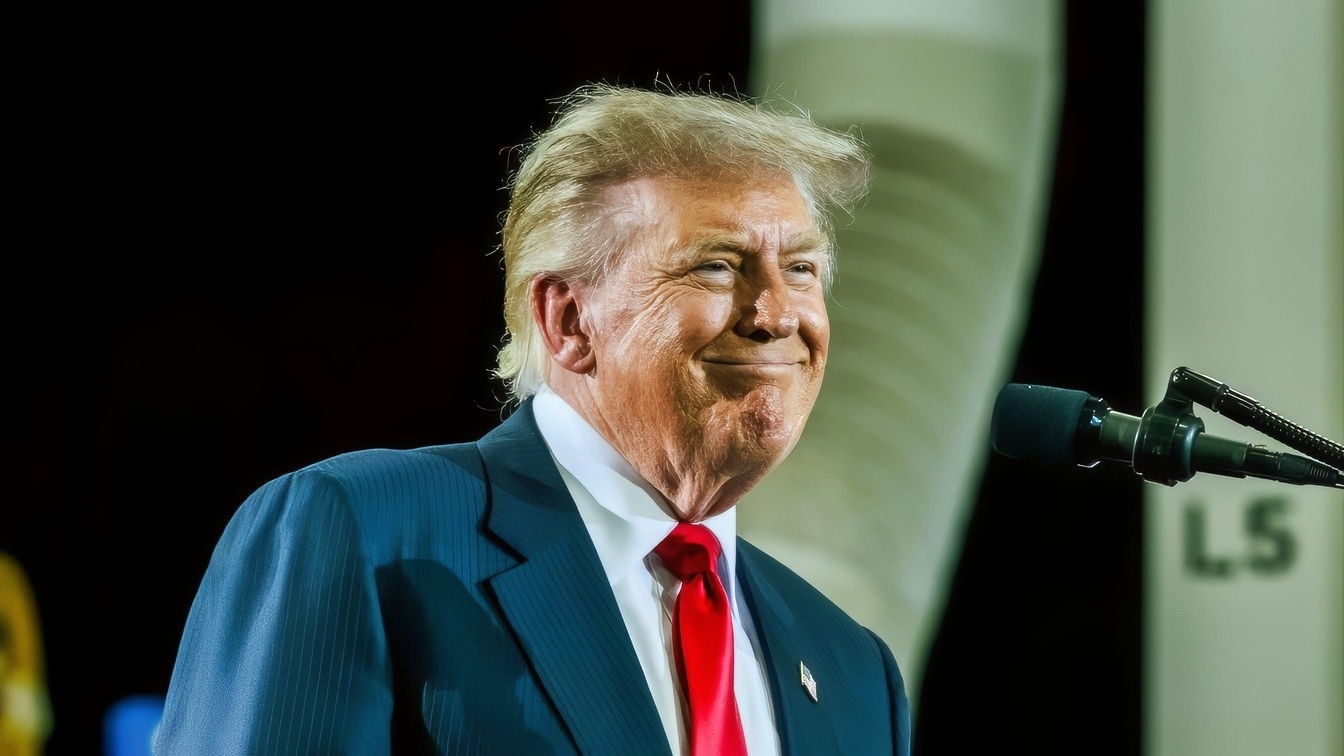
Donald Trump, since the start of the Iran military operation earlier this year, has made quite a few major mistakes. He almost certainly thought that the war could be won quickly and painlessly, and that assassinating the Supreme Leader in the early stages of the war might cause the regime to collapse. Putting an end to Iran’s nuclear ambitions also proved a lot more difficult than Trump likely imagined.
Trump didn’t seem aware that Iran would close the Strait of Hormuz, and therefore send global energy markets into months-long chaos, and strike directly at Trump’s campaign promises to keep prices, including those of gasoline, low, as well as his longtime insistence that only he could avoid long, hopeless foreign wars, especially in the Middle East.
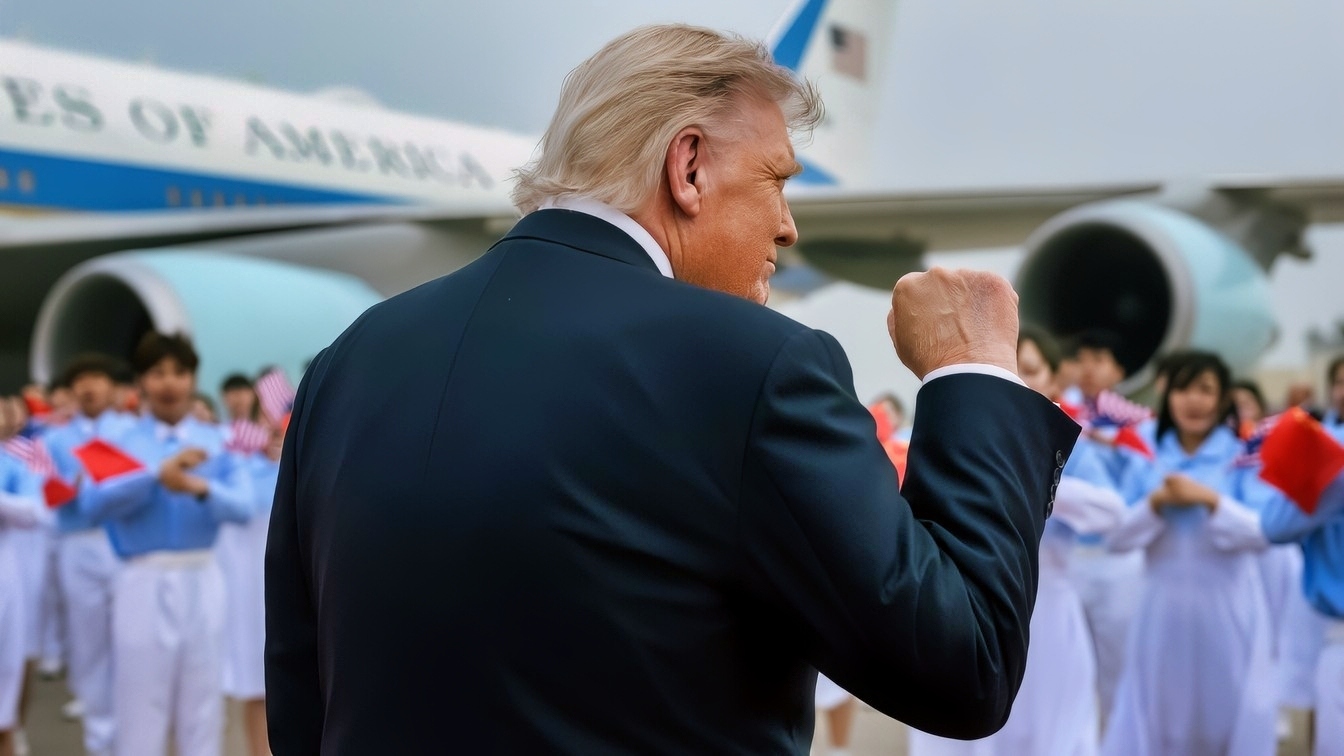
President Donald J. Trump greets Ambassadors David Perdue and Xie Feng, Executive Vice Minister of Foreign Affairs Ma Zhaoxu and Minister of Foreign Affairs Wang Yi at Beijing Capital International Airport, China on Friday, May 15, 2025, before boarding Air Force One en route Washington, D.C. (Official White House Photo by Daniel Torok)
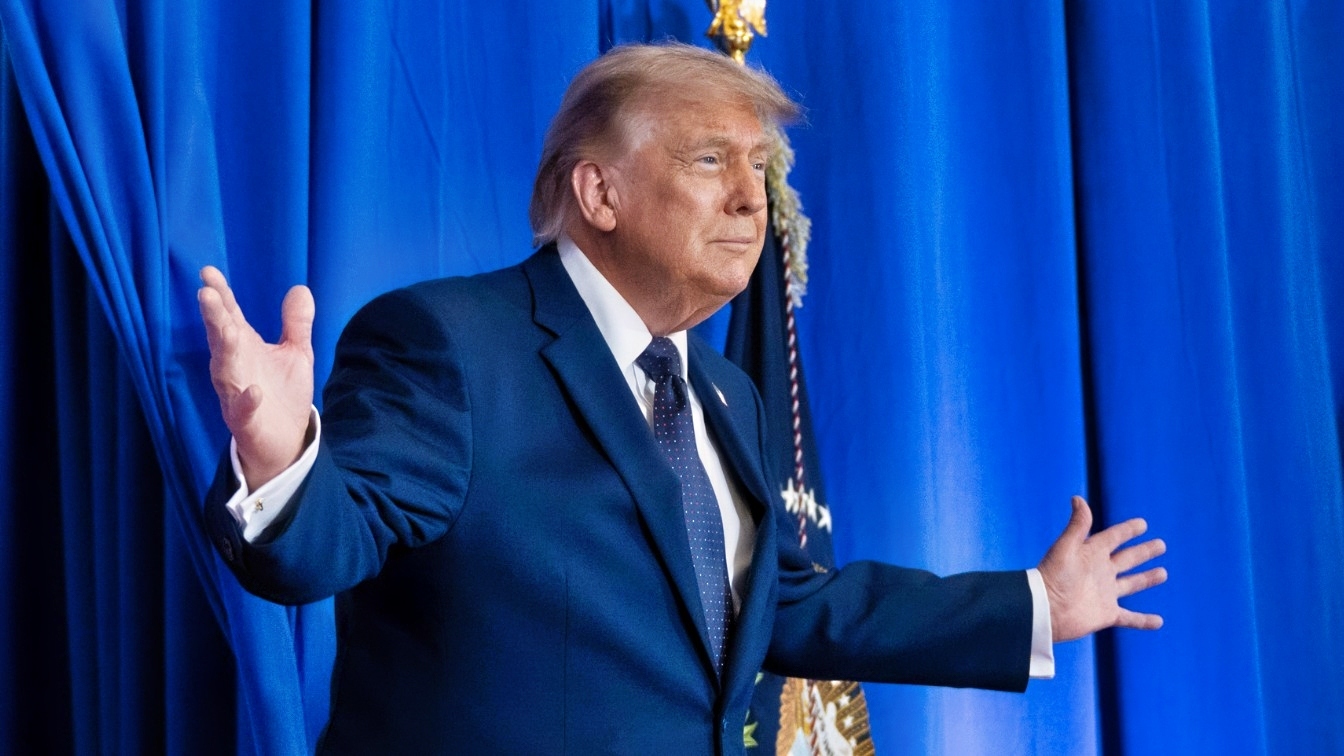
President Donald J. Trump delivers remarks on the economy at Rockland Community College in Suffern, New York on Friday, May 22, 2026.(Official White House Photo by Joyce N. Boghosian)
The president also didn’t appear to think that the war would drag out for months and become deeply unpopular, that he would find himself unable to exit the conflict easily, or that, when it became time to do so, he wouldn’t be negotiating from a position of strength.
Now, the war shows no signs of being over anytime soon; the president has no easy exit, and more countries are being pulled into the conflict seemingly on a daily basis.
A new analysis of the president’s conduct of the war makes an argument: Trump, who has been talking tough about Iran since early in his first term, doesn’t seem to have known his enemy especially well.
“Trump’s Biggest Error”
The analysis, published this week in The Atlantic, is by Nancy A. Youssef and Jonathan Lemire and examines what the authors consider Trump’s consistent lack of understanding of the Iranian regime’s motivations.
The authors start by noting that Trump has forgotten a key lesson of Sun Tzu’s “The Art of War, even though he’s been known to sometimes quote that book: “Know your enemy.”
Trump, Youssef, and Lemire argue, has failed to “understand Tehran’s priorities and motivations—and how much punishment the regime is willing to absorb to prevail.”
The latest example is when Iran launched what the U.S. described as a “surprise attack” on a Jordanian military base that houses U.S. troops.
Another example? The “Memorandum of Understanding,” agreed to by the sides in mid-June, which brought hostilities to a pause for about a month, seems to have been misinterpreted by both sides regarding what was agreed to. The term “Memorandum of Understanding,” after all, is one more associated with the real estate world — the province of Trump and his negotiators Jared Kushner and Steve Witkoff — than with war, peace and diplomacy.
Both the U.S. and Iran came away from the agreement with very different understandings of who would control the Strait of Hormuz and who would have access to it, to the point where, per the Atlantic’s reporting, some of the Iranian side believed that the U.S. had made the language purposely vague, in order to “trigger a violation that could be used as a predicate to resume strike.”
It was also, the authors said, wrong for Trump to believe that the Iranian regime was on the verge of collapse at the time of the war’s start. If anything, it has likely gotten stronger since then, with the Supreme Leader replaced by his younger, healthier son, Mojtaba Khamenei.
And the Atlantic authors state that Trump doesn’t seem to be aware of what he wants from the war— a great military victory or a grand diplomatic victory. Neither outcome appears within reach for the president.
How to End the War
“For now, there are no good options for Trump,” the Atlantic authors write. “And there is no clarity as to how two sides in a widening war can find off-ramps, particularly if they continue to misinterpret each other’s actions.”
Another analysis published this week by Foreign Policy proposed a way to end the war, through a “comprehensive diplomatic solution” that involves a “durable agreement” on the status of the Strait of Hormuz, providing real “near-term inducements” to Iran, and also reassuring American partners in the Gulf region.
“The key to any sustainable deal is that both parties need to be able to legitimately claim victory,” the analysis said.
About the Author: Stephen Silver
Stephen Silver is an award-winning journalist, essayist, and film critic, and contributor to the Philadelphia Inquirer, the Jewish Telegraphic Agency, Broad Street Review, and Splice Today. The co-founder of the Philadelphia Film Critics Circle, Stephen lives in suburban Philadelphia with his wife and two sons. For over a decade, Stephen has authored thousands of articles that focus on politics, national security, technology, and the economy. Follow him on X (formerly Twitter) at @StephenSilver, and subscribe to his Substack newsletter.


