

According to a recent poll by the Associated Press, just one in three Americans support the war in Iran.
With the war now entering its fifth month, fatigue amongst the American population is starting to mount as the war continues and the Trump administration fails to make its goals for Iran concrete.

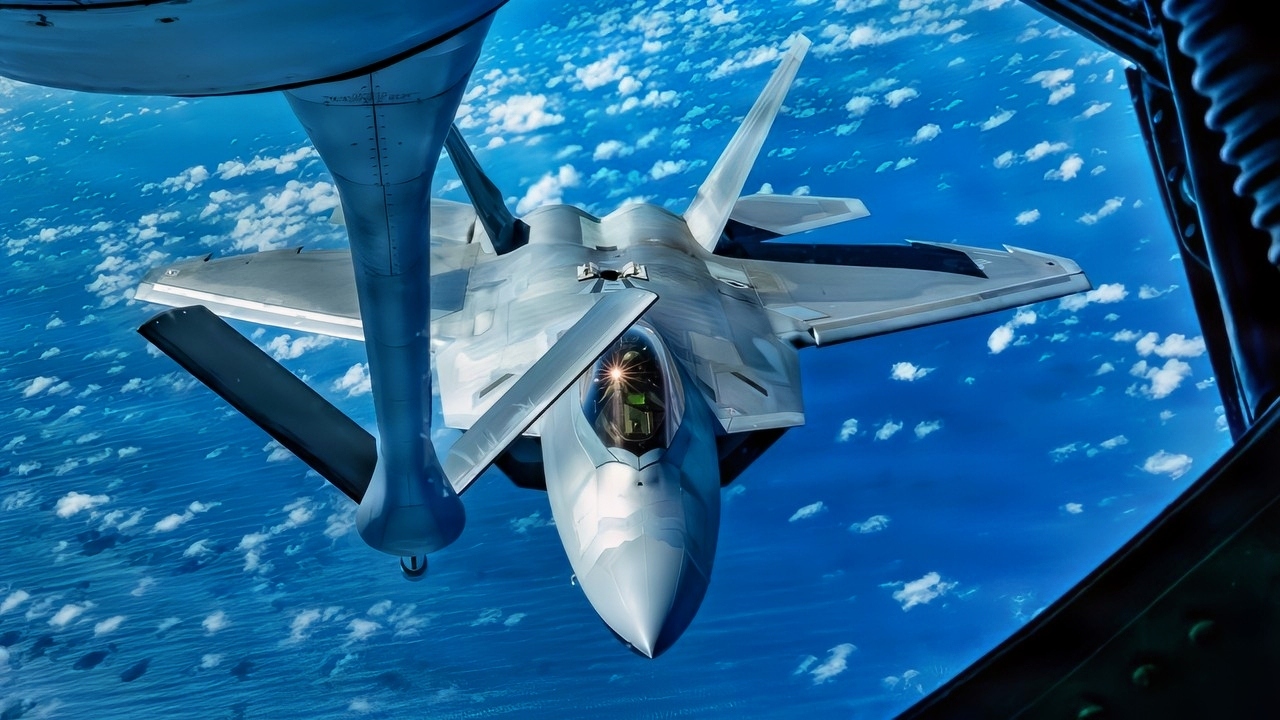
F/A-18 Hornets and an F-22 Raptor fly in formation during the HUGE 1 flyover practice over the National Mall as part of the America 250 celebration in Washington, D.C., July 3, 2026. The formation showcased current U.S. military airpower during the nation’s 250th anniversary celebration. The flyover highlighted the joint capabilities of America’s armed forces in recognition of Independence Day. (U.S. Air Force photo by Staff Sgt. Lauren Diaz)
While support is still high among Republicans, Democrats and independent voters largely disapprove of the war, with most voters still confused as to why the U.S. is attacking Iran in the first place.
As the conflict continues, the U.S. Army faces its prominent threat: public opinion. This is especially important as the midterm elections approach, providing even more pressure on Trump to finish the war as soon as possible.
Growing Dissatisfaction With the War
The poll was conducted from July 23 to July 27, garnering responses from 1,165 adults across the United States. Of those adults, only 33% approved of the war in Iran.
Support among Republicans was naturally higher, with 68% expressing their support for Trump and his war effort.
Meanwhile, Democrat participants were almost unanimously opposed to the war, with 93% expressing their disapproval and only 5% in support.

U.S. Air Force Maj. Melanie “Mach” Kluesner, the pilot for the F-35A Demonstration Team, performs aerial maneuvers in a USAF F-35A Lightning II during the first day of the airshow at Jacksonville Naval Air Station, Florida, on 18 October, 2024. The Demo Team performs at various airshows across the globe to display the power, agility, and lethality of America’s 5th generation fighter jet. (U.S. Air Force photo by Senior Airman Nicholas Rupiper)

Capt. Kristin “BEO” Wolfe, F-35A Lightning II Demonstration Team pilot and commander, flies during an airshow demonstration practice Mar. 5, 2020, at Hill Air Force Base, Utah. The team will make its first of 20 appearances at the Yuma Air Show, Mar. 13-14, 2020, at Marine Corps Air Station, Yuma, Ariz. (U.S. Air Force photo by Cynthia Griggs)
Among independent voters, only 26% showed support, while 68% disapproved of Trump’s handling of the war in Iran.
These figures more or less align with a poll conducted by Reuters, which interviewed a sample of American adults of similar size.
One notable difference between the two polls is that AP’s statistics show a growing dissatisfaction with the war. Even among Trump’s Republican fanbase.
Support from Republicans peaked in June at 71%, then dipped by 10 percentage points to its lowest level yet.
Granted, the margin of error is around 6 points, but the data still indicates that the war is losing steam among Republican voters.
Comparatively, the Reuters/Ipsos data suggested that overall support for the war may have increased slightly from March to July.
In a survey conducted in March, when hostilities started, just 27% said they supported the war.
In their July poll, however, that number rose to 33%. This does not indicate an increasing trend in support on its own, but it is still interesting to compare the two datasets.
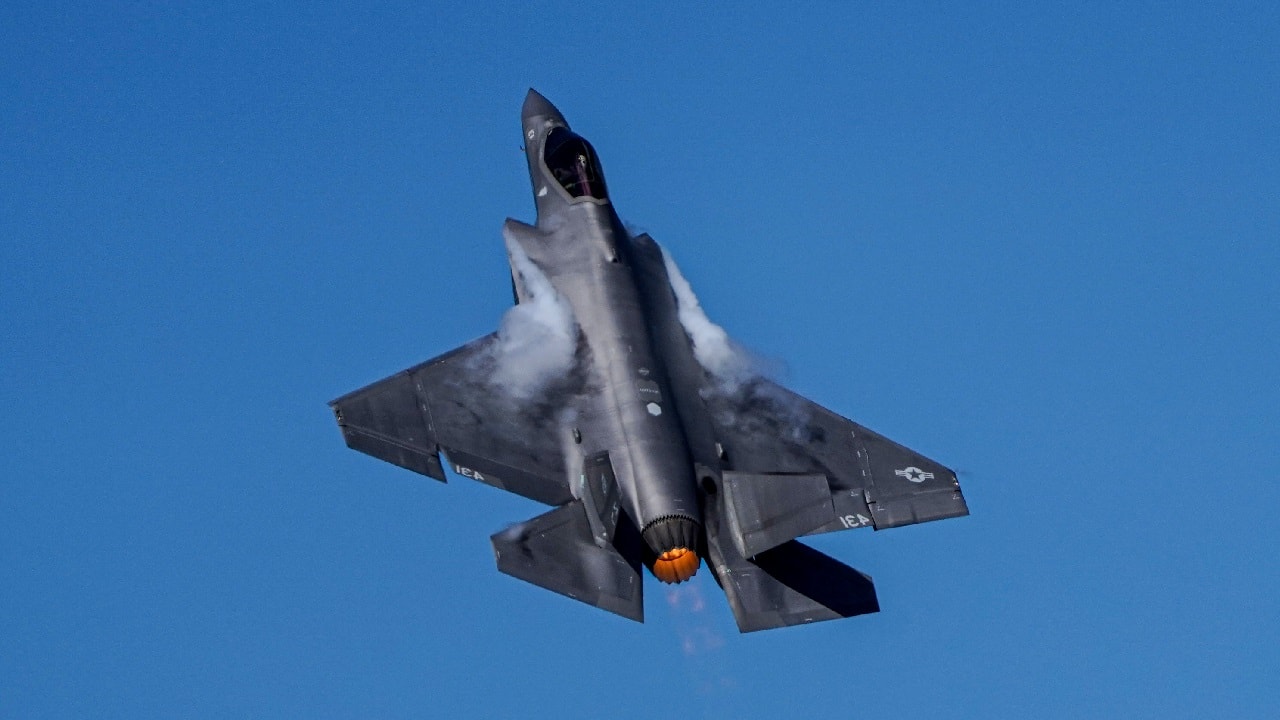
F-35 Fighter Heading Into the Sky. Image Credit: Creative Commons.
Support Among Republicans Is Also Diminishing
Additional data reveals that only around 2 in 10 adults in the U.S. favor continuing the war against Iran.
3 out of 10 support a renewed ceasefire through diplomatic means, 2 out of 10 want to cease the war altogether, and around a quarter are undecided.
Among Republican participants, 48% favor continued military action while 20% favor a new ceasefire. Republicans who do not consider themselves part of the MAGA movement are less likely to support the war, according to the data.
Robert McClary, a 52-year-old Republican from Ohio, expressed his skepticism at Trump’s ability to handle the war. “I don’t have any trust in this administration at all and to why they brought us into this war, why they’re putting our soldiers at risk again,” he said. “I really don’t know what you can do now. I mean, you’ve kind of gotten yourself buried into this mess.”
To most Americans, however, both Democrats and Republicans find the war confusing.
It is not exactly clear to most adults why the war is even happening in the first place.
Trump’s goals for this conflict have changed multiple times since the beginning.
At first, the goal was to dismantle Iran’s ballistic missile program while also preventing Tehran from acquiring a nuclear weapon.
Then the goal shifted to reopening and seizing control of the Strait of Hormuz, which had, ironically, been closed as a direct consequence of the war in the first place.
The goals of the war are further muddled by the inclusion of other actors like Hezbollah and the Houthis. What does Lebanon have to do with America’s national interest, many ask themselves.
The Trump administration has done a poor job answering those questions.
More Concerned About Gas Prices
By and large, most Americans want to prevent Iran from obtaining a nuclear weapon. However, more adults in the U.S. are more concerned about oil and gas prices than about whatever happens in the Middle East.
According to AP, 72% of U.S. adults believe preventing oil and gas prices from rising should be the U.S.’ s top priority.
Meanwhile, only 64% believe that preventing Iran from obtaining a nuclear weapon should be Trump’s highest priority.
For most Americans, gas prices are a much more immediate concern, given that cars are a huge part of American life.
Gas prices recently hit a national average of $4 per gallon, one dollar higher than the pre-war average.
Naturally, there is a political aspect to this as well.
In the past decades, American society has become extremely polarized. Trump’s terms in office seem to have exacerbated that polarization and have made any sort of political discussion all the more toxic.
If the war were to happen under a Democratic president, Republicans would be overwhelmingly against the war, while Democrats would support it wholeheartedly.
This is simply the way American society is now. Gone are the days when any sort of foreign war receives massive bipartisan support.
Anything that Trump does will receive massive pushback from the Democrats, and anything a future Democratic administration does will receive similar pushback.
The reasons for this extend well beyond the scope of this article, but the point is that the War in Iran, even if Trump were to reopen Hormuz and bring gas prices down, will still receive fierce criticism from at least half of the country.
About the Author: Isaac Seitz
Isaac Seitz, a Defense Columnist, graduated from Patrick Henry College’s Strategic Intelligence and National Security program. He has also studied Russian at Middlebury Language Schools and has worked as an intelligence Analyst in the private sector.


