
The U.S. government raised its oil price forecast on Tuesday as the Strait of Hormuz remains closed, and the conflict with Iran continues to drain global inventories.
The U.S. Energy Information Administration now expects Brent crude to average around $85 per barrel through the third quarter of 2026 and $86.81 across the whole year.
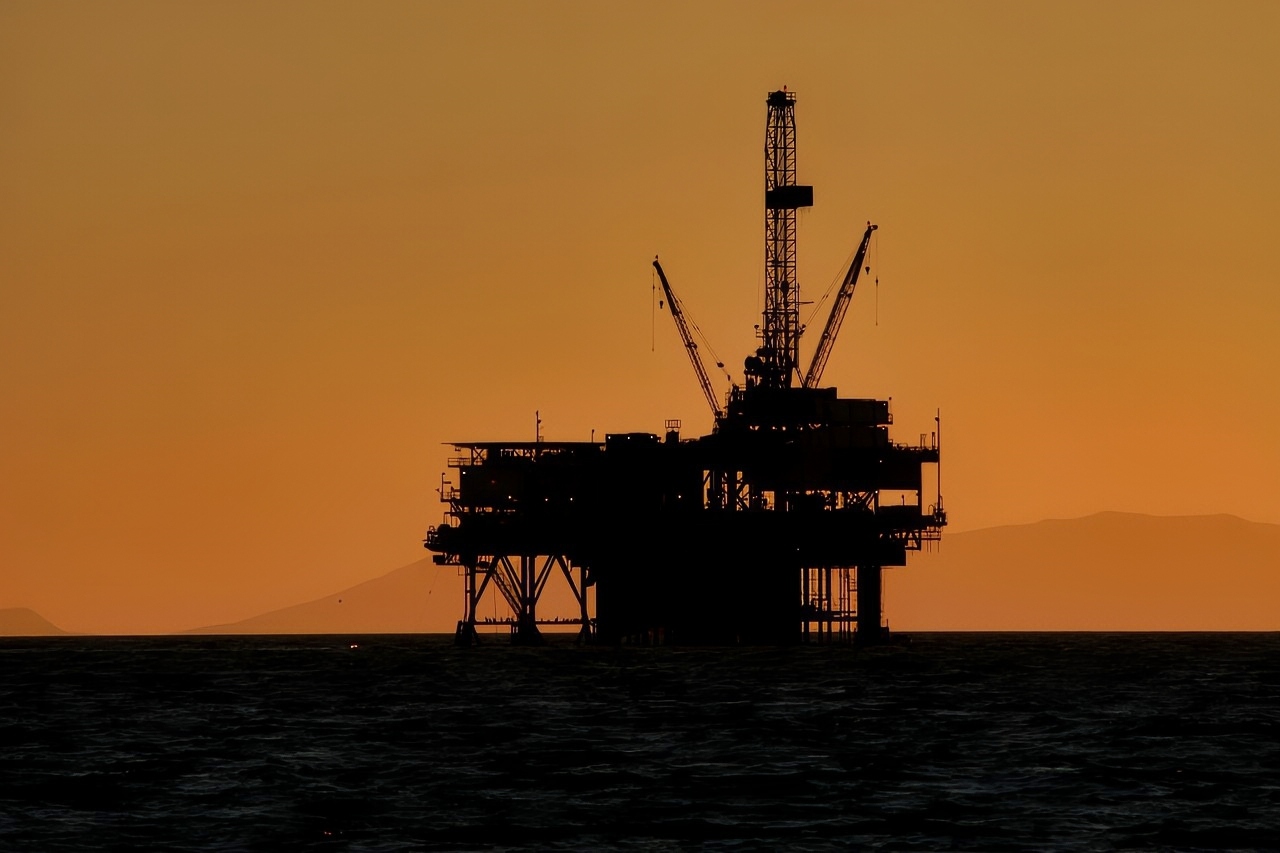
Oil Platform. Image Credit: Creative Commons.

Generic Oil Tanker Image. Image Credit: Creative Commons.
The agency estimates that roughly 5.5 million barrels of Middle Eastern production were shut out during July, which amounts to more than 5% of global oil consumption.
Those estimates, however, are based on the assumption that conditions will eventually improve, with the EIA forecasting that trade through the Strait of Hormuz will begin to recover in September.
If a deal is not reached among the U.S., Iran, Oman, and other regional partners, however, the oil market could face a much more serious problem. And much of the world will feel its impact.
Oil Approaching $90
The international benchmark Brent crude, the primary reference price for oil traded across much of the global market, climbed 1.1% to $88.67 per barrel on Tuesday, August 11. West Texas Intermediate (WTI), the main U.S. oil benchmark, also rose by 1.3% to $83.17
Both prices reached their highest levels in a week as hopes of a quick resolution to the conflict faded and suggestions from Treasury Secretary Scott Bessent and other Trump administration officials that an Iran-Oman deal was imminent proved inaccurate.
It means the global benchmark has gained more than $9 per barrel, rising by roughly 12% in less than a week.
Tehran and Washington Play the Waiting Game
While the U.S. watches Iran and Oman hash out a deal from afar, Tehran continues to insist that the waterway will not reopen until Washington meets its demands.
President Trump also says he is “low-keying it” with Iran, waiting for the economic consequences of the ongoing U.S. blockade of Iran-linked ships to bring the country’s economy to the brink, but Iran continues to prevent the normal flow of traffic through the Strait of Hormuz, which, in turn, places extreme economic pressure on the Trump administration.
Between six and eight ships reportedly passed through Hormuz on Monday, compared with an average of around 11 per day recently.
The World’s Buffer Is Running Low
There are several reasons why the months-long disruption in the Strait of Hormuz has not resulted in dramatically higher prices, but chief among them is that governments and energy markets have relied on enormous oil reserves to cover some of the shortfall.
But that cushion is getting much smaller.
The United States committed 172 million barrels from the Strategic Petroleum Reserve (SPR) as part of a wider 400-million-barrel emergency release coordinated by the International Energy Agency earlier this year.
The latest Department of Energy figures show that the SPR has since fallen below 300 million barrels, reaching its lowest level since 1983.
That does not mean that the United States is running out of oil, of course.
America remains the world’s largest oil producer, but Washington now has a substantially smaller emergency stockpile available to counter another major supply shock.
In other words, the U.S. and the rest of the world are running out of time, and Iran is willing to wait.
At the same time, Asian demand is recovering, forcing refiners that would ordinarily rely heavily on Middle Eastern crude to seek replacement supplies from the United States, Africa, and beyond.
That is putting Asian buyers in competition with European refiners for many of the same alternative supplies, and there is no immediate solution to the problem other than opening the Strait of Hormuz.
Could Oil Skyrocket?
What happens in the next several weeks is now critical.
The relatively moderate forecasts currently offered by the EIA and other analysts rely on the assumption that Gulf oil flows will begin to recover before inventories become dangerously depleted.
That recovery, however, is not guaranteed—and if it is delayed again, considerably higher oil prices are not just possible but almost certain.
Kieran Tompkins, senior climate and commodities economist at Capital Economics, told CNBC that the market could reach a “tipping point” by the fourth quarter if the Strait remains closed and oil inventories globally continue to fall rapidly.
At that point, Tompkins says, stored oil would no longer be sufficient to comfortably absorb the ongoing supply shock.
Instead, prices would have to rise enough to reduce global demand and bring consumption back in line with the amount of oil currently available.
Based on previous supply shocks, Tompkins said the worst-case scenario could send prices skyrocketing to $120-$140 per barrel.
About the Author: Jack Buckby
Jack Buckby is a British researcher and analyst specializing in defense and national security, based in New York. His work focuses on military capability, procurement, and strategic competition, producing and editing analysis for policy and defense audiences. He brings extensive editorial experience, with a career output spanning over 1,000 articles at 19FortyFive and National Security Journal, and has previously authored books and papers on extremism and deradicalization.


