


A huge question mark hangs over Canadian defense policy, mainly over its F-35 purchase.
Trump: ‘We Don’t Need Canada’
On Monday, U.S. President Donald Trump said he could raise tariffs on all Canadian automobile-related exports by up to 50%.
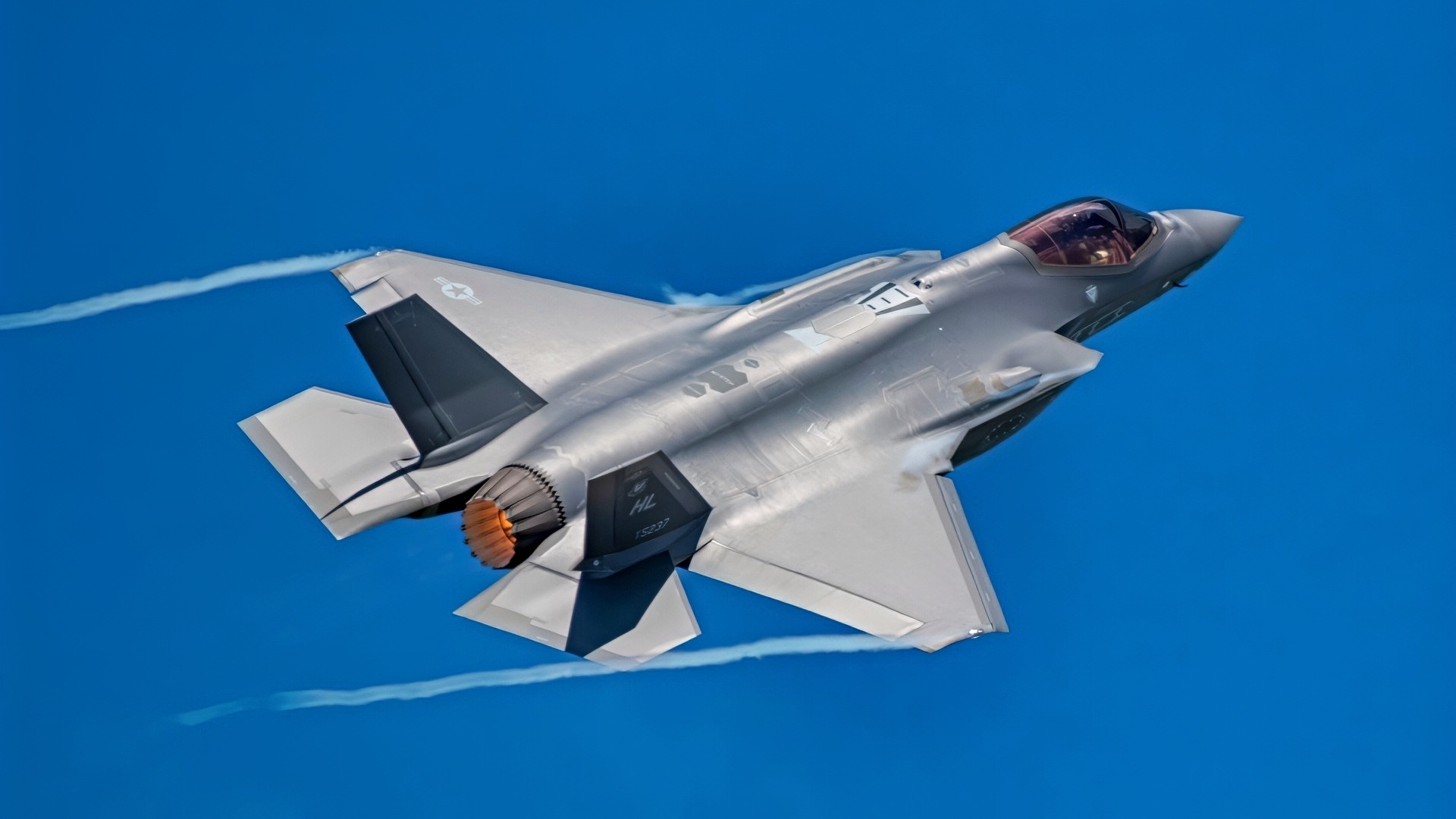
An F-35A Lightning II assigned to the 419th Fighter Wing, Hill Air Force Base, Utah takes off from the Air Dominance Center during Sentry Savannah on May 11, 2022. Sentry Savannah is the Air National Guard’s largest air-to-air, joint aerial combat exercise for fourth- and fifth- generation fighters, which tests the capabilities of our warfighters in a simulated environment and trains the next generation of fighter pilots for tomorrow’s fight. (U.S. Air Force photo by Senior Airman Erica Webster)
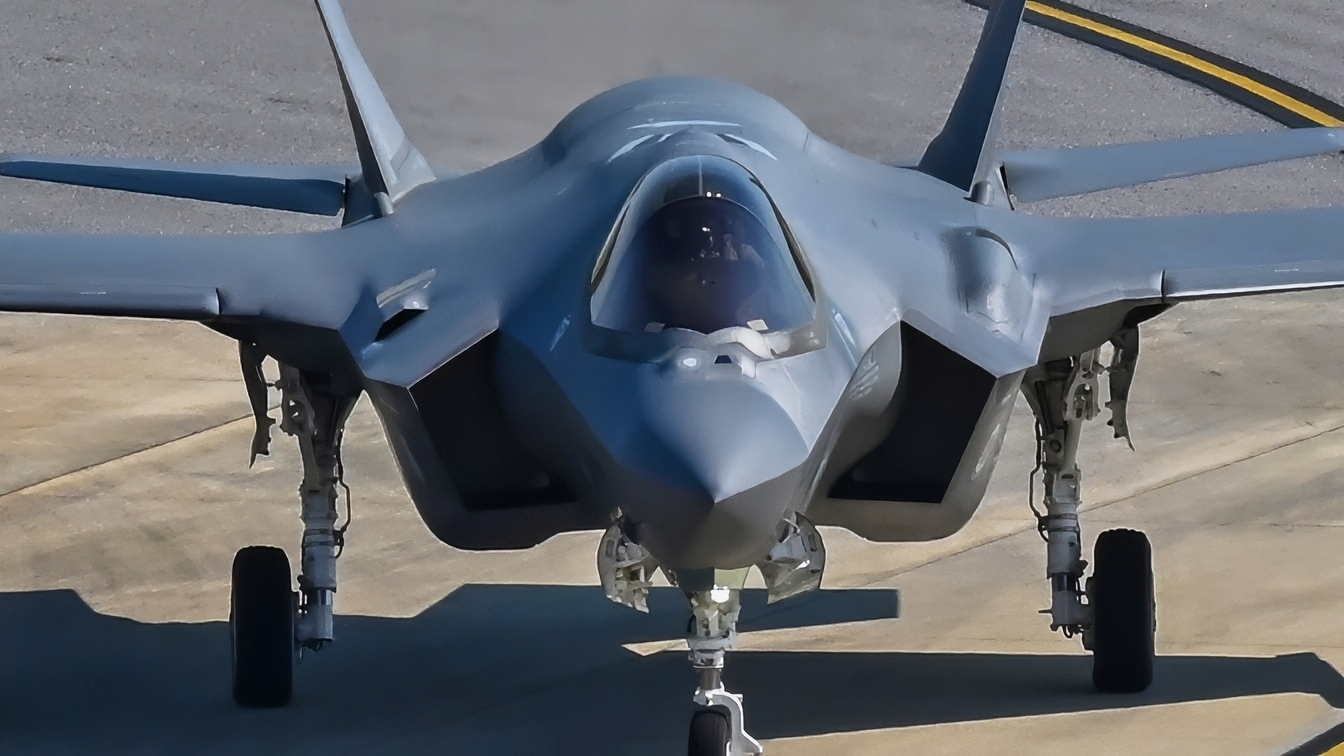
A U.S. Air Force F-35A Lightning II assigned to the 33rd Fighter Wing taxis down the runway at Eglin Air Force Base, Florida, August 1, 2023. The F-35A is a high-performance, multirole fighter jet that combines stealth, sensor fusion and unprecedented situational awareness. (U.S. Air Force photo by Airman 1st Class Abigail Duell)
In light of collapsed trade talks with Ottawa, he said he could slap the tariffs on from January 1 next year. He also outlined other retaliatory tariffs to be rolled out from September 8.
“You’re at war when you get attacked. We got attacked,” Canadian Prime Minister Mark Carney complained over the weekend.
However, when it comes to its ties with the U.S., it is not merely trade, but issues of national security on the table.
Namely, whether Carney’s government will go ahead with its full purchase of 88 Lockheed Martin F-35A fighter jets.
Jet Review Rumbles On
Shortly after ascending to office last March, Carney launched a landmark review into the F-35 acquisition.
Originally due to conclude last Fall, it has since rumbled on with no end in sight.
According to Canada’s Department of National Defense, the review is examining “operational needs, industrial benefits, strategic partnerships, and potential alternatives.”
Ottawa has not fully scrapped the purchase, and more importantly, it is still set to buy the initial 16 F-35s under its deal with Washington.
Canadian newspaper The Globe and Mail reported that Canadian negotiators were looking to keep the issue of military dependence separate from the trade dispute, although this was becoming awkward.
The former Canadian Conservative Party leader Erin O’Toole told the paper: “The level of aggression shown against us cannot just be sloughed off. It has to be responded to.”
Trump accelerated the rhetoric on Monday, saying, “Build in the U.S., and there are ZERO TARIFFS,” the U.S. President wrote to his Truth Social platform, adding: “WE DON’T NEED CANADA, THEY NEED US!”
Ottawa is now left wondering if its decades-long dependence on an American-built fighter is politically palatable, even if the jet is undoubtedly the best on a technical level.
Canada Weighs Swedish Option
Then there is the Gripen jet.
Micael Johansson, CEO of the Sweden-based Saab firm that developed the jet, told The Globe that Ottawa would likely not ditch the American fighter completely.
“I don’t think Canada will give up F-35 completely,” he said on Monday.
That prospect could mean a mixed fleet of F-35As and Saab JAS 39 Gripen Es.
The defense argument for the F-35, however, is solid. Former NORAD deputy commander Christopher Coates told The Globe that “there is no better option” for Canada.
Raquel Garbers, a former top Canadian defense official, also stated that “Canada’s strength will always lie in being inside the U.S. orbit.”
“It needs something to protect against overreach, and that means making itself indispensable,” she went on.
F-35s are stealthier, have more advanced sensors and easier interoperability with the United States and other F-35 countries.
Canada has also participated in the F-35 program since the 1990s, and over 30 Canadian aerospace firms are carrying out related program contracts.
Shelling out for Gripens as well as F-35s would not necessarily be the cheaper choice either. Ottawa would need separate pilot training, logistics and maintenance systems for a pair of fresh fighter-type jets — not just one.
Alongside this, it would also need to carry on operating its aging CF-18 fleet throughout the transition.
Although Saab has one pull factor, Lockheed Martin simply can not compete with more Canadian control.
In May, the Canadian government announced that Saab was the preferred supplier for talks over a new airborne early warning and control capability based on the company’s existing GlobalEye aircraft.
Saab Decision ‘Not a Contract’
Ottawa said the decision was not a contract yet.
However, Carney’s administration has noted that the Saab plans could well involve production, technology transfer, and partnerships intended to bolster Canada’s “economic and technological sovereignty.”
GlobalEye is itself based on Bombardier’s Canadian-built Global 6500 business jet.
Saab said the proposals offered Canada “sovereign ownership” while creating jobs on Canadian soil.
Writing for the National Post, Richard Shimooka argued that Gripen jets are “less capable, more expensive and still reliant on U.S. production”. Shimooka, a senior fellow at the Macdonald-Laurier Institute, argued that a mixed F-35/Gripen fleet would fail Canada “in every way”.
So would the main motivation for opting for it simply be to spite Washington, rather than practically aid Canada’s military?
As ties with Trump continue to sour, Canada will increasingly have to balance changing political needs with long-term military priorities.
About the author: Georgia Gilholy
Georgia Gilholy is a journalist based in the United Kingdom who has been published in Newsweek, The Times of Israel, and the Spectator. Gilholy writes about international politics, culture, and education.


