
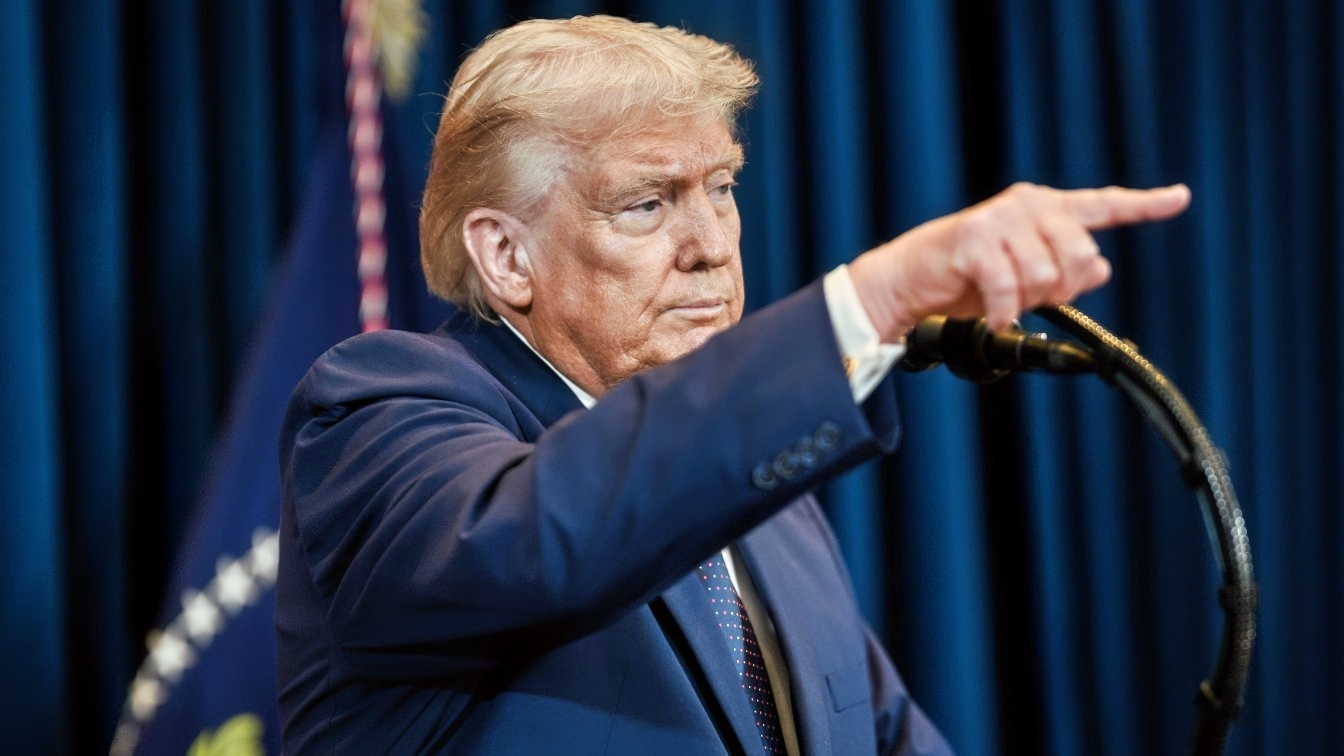
U.S. President Donald Trump has said that he is prepared to ensure the Strait of Hormuz remains open by force – a return to the tactics of the early days of the U.S.-Iran War. The president’s comments follow a weekend of intense military exchanges in which Tehran once again attempted to take control of one of the world’s most important waterways.
The weekend saw some of the heaviest fighting since the memorandum of understanding (MOU) was signed in June, with Iran launching fresh attacks against commercial shipping and U.S. partners across the Gulf, while American forces responded with a large-scale barrage of missile strikes against Iranian military infrastructure.
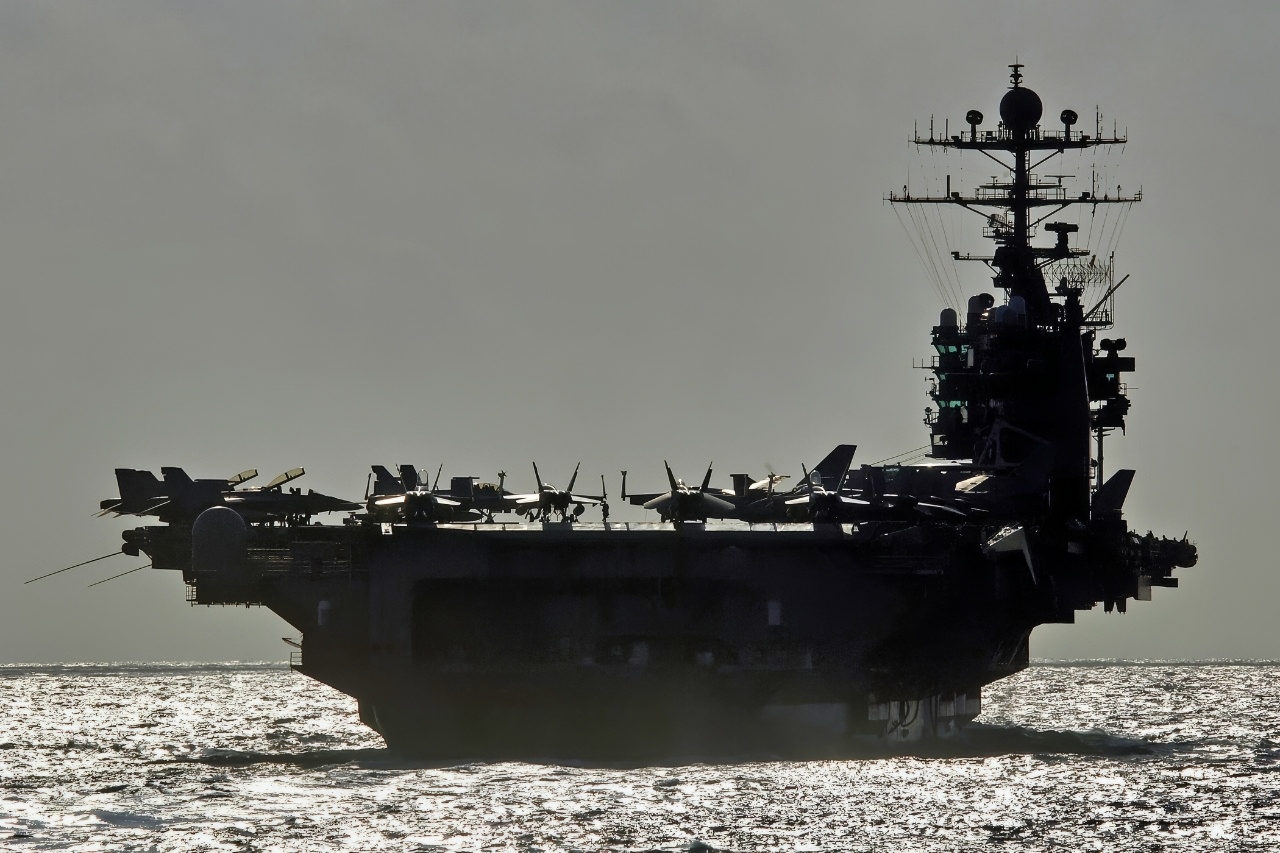
The aircraft carrier USS George Washington (CVN 73) prepares to conduct a refueling at sea with the guided missile cruiser USS Monterey (CG 61) as the two ships operate in the Caribbean Sea on April 20, 2006. The George Washington Carrier Strike group is participating in Partnership of the Americas, a maritime training and readiness deployment of U.S. Naval Forces along with navies of Caribbean and Latin American countries for enhanced maritime security.
(DoD photo by Petty Officer 3rd Class Michael D. Blackwell II, U.S. Navy. (Released))
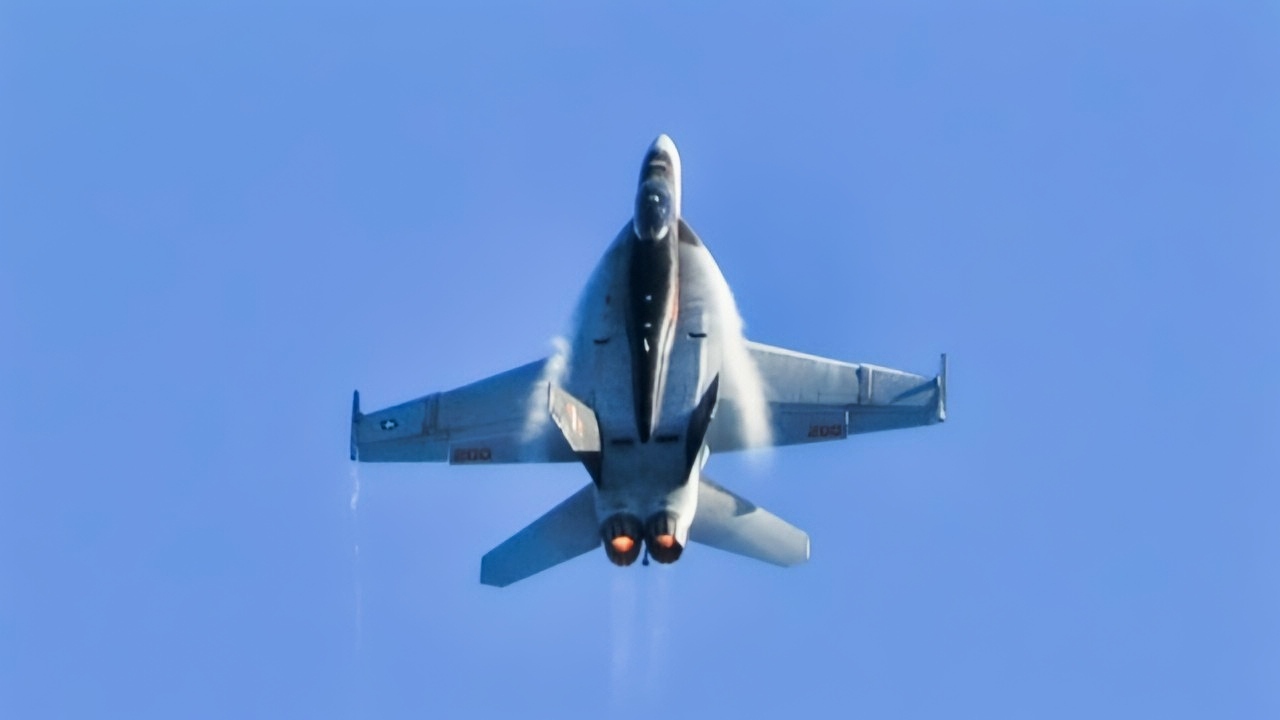
A U.S. Navy F/A-18E Super Hornet aircraft assigned to Strike Fighter Squadron (VFA) 147 performs maneuvers above the aircraft carrier USS Nimitz (CVN 68) during the departure of Carrier Air Wing (CVW) 11 Dec. 10, 2013, in the Pacific Ocean. CVW-11 fixed wing aircraft flew off the Nimitz to return home after being deployed to the U.S. 5th, 6th and 7th Fleet areas of responsibility. (U.S. Navy photo by Mass Communication Specialist Seaman Apprentice Kelly M. Agee/Released)
What Trump Said
Speaking to “Fox & Friends” on the morning of Monday, July 13, the president said that the United States has returned to its original plan to take control of the Strait of Hormuz and prevent Iran from disrupting the passage of commercial traffic.
“We’re going to keep the strait, and we’ll probably run it,” Trump said in a telephone interview.
“We’ll become the guardian of the strait. Maybe we’ll become the guardian angel of the strait, and we should be reimbursed for that,” he continued.
The comments reflect weeks of negotiations between the U.S. and Iran, with Tehran’s negotiators insisting that the country be reimbursed for various environmental and security services for ships passing through the strait. The president now indicates that not only will the strait remain open with the support of the U.S. military, but new measures will also be needed to help fund the presence of U.S. service members and naval assets.
“When we do that we’re going to be reimbursed because the other nations are very wealthy, they’re on our side, and we can’t be expected to do that for nothing unlike we had for many years,” Trump also said.
U.S. Reinstates Its Blockade
Also on Monday morning, the president announced that the United States is reinstating its blockade of the Strait of Hormuz, meaning that the U.S. military will do more than just ensure the safe passage of commercial ships – it will completely prevent any Iranian-linked ship from leaving or entering the Strait.
“The Hormuz Strait is OPEN, and will remain OPEN, with or without Iran,” Trump said in a post on Truth Social.
“We are reinstating THE IRANIAN BLOCKADE, so named because it is only stopping Iran’s ships or customers from entering or leaving. All other countries will have fair and open use of the Strait. The U.S.A. will be, from this point forward, known as “THE GUARDIAN OF THE HORMUZ STRAIT,” but as such, and as a matter of FAIRNESS, will be reimbursed, at the rate of 20% on all cargo shipped, for any and all costs necessary to do the job of providing safety and security to this very volatile section of the world.”
The president also announced that the “process and formation” of the blockade and new management for the strait “will begin immediately.”
Iran Insists It Maintains Control
Iran continues to insist that it controls the Strait of Hormuz and that Washington has no authority to determine how the waterway is managed. On Monday, Iran’s top joint military command rejected Trump’s announcements.
Islamic Revolutionary Guard Corps spokesman Hossein Mohebbi also said that Iranian forces will “force” the U.S. and its allies to “surrender.”
“We continue to assert our authority and control over the Strait of Hormuz with strength and power, and we will force foreigners and their allies to surrender to the will of the Iranian people,” he said in comments published by Iranian state media.
The IRGC also said on Monday that regular shipping would resume through the strait only after the U.S. military ends its operations in and around the waterway. The Iranian military also warned that “continued interference” by the U.S. in the region could lead to a global oil crisis.
Iran Uses Its Only Leverage
Iran’s most recent threats are centered around its only major point of leverage: its control over the Strait of Hormuz and, as a result, its unique ability to hold the global economy hostage via oil shipments. After declaring the Strait closed over the weekend, the IRGC warned on Monday that there would be more “incidents in the global oil and gas sector.”
The strategy is not new, but it is effective – and doubling down on its alleged control over the Strait of Hormuz has forced the U.S. president to escalate significantly, targeting critical infrastructure throughout Iran and not just its hardened military bunkers and missile storage sites. Despite repeated U.S. strikes destroying missile batteries and drone infrastructure – and indeed much more – Iran still retains the ability to threaten the waterway through asymmetric means. That includes laying naval mines in the Strait of Hormuz, or even causing the same amount of uncertainty by simply threatening to do so.
That pressure also appears to be aimed squarely at President Trump, who has repeatedly argued that avoiding a global energy shock is essential, privately and publicly warning that his actions could make him another President Herbert Hoover. With Trump concerned about global oil supplies and a global economic crisis, securing control over the Strait of Hormuz is now his administration’s most urgent priority.
MORE – NATO vs. Russia Is a War That Could Happen
About the Author: Jack Buckby
Jack Buckby is a British researcher and analyst specializing in defense and national security, based in New York. His work focuses on military capability, procurement, and strategic competition, producing and editing analysis for policy and defense audiences. He brings extensive editorial experience, with a career output spanning over 1,000 articles at 19FortyFive and National Security Journal, and has previously authored books and papers on extremism and deradicalization.


JingleBells
July 13, 2026 at 12:55 pm
US president Donald peddo trump, is imposing a 20% fee on all shipping passing through the strait of Hormuz.
That’s because Washington is now behaving as if it’s the owner and guardian of the strait.
China, on the other end of the planet, better be fully aware of what’s happening now.
Tomorrow, US and its minions could well be doing exactly the same lawless thing in the Taiwan strait.
So, what to do now.
First, get rid of the trump sycophant in Beijing, xi jinping.
Next, restart the FOBS testing, and start manufacturing fleets and fleets of spacebombers.
Otherwise, xi will hand over china on a silver platter straight over to Washington.