
Iran looks to be reasserting control over the Strait of Hormuz, with Iranian forces turning around an oil tanker attempting to use the U.S.-backed southern shipping corridor on Wednesday – just as Washington signals that it has no immediate intention to resume military strikes against Iran.
The incident, which involved the HAANA, an Indian-managed tanker, comes only a day after Iran and Oman announced that they had made progress toward agreeing on a new temporary shipping route through the Strait of Hormuz.

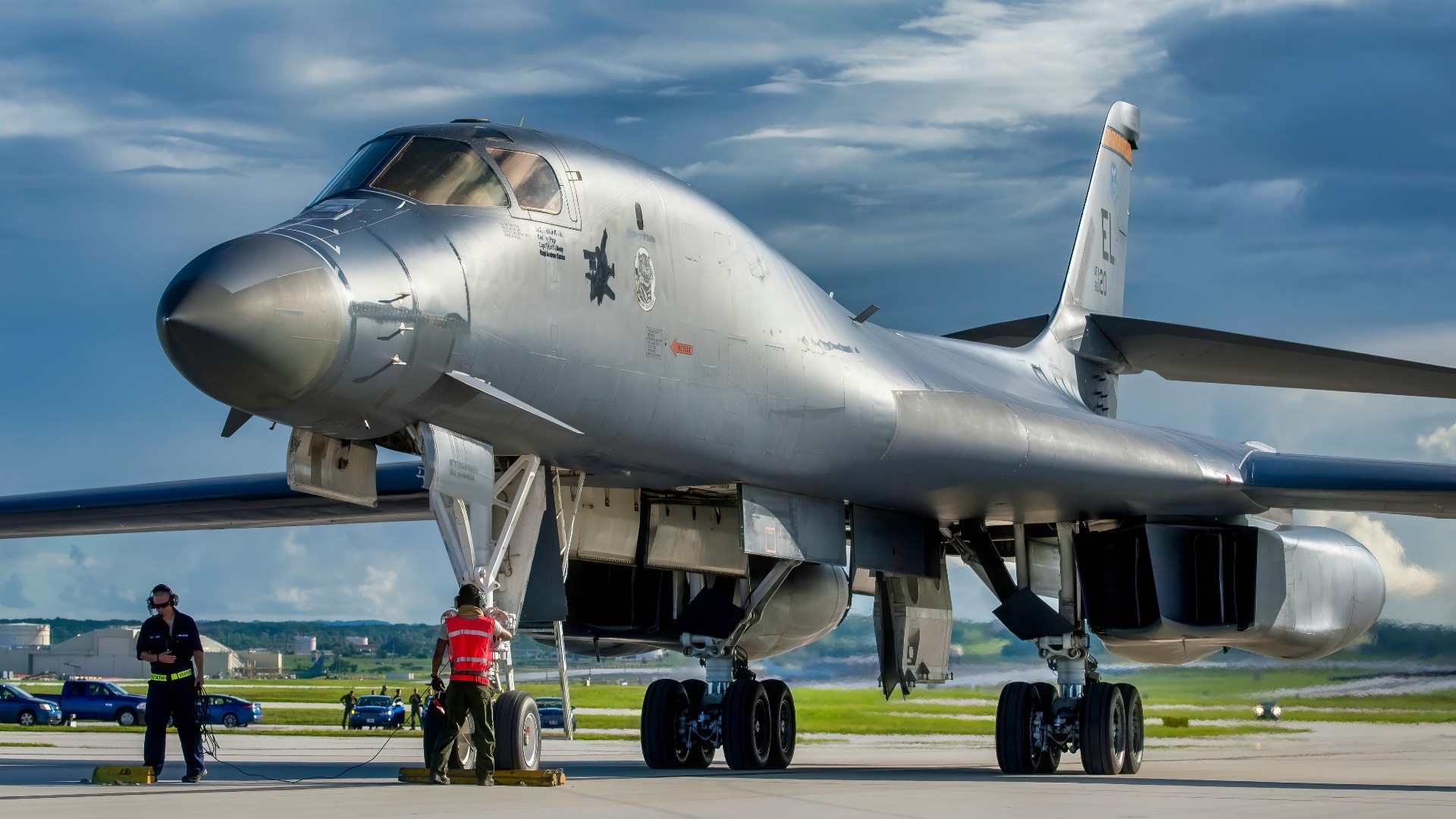
A U.S. Air Force B-1B Lancer assigned to the 34th Expeditionary Bomb Squadron, Ellsworth Air Force Base, South Dakota, flies over the United States, July 2, 2025. The B-1B is a heavy bomber with up to a 75,000 pound payload. (U.S. Air National Guard photo by Airman Spencer Strubbe)

B-1B Lancer Bomber National Security Journal Photo.
Tehran says, however, that implementing the agreement will only mean closing the southern corridor along Oman that the United States has been protecting for weeks, not fully opening the waterway.
For Hormuz to be opened, Tehran says, Washington must make a series of major concessions.
Iran Turns Tanker Around
Fars News Agency described how Iranian forces stopped the HAANA on Wednesday after the tanker attempted to pass through the southern shipping lane.
The vessel changed course after Iran’s warning and was prevented from continuing through the corridor, according to reports citing Fars.
This follows reports that the U.S. has been successfully operating a nightly convoy through a southern route in the Strait of Hormuz for several weeks, moving dozens of tankers through the waterway every night in a protected convoy.
Open-source intelligence account MenchOsint also claimed on Wednesday afternoon that there appeared to have been no visibly confirmed passage through the southern corridor during the preceding 24 hours.
The account also identified HAANA as the latest vessel attempting to move through the waterway, and that the tanker appeared to have been turned around by the Islamic Revolutionary Guard Corps Navy.
And while the assessment has not been independently confirmed, Iranian reports did say that HAANA was stopped while attempting to use the southern route.
Iran has also blacklisted 45 vessels that it accuses of violating its restrictions in Hormuz and warned that ships carrying cargo connected to those vessels could be struck.
Iran and Oman Forge New Agreement
Also this week, Iran and Oman have moved closer to forming an entirely new system for managing traffic through the Strait of Hormuz.
On Tuesday, Iranian Deputy Foreign Minister Kazem Gharibabadi said that the countries had agreed on a temporary route that vessels entering the Persian Gulf would travel through Iranian territorial waters.
Under the deal, outbound vessels would take a more southern route that runs partly through Iranian waters and partly through Omani waters.
Gharibabadi confirmed, however, that the agreement still does not amount to a full reopening of the Strait of Hormuz, and ships remain subject to Iranian surveillance.
Iranian Army spokesman Mohammad Akraminia also said that vessels will still require Tehran’s permission before passing through.
Gharibabadi also said the arrangement will only take effect by closing the existing route in the southern section of the waters, which appears consistent with the lack of traffic through the strait using the U.S.-organized route over the last 24 hours.
Iran and Oman are now expected to spend the next 30 to 60 days negotiating a permanent arrangement and ironing out the legal implications and requirements, including plans related to traffic management and various maritime services.
Washington Backs Away From Strikes
As this unfolds, Washington also appears to be backing away from continued strikes against Iran, continuing what U.S. President Donald Trump has described as a policy of “low-keying it” with Iran.
Secretary of State Marco Rubio told foreign counterparts this week that the United States is not expected to initiate any new attacks against Iran “for the time being,” according to Axios.
Instead, the Trump administration is shifting its focus toward economic warfare, adding to the existing naval blockade of Iranian ports by threatening secondary sanctions on individuals, companies, and countries that continue to trade with Iran.
But those threats come with the very real risk of, as U.S. Treasury Secretary Scott Bessent put it, blowing up the global financial market. And Tehran knows it.
That could be why the U.S. hasn’t completely ruled out returning to military strikes, with one U.S. official telling Axios that Rubio was not ruling out military strikes if Iran attacks first.
Another source also said the current posture may remain in place only until after November’s midterm elections.
Iran Tests Washington’s Restraint
It leaves Tehran with a real opportunity to test how far Washington’s restraint really goes.
After all, Iran has already endured extreme economic hardship, and its radical leadership cares little about the impact it has on regular civilians.
It can endure weeks or months longer and, in the process, limit President Trump’s ability to govern over the next two years by influencing the result of the midterms.
If Iranian forces can continue to prevent vessels from using the U.S.-protected corridor without triggering fresh American strikes, Tehran will prove that it can challenge the United States without even a conventional military.
The next few days, therefore, will be critical for all sides.
About the Author: Jack Buckby
Jack Buckby is a British researcher and analyst specializing in defense and national security, based in New York. His work focuses on military capability, procurement, and strategic competition, producing and editing analysis for policy and defense audiences. He brings extensive editorial experience, with a career output spanning over 1,000 articles at 19FortyFive and National Security Journal, and has previously authored books and papers on extremism and deradicalization.


