

President Trump thinks Iran is about to cave. Speaking in Denton, Texas, on Thursday, where he campaigned for Republican Senate nominee Ken Paxton, the president told the crowd the US is in a conflict “with a country that will never have a nuclear weapon and is ready to fold up,” according to Breitbart.
“We’ll win very easily right now,” he added. “Their currency is valueless. They have no money.”
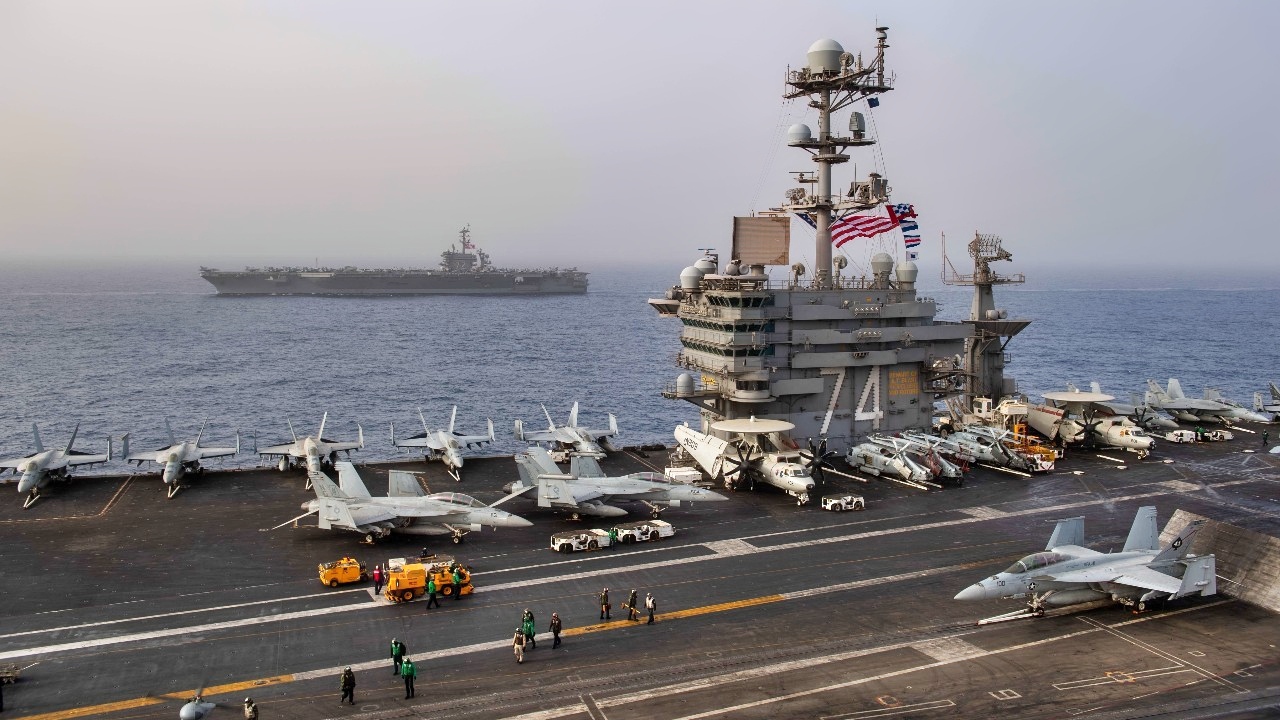
The aircraft carrier USS Abraham Lincoln (CVN 72), back, steams alongside the aircraft carrier USS John C. Stennis (CVN 74) in the Mediterranean Sea, April 24, 2019. The John C. Stennis Carrier Strike Group (CSG) 3 and Abraham Lincoln Carrier Strike Group (CSG) 12 are conducting dual carrier operations, providing opportunity for two strike groups to work together alongside key allies and partners in the U.S. 6th Fleet area of operations. John C. Stennis is underway in the Mediterranean Sea as part of the John C. Stennis Carrier Strike Group (JCSCSG) deployment in support of maritime security cooperation efforts in the U.S. 6th Fleet area of responsibility. (U.S. Navy photo by Mass Communication Specialist 3rd Class Grant G. Grady)

(Feb. 25, 2019) The aircraft carrier USS John C. Stennis (CVN 74) transits the South China Sea at sunset, Feb. 25, 2019. The John C. Stennis Carrier Strike Group is deployed to the U.S. 7th Fleet area of operations in support of security and stability in the Indo-Pacific region. (U.S. Navy photo by Mass Communication Specialist 1st Class Ryan D. McLearnon/Released)
That line came the same day TIME published an interview in which the president said renewed, heavier bombing of Iran after the November midterms is on the table.
Asked about his earlier threat to “annihilate” Iran, Trump answered, “Yeah, I would do that. It’s possible,” per Iran International.
So which is it? Is Iran folding, or does it need a harder hit?
In truth, the answer may be a little bit of both.
The Election Clock Is Ticking
This isn’t the first time that President Trump has tied the war to the calendar. On September 9, before boarding Air Force One, he said flatly, “This war will end immediately after our election,” Al Jazeera reported.
He accused Tehran of stalling on purpose, hoping a Democratic win in November would hand Iran a softer negotiating partner.
The TIME interview went a step further. Trump told the magazine that military action could resume after the midterms if the two sides can’t reach a satisfactory deal, according to CBS News.
He rejected Iran’s latest proposal as “just not good enough,” and added, “I don’t think you could ever have peace” with Iran. Earlier in the week, he boiled it down even further: “We blow them up or make a deal.”
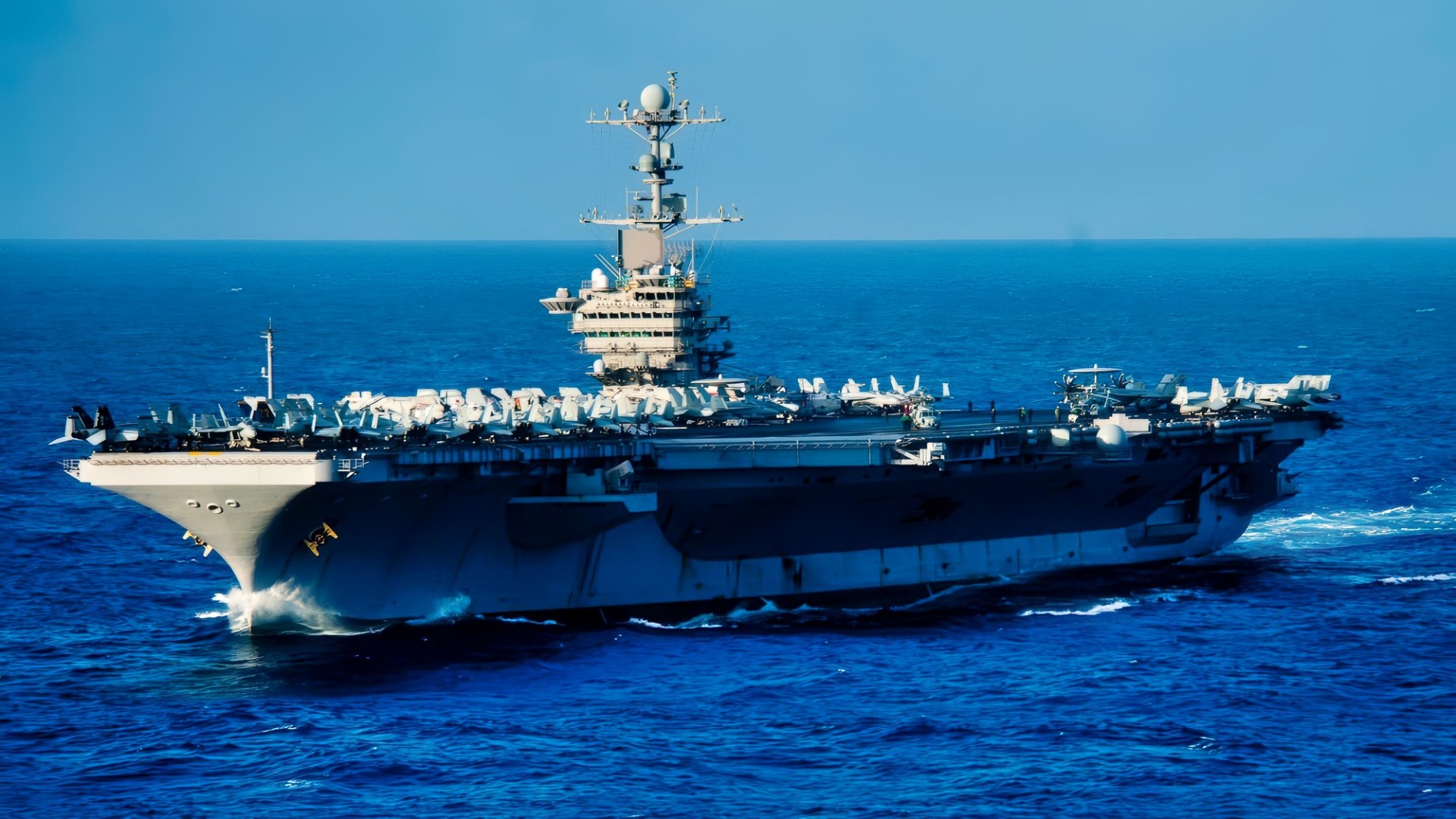
The Pentagon is moving in response to the president’s threats. CBS reports three ships carrying more than 7,000 sailors and 2,000 Marines are headed to the region.
Three carriers could be on station by late October, putting more than 20,000 sailors and Marines, plus hundreds of aircraft, within reach of Iran.
For those keeping score at home, the midterms are November 3.
That’s only a month away.
Is Iran Really Folding?
The economic case for the president’s statement is strong.
Treasury Secretary Scott Bessent announced that “Iran loaded ZERO crude oil onto tankers in September,” and said Tehran will soon have “nothing left to trade for anything.”
TankerTrackers.com found that not one barrel of Iranian crude crossed the US blockade line over a 60-day stretch, per Gulf News.
The rial hit a record 2.5 million to the dollar this week, Fox News reported.
The president’s point about the currency is fair. “Valueless” is only a slight exaggeration.
However, broke is not the same thing as beaten.
Iran is offering to reopen the Strait of Hormuz within seven days, but only in exchange for $12 billion to $24 billion in frozen assets, sanctions relief, an end to the blockade, and a halt to fighting across the region, Al Jazeera noted.
Those are the demands of a regime that’s hurting.
They aren’t the terms of a regime that’s ready to sign anything put in front of it.
And Tehran is still threatening the remainder of the Gulf nations.
Parliament Speaker Mohammad Bagher Ghalibaf warned, “In a region where we do not sell oil, no one will sell oil, and if our security is not ensured, no infrastructure will be safe.”
Saudi Arabia’s East-West Pipeline was hit in September.
That particular attack came from a drone strike that originated via Iran’s proxy militias in Iraq.
The East-West pipeline serves as Saudi Arabia’s primary alternative route to export crude to the Red Sea (Yanbu port) while bypassing the volatile Strait of Hormuz.
That’s not a threat on paper.
Wars Don’t Run On The Political Calendar
Here’s the problem with tying a war’s timeline to an election.
The enemy gets a vote, and he can read a calendar too.
If Tehran believes the heaviest strikes are coming after November 3, it has every reason to dig in, harden what it can, and wait.
If it believes the US wants this over before voters weigh in, it has every reason to stall.
Neither helps the guys on the ships headed to the Gulf right now.
Pressure is building at home, too.
Only 31 percent of Americans supported the conflict in polling cited by Al Jazeera in September.
And Trump had to push back on reports of Pentagon munitions shortages in the TIME interview, Axios noted.
A renewed bombing campaign burns through precision munitions quickly.
Out of stockpiles that were already stretched shortly after this latest conflict with Iran started.
None of that means the president is wrong about Iran’s condition.
The blockade is working.
The regime is running out of money and buyers.
Pressure like that eventually breaks governments.
However, “eventually” is doing a lot of work in that sentence.
The Islamic Republic has survived eight years of war with Iraq, decades of sanctions, and repeated waves of unrest at home.
It has a long history of absorbing pain that would topple most governments.
Iran may well be ready to fold up.
But despite widespread discontent, resistance movements inside Iran are weak, fragmented, and lack shared goals, and even a plan.
They have no arms, and the brutal repression of earlier protests has stifled further moves.
Regimes like this one usually fold last.
About the Author: Steve Balestrieri
Steve Balestrieri is a National Security Columnist. He served as a US Army Special Forces NCO and Warrant Officer. In addition to writing on defense, he covers the NFL for PatsFans.com and is a member of the Pro Football Writers of America (PFWA). His work was regularly featured in many military publications


