
Hegseth Shifts Blame Over Missile Shortage to Second-In-Command – The United States’ apparent long-range missile shortage is no longer a secret, and reports this week have revealed how President Donald Trump clashed with Defense Secretary Pete Hegseth over the matter during a meeting at Camp David last week. The president reportedly lashed out at the defense secretary and other administration officials after learning that U.S. stockpiles of several key long-range missiles and air-defense interceptors had fallen to levels lower than initially believed.
According to a Washington Post report published on Thursday, August 6, Trump demanded an explanation after concluding he had not been fully informed about the extent of the shortages, which have emerged following years of support for Ukraine, months of operations against Houthi forces in Yemen, and weeks of strikes against Iran.

A U.S. Air Force B-1B Lancer assigned to the 345th Expeditionary Bomb Squadron is photographed after landing at Dyess Air Force Base, Texas, Aug. 22, 2025. Three bombers deployed for Bomber Task Force Europe with a total force integration team composed of roughly 30% active-duty and 70% reserve Airmen from the 7th Bomb Wing and 489th Bomb Group. (U.S. Air Force photo by Senior Airman Jade M. Caldwell)
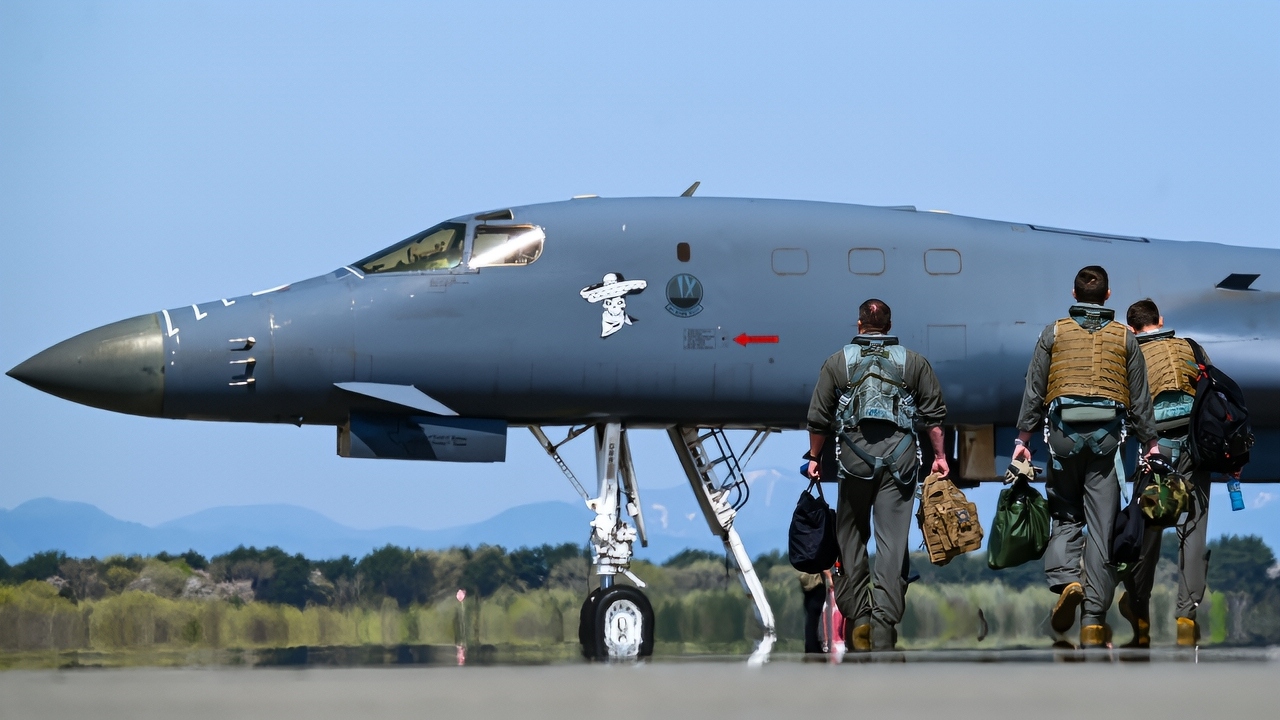
9th Expeditionary Bomb Squadron aircrew step out to the B-1B Lancer during Bomber Task Force 25-2 at Misawa Air Base, Japan, May 9, 2025. BTF 25-2 demonstrates Allied strength by forging strong alliances, showcasing our resolve, and deterring aggression, while also supporting global stability and security and strengthening military capabilities. (U.S. Air Force photo by Airman 1st Class Mattison Cole)
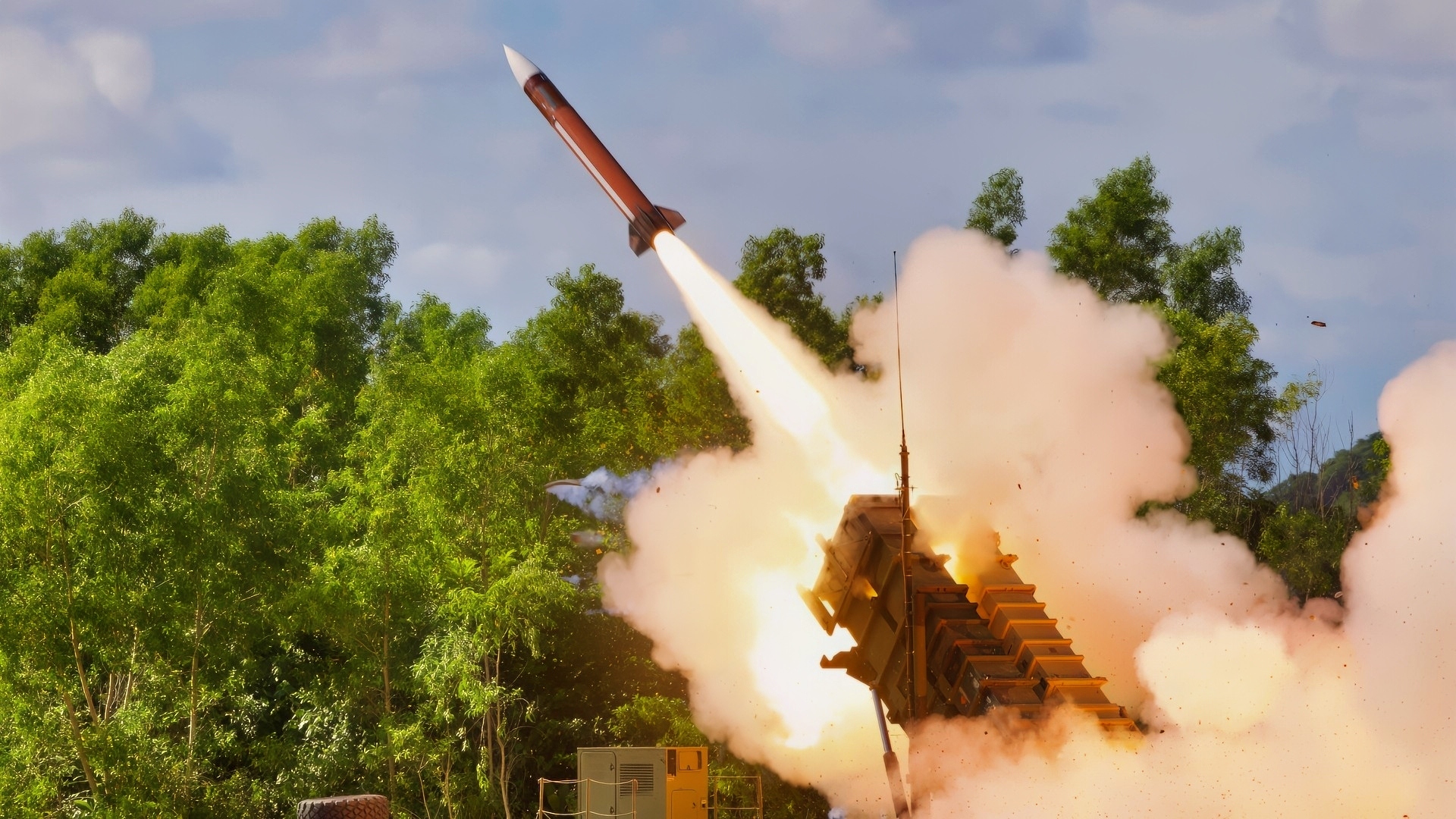
It follows several days of reporting on the mounting pressure on U.S. inventories of precision-guided munitions, including ATACMS, Patriot interceptors, THAAD interceptors, and Tomahawk cruise missiles.
And while the White House and Pentagon have disputed aspects of those reports, with the president insisting that the U.S. has more missiles than it needs, it also comes amid struggling negotiations with Tehran that ultimately hinge on the United States’ ability to fight and defend itself.
Trump Confronts Hegseth Over Shortages
Per the Washington Post report, which cited two people familiar with the exchange, President Trump confronted Hegseth during a meeting at Camp David on Friday after discovering that U.S. inventories of critical precision-guided munitions remained significantly lower than he had been led to believe.
The Post claimed that the president was under the impression that the issue had already been addressed, but did not specify whether the president believed that munitions had been rapidly replaced or that supplies had been moved closer to the conflict.
Trump reportedly questioned why he had not been fully informed about the stockpile situation, demanding an explanation for the shortfall beyond the obvious fact that Iran strikes had drained them. He also reportedly questioned why the problem had persisted despite previous discussions about rebuilding U.S. weapons stockpiles. The report seems to suggest that the president was under the impression that the U.S. defense industry was capable of rebuilding supplies of critical interceptors more rapidly than it is at present.
The president’s frustration, according to the unnamed sources, stemmed not just from the shortages themselves but also from the belief that he had not been given an accurate picture of the Pentagon’s readiness.
Hegseth Blames Feinberg
During the Camp David disagreement, Secretary Hegseth reportedly blamed Deputy Defense Secretary Stephen Feinberg for the misunderstanding. Feinberg has played a central role in overseeing the Pentagon’s efforts to rebuild weapons inventories and expand missile production.
Since arriving at the department, Feinberg has been at the center of initiatives to accelerate defense manufacturing and procurement. A former private equity CEO, Feinberg has used what has been described as a “carrot-and-stick” approach with defense companies as he attempts to ramp up production of critical ammunition. Speaking to executives from America’s top defense companies and major suppliers in Washington, D.C., in 2025, Feinberg said that contractors that are willing to change will “prosper and grow.” But those efforts, it seems, are not producing results quickly enough for Trump to fight and win against Iran.
According to The Post, President Trump telephoned Feinberg directly after the Camp David meeting, demanding to know why the White House had not been fully briefed on the extent of the shortages and asking what steps are being taken to replenish inventories.
Sources familiar with the call said the president also indicated that Feinberg’s job was in jeopardy if the problem is not addressed. quickly
Feinberg allegedly responded to the call by convening a “crisis meeting” later that evening, bringing together senior officials from the Pentagon, military leaders, and defense acquisition specialists to consider options for rapidly accelerating the production of precision-guided missiles.
The meeting reportedly focused on addressing issues that make procurement such a lengthy process, rather than simply securing additional funding.
Beyond serving as the department’s second-in-command, Feinberg has also become one of the main figures overseeing defense and industrial policy in the Trump White House.
The Missile Shortage
The U.S. missile shortfall comes at the worst possible time, with Washington hoping that Tehran will return to the negotiating table with less maximalist demands than before. Given the recent developments, that now seems unlikely, with the Islamic regime now well aware that the U.S. has limited options left.
Before 2022, analyses by the Center for Strategic and International Studies estimated the United States possessed roughly 2,330 Patriot interceptors and 452 THAAD interceptors. Recent CSIS estimates suggest those inventories have fallen to approximately 759-827 Patriot missiles and 234-278 THAAD interceptors after years of transfers to Ukraine and sustained operations in the Middle East. Recent reports also claimed that ATACMS inventories are now virtually exhausted, while Tomahawk cruise missile stocks have fallen to roughly half of planned levels.
About the Author: Jack Buckby
Jack Buckby is a British researcher and analyst specializing in defense and national security, based in New York. His work focuses on military capability, procurement, and strategic competition, producing and editing analysis for policy and defense audiences. He brings extensive editorial experience, with a career output spanning over 1,000 articles at 19FortyFive and National Security Journal, and has previously authored books and papers on extremism and deradicalization.


