


Every few weeks someone rediscovers the arithmetic and pronounces it insane: a Patriot interceptor costing roughly $4 million, fired at a Shahed drone that Iran builds for something between twenty and fifty thousand.
Analysts at Bruegel estimate that Gulf states have already expended hundreds of Patriot interceptors against Iranian drones during this war.
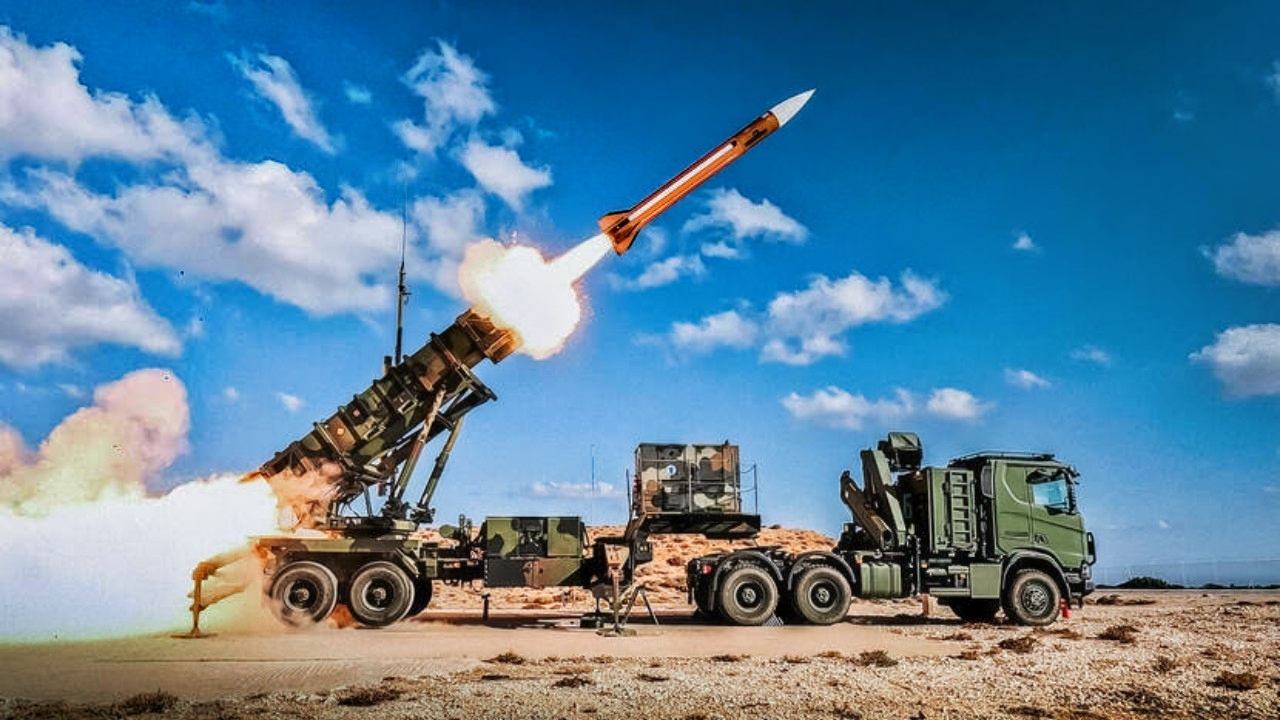
Patriot Missile Launch. Image Credit: Creative Commons.
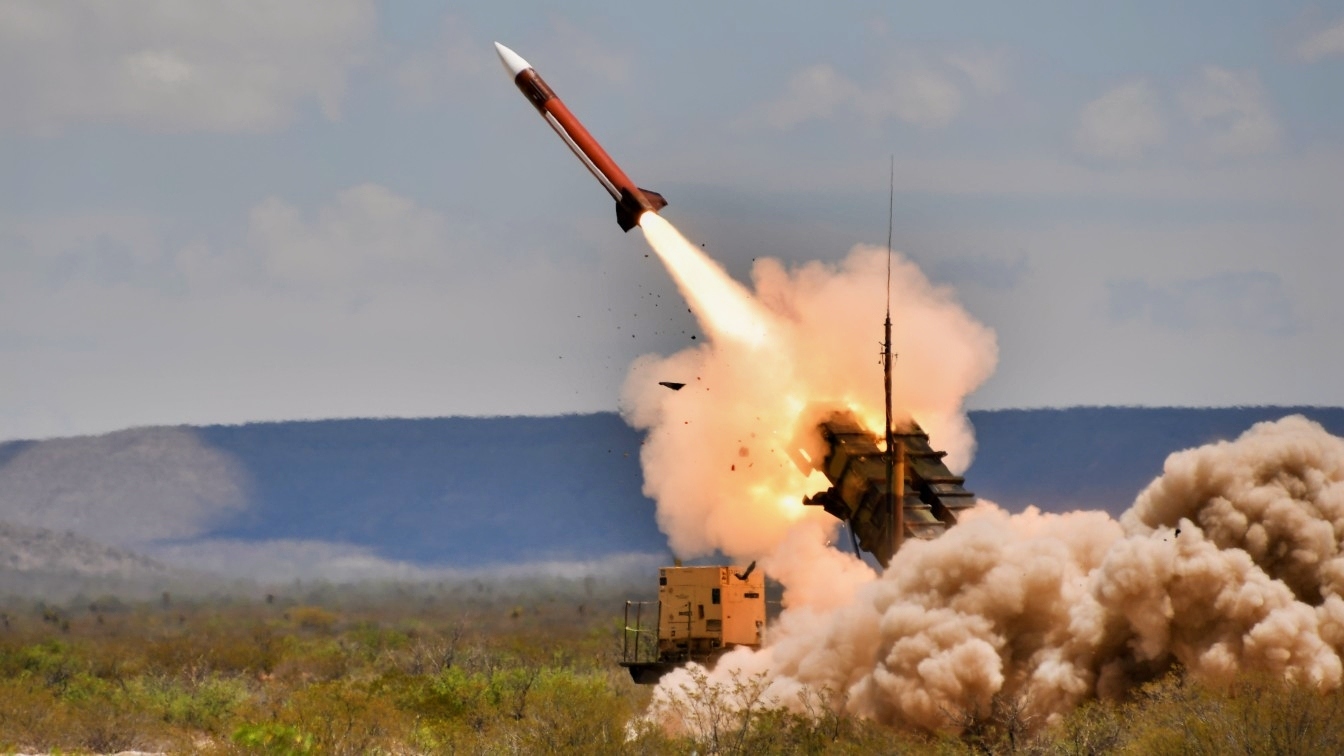
A MIM-104 Patriot Surface-to-Air Missile System assigned to the Fort Bliss, Texas-based 11th Air Defense Artillery Brigade fires as part of a bi-lateral live-fire exercise with military members from the Royal Netherlands Ground-based Air Defense Command at McGregor Range, N.M., May 11, 2024. The Patriot Missile System is a highly mobile air defense guided missile system designed to engage and intercept any aerial threats whether it be aircraft or tactical ballistic missiles under any weather conditions and in natural or induced environments. The command showcased its capabilities firing interceptors at simulated drone targets during the training event working with Dutch Allies.
(U.S. Army photo by Sgt. David Rincon)
The obvious inference is that the shot is the problem, and that a cheaper shot would fix it.
That inference is wrong. The cost problem in air defense is less about the price of the shot than the absence of alternatives to it.
A commander watching a drone close on his position too often has one weapon that will reliably kill it in the seconds available, and that weapon happens to be scarce and expensive.
What he lacks is a ladder of cheaper options beneath it. Lasers add a rung. They do not build the ladder.
The Single Shot Is Usually Defensible
Start with the engagement everyone finds embarrassing.
The comparison that produces the outrage — the price of the drone against the price of the interceptor — leaves out nearly everything the commander actually has to weigh.
He does not know the drone costs $50,000.
He knows something is inbound. He does not know what it is carrying, whether it is alone or the leading edge of a salvo, or whether it is aimed at an empty stretch of runway or at the radar the rest of his defense depends on.
Iran has been striking exactly those sensors, including the AN/FPS-132 early-warning radar at Al Udeid in Qatar and the AN/TPY-2 that feeds THAAD at Muwaffaq Salti in Jordan.
Killing the sensor is worth far more than killing the shooter.
Spending $4 million to protect a radar the theater cannot replace is a decision made with a few seconds of information, and it is cheap against the loss.
The counterfactual that haunts air-defense crews is not the wasted missile. On the second day of the war, a single Iranian drone reached a lightly protected operations center at Port Shuaiba in Kuwait and killed six American soldiers.
But the Sequence Is Where It Falls Apart
Each shot can be a good bet, and the sequence of bets can still be a losing campaign. That is the distinction the drone-versus-missile arithmetic obscures, and it is the whole argument.
The attacker does not need every drone to arrive.
Cheap drones force radars to radiate and reveal themselves, hold crews at readiness for days, and crowd tracking systems while opening lanes for the ballistic missiles that follow.
A Shahed destroyed by a Patriot has still done part of its job: it converted a cheap, quickly manufactured offensive round into the permanent disappearance of a scarce defensive one.
This is attrition in the service of penetration. Iran spends drones to make the defense spend interceptors, strike the sensors, and burden the command systems, and then sends the weapon it actually wants to land.
The bill is visible in the budget documents. The Telegraph reported this month that officials believe American THAAD inventories are inadequate to sustain the air campaign safely, and that the White House may not fully grasp how far the stocks have fallen.
Defense Secretary Pete Hegseth and General Dan Caine have both said publicly that munitions are sufficient for the task at hand, and both statements may be true of the immediate mission while the longer position remains uncomfortable.
The FY2027 request asks for 857 THAAD interceptors against 55 in FY2026.
What that number cannot do is arrive quickly. CSIS puts realistic surge production closer to 96 a year, which means the request describes an ambition measured in years while the salvos are measured in weeks.
What’s Actually Missing
A defense that works over months rather than days needs several credible ways to kill the same target, so the expensive missile becomes a choice rather than the only option.
Jamming and spoofing at the bottom, then guns and cheap interceptor drones, then short-range kinetics, with the scarce high-end rounds held back for what nothing else can touch.
Some of this is already happening, and faster than the Pentagon’s usual reputation would suggest.
Army Secretary Dan Driscoll told Congress in April that within roughly eight days of the war starting, the service bought 13,000 Merops interceptor drones at about $15,000 apiece, a system Ukraine had already proven against Russian Shaheds over eighteen months.
Lasers belong on this ladder for what they genuinely offer: a marginal cost per shot measured in dollars of electricity, and a magazine limited by power and cooling rather than by what is in the ready racks.
The Pentagon’s Joint Laser Weapon System, announced July 9, is a serious bet on that logic, with $86 million in initial agreements against a program ceiling of $847 million.
Israel’s experience shows both the promise and the limit.
Rafael delivered the first operational Iron Beam system to the IDF in December, and Israeli forces have since used it against drones and rockets from Lebanon, though lower-powered Israeli lasers had recorded intercepts before that.
What Israeli officers say about scale matters more than the intercept footage: one battery is nowhere close to sufficient, and the IDF reportedly wants around fourteen for meaningful coverage.
A laser’s usefulness depends on range, weather, how long it must hold the beam on target, and whether enough systems are deployed to cover the ground that needs covering.
Our own record is harder. GAO found the Army’s Stryker-mounted 50-kilowatt DE M-SHORAD not mature enough to transition as planned, pushing expected production to fiscal 2027.
Lasers lower the cost of the engagements they suit. They cannot replace kinetic defenses when conditions put those engagements out of reach.
Buy What Preserves the Magazine
The procurement instinct to find one winning technology is the wrong instinct here.
What the services need is an integrated sensing and fire-control layer that classifies each inbound target and hands it to the cheapest effector capable of killing it, and then they need to judge new systems by how many high-end rounds those systems leave in the magazine.
A cheap interceptor earns its place not because its unit price looks good in a press release, but because it reduces how often the Patriot is the only shot available.
That is not the metric acquisition programs are currently built to report.
Commanders should keep their discretion, and this matters more than it might appear.
A standing rule against firing expensive missiles at cheap drones would substitute one bad arithmetic for another, and it would do so at exactly the moment when what is being defended determines the right answer.
Building the low end is worth doing precisely because it lets a commander decline the expensive shot when he can afford to, and take it when he cannot.
None of that changes how long a factory takes.
The binding constraint on American air defense is not the skill of the crews or the sophistication of the radars but production time measured against an adversary’s willingness to keep launching.
The low end can be bought fast, as Merops showed; the interceptors that stop what the low end cannot are years out.
Five months in, the United States is defending the Gulf with the magazine it had in February, and it will be defending it with stocks it cannot replace before the end of the decade.
About the Author: Dr. Andrew Latham
Andrew Latham is a professor of international relations and political theory at Macalester College in Saint Paul, MN. You can follow him on X: @aakatham.


high-end faight
July 23, 2026 at 10:53 pm
THAAD, along with trump’s golden dome, and US space force’s newest military spacecraft, the Northrop grumman MRV, spell death (or surrender) for America’s geopolitical rivals. In the immediate comin’ years. (please remember this.)
Actually, it’s death. Outright death. Definite death.
THAAD, along with USN’s AEGIS, AEGIS ashore, and Guam’s EIAMD, will ensure no enemy missiles can cross the pacific. To harm US.
Donaldo trump is now trying to acquire Greenland. For what. For turning it into the Guam of the Atlantic. No enemy missiles therefore can cross the northern Atlantic to harm US.
Thus, it’s death for America’s rivals. Definite death.
To trump trump’s golden dome, THAAD, AEGIS, and pac-3 and various other American bmd systems, America’s rivals must now develop and deploy space-based nukes, FOBS capabilities and spacebombers. Amen.