

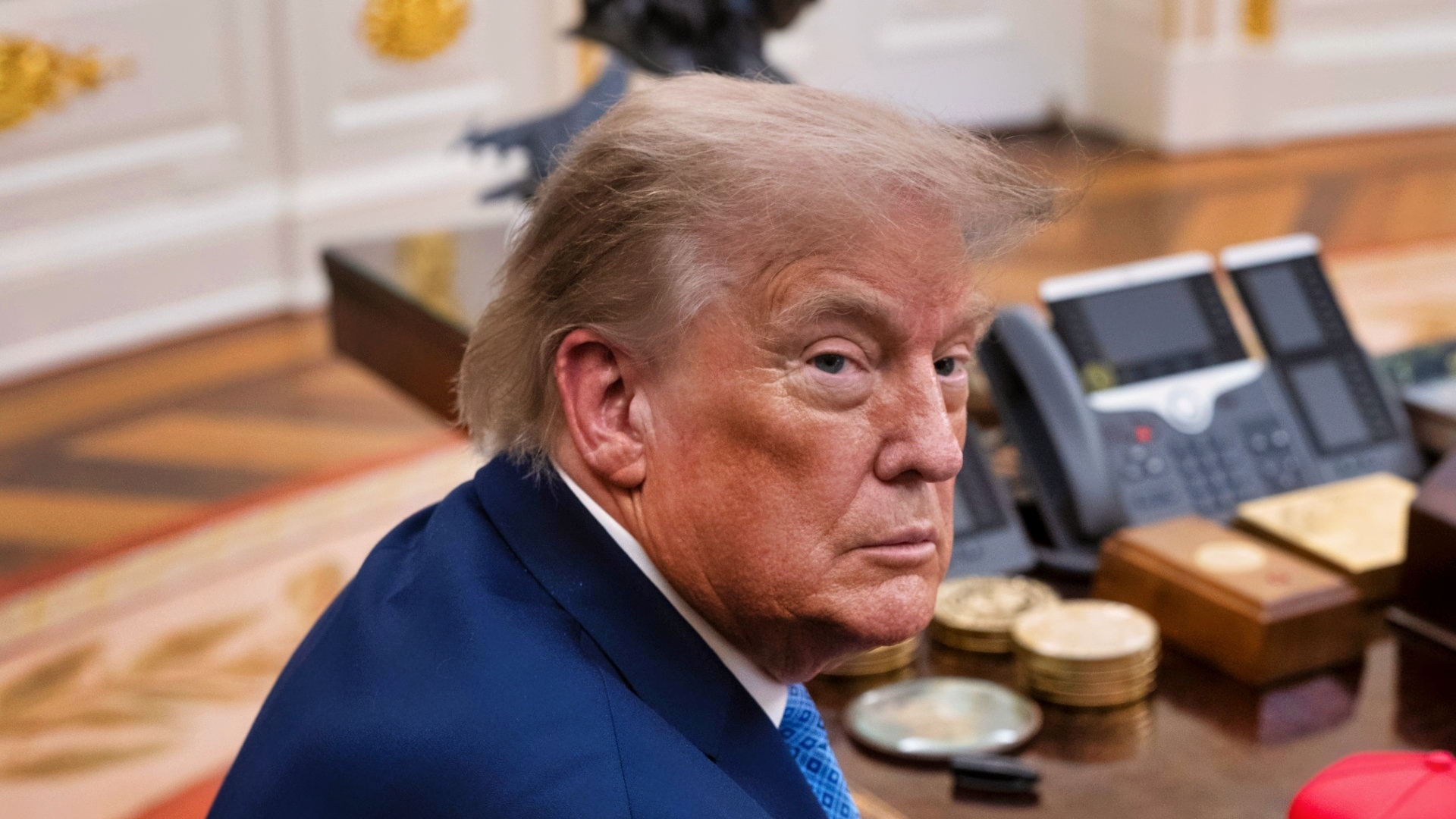
Trump Should Target Iranian Leaders, Not Just Their Military Facilities: President Donald Trump ordered renewed attacks on Iran after the Islamic Revolutionary Guard Corps allegedly attacked three ships in the Strait of Hormuz. “The era of bullying and extortion is over,” Iran’s Parliament Speaker Mohammad Bagher Ghalibaf, Iran’s chief negotiator with the United States, tweeted. “It leads nowhere. We don’t fold.” Trump, for his part, declared the interim agreement over. “To me, I think it’s over. I don’t want to deal with them,” Trump said.
The Iran War: What We Know Right Now
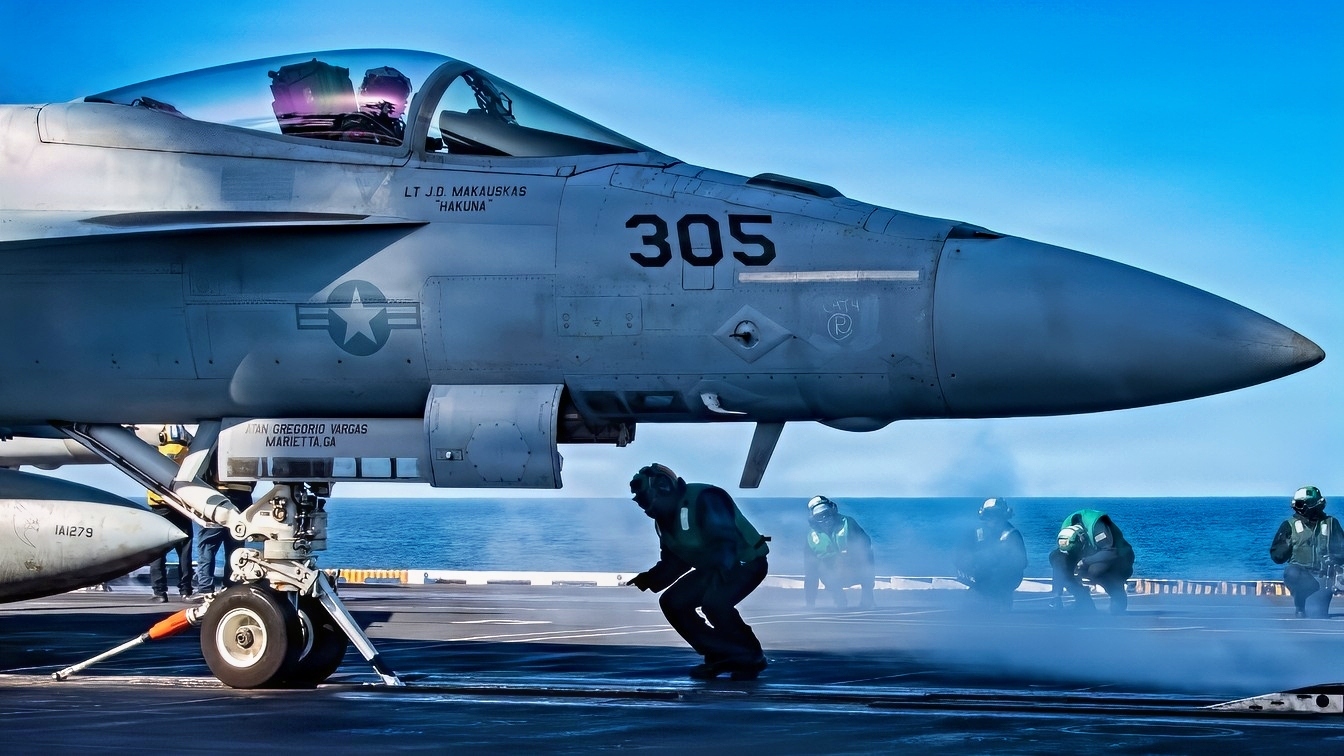
An F/A-18E Super Hornet, attached to the “Kestrels” of Strike Fighter Squadron (VFA) 137, prepares to launch from the flight deck of the Nimitz-class aircraft carrier USS Nimitz (CVN 68) in the Pacific Ocean, April 22, 2026. Nimitz is deployed as part of Southern Seas 2026 which seeks to enhance capability, improve interoperability, and strengthen maritime partnerships with countries throughout the region through joint, multinational and interagency exchanges and cooperation.
The U.S. strikes hit both Iranian small boats used to harass ships and air defense systems, which Iran seeks to reconstitute.
Both are valid military targets, but if Trump seeks victory in the war and then also to win the peace, he should target Iranian leaders.
Currently, the U.S. team led by Vice President J.D. Vance is speaking with Ghalibaf. While Ghalibaf is a regime insider, he is not its most powerful leader. On one level, the choice of Ghalibaf as an interlocutor made sense. His connections run deep. He was once the head of the Islamic Revolutionary Guard Corps’ Aerospace Force, the regime’s chief policeman and, more recently, the speaker of its parliament. He was also a four-time presidential candidate. In addition, while he abides by the regime’s ideology, Ghalibaf’s reputation among Iranians suggests his love of money exceeds his love of God.
On another level, however, working with Ghalibaf was always a mistake. He was never a leader of men. While Iranian elections are tightly controlled, there is a reason why Ghalibaf always crashed out. Other Iranian leaders treat him with cynicism. At Supreme Leader Ali Khamenei’s funeral, Foreign Minister Abbas Araghchi gave Ghalibaf the side-eye due to his over-the-top antics.
Most importantly, Ghalibaf was never in charge. In real estate terms, Trump was negotiating with the skyscraper’s doorman rather than its owner.
The Iran Succession Situation
The succession to Khamenei reflects the power within the Islamic Republic. In theory, the 88-member Assembly of Experts chooses the next leader based on strict religious criteria.
Mojtaba should never have qualified for three reasons. First, while the CIA may have publicized his alleged homosexuality, those rumors originated in Iran’s own seminary and leadership circles. Second, the Islamic Republic bases its legitimacy on its opposition to hereditary leadership, so to turn around and anoint Khamenei’s son raises questions about how different the Islamic Republic is from the monarchy it overthrew. Most important, however, is Mojtaba’s lack of religious qualifications. He is not an ayatollah, let alone a top-tier marja. Within the clerical hierarchy, he was only a hojjat ul-Islam, akin to a bishop in the Catholic Church. To understand who is in charge, then, it is necessary to identify who shepherded Mojtaba through a bureaucracy that rejected him. This was like Ahmad Vahidi, the former defense minister and Revolutionary Guard ideologue who notably refused to travel to Pakistan to negotiate with the American team.
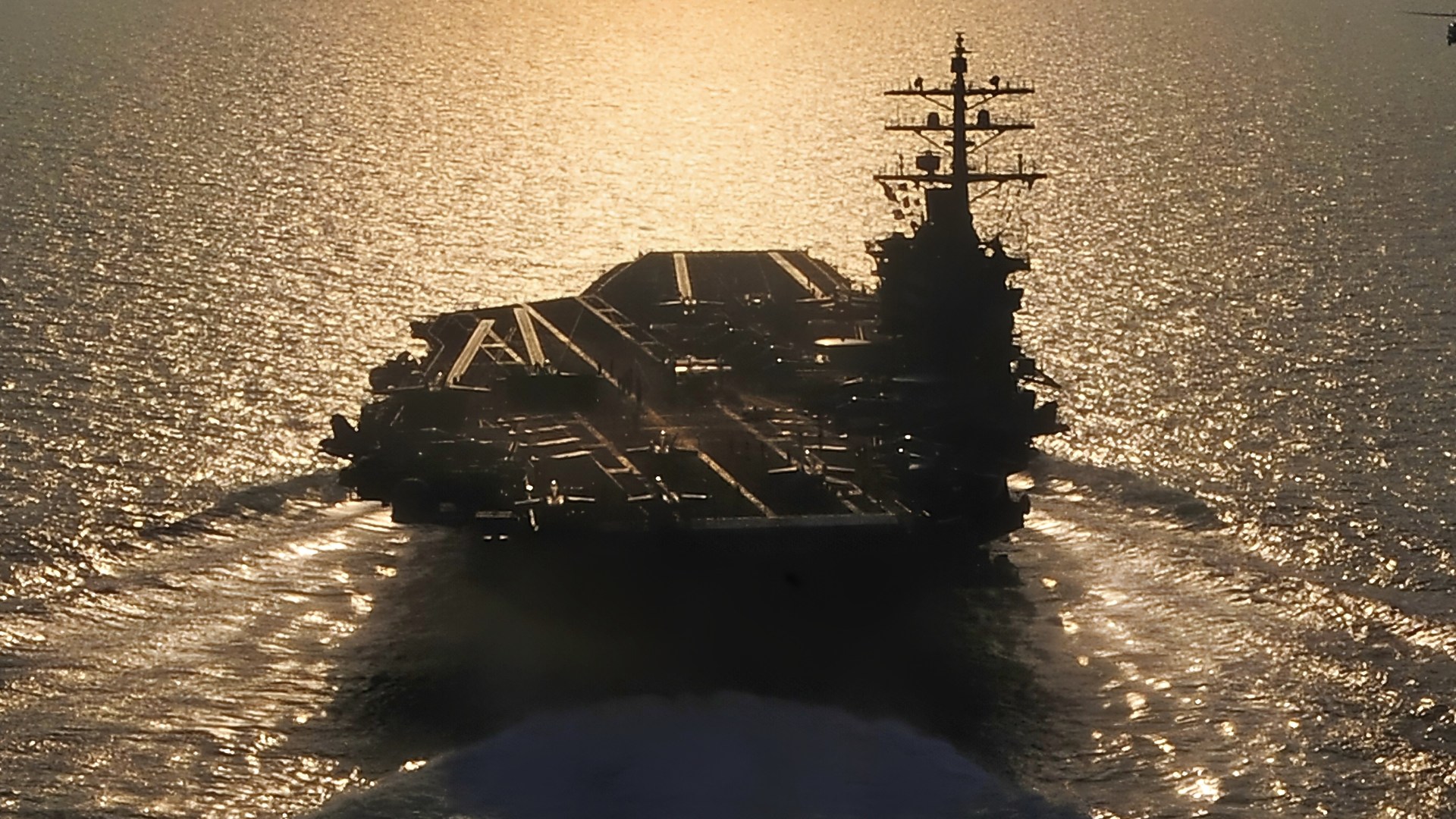
120710-N-RY232-571 MEDITERRANEAN SEA (July 10, 2012) – An SH-60F Seahawk from the Nightdippers of Helicopter Anti-Submarine Squadron (HS) 5 flies alongside Nimitz-class aircraft carrier USS Dwight D. Eisenhower (CVN 69), July 10. Dwight D. Eisenhower is on a regularly scheduled deployment in support of Maritime Security Operations (MSO) and Theater Security Cooperation (TSC) efforts in the U.S. 5th and 6th Fleet areas of responsibility. IKE deployed as part of Eisenhower Carrier Strike Group (CSG), which includes CSG 8, IKE, guided-missile cruiser USS Hue City (CG 66), guided-missile destroyer USS Farragut (DDG 99), guided-missile destroyer USS Winston S. Churchill (DDG 81), USS Jason Dunham (DDG 109), the seven squadrons of Carrier Air Wing (CVW) 7, and Destroyer Squadron 28. (U.S. Navy photo by Mass Communication Specialist 2nd Class Julia A. Casper/Released)
Other factional leaders more important than Ghalibaf include Expediency Council member Saeed Jalali, Supreme National Security Council Secretary Mohammad Bagher Zolghadr, and Judiciary Chief Mohammad Eje’i. Islamic Revolutionary Guards Corps Deputy Commander Ali Fadavi, the former chief of the Revolutionary Guards’ Navy, is also important.
The Strategy Choice
If Trump wants to force the regime to surrender on issues related to the Freedom of Navigation, he must choose one of two strategies.
He must either negotiate with those already in charge or ensure that those with whom he negotiates marginalize their internal opponents.
If the former, he should dispense with Ghalibaf and perhaps even eliminate him as a lesson to other Iranian leaders who would agree to things over which they have no authority or break agreements when they do.
For Ghalibaf to tweet at Trump suggests Ghalibaf is far more interested in ingratiating himself with Vahidi than bringing peace and stability to the region. He should then go down a list of Iranians ranked by their power, making each one an offer they cannot refuse, Godfather-style. Should Vahidi reject the offer to negotiate a peace on America’s terms, then Trump should make him the number-one target. If Zolghadr next rejects freedom of navigation, then he, too, should become a target to eliminate.
Trump might offer each target another option: They can leave Iran permanently and, after a CIA and Mossad debriefing, put their fates in the hands of their new hosts in Iraq, Yemen, or Russia. Former Syrian President Bashar al-Assad, after all, is lonely.
If Trump, meanwhile, wants to double down on Ghalibaf, he should do something similar: Ghalibaf’s defiance reflects his own fear of internal rivals. For Ghalibaf to succeed, then, requires systematically targeting every factional opponent he faces. He may never be popular, but Iranians can be pragmatic and realize their lives depend on silence and inaction.
If anyone gives an order to attack a ship in the Strait of Hormuz, Trump’s envoy Steve Witkoff should make a simple demand of Ghalibaf: “Kill the person who defied you or give us his name to do the deed.”
Such personalized warfare might seem crude, but any alternative plays ignore the real power dynamics at play within Iran and allow regime officials to use the same good cop-bad cop approach that led the Islamic Republic to the brink of becoming a nuclear power despite decades of inspections and sanctions.
Frankly, it is also more humane as innocent conscripts or lower-ranking Guardsmen should not die for the ambition and corruption of their leaders.
About the Author: Dr. Michael Rubin
Michael Rubin is director of policy analysis at the Middle East Forum and a distinguished fellow at India’s Usanas Foundation. A former Pentagon official, Dr. Rubin was a senior fellow at the American Enterprise Institute for more than two decades. He has lived in post-revolution Iran, Yemen, and both pre- and postwar Iraq. The above opinion article represents the author’s own personal views.


