

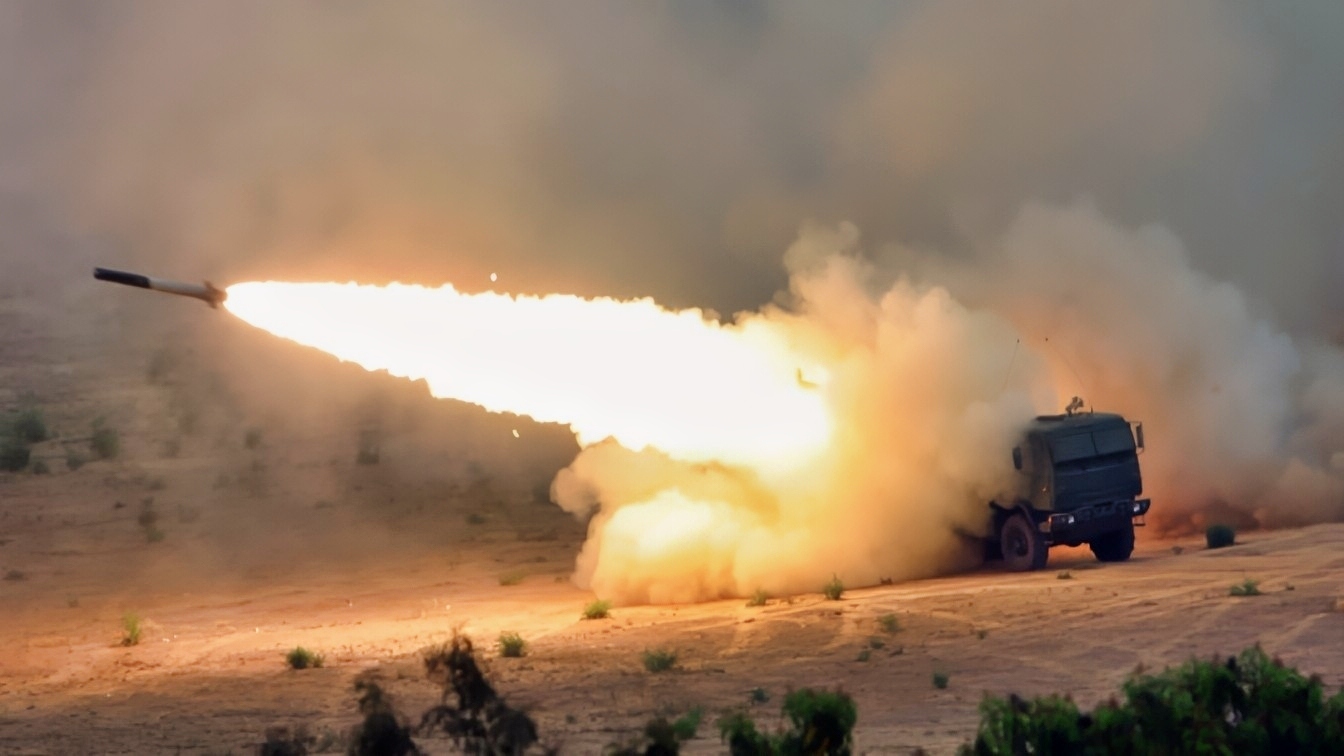
Russia has issued a furious threat after British-made drones were used by Ukraine to strike targets hundreds of miles into Russian territory.
Russia: UK is ‘Accomplice’ in Ukraine’s Attacks
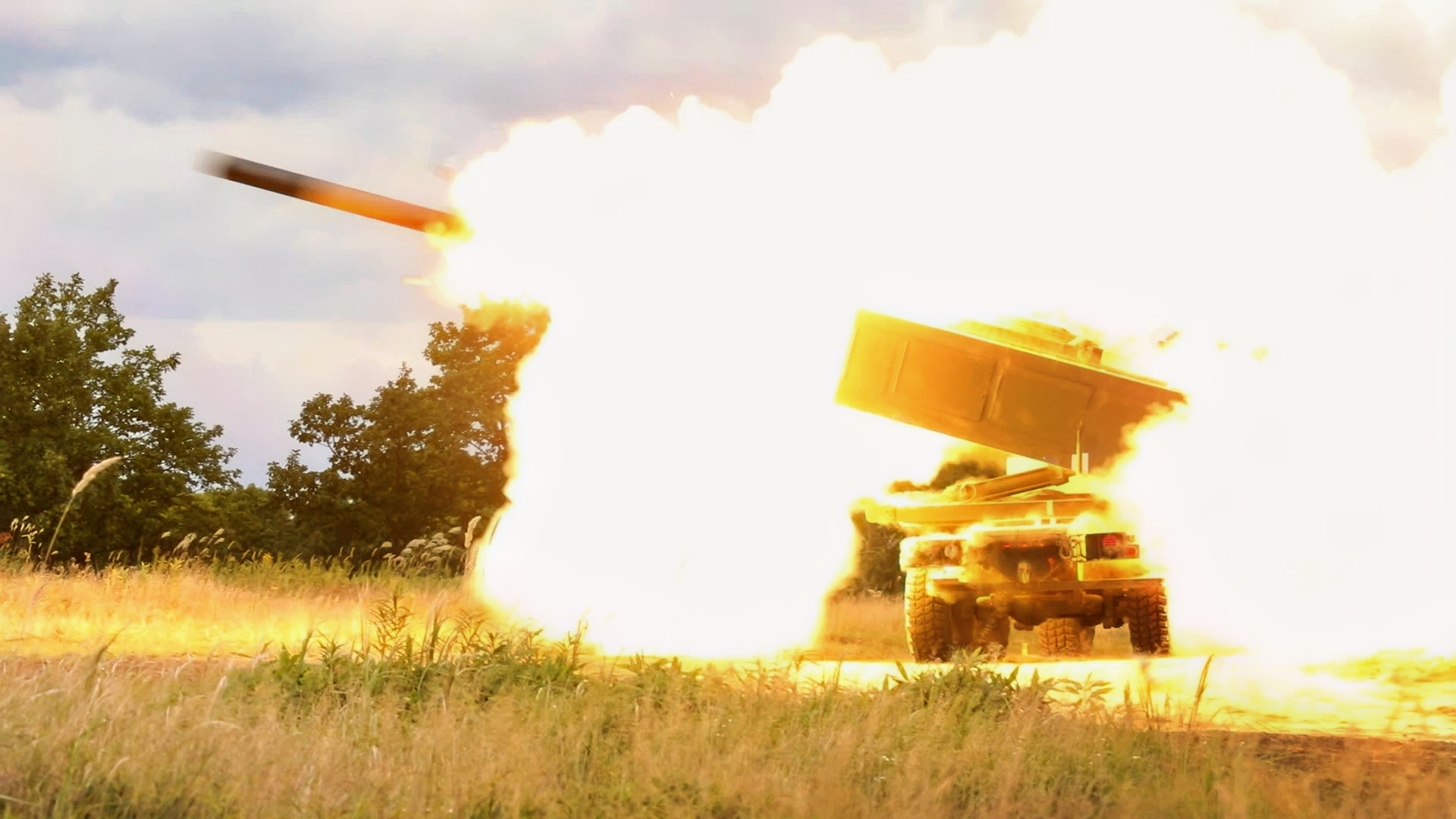
A High Mobility Artillery Rocket System (HIMARS) with the 1st Battalion, 181st Field Artillery Regiment fires toward a designated target at Yausubetsu Training Area, Hokkaido, Japan on Sept. 20, 2023. U.S. Army soldiers and Japan Ground Self-Defense Force (JGSDF) members participated in showcasing their artillery prowess in front of VIPs and dignitaries. (Photo by U.S. Army National Guard Staff Sgt. Ryan S. Gay)
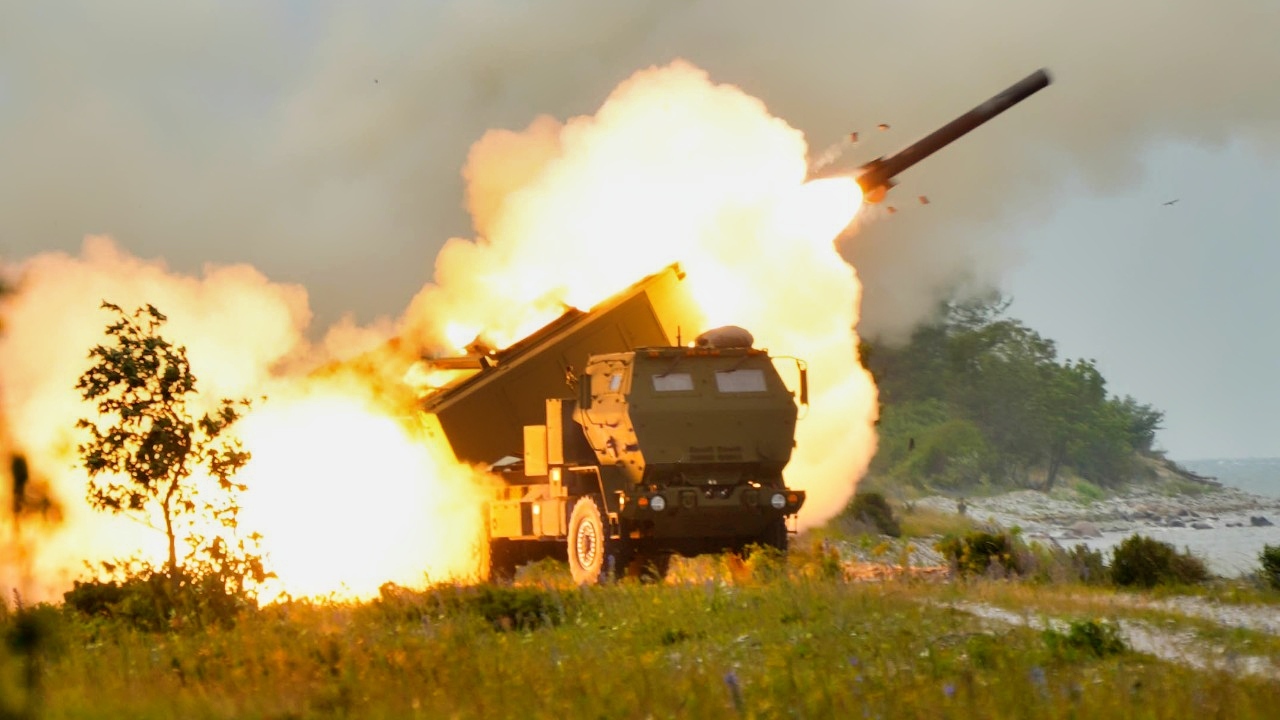
An Estonian Defense Forces M142 High Mobility Artillery Rocket System (HIMARS) fires a training rocket during a live-fire exercise in Undva, Estonia, July 11, 2025. U.S. Army elements from Bravo Battery, 1st Battalion, 14th Field Artillery Regiment, 75th Field Artillery Brigade, supporting Task Force Voit, assisted in the training process. The task force was originally formed in 2023 to support the Estonian Defense Forces in the creation of a HIMARS unit. Task Force Voit works closely with the Estonian Armed Forces, sharing critical defense strategies, training, and military readiness support. The presence of U.S. troops in the region serves as a cornerstone of NATO’s commitment to security in the Baltic region. The task force provides combat-credible forces to V Corps, America’s only forward-deployed corps in Europe. (U.S. Army photo by Staff Sgt. Rose Di Trolio)
The Russian embassy in London said on Monday that the United Kingdom was risking paying a “higher price” if it continued aiding such attacks on Russian soil.
It did not specify what form a Russian retaliation against the UK might take.
The statement was issued in the wake of reports that drones manufactured by a pair of British firms have been used in attacks on industrial and military targets this year.
The embassy said London had deliberately escalated the conflict. It also accused Britain of becoming an “accomplice and accessory” to Kyiv’s attacks.
Weapons supplied by British companies have crossed the Russian border on numerous occasions since Moscow’s full-scale invasion of its southern neighbor.
UK-supplied Storm Shadow cruise missiles have been used routinely against targets there. The only difference now is that it has been confirmed that these British-built drones are being used on Russian soil.
UK Drones Strike in Central Russia
Over the weekend, The Sunday Times revealed that drones built by two UK manufacturers had been launched by Ukraine far into the Russian mainland.
Ukrainian military sources told the outlet that oil refineries in Volgograd and Yaroslavl had been targeted by the UK-made drones.
The Nyan system, a jet-powered attack drone created by Callen-Lenz, a subsidiary of BAE Systems, was among the weapons used.
The carbon-fiber drone possesses a wingspan of 2.9 meters and can fly for over 150 miles (over 240 kilometers).
A senior British defense source also told the paper that: “Russia has been very effective at keeping the West nervous about hitting it too hard.
These attacks mean the UK is effectively signaling to Russia and our allies that we’re not [nervous] any more.”
The Sunday Times also said that a second type of UK-made drone capable of 600-mile travel was in use in Ukrainian attacks deep inside Russia, but that it would not be identified due to security protocols.
Drones differ from the Storm Shadow missiles in both cost and quantity.
The missiles are much more expensive, costing around £750,000 per missile, and take longer to replace.
Long-range drones can be built in weeks or months from much cheaper materials.
Attacks Cost Russian Economy £35 Billion
Ukraine now claims that its method of targeting critical Russian energy and infrastructure sites had resulted in a £35 billion hit to the latter’s economy. 19FortyFive cannot verify this figure.
These revelations about Britain’s involvement come as Ukraine raises the tempo of such attacks.
On Sunday, it launched a major aerial attack. Russia said more than 800 drones had been destroyed in its territory.
A Wildberries distribution facility belonging to Wildberries, Russia’s largest online retailer, was also hit close to Moscow.
Kyiv has accused the site of aiding Russia’s invasion of Ukraine by supplying sanctioned components that can be used in drones.
Ukraine’s Defense Ministry said Sunday that seven of the company’s 10 largest logistics hubs had now been put out of operation.
Oil infrastructure has also been extensively targeted, with a flurry of major sites including TANECO, Orsk and Salavat sustaining damage in the last week alone.
Ukraine and Britain Ramp Up Ties
Over in London, drone cooperation with Kyiv seems to be increasing rather than abating amid the tensions.
According to the British Ministry of Defense, Britain is set to provide 150,000 Ukrainian-produced drones by the end of the year. This is part of a £752 million package that also includes 350 air-defense missiles.
A 100 Year Partnership Declaration * in January 2025. The deal commits Britain and Ukraine to closer defense-industrial cooperation, including work on long-range strike capabilities, joint production, and drone technology.
The ‘Gray Zone’
While Moscow has not specified exactly what course of action it could be considering, it is already involved in extensive “gray zone” warfare against NATO members including London.
“Hostile states have recognized that cyberattacks, influence operations and economic disruption can achieve strategic objectives without crossing the threshold into open conflict,” Craig Watt, senior threat intelligence specialist at Quorum Cyber, recently told the UK radio station LBC.
He said cyber operations, spying and sabotage by states such as Russia, Iran and China now ranked “among the most serious security threats facing the UK today” because they target “the foundations of our national resilience, economic stability and public trust”.
“A well-executed cyberattack or espionage operation can deliver strategic impact that once required military force.”
About the author: Georgia Gilholy
Georgia Gilholy is a journalist based in the United Kingdom who has been published in Newsweek, The Times of Israel, and the Spectator. Gilholy writes about international politics, culture, and education.


