


According to US Central Command, Iran’s Islamic Revolutionary Guard Corps (IRGC) initiated a wave of ballistic missile strikes from Iraq on Tuesday night. US regional defenses intercepted many of the attacks, with CENTCOM describing the IRGC missile attacks as an “attempted surprise attack.”
CENTCOM did not issue any further details.
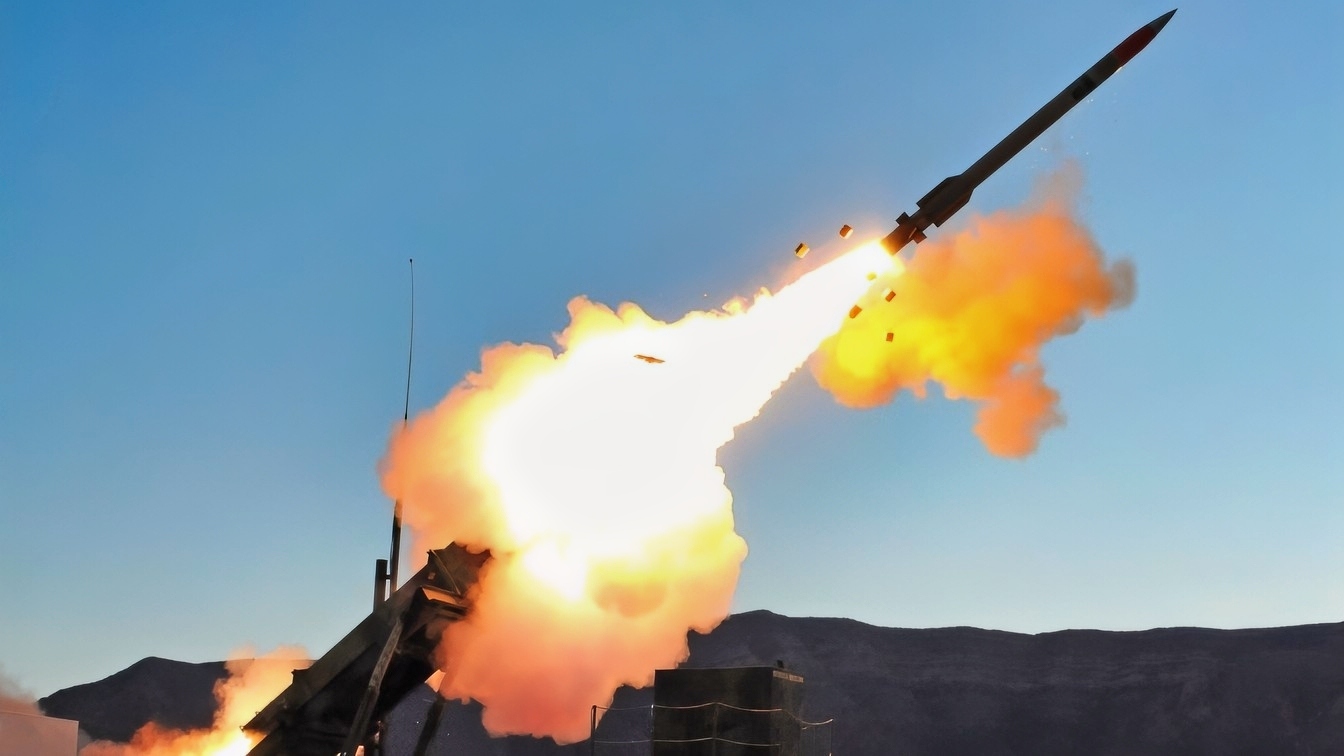
The Army test fires a Patriot missile in a recent test. The Patriot missile system is a ground-based, mobile missile defense interceptor deployed by the United States to detect, track and engage unmanned aerial vehicles, cruise missiles, and short-range and tactical ballistic missiles. Patriot, along with other missile defense systems, are included in the Army Air and Missile Defense 2028, which provides the Army’s overarching vision for the AMD force, describes how the AMD force is postured to support the Army and joint forces, and articulates what must be accomplished to achieve the 2028 desired end state of preventing and defeating adversary air and missile attacks through a combination of deterrence, active and passive defense, and support to attack operations. (U.S. Army photo)
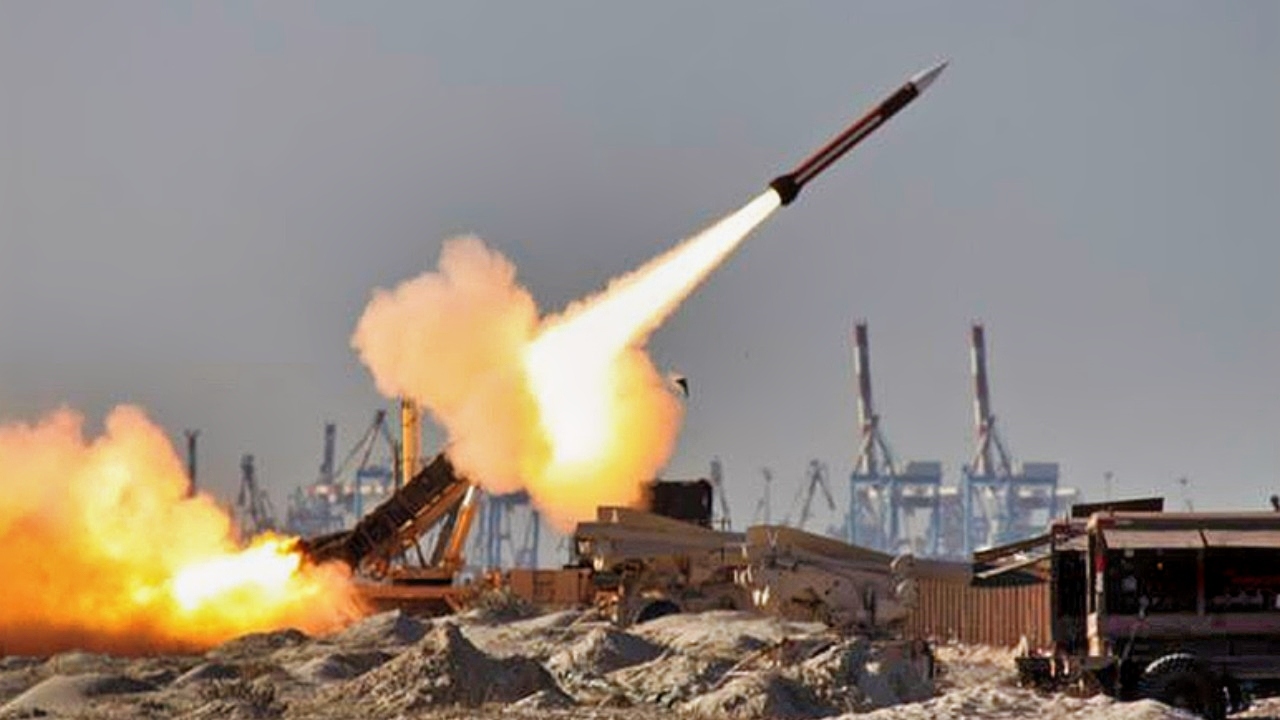
Patriot Missile Interceptor Test. Image Credit: Creative Commons.
The recent missile attacks are part of a broader confrontation between the United States and the Islamic Republic of Iran, which has expanded beyond direct military exchanges to now include attacks by Iranian-backed militias across the Middle East. Everything from shipping to energy flows has been disrupted because of the ever-expanding war.
The Saudis Intervene
These attacks from IRGC elements in Iraq came on the heels of a joint-US-Saudi military operation that struck at those “Iran-aligned terrorists” in Iraq. Not only do these events indicate the way in which the conflict is expanding, but they also highlight how even the Saudis are getting more involved in military operations.
Those strikes occurred in response to a series of drone attacks that targeted Saudi Arabian energy infrastructure in the days before the joint US and Saudi strikes. CENTCOM claims that more than 30 drone attacks were launched against US forces and facilities during that period, too. Both Riyadh and Washington assert that those drone attacks on US and Saudi targets emanated from Iraq.
Neither CENTCOM nor Riyadh elaborated any further on the details of their attacks.
Clearly, Saudi Arabia is increasingly participating in the ongoing Iran War, as both countries seek to counter Iranian-backed groups operating throughout the region. Iran has repeatedly denied directing attacks carried out by regional proxy organizations, although the United States has consistently blamed the Revolutionary Guard for coordinating many of those operations.
What About Missile Defense?
The successful interception of the ballistic missiles highlights the importance of regional air and missile defense systems, especially as Iran’s use of missile and drone tactics-such as those launched from Iraq-continues to challenge regional security and defense strategies.
Tuesday’s interception suggests the US defensive networks remain capable of countering at least limited missile salvos despite months of sustained operations across the region.
The question remains: how long can the US defenses in the region remain operational under increased strain and diminishing arsenals?
Consider this: US defensive stockpiles have been depleting at record levels, causing concern among national security professionals. Both offensive and long-range guided munitions are depleting, as are those critical defensive interceptors. The Pentagon insists that there are plenty of systems available to them and they rightly point to the purported successful interceptions of the last 24 hours.
Yet, US military sources revealed in recent reporting that the US Department of War is increasingly allowing some Iranian drones and missiles to enter its airspace. The implication is that the US defensive stockpiles are strained and the military must therefore conserve its dwindling ammunition.
If Iran really does increase its operational tempo, expect more American and allied targets to be hit, as they cannot stop every Iranian attack — and the Iranians have more than enough systems required to overwhelm those finite defenses.
Trump and Netanyahu Meet at the White House
As military operations in the region continued, in Washington, President Donald Trump hosted Israeli Prime Minister Benjamin Netanyahu at the White House on Tuesday.
That meeting came as questions abounded as to whether the Israelis would intervene alongside the Americans in the renewed round of attacks on Iran. President Trump has previously hinted that he wanted the Israelis to rejoin the fight against Iran. Both sides claimed that the meeting was productive and positive.
Diplomacy Continues
Despite Tuesday’s military activity, diplomatic contacts between the United States, Iran, and regional intermediaries remain ongoing.
So, rather than saying the conflict has returned is— for now— an overstatement, despite its expansion. For now, the conflict remains characterized by periodic military exchanges occurring alongside diplomatic efforts.
Many are now trying to divine whether the current pause in large-scale combat can be sustained or whether another broader escalation lies ahead.
About the Author: Brandon J. Weichert
Brandon J. Weichert is Senior National Security Editor. He also manages The Weichert Brief on Substack. Weichert also hosts “National Security Talk” on Rumble. He is the author of four bestselling national security books, the most recent of which is A Disaster of Our Own Making: How the West Lost Ukraine (Encounter Books). Follow him via Twitter/X @WeTheBrandon.


