


An Iranian Vietnam-era F-5 fighter jet slipped past U.S. Patriot PAC-3 air defense batteries and bombed a U.S. base in Kuwait. The F-5 flew low and at high speed to evade the Patriot’s detection grid. Iran purchased the F-5 fighters during the Shah’s reign before the 1979 Islamic Revolution. More than one F-5 hit Camp Buehring in Kuwait during Operation Epic Fury. 6 of the 7 U.S. servicemen who died in the Iran air raids were killed at this base. The Patriot PAC-3 is the U.S. state-of-the-art air defense system. Iranian forces struck more than 100 targets across 11 bases in 7 countries. Damage included 217 structures and 11 pieces of equipment across 15 U.S. military sites.
How Iran’s Old F-5 Fighters Hit A U.S. Base: The Patriots Did Not Catch Them

F-5E Tiger II Fighter. Image Credit: Creative Commons.
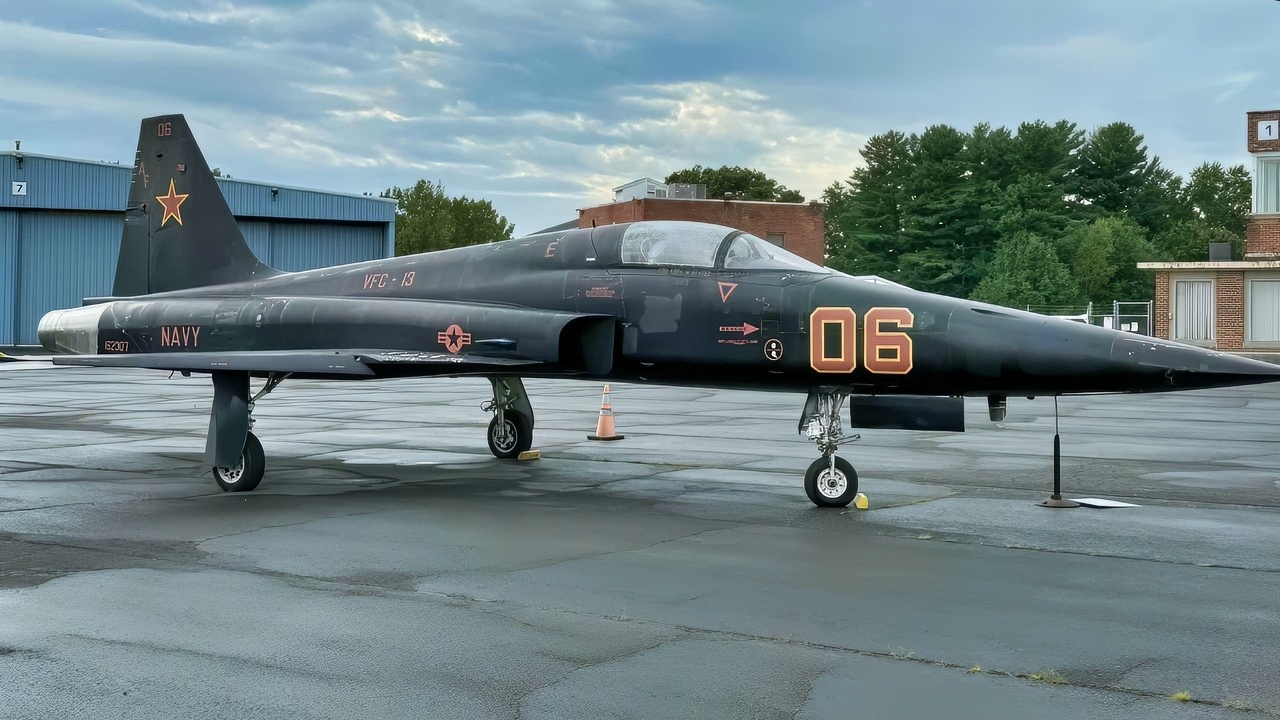
F-5 Fighter Photo by National Security Journal. Image Taken by Jack Buckby on August 24, 2025.
Initial reports of Iran’s armed forces hitting the airbases and other facilities of Washington’s Persian Gulf allies were originally assumed to have been accomplished by Tehran’s considerable arsenal of ballistic missiles, as well as its Shahed-series of drones that have been used in the untold thousands in Russia’s war in Ukraine.
However, it turns out that there were, as difficult as it is to believe, actual Iranian tactical aircraft that hit some of these sites with old-fashioned “iron bomb” air strikes. This is somewhat unexpected, given that most of these aircraft are one or two generations behind the state of the art in fighter design and are not well equipped with modern electronic warfare systems that would protect them against Western air defense systems like the US-made Patriot PAC-3.
Originally, the damage to these facilities was also thought to be minor, but it turned out to be significant. An investigation by the Washington Post of several sets of satellite imagery found that 217 structures and 11 pieces of equipment were damaged or destroyed at 15 US military sites in the region. (CNN reported that 16 different installations had been struck.)
The estimated cost of infrastructure repairs may exceed $5 billion, according to an NBC report. That report cannot be independently verified, and the US Department of War has not issued any statement to confirm or deny it.
The US NBC news network confirmed at the end of April that a completely unexpected successful air strike was carried out by the Iranians during Operation Epic Fury. Somehow, an old Iranian-piloted F-5 warplane managed to avoid being shot down by any of the PAC-3 batteries protecting the site and bombed one of the US bases in Kuwait.
Strike on Kuwaiti Air Base
NBC reported that the aircraft, one of the F-5 fighters purchased during the Shah of Iran’s reign and prior to the 1979 Islamic Revolution, had been flying low and at high speed. This permitted it to slip in under the air base’s air defense umbrella and hit some of the base’s infrastructure.
Reportedly, more than one of the F-5s was able to hit this base, which is where 6 of the 7 US servicemen who have died in these air raids were killed. The Vietnam-era F-5 vs. the state-of-the-art Patriot was never supposed to be much of a matchup, but the antiquated jet still managed to carry out its mission.
What is being asked now is if successful hits by these old aircraft are revealing gaps in the US air defense systems’ low-altitude detection. Another possibility is that Russia’s military has shared the plethora of information it has gained by observing the Patriots’ operation with Iran, giving them the data they need to skirt the air defense systems’ detection grid.
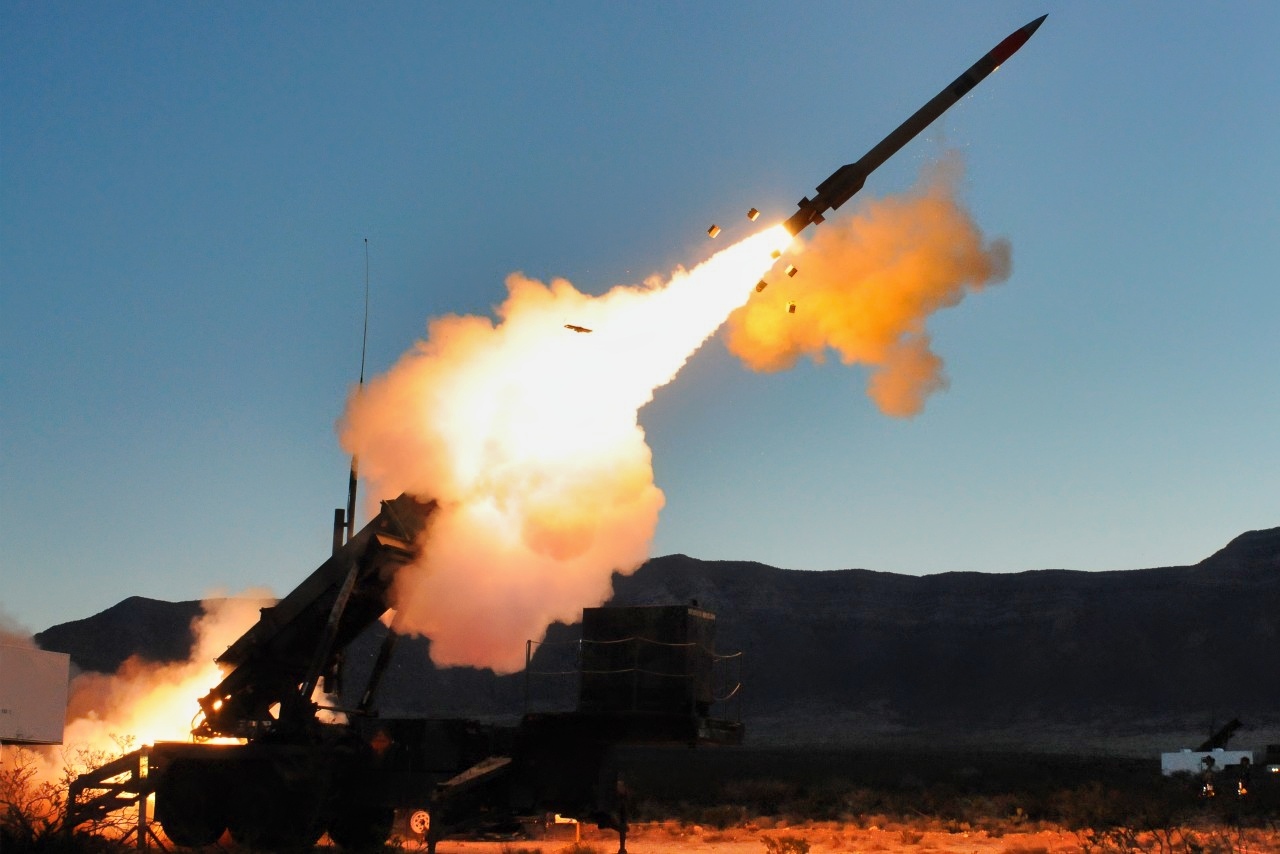
The PAC-3 MSE is a highly sought-after air defense munition due to its advanced capabilities and versatility. As a next-generation interceptor, it offers improved range, speed, and maneuverability, making it an effective counter to a wide range of threats, including tactical ballistic missiles, cruise missiles, and aircraft. (Official U.S. Army photo)
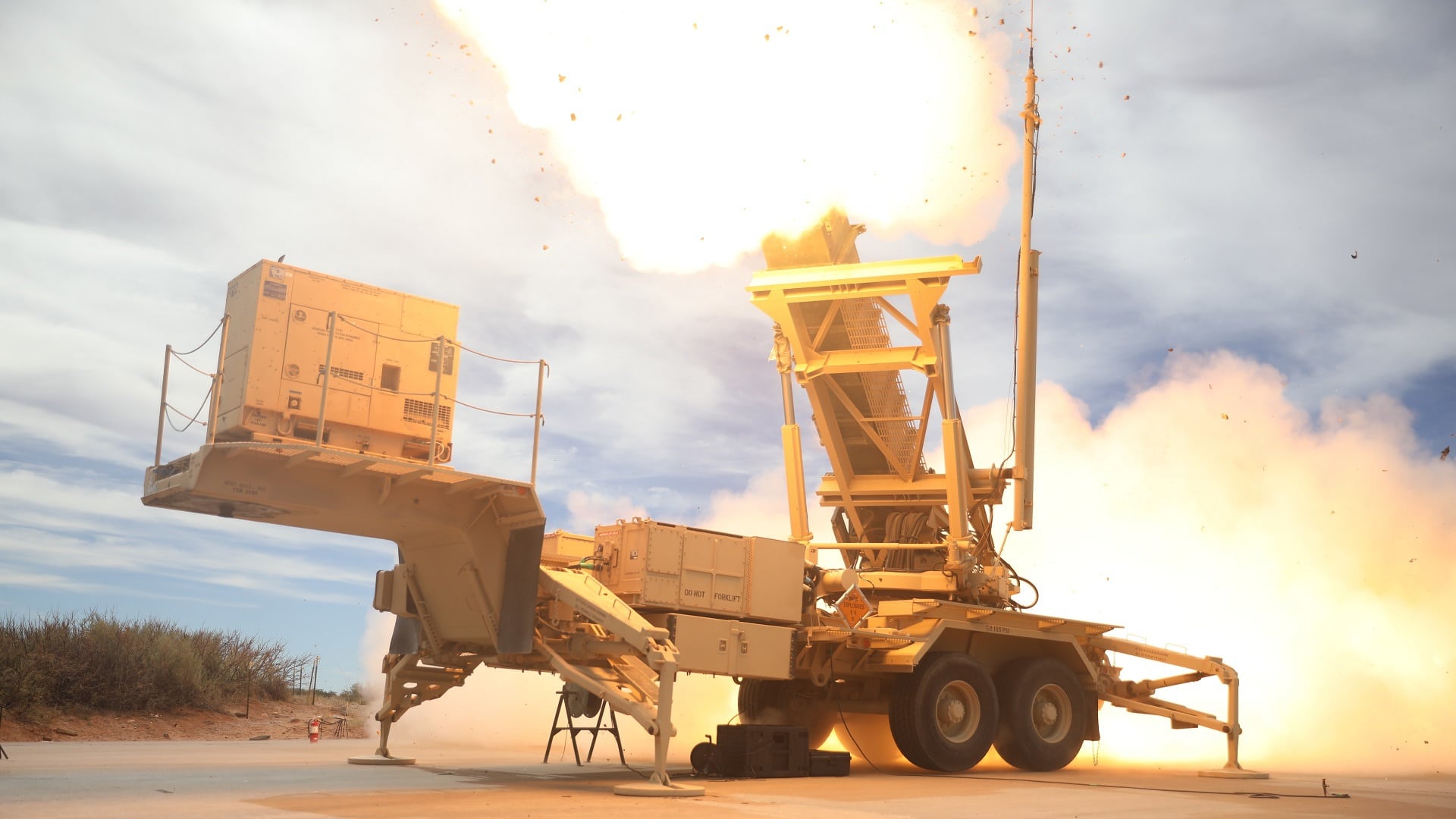
Patriot Missile. Image Credit: Creative Commons.

Exercise Artemis Strike is a German-led tactical live fire exercise with live Patriot and Stinger missiles at the NATO Missile Firing Installation in Chania, Greece from Oct. 31-Nov. 09. Over 200 U.S. soldiers and approximately 650 German airmen will be participating in the realistic training within a combined construct, exercise the rigors associated with force projection and educate operators on their air missile defense systems. The 10th Army Air Missile Defense Command will deploy, operate and fire live missiles within a tactical scenario, under Supreme Headquarters Allied Powers Europe operational readiness evaluation criteria.

German soldiers assigned to Surface Air and Missile Defense Wing 1 fire the Patriot weapons system at the NATO Missile Firing Installation (NAMFI) during Artemis Strike Nov. 7 in Chania, Greece. Artemis Strike is a German-led multinational air defense exercise. German soldiers Over 200 U.S. soldiers and approximately 650 German airmen will be participating in the realistic training within a combined construct, exercise the rigors associated with force projection and educate operators on their air missile defense systems. (Photo By Officer Candidate Sebastian Apel, Air Defence Missile Group 24)
“Russia has provided Iran with information that could help Tehran strike American warships, aircraft, and other assets in the region, according to two officials familiar with US intelligence on the matter,” said a report from March on the US PBS network.
Survivability
Whether or not the F-5 survived and made it back to Iran is not known. But Kuwait did later display wreckage of an Iranian warplane shortly after the ceasefire in the conflict began.
This Iranian Air Force F-5 fighter in particular struck Camp Buehring in Kuwait, which is reportedly the first time in many years that a hostile aircraft has successfully hit a US military facility in a foreign country.
The NBC report was that the Iranian pilot was not only able to get past the air defenses that protected the base, but he was also able to drop his bomb load on target. The think-tank American Enterprise Institute now estimates that using tactics like these, Iran struck more than 100 targets across 11 bases in seven countries: Qatar, the United Arab Emirates, Bahrain, Jordan, Kuwait, Iraq, and Saudi Arabia.
According to an analysis by the Center for Strategic and International Studies (CSIS), over the seven weeks of the Iran war, the US military used at least 45 percent of its stockpile of precision-guided missiles.
This included at least half of its THAAD interceptor missiles, which are designed to counter ballistic threats, and nearly 50 percent of its Patriot air defense interceptors.

A Terminal High Altitude Area Defense (THAAD) interceptor is launched from the Pacific Spaceport Complex Alaska in Kodiak, Alaska, during Flight Experiment THAAD (FET)-01 on July 30, 2017 (EDT). During the test, the THAAD weapon system successfully intercepted an air-launched, medium-range ballistic missile (MRBM) target.
In addition, about 30 percent of the US stock of Tomahawk cruise missiles were expended, along with more than 20 percent of long-range air-to-surface missiles and roughly 20 percent of SM-3 and SM-6 interceptors. Estimates now are that it will take the United States 4–5 years to replenish these stockpiles.
About the Author: Reuben F. Johnson
Reuben F. Johnson has thirty-six years of experience analyzing and reporting on foreign weapons systems, defense technologies, and international arms export policy. Johnson is the Director of Research at the Casimir Pulaski Foundation. He is also a survivor of the Russian invasion of Ukraine in February 2022. He worked for years in the American defense industry as a foreign technology analyst and later as a consultant for the U.S. Department of Defense, the Departments of the Navy and Air Force, and the governments of the United Kingdom and Australia. In 2022-2023, he won two consecutive awards for his defense reporting. He holds a bachelor’s degree from DePauw University and a master’s degree from Miami University in Ohio, specializing in Soviet and Russian studies. He lives in Warsaw.


