

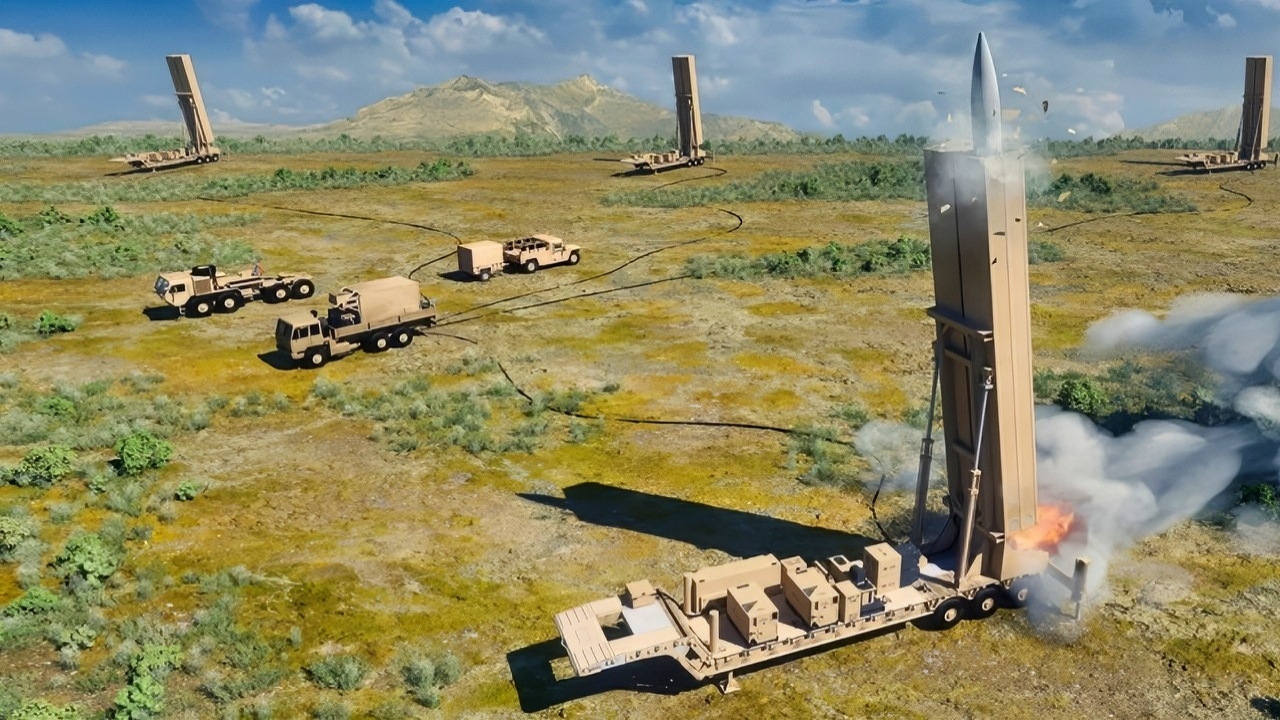
Key Points and Summary – The U.S. Army’s Long Range Hypersonic Weapon, nicknamed Dark Eagle, is nearing full operational status with a reach of roughly 2,175 miles—enough to hit mainland China from key locations like Japan, the Philippines, Taiwan, and possibly Guam.
-Fielded alongside the Navy’s Conventional Prompt Strike on Zumwalt destroyers, Dark Eagle is designed to offset Beijing’s DF-17 and YJ-21 hypersonic arsenal, which can already threaten U.S. forces from land, sea, and air.
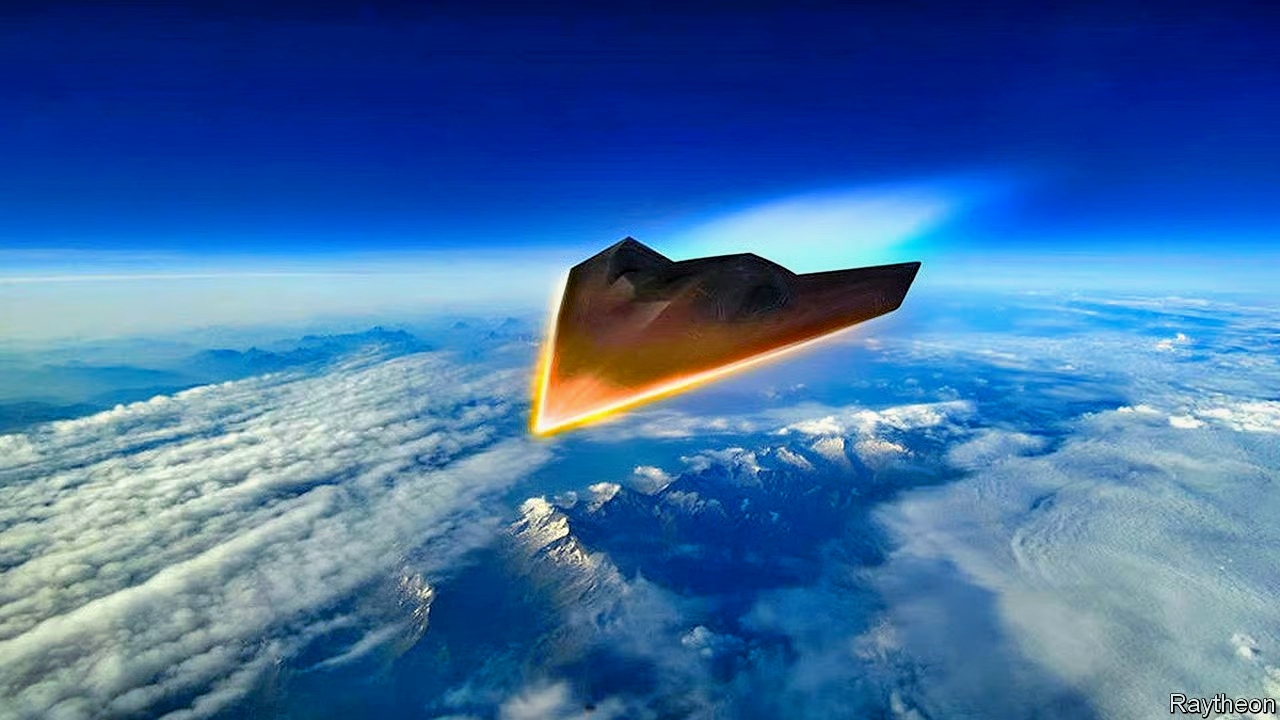
Hypersonic Glide Vehicle. Image Credit: Raytheon.
-Road-mobile and C-17 transportable, the system can rapidly reposition and, with future software upgrades for engaging moving targets, complicate any Chinese attempt to build a hypersonic “no-go” zone around Taiwan.
The Mach 5 Dark Eagle Hypersonic Missile Looks Like a Game-Changer
The United States’ soon-to-be fully operational Long Range Hypersonic Weapon will have a range of 2,175 miles, a distance of considerable tactical significance in the Pacific theater.
Details about the so-called “Dark Eagle” surfaced in a number of public news reports and on C-SPAN after senior Pentagon weapons developers briefed Defense Secretary Pete Hegseth during his visit to Alabama to designate Huntsville as the home for US Space Command.
In terms of simple, clear deterrence, this Dark Eagle range means mainland China and areas of the Pacific Ocean in the Pacific theater can be reached from Japan, the Philippines, Taiwan, and possibly even Guam.
Added to this offensive power, the US Navy expects to have operational Conventional Prompt Strike hypersonic weapons arming its Zumwalt-class destroyers in 2026 as well.
Chinese Threat
The much-anticipated weapon is arriving now and is expected to be operational at multiple locations in the coming months.
Hypersonic capabilities are very much needed in the Pacific to offset China’s current advantage in the realm of hypersonics.
China’s now operational DF-17, for example, can likely already hold Taiwan, Japan, the Philippines, and even Guam at risk of attack from its mainland.
The PLA-Navy has also test-fired the YJ-20 sea-launched hypersonic weapon from its stealthy Type 055 destroyer. Beyond these two areas of concern, the PLA Air Force has even armed its H-6 bomber with the YJ-21, an air-launched variant of the hypersonic weapon.

DF-17 Missile from China. Image Credit: PLA.
In essence, this means the PLA can put the US and its allies at risk of hypersonic attack from the air, land, and sea.
After some developmental challenges, setbacks, and growing pains, the US is now closing the hypersonic gap with China, something of massive significance in the Pacific.
The significance of these developments cannot be underestimated.
Many Pentagon weapons developers, wargamers, and observers have expressed concern that the PRC might seek to exploit its hypersonic weapons advantage to create a hypersonic weapons “bubble” around Taiwan, denying access to US and allied forces seeking to intervene.
A maneuver of this kind would, in essence, create a strike range of offensive “blockade” through which US warships might not be able to travel safely.

DF-17 Missile from China. Image Credit: Creative Commons.
The Dark Eagle, however, could hold Chinese warships and ground locations at risk from various locations throughout the Pacific, operating as a deterrent.
Targeting and maneuverability are key elements of the Dark Eagle, as the system is mobile and deployable on a US Air Force C-17 Cargo Plane, allowing it to quickly reposition as needed to adapt to changing target information.
Targeting is also being improved, as senior Army leaders publicly stated several years ago that Pentagon weapons developers have been working on “tech insertion” software upgrades to enable hypersonic weapons to destroy moving targets eventually.
The PLA could seek to exploit the mismatch and use its hypersonic arsenal to target US warships from a distance, preventing them from coming close enough to engage.
Should the US Navy and Army operate with a commensurate ability to target and destroy PLA forces with hypersonic weapons, China’s advantage will be neutralized or “offset.”
Offensive Hypersonics
Offensive hypersonic power is highly critical, especially at this moment, given that emerging defenses against hypersonic weapons may not yet be mature enough to intercept incoming hypersonic missiles successfully.
Therefore, the presence of countervailing offensive hypersonic firepower capability is the optimal deterrent against a hypersonic attack.
C-SPAN footage showed Lt. Gen. Francisco Lozano, Director of Hypersonic, Directed Energy, Space and Rapid Acquisition, saying the emerging Dark Eagle could hit China from Guam, Moscow from London, and Tehran from Qatar.
This targeting range is of great tactical significance, in considerable measure due to the speed of hypersonic weapons, which means target locations would have very little time to launch countermeasures or deploy any workable defenses.
Not only that, hypersonic weapons travel so quickly from one radar aperture or field of view to another that it becomes tough, if not impossible, to establish a continuous target track of the weapon as it transits through space.
About the Author: Defense Expert Kris Osborn
Kris Osborn is the President of Warrior Maven – Center for Military Modernization. Osborn previously served at the Pentagon as a highly qualified expert in the Office of the Assistant Secretary of the Army—Acquisition, Logistics & Technology. Osborn has also worked as an anchor and on-air military specialist at national TV networks. He has appeared as a guest military expert on Fox News, MSNBC, The Military Channel, and The History Channel. He also has a Masters Degree in Comparative Literature from Columbia University.


