

Key Points and Summary – Leaked Russian documents obtained by the Kyiv Independent reveal a covert Chinese arms pipeline from Moscow to Beijing since early 2022, focused on building a PLA airborne force tailored for a Taiwan assault.
-Using front contracts and hidden payments to sanctioned Russian defense firms, China is acquiring air-droppable armored vehicles, aircraft, ammunition, and paratrooper training.

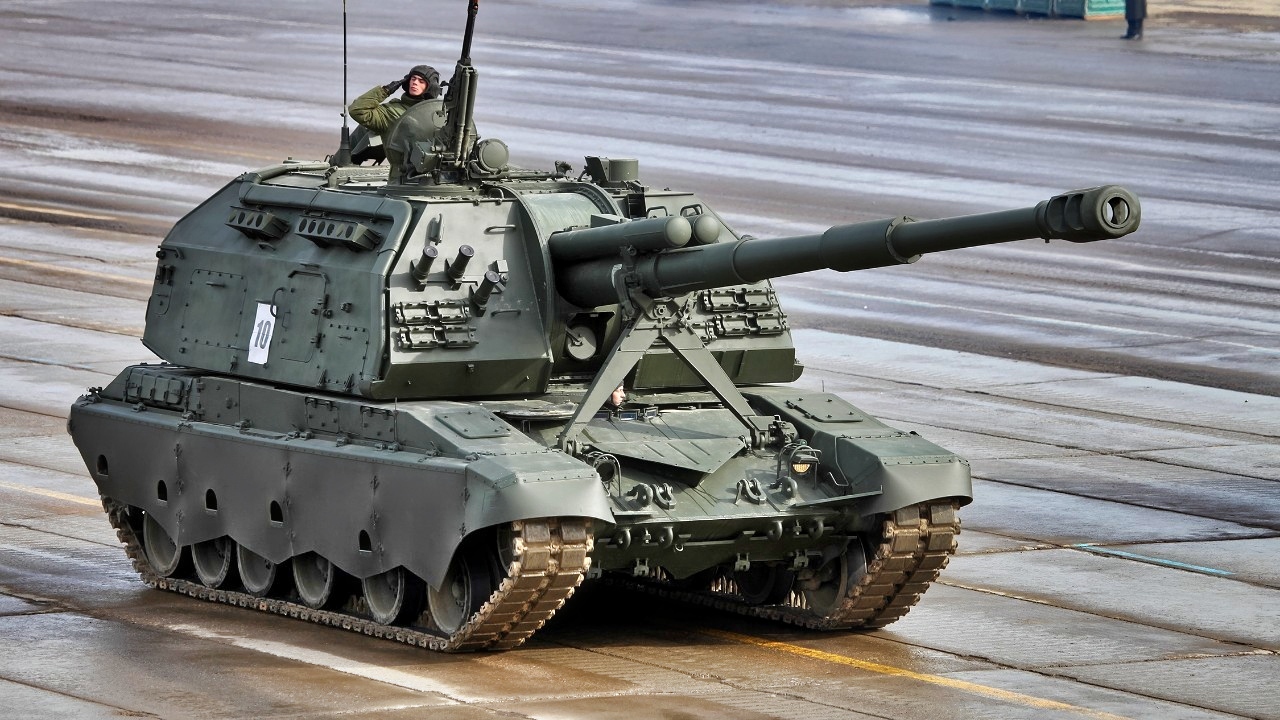
MSTA-S Russian Army. Image Credit: Creative Commons.
-Delivery schedules and contract deadlines align with Xi Jinping’s stated 2027 readiness goal and the PLA’s centennial, reinforcing fears of a Taiwan invasion window.
-The deals deepen China–Russia strategic cooperation while giving the PLA invaluable combat-proven hardware and doctrine at bargain prices.
China Is Quietly Buying Russian Weapons to Prep a Taiwan Invasion
The Kyiv Independent published a report detailing how, even after the February 2022 invasion of Ukraine, China decided to purchase Russian aircraft, combat vehicles, ammunition, and equipment. The bilateral engagements were organized to build up the People’s Liberation Army (PLA) paratrooper and airborne units.
In support of this activity, Chinese officers and representatives of Beijing’s major defense manufacturers have shuttled back and forth to Russia for more than two years. While in Russia, they have inspected a wide variety of weapons and negotiated contracts to purchase hundreds of millions in hardware from Moscow, the Independent finds.
In 2023 and 2024, Beijing reportedly entered into several confidential contracts with Moscow to acquire Russian armaments. The PLA has done its best to obscure these contracts and any payments made, according to the report, because the sums are supposed to be paid to Russian arms manufacturers currently subject to international sanctions.
The overall goal of these acquisitions appears to be equipping Chinese paratrooper forces with both the air mobile and heavy transport assets needed to conduct a large airborne assault on Taiwan.
Among the items being acquired by the PLA are air-mobile, airdrop-capable armored vehicles. “The delivery schedule built into the armored vehicle draft contract offers a rare look at how Moscow and Beijing are thinking about time, as the production and testing timelines align with dates already featured in debates over a possible Chinese invasion of Taiwan,” explains the article.
The known deadline for implementing some of the other contracts is 2027. Again, this correlates with the year Chinese President Xi Jinping has identified as the time China’s military should be ready to carry out a possible Taiwan invasion.
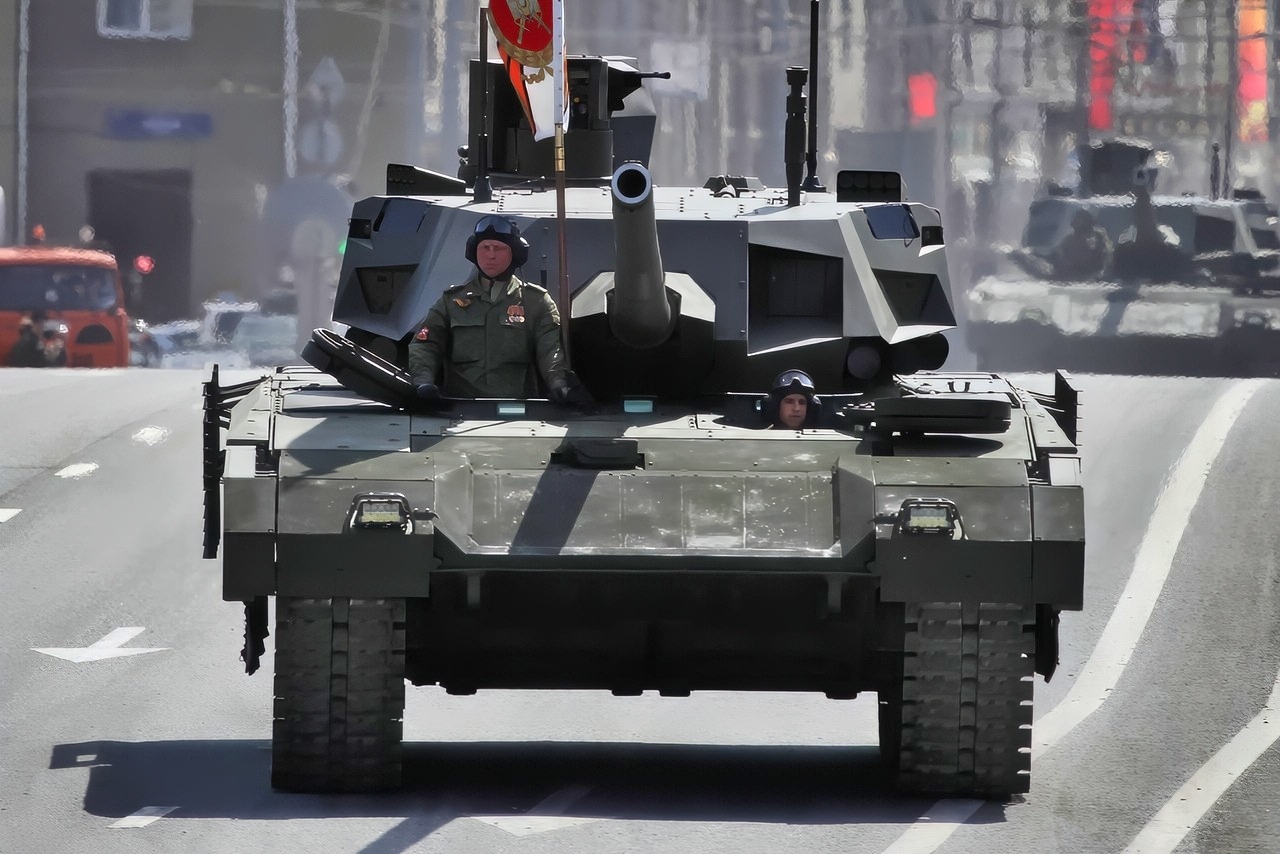
T-14 Armata Tank from Russia. Image Credit: Creative Commons.
The year 2027, as a recent article from the Australia-based Lowy Institute points out, is the 100th anniversary of the PLA’s founding. For Xi it will also be the 21st Party Congress, when he is likely to secure an unprecedented fourth term as leader of the party, military, and government. This intersection of so many anniversaries may be too much of a temptation for Xi to pass up.
Chinese Delegations and Cooperation Timeline
The Kyiv Independent reports that it has also identified several dozen Chinese military personnel and employees of Chinese arms producers that have continued to cooperate with the Russian defense industry. Those individuals are all also now in violation of international sanctions.
The Kyiv paper further reported that PLA representatives contacted the Russian government slightly more than a month after the full-scale invasion of Ukraine in 2022. Knowledge of this initial contact, among many details of the report, came from a leak of Russian classified documents obtained by the Black Moon hacktivist group this year.
In this first set of messages, Beijing reportedly requested to buy a set of weapons and armored vehicles for airborne troops. The request, numbered ZH2022-Y53, was received on 7 April 2022, according to the leaked documents.
Three weeks later, Russia’s Federal Service for Military-Technical Cooperation instructed Rosoboronexport, the state-owned company that brokers all arms exports from Russia, to prepare an elaborate demonstration of Russian air-droppable armored combat vehicles for a PLA delegation. The delegation arrived in Moscow a year later, in April 2023.
Full-Scale Cooperation
Official agreements between Beijing and Moscow are now in place to provide internationally sanctioned Russian arms manufacturers with some significant revenue from the export of their weaponry to the PLA. In return, Beijing would receive an extensive complement of weaponry and equipment for its airborne forces, the PLA Air Force Airborne Corps.
The units that make up this formation have been steadily building up their numbers and equipment in preparation for a future attack on Taiwan. The leaked documents include “internal letters, meeting minutes, a draft intergovernmental contract, copies of the Chinese officers’ passports, and other documents,” reads the paper’s report.
The Kyiv Independent writes that they verified the facts contained in the documents by using Russia’s air cargo and passenger flight data, customs declarations, and court records, as well as facial recognition software. They also identified the negotiators and other individuals that established these agreements—all of this took place amid Russia’s war in Ukraine.
The leaked documents and the records that validate them reveal a largely hidden arms pipeline that has been running between Moscow to Beijing since the beginning of Russia’s full-scale war against Ukraine. They show China engaging in full-scale cooperation with Moscow.

Su-34 Fullback from Russia. Image Credit: Creative Commons.
In total, the Kyiv Independent identified 40 Chinese military personnel and representatives of arms manufacturers who have visited Russia during its war with Ukraine for the purpose of negotiating purchases of Russian weaponry.
The PLA, writes the paper, has been “discreetly seeking Russian aircraft, armored vehicles, ammunition, and training for its paratroopers, funneling new money to sanctioned Russian defense companies while signaling a deepening strategic partnership” between China and Russia
“It shows the world that Russia has a true, tremendous friend in Beijing,” said Daniel Fu, a research associate at Harvard Business School, who spoke to the Kyiv Independent about the leaked documents.
An Invasion of Taiwan Is Coming, Says Retired Intel Officer to National Security Journal
“If there was ever any question about the PRC’s intentions to launch a full-scale invasion of the ROC on Taiwan, it is now no longer in doubt,” said a retired former NATO-nation intelligence officer with many years assessing the PLA’s organization, weaponry, and planning mechanism.
“The Ukraine war has presented the opportunity of a lifetime for the PLA to take advantage of a Russia desperate to sell anything at the moment,” he said. “And they are making the maximum benefit out of the situation.”
About the Author: Reuben F. Johnson
Reuben F. Johnson has thirty-six years of experience analyzing and reporting on foreign weapons systems, defense technologies, and international arms export policy. Johnson is the Director of Research at the Casimir Pulaski Foundation. He is also a survivor of the Russian invasion of Ukraine in February 2022. He worked for years in the American defense industry as a foreign technology analyst and later as a consultant for the U.S. Department of Defense, the Departments of the Navy and Air Force, and the governments of the United Kingdom and Australia. In 2022-2023, he won two awards in a row for his defense reporting. He holds a bachelor’s degree from DePauw University and a master’s degree from Miami University in Ohio, specializing in Soviet and Russian studies. He lives in Warsaw.


