

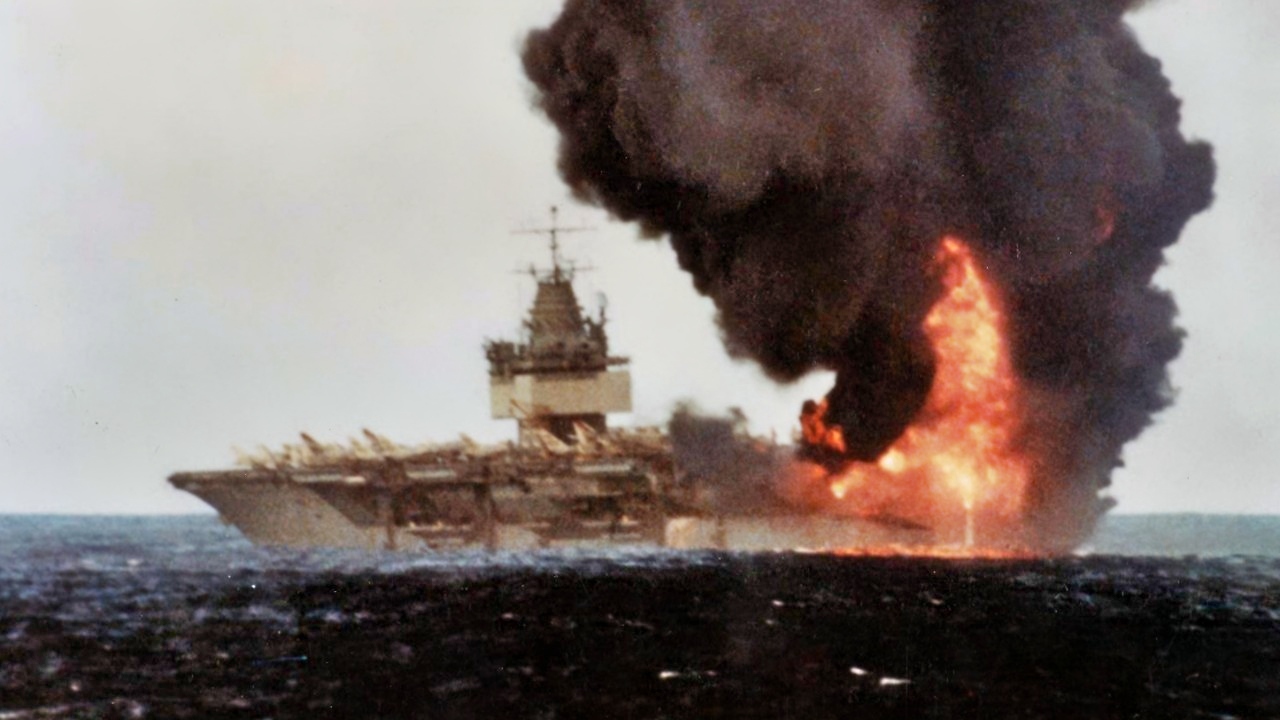
Key Points and Summary – A “tragic” 1969 fire aboard the USS Enterprise (CVN-65) was “caused by a huffer” (an aircraft starter unit) whose 590-degree exhaust was improperly aimed at a Zuni rocket.
-The warhead “cooked off” in 78 seconds, “sparking a catastrophic chain reaction” of 18 explosions. The blasts “killed 28 sailors,” “injured 314,” and “destroyed 15 aircraft.”
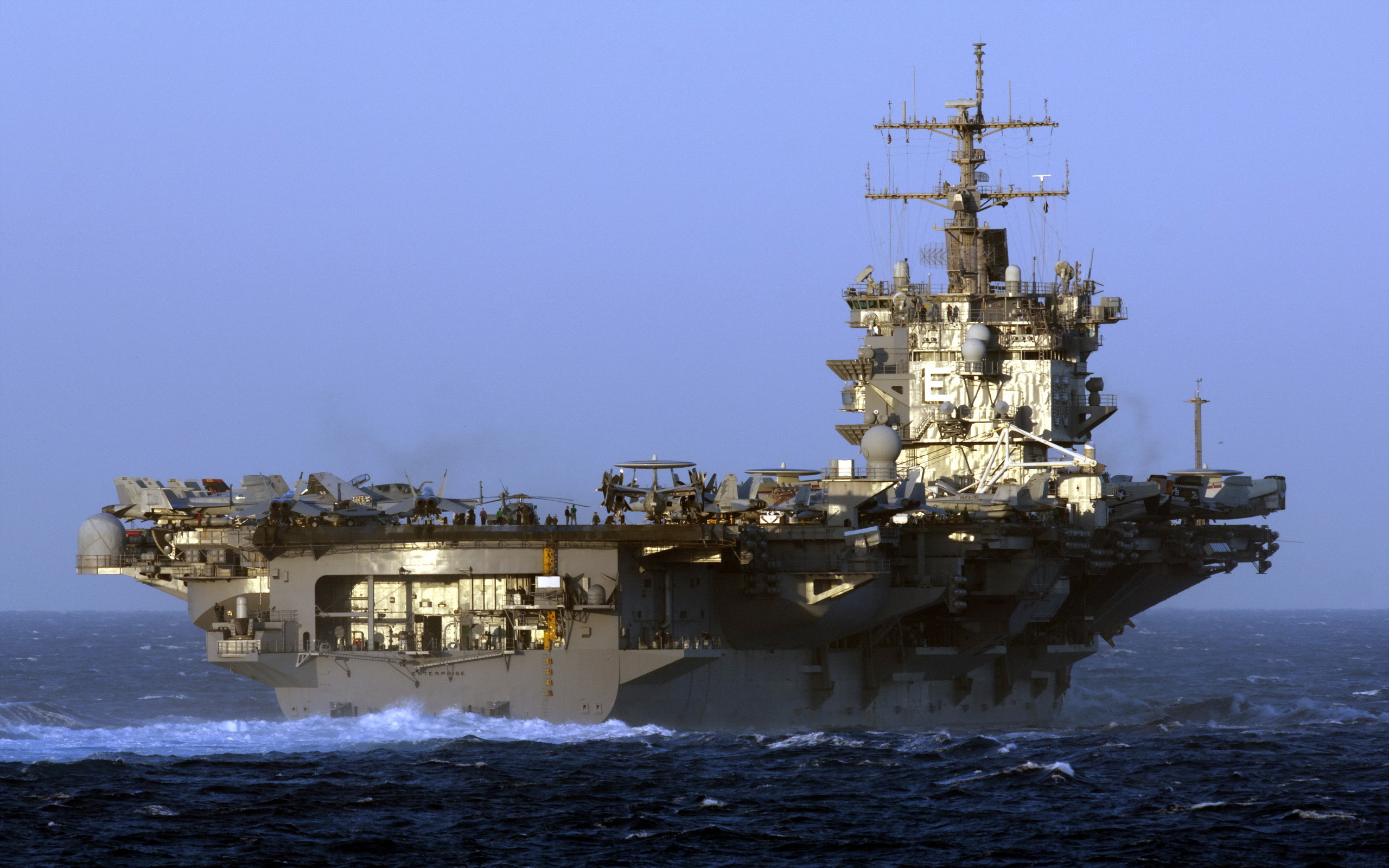
USS Enterprise. Image Credit: Creative Commons.
-A survivor, Danny Noe, was “blown into a wall” and “escaped just in time,” though his two roommates were killed.
-The Naval History and Heritage Command noted the disaster “could’ve been even worse,” as 96% of the Enterprise crew had firefighting training, unlike on the USS Forrestal (which lost 134 men in a similar fire).
USS Enterprise’s 1969 Fire Was Tragic, But It Could’ve Been Even Worse
One of the most hallowed names in the history of the United States Navy (in addition to being a revered name amongst certain hardcore sci-fi buffs) is that of the USS Enterprise, which has been bestowed upon more than one aircraft carrier, which in turn was affectionately nicknamed “The Big E.”
More recently, there was CVN-65 (formerly CVAN-65), which served proudly from 1961 to 2017.
This iteration of “Big E” made history as the first nuclear-powered aircraft carrier in the US Navy, as well as the longest naval vessel ever built (with a hull length of 1,123 feet [342 meters]). Unfortunately, she also tragically made history via an onboard fire, which caused multiple deaths and injuries.
The only silver lining behind the cloud of this tragic story is that it could’ve been even worse.
The Basics of the Enterprise Tragedy
On January 14, 1969, the “Big E” was operating about 70 nautical miles southwest of Pearl Harbor, Hawaii, conducting a final battle drill and Operational Readiness Inspection (ORI) before heading off for her fourth deployment to Vietnam.
More specifically, she was preparing for an 0830 Local Time (1830 UTC AKA “Zulu Time”) launch of six F-4 Phantom II fighters, seven A-7 Corsair II (AKA the “SLUF”) light attack jets, one RA-5C Vigilante photo-reconnaissance aircraft, one EKA-3B Skywarrior tanker, and one E-2A Hawkeye airborne early warning aircraft of Air Wing NINE (CVW-9).
At 0818L, as the vessel was commencing a turn to port into the wind, an explosion occurred on the port quarter of the flight deck outside the landing area. An MD-3A aircraft starter unit (“huffer”) had been positioned so that hot exhaust was blowing on the warhead of a MK-32 5-inch Zuni rocket.
This warhead (which contained 15 lbs. [6.8 kg] of Composition B explosive) was mounted in a pod of four rockets on the starboard wing (No. 8 station) of an F-4J belonging to Fighter Squadron NINETY-SIX (VF-96). The huffer’s exhaust temperature could reach 590 degrees Fahrenheit at a two-foot distance. In comparison, a mere 358 degrees was sufficient to cook off the warhead in about 78 seconds (per the subsequent investigation).
The Phantom in question was also carrying two wing fuel tanks (one on the starboard wing outboard of the Zuni rockets) and six MK 82 500-lb. bombs.
A junior airman apprentice attempted to sound the alarm about the pending danger, but his warning was either not understood or was drowned out in the din of jet noise. The subsequent investigation determined that the warning was likely too late already.
When the Zuni warhead exploded, shrapnel perforated the external fuel tanks and ignited a JP-5 fuel fire. About one minute later, the other three Zuni rockets on that star-crossed F-4J exploded, blowing holes in the flight deck down which burning JP-5 flowed into the O-3 level.
(NOTE: The Mk 32 variant of the Zuni warhead contains 2000 one-quarter-inch [6.35mm] square fragments that can damage light vehicles within a 70-foot [21.3-meter] radius.)
The Big E’s skipper, then-Captain Kent Lee (future Vice Admiral and Commander of Naval Air Systems Command), promptly steered the ship so that the wind blew smoke and flames off the flight deck; however, despite Capt.
Kent’s swift reaction triggered a catastrophic chain reaction of ordnance and fuel, resulting in a total of 18 explosions that blew five large holes in the flight deck and destroyed eight Phantoms, six Corsairs, and the Skywarrior tanker.
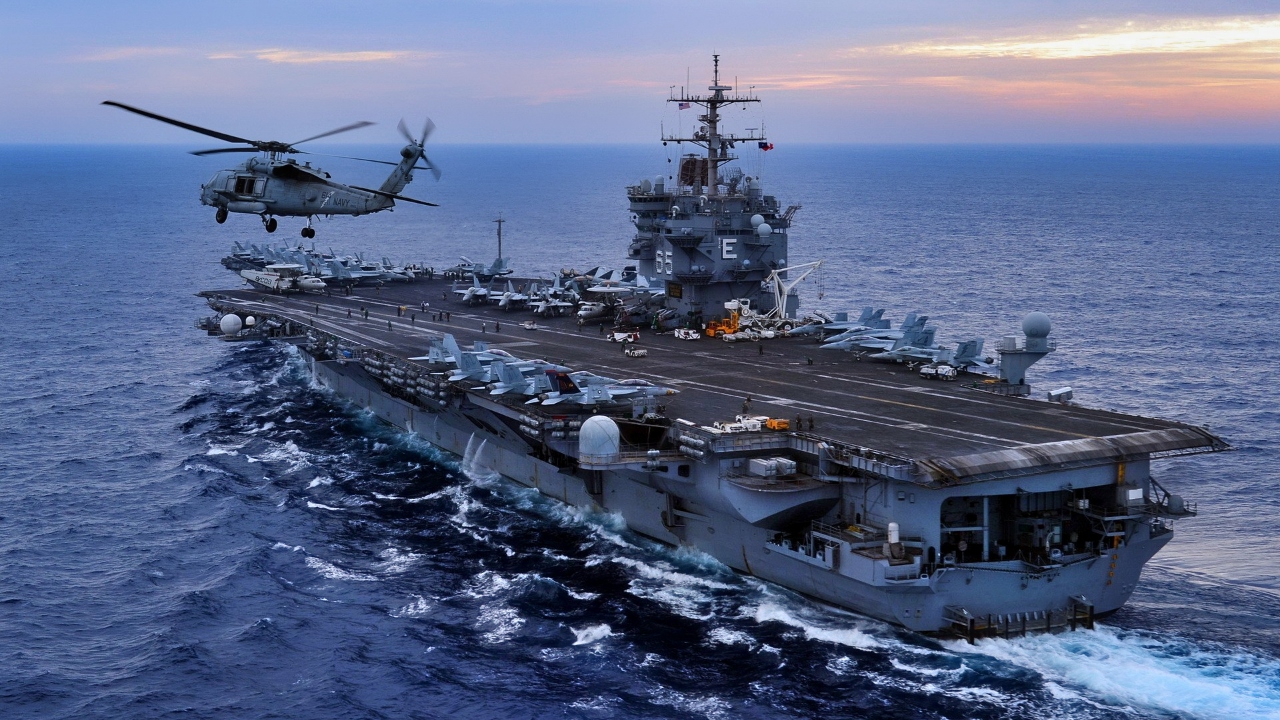
USS Enterprise. Image Credit: Creative Commons.
Twenty-eight of the Enterprise’s crew members lost their lives, and an additional 314 were injured.
It Could’ve Been Even Worse
Though it comes as no comfort to the surviving loved ones of the Enterprise sailors who lost their lives, the death toll and destruction could’ve been even worse than they actually turned out to be.
As noted by Naval History and Heritage Command, “Despite the casualties, a big difference between the fires of Enterprise and Forrestal (see H-Gram 008) was that on Enterprise 96 percent of ship’s company and 86 percent of air wing personnel had received formal firefighting training, whereas on Forrestal only 50 percent of the crew and none of the air wing had been trained.”
That Forrestal (CVA-59) fire killed 134 men, injured 161, and destroyed 21 aircraft; amongst the sailors who endured that particular tragedy was then-LCDR (and future United States Senator) John S. McCain III.
In One Sailor’s Words
A particularly harrowing firsthand account of the Enterprise fire comes from a former sailor named Danny Noe, who shared his story with reporter Rhett Rodriguez of YourCentralValley.com earlier this month.
Danny had been asleep in the room directly beneath the initial Zuni explosion:
“I survived. Two of my mates did not, and I luckily got out just in time,’ Noe explained. He says the blast threw him into the wall, and when he came to, his first instinct was to run. His two friends, who were in the same room, ran to the right; he ran to the left.’ If I had gone to the right, I would probably have been dead. It’s heartening, but I’m here,” Noe explained. “That’s the good thing, I guess, and unfortunately they didn’t make it… They were doing what they did to protect everyone, and I just happened to get out alive.’”
As a testament to both his training and his personal fortitude, Danny recovered his wits from his near-death experience quickly enough to grab a hose and do his part to help fight the flames.
However, as if the mental and emotional trauma of losing his shipmates wasn’t bad enough, Danny received a further shock shortly thereafter when he learned that he had been listed as missing in action: “I went up and gave them my name a couple of days later, and they said you are MIA, and I said ‘As you can see, I’m here’ and they gave me them [his dog tags, that is] somehow during the explosion, they got knocked off and were found, and I’ve had them ever since.”
About the Author: Christian D. Orr, Defense Expert
Christian D. Orr is a Senior Defense Editor. He is a former Air Force Security Forces officer, Federal law enforcement officer, and private military contractor (with assignments worked in Iraq, the United Arab Emirates, Kosovo, Japan, Germany, and the Pentagon). Chris holds a B.A. in International Relations from the University of Southern California (USC) and an M.A. in Intelligence Studies (concentration in Terrorism Studies) from American Military University (AMU). He is also the author of the newly published book “Five Decades of a Fabulous Firearm: Celebrating the 50th Anniversary of the Beretta 92 Pistol Series.”
More Military
China Might Have a Way to ‘Swarm’ U.S. Navy Aircraft Carriers
India Leases Russia’s ‘Stealth’ Nuclear Attack Submarines
The Mach 3 SR-71 Blackbird Deserves A Better Fate Than This
The F-14 Tomcat Fighter Was ‘Notoriously Difficult and Costly to Keep Operational’


