

Key Points and Summary – Ukraine is pioneering a “hybrid” approach to drone warfare, combining AI-assisted targeting with manual operator control to strike high-value Russian assets.
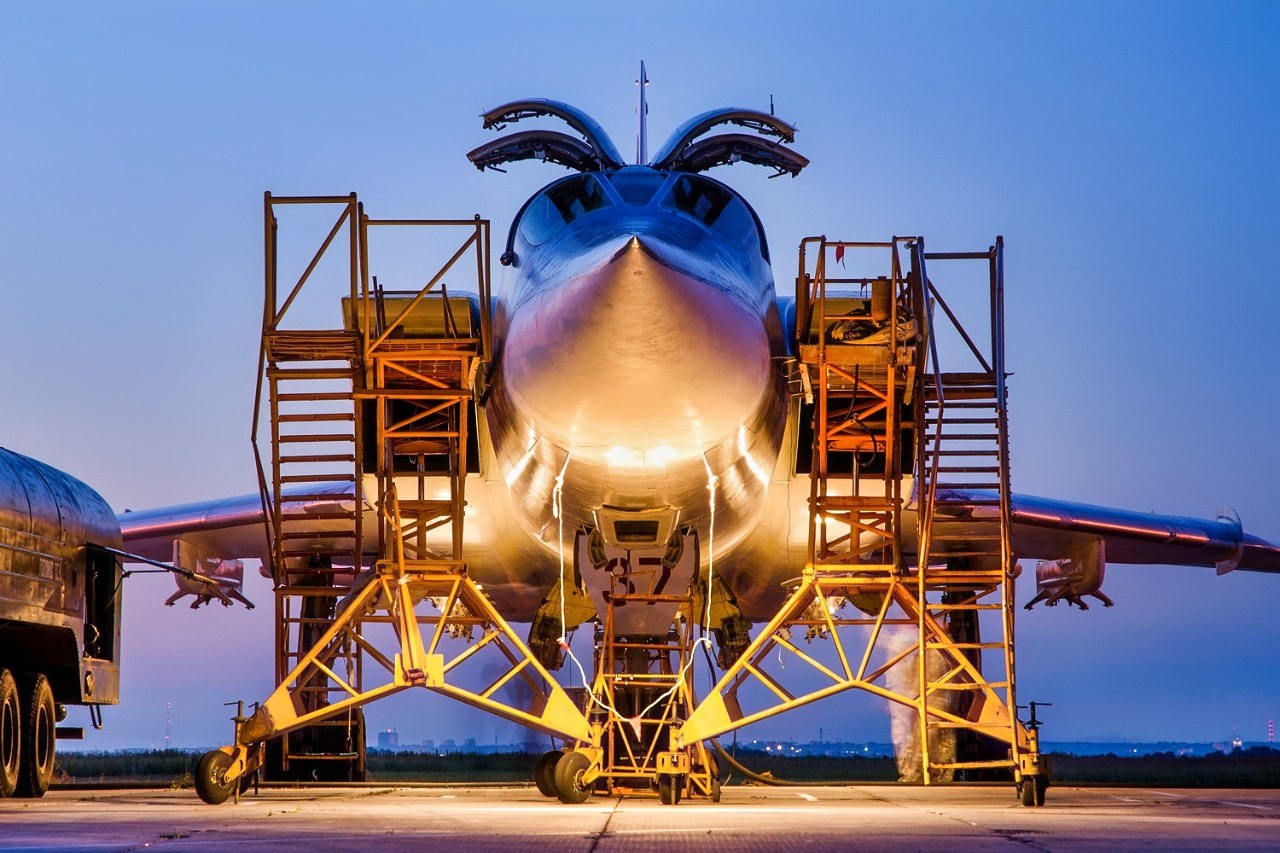
-This was showcased in the devastating “Operation Spiderweb” in June, where FPV drones, likely using AI trained on museum aircraft to identify weak points, struck Russian strategic bombers deep inside Russia.
-While some frontline drone pilots remain skeptical, arguing for more cheap, standard drones over fewer expensive AI-enabled ones, this innovative strategy is a key part of Ukraine’s asymmetric fight. It represents a crucial effort to counter Russia’s numerical superiority by leveraging technological ingenuity.
AI Drones and the Ukraine War
Now in its fourth year, the Russo-Ukrainian war has become a contest of technological innovation.
Ukraine’s ability to hold off a much larger military force increasingly depends on rapid advances in technology and the use of inexpensive drones. In early June, Kyiv once again surprised analysts around the world with what these tools can accomplish on the battlefield.
On June 1, Ukraine’s Security Service (SBU) smuggled containers into Russia. The force launched remotely controlled drones that struck Russian long-range bombers, causing an estimated $7 billion in damage and weakening Moscow’s ability to bomb Ukrainian cities. The campaign was named Operation Spiderweb. Initial estimates from Kyiv were that Ukraine neutralized 34% of Russia’s strategic cruise missile carriers.
Ukrainian President Volodymyr Zelensky said the operation would be “studied in history books.” The image of low-cost drones destroying high-value assets has become a defining feature of the war.
Ukraine’s Osa (“Wasp”) First-Person View (FPV) drones, which appear to be the leading candidate for those used in the operation, are produced by the company First Contact. These compact, weather-resistant drones can carry a payload of up to 3.3 kg, reach speeds of 150 km/h, and utilize AI-enabled targeting to help identify and strike vulnerable areas.
The SBU stated, “During the operation, modern UAV control technology was used, which combines autonomous artificial intelligence algorithms and manual operator intervention.”
Hybrid Drone Warfare is Born in the Ukraine Conflict
Kateryna Bondar, a researcher on AI technology in Ukraine, suggested Ukraine’s Operation Spider Web showcased a hybrid approach that combined remote control with AI-assisted targeting.
The drones used open-source autopilot software, such as ArduPilot, paired with onboard computers and LTE modems, to maintain control over long distances. The AI-based object recognition most likely helped identify and strike weak points on high-value Russian aircraft.
This kind of precision wasn’t accidental. It was reported that Ukraine’s military intelligence (HUR) trained AI systems using hundreds of images of Soviet-era bombers taken at the Poltava Museum of Heavy Bomber Aviation. These datasets helped FPV drones identify weak points on aircraft such as fuel tanks and missile pylons, enabling more destructive and precise strikes during Operation Spider Web.
First Contact has been working on AI-enabled drones for well over a year and a half, which is also likely a reason they were chosen for the operation.
AI and Drones: A Deadly Mix
In January 2024, Valerii Borovyk, commander of a Ukrainian drone strike unit, said the company was focused on improving AI compatibility, including the “last mile of reaching the target, tracking the target, selecting the target with artificial intelligence.”
For the past few years, Ukrainian drone companies have prioritized developing AI systems to support last-mile target delivery, especially in contested environments with heavy enemy jamming.
As electronic warfare and signal jamming intensified on both sides, the focus steered towards countermeasures, one of the most promising being AI software that enables drones to lock onto and strike targets, even after losing communication with their operators.
Lyuba Shipovich, CEO and co-founder of Dignitas, said that Ukrainian volunteers, like those in their organization, work extensively on supporting the development of AI technologies in these drones. Dignitas maintains close contact with soldiers on the front lines and incorporates their feedback to help fine-tune and improve the AI deployed in combat. Shipovich noted that AI targeting performs significantly better in simple, flat terrain; however, its effectiveness drops in forested or hilly environments, where visual obstructions make target recognition more difficult.
Yet not all AI implementations have performed as hoped. Early attempts to add AI-assisted targeting to drones failed to deliver, leaving soldiers disappointed after paying extra for underperforming upgrades.
Twist Robotics CEO Viktor Sakharchuk stated that the company has taken a more rigorous approach to its development, having built autonomous drone systems since 2022. Their AI model is built around three core functions: visual navigation, object tracking, and trajectory planning, each of which is trained independently. Twist utilizes both real and synthetic data, including photorealistic simulations, to refine these systems prior to live deployment.
Ihor from the 23rd Mechanized Brigade stated that even AI-enabled systems, such as the US-made Switchblade drone, often fail. “Out of three flights, it didn’t hit the target once,” he noted. Despite being called a “tank-killer,” its battlefield performance has been disappointing, according to Ihor. Still, the Switchblade is being increasingly used on the front and does see effectiveness in some instances.
Ukrainian soldiers remain unconvinced that AI-enabled drones are a priority for them, compared to other urgently needed equipment on the front. Yaroslav, a drone pilot from the 110th Mechanized Brigade, noted that instead of AI-enabled drones, “What we need more for our work are batteries for the Baba Yaga [Vampire] drone, since they are expensive, because we use them for remote mining.”
He noted that they simply need more drones. The tradeoff then becomes spending more money on buying more expensive AI-enabled drones or purchasing cheaper drones without AI, but having more of them.
Echoing a similar sentiment, Dmytro from the 413th Separate Battalion of Unmanned Systems said, “We rarely see last-mile AI drones on the battlefield because they’re just too expensive right now. Adding advanced chips and extra cameras significantly increases the cost. I’d rather have three standard drones than one with onboard AI.”
Challenges Remain
These challenges are not unique to Ukraine. The Institute for the Study of War noted that in 2024 and early 2025, both Russia and Ukraine struggled to effectively deploy machine-learning-enabled drones, prompting a shift toward fiber-optic drones.
Russia’s Lancet-3 drones demonstrated inconsistent performance, prompting developers to favor simpler, wire-guided alternatives that proved resistant to electronic warfare and were scalable for battlefield use. Machine vision technology remains underdeveloped, with weak guidance algorithms and mediocre performance in frontline conditions.
“Terminal targeting and guidance autonomy for FPVs has been long awaited but slow to emerge. Using machine learning to train algorithms to identify and track vehicles is complicated by the tremendous variety of vehicle silhouettes,” said Roy Gardiner, an open-source weapons researcher.
By 2024, Russia began fielding fiber optic drones to bypass jamming, eventually using them to recapture much of the Ukrainian-held territory in the Kursk region after Ukraine’s August incursion. These drones maintain a secure connection via a thin wire trailing behind them, allowing control even in heavily jammed environments.
While they sacrifice some maneuverability and speed, their precision makes them effective against heavy armor and electronic warfare systems on the front. As a result, Ukraine has begun targeting Russian fiber optic FPV drones, which are often hidden in roadside ambush positions, using its own FPVs and drone-dropped bombs in a growing form of drone-on-drone warfare.
Ukraine also leverages its Avengers AI platform to automatically identify 12,000 Russian targets each week by analyzing drone and surveillance footage, significantly improving battlefield decision-making speed and accuracy. “We use it daily,” said Dmytro, also known by his callsign “Liber.” Once a high-value target is identified, a fiber-optic drone can be dispatched to destroy it.
Both sides are racing to develop autonomous drones that can resist jamming and improve targeting, with the long-term aim of deploying swarms to overwhelm enemy positions. But building reliable autonomy has proven more difficult than expected, and it’s increasingly taking on a hybrid form on the battlefield. Still, Ukraine is pushing ahead with a “robots first” strategy, and in a war increasingly shaped by technology, every edge counts.
About the Author: David Kirichenko
David Kirichenko is an Associate Research Fellow at the Henry Jackson Society. His work on warfare has been featured in the Atlantic Council, Center for European Policy Analysis, and the Modern Warfare Institute, among many others. He can be found on X/Twitter @DVKirichenko.
More Military
The U.S. Navy’s Submarine Crisis Is Real



JingleBells
July 9, 2025 at 10:27 am
Unlikely. Just hyperbole as ukraine in its today’s guise won’t last very long.
That has been completely caused by trump’s gross failure to achieve a peace deal for the Warring parties.
Worse, taco trump is blaming putin for his own abject failure, and so putin has no choice but to Strange the cat now, today.
Definitely, ukraine in its current war-loving mode won’t last long.
The resolve to push ukraine to the brink MUST be there, and Once the floodgates are open, the water will drown the fascists.
So, the fascists are facing foreclosure, THANKS to trump.
Hasta la vista.
Jim
July 9, 2025 at 1:07 pm
Tactically, the June attack was effective.
But strategically, did it change the battlefield?
Drone warfare and now AI drone warfare have blossomed in the biggest war of the 21st Century.
Each side is working hard to innovate weapons systems so they are more effective… with success.
AI recognition of enemy items to destroy and, per the article, AI evasion, such as relying on internal AI guidance close to the target to avoid electronic jamming.
But also with industrial production large numbers allow AI “swarm” control where AI controls the whole swarm of drones, much like civilian entertainment displays, but over the battlefield where the drones act as a group initially, but over the battlefield “peel off” individually or in groups to attack specific targets on the battlefield controlling the timing, and “close in” maneuvers at the point of attack.
And, these are just some of the possible scenarios.
We are 25 years into the 21st Century, a quarter century in.
AI drone warfare is the cutting edge and we are seeing it in Ukraine and environs unfold before our eyes!
tomorrow
July 10, 2025 at 3:16 pm
“Initial estimates from Kyiv were that Ukraine neutralized 34% of Russia’s strategic cruise missile carriers.”
Another Ukrainian lie, there is no evidence for this. Pathetic Nazis have been lying for four years now.
Ukraine is the poorest and most corrupt terrorist country, which is fully sponsored by the West.
Pingback: Inside Ukraine’s Race To Build Autonomous Strike Capabilities – Business Australia