

Summary and Key Points: The last 48 hours in the Middle East have been a blur. Netanyahu threatened to bring the war to Beirut; Trump got on the phone and, by his own account, talked him out of it — and even says he persuaded Hezbollah to halt its attacks. But the ground was messier: Israeli drones kept striking southern Lebanon, and U.S. forces hit an Iranian military site after downing Iranian drones. Whether any of it holds is the real question.
Why Israel Is Striking Lebanon

F-15I Fighter from Israel. Image Credit: Creative Commons.

An Israeli F-15I Ra’am assigned to the 69th Squadron launches for a sortie in support of exercise Juniper Falcon May 7, at Uvda Air Base, Israel. Juniper Falcon 17 represents the combination of several bi-lateral component/ Israeli Defense Force exercises that have been executed annually since 2011. These exercises were combined to increase joint training opportunities and capitalize on transportation and cost efficiencies gained by aggregating forces. (U.S. Air Force photo/ Tech. Sgt. Matthew Plew)
Israeli Defense Minister Israel Katz confirmed on June 2 that Israeli forces had refrained from carrying out major strikes in Beirut following a request from Washington. The decision came less than 24 hours after Prime Minister Benjamin Netanyahu ordered attacks on Hezbollah-controlled areas of southern Beirut and warned that Israel would move ahead with strikes on the Lebanese capital if Hezbollah continued to launch attacks against Israel.
It comes at a difficult time, with Washington and Tehran still engaged in high-stakes talks over a potential extension of the April ceasefire, and U.S. Secretary of State Marco Rubio hinting that a deal could be just days away. According to Iranian media reports on June 1, Tehran said that it was suspending indirect negotiations with Washington, though negotiations reportedly restarted after Trump ordered Israel to cease attacks on Lebanese targets.
U.S. Orders Israel to Avoid Beirut
Recent days have been a whirlwind of contradictions, escalations, and de-escalations. Reports on June 1 said that Netanyahu had ordered attacks against Hezbollah-dominated regions in the south of Beirut, following recent Hezbollah attacks on Israeli forces and communities.
Speaking after a phone call with President Trump, Netanyahu insisted that Israel’s position had not changed.
“Tonight, I spoke with President Trump and told him that if Hezbollah does not cease attacking our cities and citizens—Israel will attack terror targets in Beirut. This stance of ours remains unchanged. In parallel, the IDF will continue to operate as planned in southern Lebanon,” Netanyahu said on X.
On Monday evening, President Trump publicly intervened, announcing on Truth Social that he had spoken to the Israeli prime minister and instructed him to refrain from new military activity in Beirut.

F-16I Sufa Fighter. Image Credit: Creative Commons.
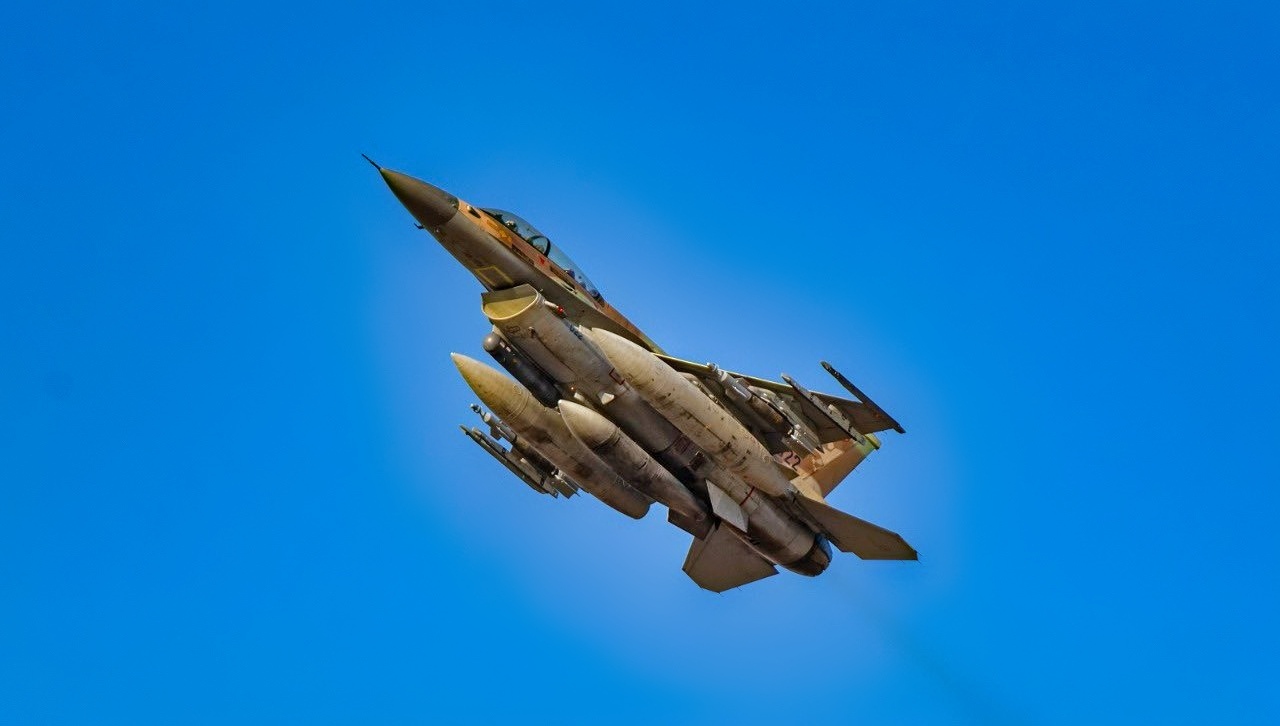
F-16I from Israeli Air Force. Image Credit: Creative Commons.

Israel F-16I Fighters IDF. Image Credit: IDF.
“I had a conversation with Bibi Netanyahu today, asking him not to go into a major raid of Beirut, Lebanon. He turned his Troops around. Thank you Bibi! I also had a conversation with Representatives of the Leaders of Hezbollah, and they agreed to stop shooting at Israel, and its soldiers.
Likewise, Israel agreed to stop shooting at them. Let’s see how long that lasts — Hopefully it will be for ETERNITY!” Trump wrote on Truth Social.
Strikes Occurred Regardless
Strikes did occur throughout southern Lebanon on Tuesday, however. Israeli drones struck targets in the region and killed at least 11 people, according to reports. One drone strike reportedly killed two Syrians in Hibchit, and another two people were killed in the village of Tou.
Earlier strikes on Monday killed six people in the village of Marwaniyeh. Defense Minister Israel Katz also confirmed that Israel had refrained from attacking Beirut following a phone call with the president.
A video shared by the Israeli Defense Forces (IDF) on X showed the strikes taking place, with the accompanying post describing how the 91st Division and Air Force struck “terrorists and infrastructure of the terror organization Hezbollah.

Israel’s F-35I Adir Fighter. Image credit: Creative Commons
“Yesterday, the 91st Division and Air Force struck weapons storage facilities, command centers, and additional terror infrastructure in southern Lebanon from which terrorists of the terror organization Hezbollah were operating,” the post reads.
Why Israel Is Threatening Beirut
Beirut is in Israel’s crosshairs because Hezbollah, the Lebanese Shia Islamist terrorist organization, has a large militant presence in the city. The Iran-backed organization holds significant influence across Lebanon, and its military wing continues to fire rockets and launch attacks against northern Israel despite ceasefire agreements reached earlier this year.
Israel sees the southern suburbs of Beirut as legitimate military targets when strikes originate from these areas. Netanyahu ordered strikes on targets in the suburbs after Hezbollah rockets struck northern Israel and the outskirts of Haifa.
Israel says that it is unacceptable that Israeli communities remain under attack while Beirut remains untouched, and insists that Hezbollah must continue to face consequences if the attacks continue.
Tehran, however, keeps piling pressure on the United States to encourage Israeli forces to cease military engagement in the region as a condition for continued negotiations. According to Katz, Washington “endorsed the principle” that continued Hezbollah attacks should trigger future strikes against Hezbollah strongholds in Beirut, even though Trump himself requested that Israel refrain from carrying out major strikes this week.
U.S. Conducts “Self-Defense Strikes” Against Iran
On Tuesday evening, the U.S. military confirmed that it had conducted “self-defense strikes” after it shot down Iranian platforms. The exchange occurred despite the ceasefire technically remaining in place and Washington continuing to insist that negotiations are ongoing – despite Tehran’s previous claims otherwise.
According to U.S. Central Command, forces successfully targeted an Iranian military ground control station located on Qeshm Island. Additional targets were also hit. A CENTCOM statement said that several ballistic missiles were shot at “regional neighbors,” but added that “all failed to hit their intended targets.”
The United States and Israel agreed to a ceasefire on April 7 – a deal that prevented most direct hostilities. However, there have been several major clashes since then.
About the Author: Jack Buckby
Jack Buckby is a British researcher and analyst specializing in defense and national security, based in New York. His work focuses on military capability, procurement, and strategic competition, producing and editing analysis for policy and defense audiences. He brings extensive editorial experience, with a career output spanning over 1,000 articles at 19FortyFive and National Security Journal, and has previously authored books and papers on extremism and deradicalization.


