


On the night of 25-26 July, Ukraine attacked one of the most advanced Russian air defense systems – a battery that was deployed in Crimea at the time. According to Ukraine’s Defense Intelligence Service (HUR) troops a launcher from an Almaz-Antei S-400 (NATO Codename SA-21) missile defense system and a radar were “destroyed” in Crimea overnight into Sunday.
Ukraine’s military and the organized resistance on the peninsula that support them have been gradually “chipping away” at the air defense network in Crimea.
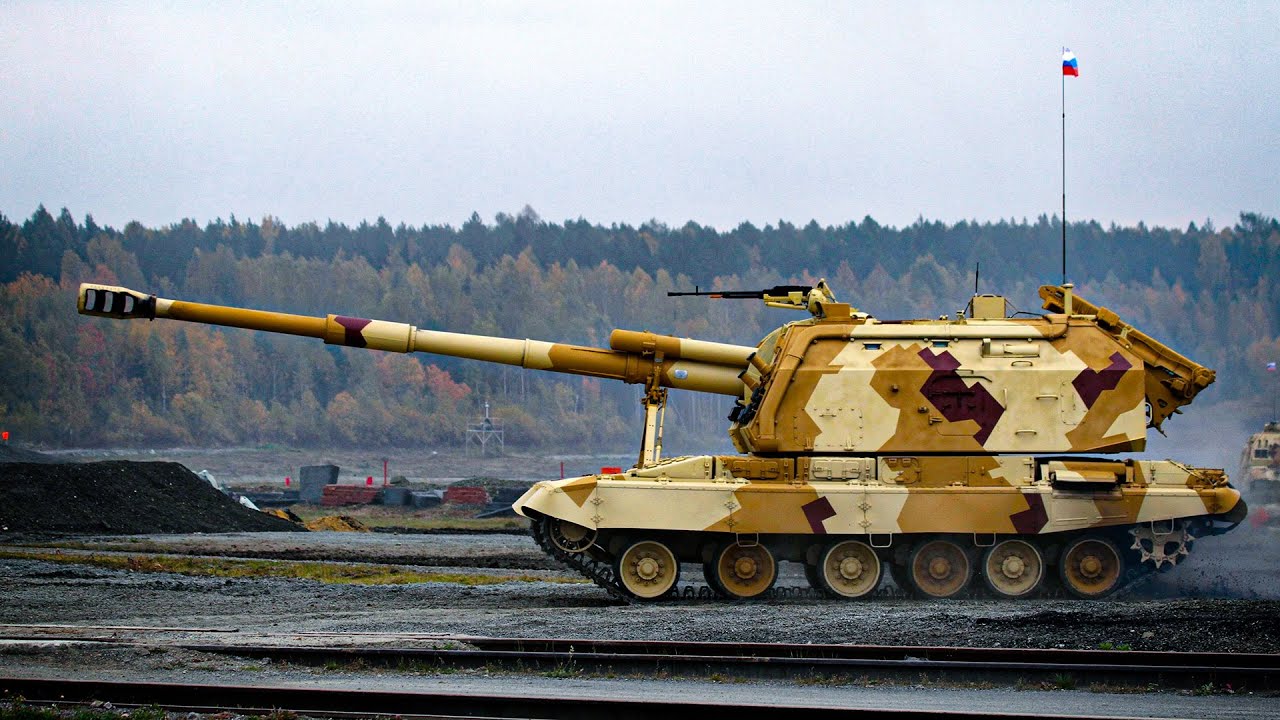
MSTA Russian Artillery Creative Commons Image
This campaign, which has been underway for more than two years now, is part of what Kyiv has been calling a sustained effort to isolate the illegally annexed region from Moscow and make it untenable for Russia’s military and imposed administrative entities to remain.
At least 5 to 7 entire S-400 batteries or their core battle manager command positions have been either heavily degraded or destroyed in Crimea since the war began.
Independent on-the-ground intelligence confirms that over 18 individual S-400 launchers and at least 4 major radar command units have been destroyed across the peninsula.
Because a complete S-400 battery is divided into separate mobile components with differentiated functions, reporting on which units have been taken out can be confusing.
Tracking exact total losses depends heavily on whether one counts the destruction of the individual vehicles or entire operational batteries.
The complete S-400 system, known by the Russian nickname “Triumph,” is a complex, multi-vehicle system.
It consists of a command post, long-range radars, and up to a dozen transporter-erector-launchers (TELs).
Its configuration – similar to the US PAC-3 Patriot system – is such that military analysts separate and tabulate losses into component-level destruction and the complete wiping out of entire batteries.
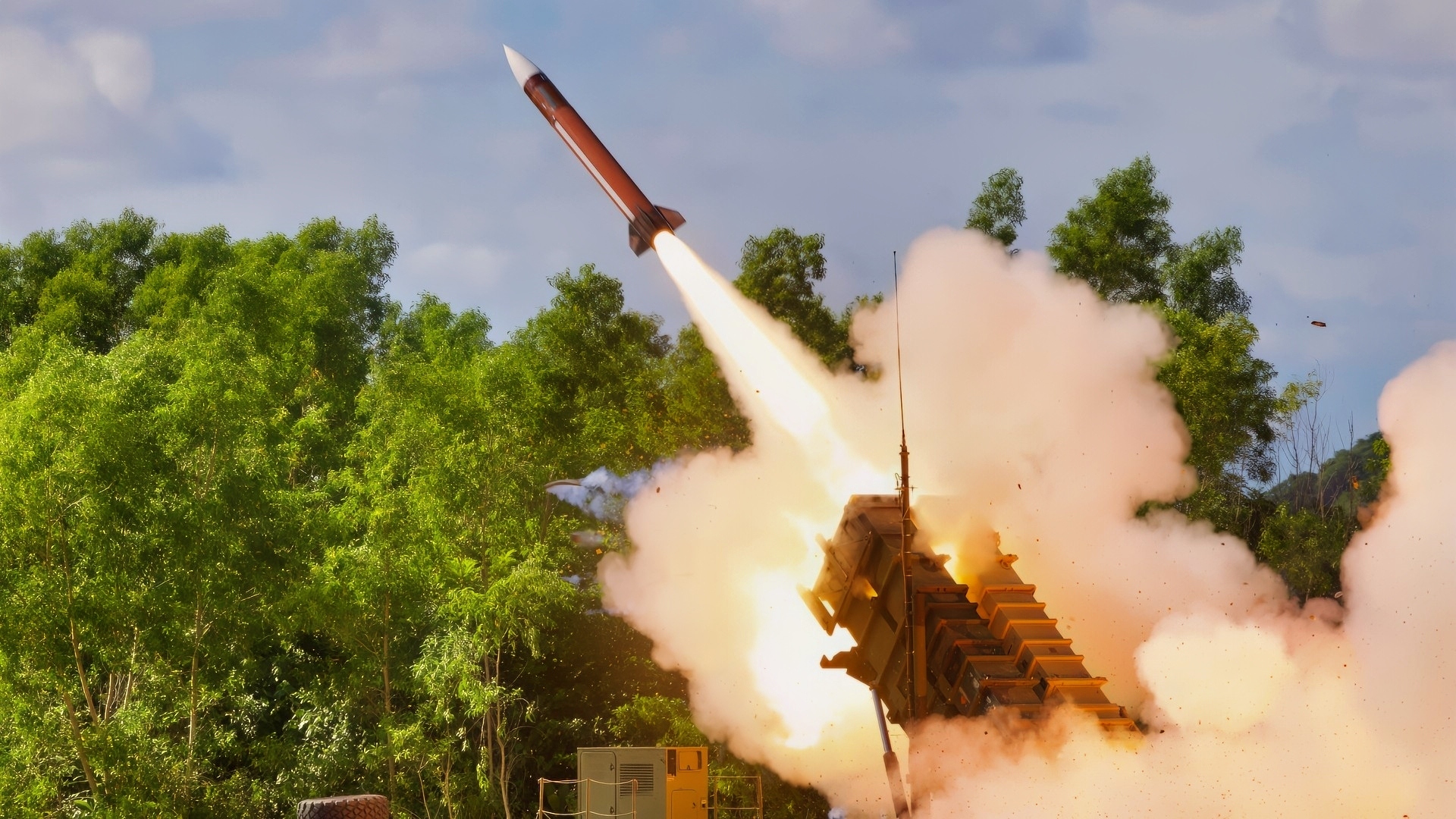
KOROR, Palau — A Patriot Advanced Capability 2 Interceptor missile is fired from an M903 Patriot Launching Station assigned to Battery D, 1st Battalion, 1st Air Defense Artillery Regiment during the patriot live fire portion of Exercise Tenacious Archer 25 on Aug. 21, 2025. Exercise Tenacious Archer 25 is a training event designed to build interoperability, capacity, and relationships that deter aggression and promote peace through strength. The exercise sharpens the brigade’s ability to operate across multiple domains, reinforcing U.S. Army Pacific’s commitment to regional security and stability.(U.S. Army photo by Capt. Frank Spatt)
Wartime Losses
As the Ukrainian military site Militarnyi has reported, the S-400’s 92N6E radar units are responsible for target detection, tracking, and missile guidance.
These radars are designed to track up to 100 targets and can provide firing solutions for as many as 72 missiles simultaneously.
The 91N6E radars, which were also struck during the operation, are used for long-range detection and target assignment within the entire missile battery complex.
The Transporter-Erector Launcher (TEL) vehicles are a component of any ground-based air defense system that fires interceptor missiles to destroy incoming threats, such as drones, fighter aircraft, bombers, helicopters, or other missiles.
The S-400 missiles are the evolutionary, next-generation replacement for the famous S-300 family of air defense systems. Russia’s designers claim they can take down targets up to 250 miles away.
Due to its advanced performance and the high price tag, the S-400 is the most sophisticated long-range air defense system that Russia can deploy against Ukraine.
The system prices out at $500 million when acquired by the Russian armed forces, but export packages range from $1 billion to $1.25 billion per battery.
The individual missiles that are fired by the system cost between $300,000 and $2 million per shot.
Across the entire theatre of operations and not just in Crimea, Ukrainian forces have visually confirmed the destruction or severe combat damage to at least 18 to 22 S-400 missile launchers.
These losses were in parallel with those of more than a dozen other critical system components, radars, and command posts.
Foreign Buyers
Several countries have procured the S-400 from Russia, among them its neighbor and close ally, Belarus.
Turkey, a NATO member state, acquired the system in a gesture that has been assessed as more an effort to keep relations with Russia on a business-like level than for most other alliance partners.
But since the war in Ukraine began, Turkey has been in talks to resell its unused S-400 units.
Parting with these batteries is an effort to persuade Washington to lift sanctions imposed on Ankara over this initial procurement.
Turkey had hoped that efforts to divest itself of this Russian-made system would lead to the lifting of those sanctions.
Ankara hopes it will then be back in the position to acquire the aircraft and participate in the industrial workshare of the F-35 program.
However, this week the State Department sent a letter to Congress stating that current US law continues to prohibit transferring the F-35 to Ankara.
The specific legislation applicable to Turkey is the Countering America’s Adversaries Through Sanctions Act (CAATSA) and the 2020 National Defense Authorization Act (NDAA).
Any effort to resolve the dispute over the S-400 must be “transparent, lawful, and consistent with our national security interests,” the letter reads.
About the Author: Reuben F. Johnson
Reuben F. Johnson has thirty-six years of experience analyzing and reporting on foreign weapons systems, defense technologies, and international arms export policy. Johnson is the Director of Research at the Casimir Pulaski Foundation. He is also a survivor of the Russian invasion of Ukraine in February 2022. He worked for years in the American defense industry as a foreign technology analyst and later as a consultant for the U.S. Department of Defense, the Departments of the Navy and Air Force, and the governments of the United Kingdom and Australia. In 2022-2023, he won two awards in a row for his defense reporting. He holds a bachelor’s degree from DePauw University and a master’s degree from Miami University in Ohio, specializing in Soviet and Russian studies. He lives in Warsaw.


