


Russia and Ukraine keep trading blows as winter nears.
While Russia continues to strike targets across Ukraine, Kyiv also continues to attack Russia’s energy sector.
Moscow Under Attack Means the War Isn’t Ending
Overnight on October 6, Ukraine launched another massive drone attack against Moscow, utilizing over 600 attack drones.

Su-57 Felon Fighter from Russia. Image Credit: Creative Commons.
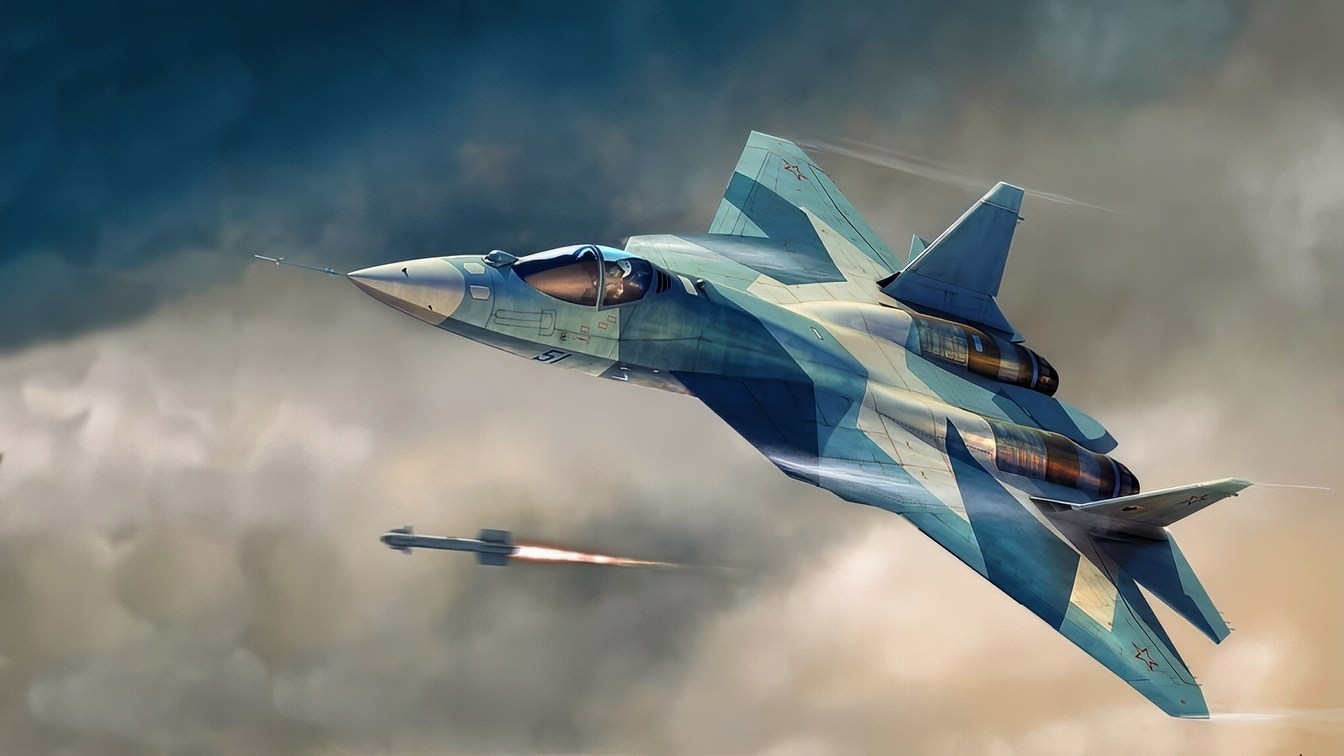
Su-57 Felon in the Sky. Image Credit: Creative Commons.
While air defenses downed most of the drones, at least one drone, possibly more, struck the Volodarsk oil depot, the largest in the Moscow Oblast.
Although the tempo has decreased since the summer, Ukraine continues to strike oil depots and refineries across Russia in an attempt to hurt Moscow’s war economy.
Likewise, Russia is continuing its long-range strike campaign as both sides seek to cripple the other’s economy.
Large-scale Drone Attack on Moscow
On the night of October 6 local time, Ukraine reportedly launched around 650 drones into Russian territory. According to Moscow’s mayor, Sergei Sobyanin, air defenses intercepted most as they approached the capital. Another 105 attack UAVs were intercepted over the Moscow Oblast.
The attack was apparently one of the largest attacks on Moscow in the last two years.
Russian news media sources have noted a significant uptick in Ukrainian UAV activity over Russia in 2026.
Between September 1 and October 5, for example, Russia reported that around 9,994 attack drones were detected flying en route to Moscow, with most destroyed by air defenses and another 862 intercepted as they approached the city (these figures may be inflated for propaganda).
During the attack, Ukrainian drones struck the Volodarsk facility in the town of Konstantinovo. Eyewitness footage shows the attacks sparked a large fire, with thick plumes of smoke billowing from the facility.
As of now, it is unclear how many drones struck the facility or how extensive the damage is. According to OSINT reports, the Volodarsk facility is one of the largest oil depots in the Moscow Oblast.
The facility supplies fuel to Moscow’s largest airports (Vnukovo, Domodedovo, and Sheremetyevo).
The facility supplies around 3 million tons of petroleum products per year and receives its fuel from the Moscow and Ryazan refineries.
Interestingly, this is the first time that Ukraine has attacked the facility, whereas most of Russia’s largest refineries have been attacked multiple times by this point.
According to the Mayor of Moscow, Andrey Vorobyov, one person was killed, and another six were wounded as a result of the attacks.
The Fruits of Ukraine’s Long-range Campaign
Over the past year, Ukraine has ramped up its strikes against Russia’s energy sector as a means of crippling Moscow’s wartime economy.
According to the Ukrainian Ministry of Defense, Kyiv’s long-range campaign has disabled more than 51% of Russia’s fuel-refining capacity. “This is the result of carefully planned, systematic, and comprehensive actions aimed at crippling the Russian war machine and destroying its military-economic potential,” said Defense Minister Yevhen Khmara. “Fifty-one percent of the damaged oil refining capacity is a significant blow to the enemy’s economy, to its ability to wage aggression, and to supply its military formations.” Keep in mind that these reports do not account for refineries that have already been repaired or restored to partial capacity since their last attack.

Su-34 Fullback Airshow Photo Creative Commons Image
Ukraine attributes its successful campaign to the country’s investment in long-range strike capabilities. The Ukrainian MoD also reported that it tripled procurement and production of long-range strike drones in 2026, with plans to expand further. “This is not the limit,” the ministry said. “We will continue to scale up our long-range strike capabilities.” The military reported a new record a month ago, when an FP-1 drone struck a Russian gas facility some 3,200 kilometers (1,988 miles) from the Ukrainian border. Longer-range drones and missiles have allowed Kyiv to strike targets that were impossible to reach in the first four years of the war.
Long-range Strike Capabilities Don’t Come Cheap
However, long-range strike capabilities are not cheap. Although drones are much cheaper to produce than advanced ballistic or cruise missiles, the cost of long-range UAVs, Starlink terminals, and advanced guidance systems rises relatively quickly.
For example, the An-196 Liutyi costs around $150,000 to $200,000, while the UJ-26 Bobr costs around $100,000 per unit and the FP-1/FP-2 cost a more modest $60,000 per piece.
In July, the Russian MoD reported intercepting 9,800 long-range drones over Russian territory.
If we assume these numbers are true (again, official numbers should always be taken with a grain of salt) and an average cost of around $100,000 per UAV, then the July interceptions cost Ukraine around $980 million to $1.18 billion.

Sukhoi Su-35 Fighter. Image Credit: Creative Commons.
Assuming all twelve months show a similar trend, that is, around $12 billion worth of drones are intercepted, or roughly 12% of Ukraine’s entire defense budget, not to mention what is spent on intelligence, planning, and the other infrastructure required for these operations.
Granted, this analysis relies on many assumptions, but the point is that these long-range operations are quite expensive for Ukraine.
Not only do they impose major fiscal costs on Kyiv’s defense budget, but they also encourage Moscow to retaliate in kind whenever Ukraine expands its air campaign against Russia.
This is not to say that Ukraine is responsible for any Russian escalations, but, as former Defense Minister Valerii Zaluzhnyi pointed out in July, “Russia retains the ability to strike back with equal or greater force.”
About the Author: Isaac Seitz
Isaac Seitz, a Defense Columnist, graduated from Patrick Henry College’s Strategic Intelligence and National Security program. He has also studied Russian at Middlebury Language Schools and has worked as an Intelligence Analyst in the private sector.


