
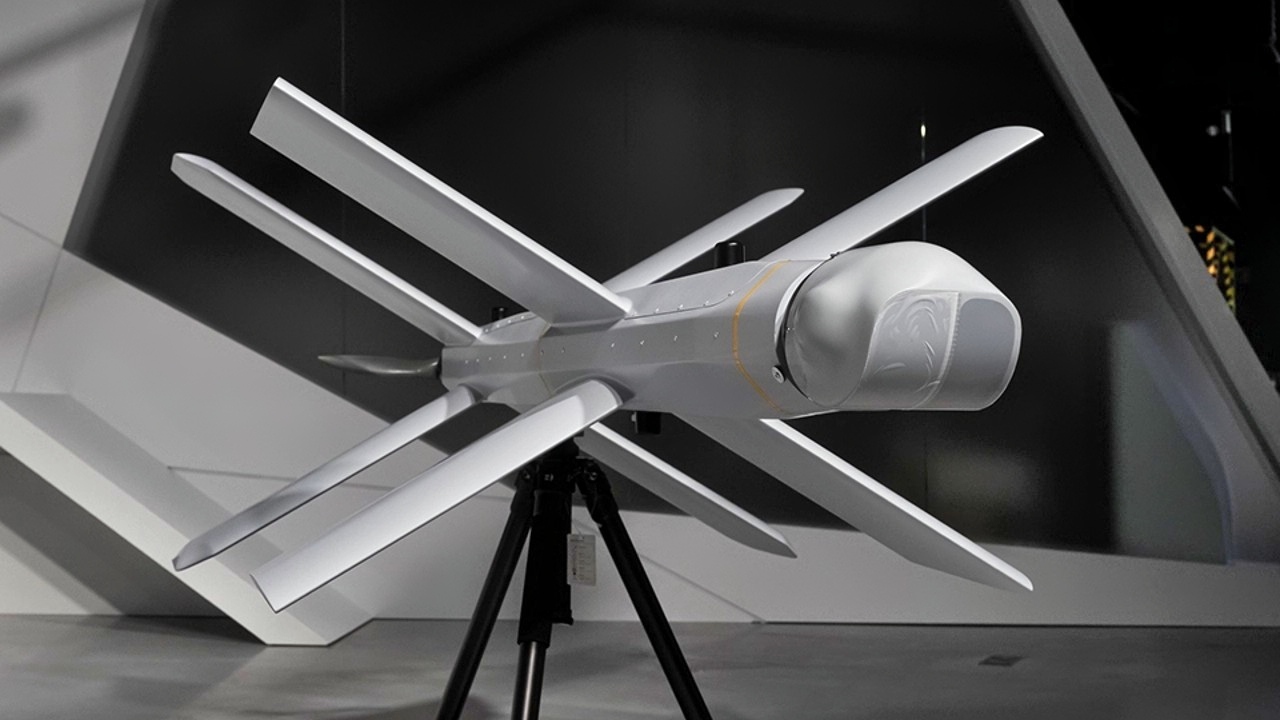
Key Points – Russia has dramatically ramped up its drone production, turning what was once a Ukrainian advantage into a full-blown industrial arms race.
-Moscow is now reportedly producing over 5,000 long-range UAVs per month—a mix of Shahed-136 strike drones and decoys—a fivefold increase from late 2024, likely enabled by a covert supply of Chinese components.
-This mass production has fueled devastating recent assaults, like the June 17th attack on Kyiv that killed at least 18 people.
-By using overwhelming numbers of cheap drones, Russia aims to saturate and deplete Ukraine’s limited and expensive air defense interceptors, shifting the war’s attritional balance in its favor.
Russia’s Drone War Against Ukraine Enters Full Swing
Drone warfare reshaped the battlefield in Ukraine some time ago, with unmanned aerial vehicles (UAVs) having proven a vital asset for both sides since 2022. Now, though, the Russia-Ukraine drone war is entering a new phase of rapid and mass drone production.
The production of these cheap weapons, that once provided a much-needed edge for Ukraine, has now evolved into a full-blown industrial arms race.
Moscow now produces more than 5,000 long-range UAVs per month, split roughly 50/50 between Shahed-136 strike drones and decoy UAVs designed to overwhelm Ukrainian air defenses.
It’s a fivefold increase compared to the roughly 500 Shahed drones per month reported in August 2024, and an increase over 2,000 per month in December 2024.
Much of Russia’s newfound drone prowess appears to be made possible with significant, but secretive, support from China. While Beijing has avoided directly supplying weapons to Moscow since the outbreak of the war, Chinese-made microchips, circuit boards, and other dual-use components are widely believed to be making their way into Russian drone factories, allowing Russia to bypass Western sanctions on the sale of such components.
Russia isn’t just building drones in large numbers, either – they’re deploying them rapidly, too.
As of June 12, 2025, data from the Center for Information Resilience suggests Russia launched 34,014 drones since January 2023. By September 2024, over 8,000 Shahed-style attack drones had also been deployed against Ukrainian forces.
With growing production capacity, Russia can now comfortably deploy these drones as a means to minimize future casualties and protect its most valuable hardware, much of which is now also under threat from Ukrainian covert drone operations like the famed Operation Spider’s Web.
What was once Ukraine’s saving grace – nimble, cheap, and easy-to-produce drones – is now being turned against them with brutal efficiency.
Russia’s Drone Recent Successes
Ukraine is no stranger to Russian drone strikes, but they are certainly becoming more frequent, and much deadlier.
On June 17, Russia launched one of its most devastating air assaults on Kyiv this year, unleashing hundreds of drones and dozens of missiles that flattened a section of an apartment block in its capital city and wreaked havoc elsewhere in the city. At least 18 people were killed, with another 151 wounded. Additional attacks in the same period killed 16 more civilians in Kyiv and two in Odesa.
Moscow is showing, particularly in the wake of Ukraine’s recent drone attacks inside Russian territory, that it is willing to use these drones to cause as much damage as possible, including by targeting civilian infrastructure.
Russia is saturating Ukraine’s weakened air defense systems at a time when Kyiv is urgently requesting new systems from Europe, and with every new attack, Ukraine’s defenses get weaker, with their arsenal of interceptors dwindling with every new assault.
Drones can, as many analysts note, tip the balance of this war – and not just for Ukraine. Moscow knows they’re effective, and its military is proving that they will be used in overwhelming numbers from now onwards.
With peace talks already paused, Russia’s new drone offensive could prolong the war indefinitely.
If Kyiv loses U.S. support, or if drone combat continues to overwork Ukrainian defense capabilities, the conflict risks shifting into a grinding war of attrition that Ukraine simply cannot win.
About the Author:
Jack Buckby is a British author, counter-extremism researcher, and journalist based in New York. Reporting on the U.K., Europe, and the U.S., he works to analyze and understand left-wing and right-wing radicalization, and reports on Western governments’ approaches to the pressing issues of today. His books and research papers explore these themes and propose pragmatic solutions to our increasingly polarized society. His latest book is The Truth Teller: RFK Jr. and the Case for a Post-Partisan Presidency.
Submarines Like No Other
Japan Might Have a Stealth Submarine the U.S. Navy Would Love


Pingback: Iran Now Must Drink 'A Chalice of Poison' - National Security Journal