


On Friday, a Russian attack damaged the headquarters of Ukraine’s Security Service in Kyiv city center.
President Volodymyr Zelenskyy said a Russian drone hit the SBU’s flagship premises on Volodymyrska Street, directly across from St. Sophia Cathedral.
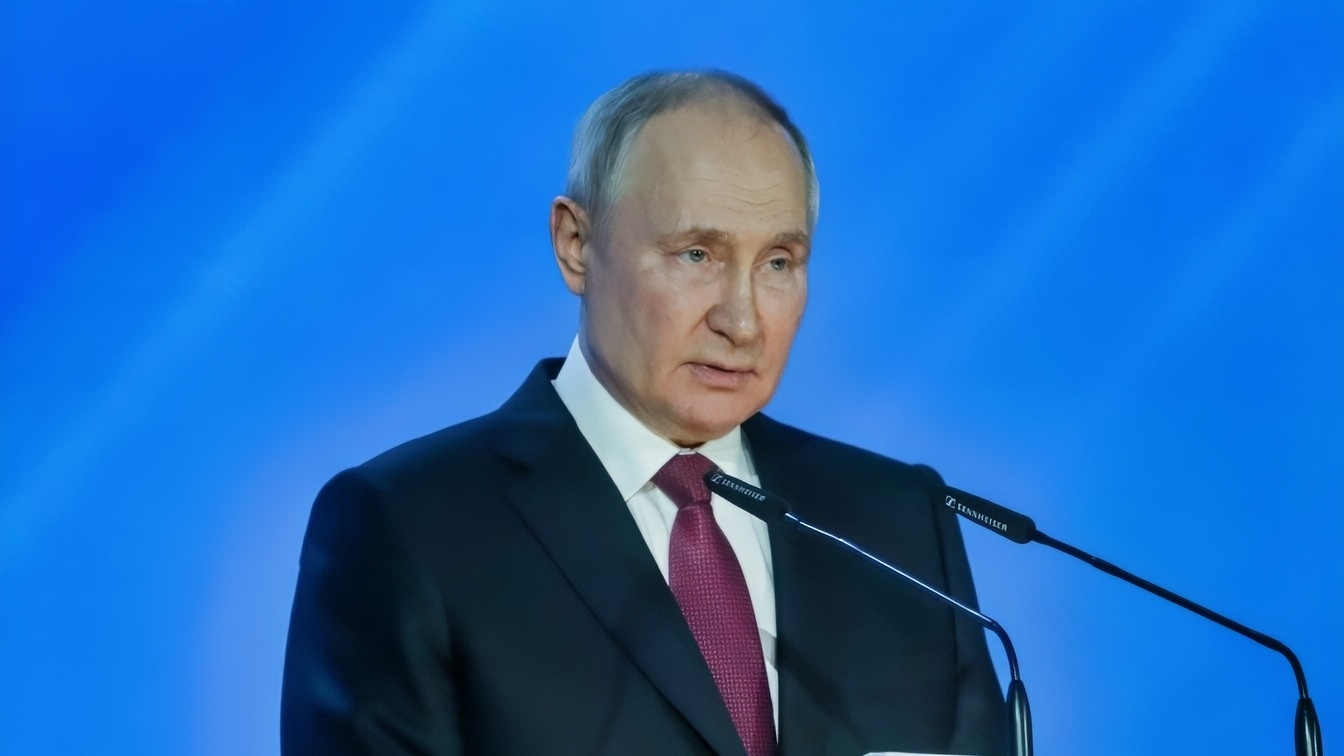
Putin March 2023 Image Credit Creative Commons
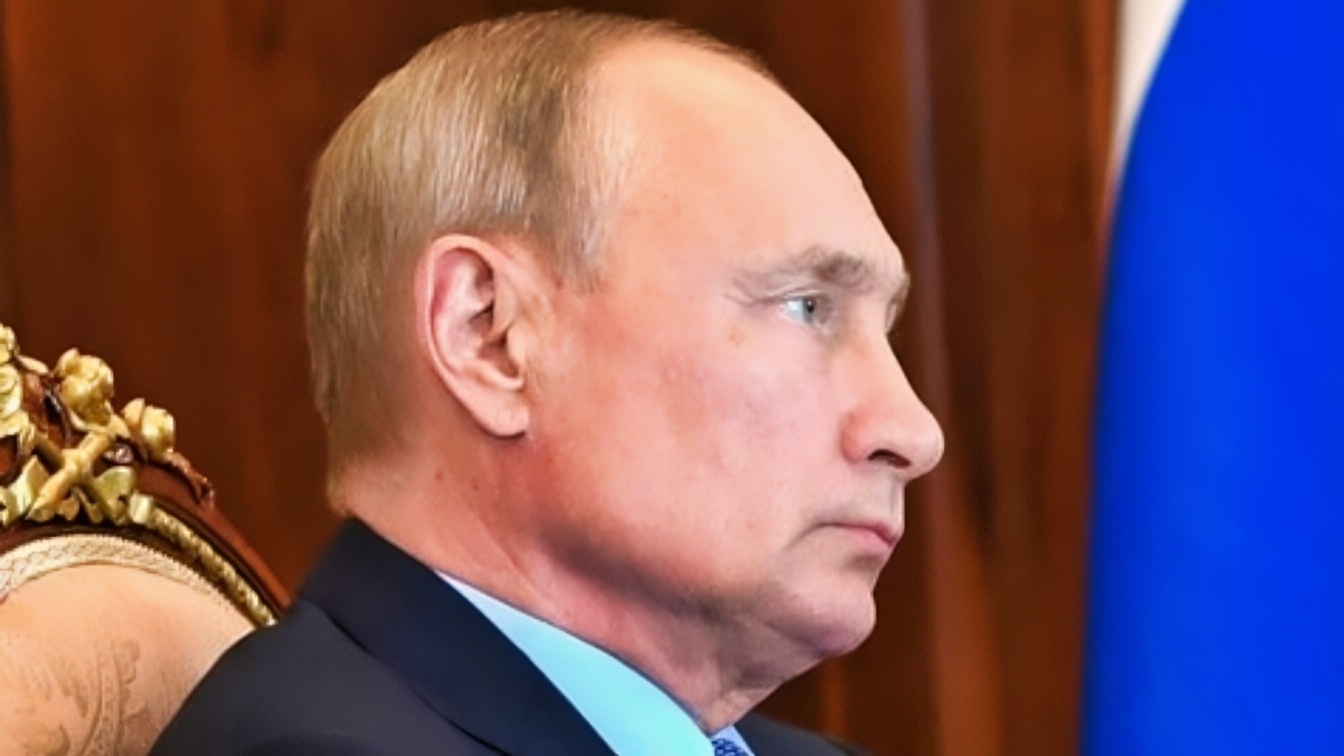
Putin Back in July of 2020 Creative Commons Image
“The drone was aimed directly at the office of the head of the Security Service in that building,” Zelenskyy said, according to Reuters.
53 Killed in Recent Weeks
Vitali Klitschko, the capital city’s mayor, has claimed 12 people were injured.
Huge, dark plumes of smoke were seen billowing out of the site following the strike, according to Reuters.
Zelenskyy said the SBU had been instructed to “deliver an appropriate, tangible response.”
The SBU headquarters is in Kyiv’s historic center, opposite the striking, UNESCO-listed St. Sophia Cathedral and close to other prominent heritage sites such as the city’s Golden Gate and National Opera.
The hit marks a huge escalation after over a week of intense attacks on the Kyiv region.
CNN said there have been 53 fatalities and 134 injuries across the region during this renewed wave of attacks.
Ukraine’s Interceptor Shortages
Writing for the Telegraph newspaper, former Royal Navy officer Lewis Page argued that the UK’s recent handover of missile technology was “political theatre designed to pressure the US into sharing its prized Patriot interceptor capabilities.”
In July, U.S. President Donald Trump appeared to propose a major fix for Ukraine, reportedly telling Zelenskyy: “We’re going to give a license to you to make Patriots.” He later walked back the idea.
U.S. defense contractor Raytheon initially developed the interceptors. Lockheed Martin is currently the prime contractor for PAC-3 interceptors used by the Patriot systems.
In the days after reports of this update, Trump signaled uncertainty about the idea, stressing that the U.S. had to be “very careful” about licensing the technology.
For much of the war, Kyiv residents could expect the heaviest Russian drone and missile attacks after dark.
On Friday, The Associated Press said Russia’s growing use of fast, jet-powered drones has interrupted the pattern, bringing repeated alerts and explosions into daylight hours.
“The alarms sound constantly,” Kyiv resident Ivan Datsiv told the outlet after a drone tore through his apartment building in the Podil district. “You don’t even have time to go down and come back up.”
Volodymyr Bovsunovskyi, whose young daughter’s kindergarten repeatedly sends children into shelter, said: “There is no stability.”
Russia Using Jet-Powered Drones
The Institute for the Study of War, citing Ukraine’s Air Force, said Russia launched 163 drones overnight from September 2 into September 3, including Shahed-type, Gerbera-type, and other systems.
Roughly half were jet-powered. Ukraine said 135 were shot down.
Russian forces have employed Geran-5 jet-powered drones against Kyiv for a second consecutive day. Ukrainian defense-technology adviser Serhiy Beskrestnov explained that the drones had been launched from roughly 400 kilometers away and could be intercepted by Ukrainian air defenses.
The pressure continued overnight into Friday.
Ukraine’s Air Force said Russia launched 121 drones and one Kh-31P missile, with 103 drones and the missile downed or suppressed, according to Interfax-Ukraine.
A World Health Organization warehouse holding humanitarian medical supplies in the Kyiv region was also hit, although the WHO said no staff were injured.
Putin’s ‘Peace’ Talks
Speaking at the Eastern Economic Forum on Thursday, President Vladimir Putin said there was, in his view, a “chance” for constructive peace talks.
ISW noted that the remark came only two days after Putin said Russia could not negotiate directly with Ukraine because Moscow considers it a “terrorist entity.”
U.S. envoys Steve Witkoff and Jared Kushner are reportedly expected to travel to Russia, although neither Washington nor Moscow had formally confirmed the trip as of Friday.
Two Years Before Ukraine Likely to Be Building Storm Shadows at Home
Justin Bronk, a senior research fellow at the Royal United Services Institute (RUSI), recently told CNN that the Storm Shadow missiles, which could massively aid Ukraine’s strike campaign in Russia, were unlikely to be manufactured by Kyiv “for a couple of years.”
His remarks came after the British government authorized the sharing of certain component blueprints with Ukraine last month.
He said Ukraine could speed up the deal’s benefits if of used Storm Shadow components in existing weapons.
Matthew Savill, RUSI’s director of military sciences, explained to the AP how SCALP’s sophisticated warhead and velocity allow it to penetrate difficult targets in ways slower drones currently cannot.
About the Author: Georgia Gilholy
Georgia Gilholy is a journalist based in the United Kingdom who has been published in Newsweek, The Times of Israel, and the Spectator. Gilholy writes about international politics, culture, and education. Follow her on X: @llggeorgia.


