

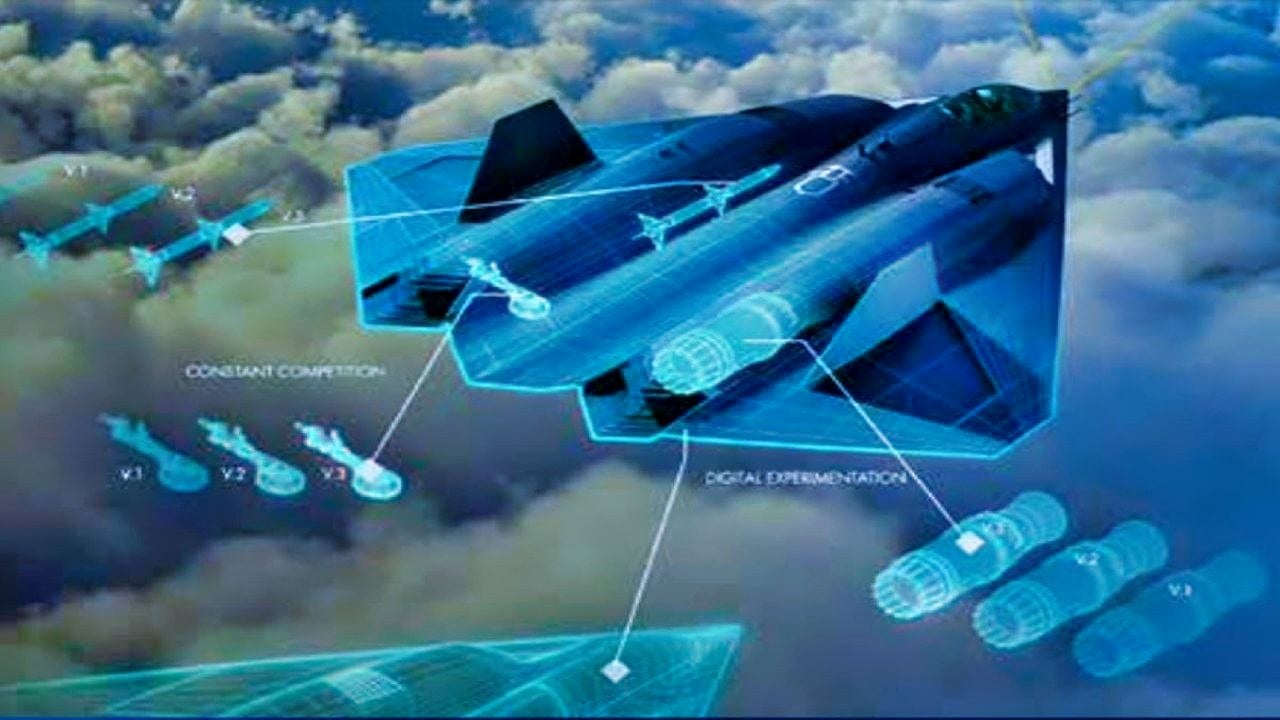
Key Points and Summary – A “paradigm-changing” 1999 concept, the Lockheed Martin X-44 MANTA, is identified as the spiritual predecessor to today’s 6th-generation fighters.
-The X-44 was envisioned as a “tailless F-22,” using 3D thrust-vectoring to achieve fighter-like agility while retaining the “broadband stealth” of a bomber-like blended-wing body.

X-44 MANTA concept art.
-While the project was canceled due to budget constraints, its innovative design philosophy—combining bomber stealth with fighter maneuverability—directly informs the new F-47 NGAD, suggesting the U.S. might have fielded a 6th-gen aircraft decades sooner if the MANTA program had continued.
The X-44 MANTA: NGAD in 1999?
Tailless 6th-generation stealth has become a reality in future fighter-jet technology, a modern, extremely cutting-edge breakthrough in the realm of air combat. The ability to vector like a fighter jet while maintaining a fully horizontal, blended-wing-body bomber-like stealth configuration is heralded as a paradigm-changing development in the realm of air combat.
However, what if early breakthroughs in the realm of the now airborne 6th-generation Air Force stealth fighter could be traced back nearly 30 years?
The answer may be yes, should one take a close look at the experimental Lockheed Martin X-44 Multi-Axis No-Tail Aircraft (MANTA) envisioned in 1999.
A “Tailless F-22?”
The X-44 was engineered to be a “tailless”, completely horizontal stealth fighter jet capable of vectoring without a tail, vertical stabilizers, or any fins.
Sound familiar?
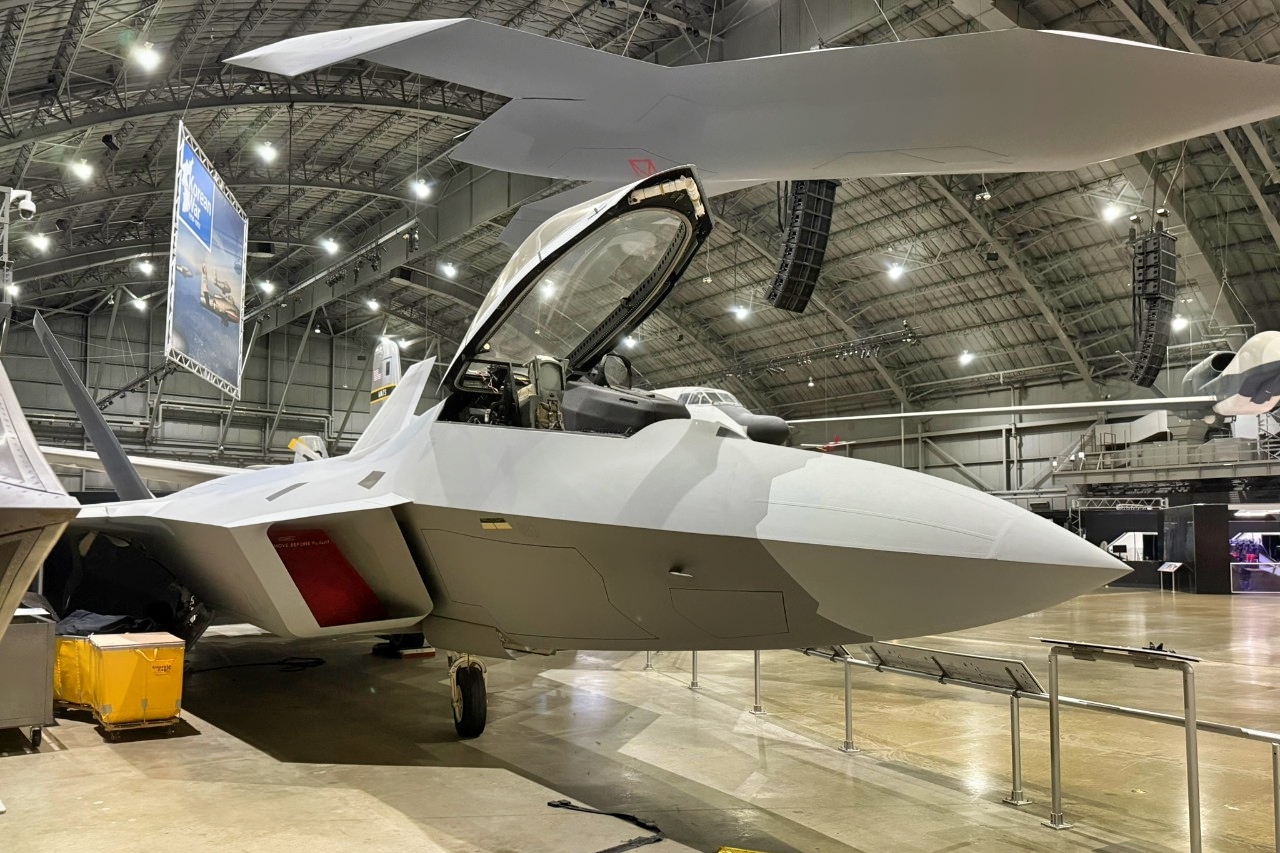
F-22A Raptor with YF-118G Overhead. Image Credit: National Security Journal.
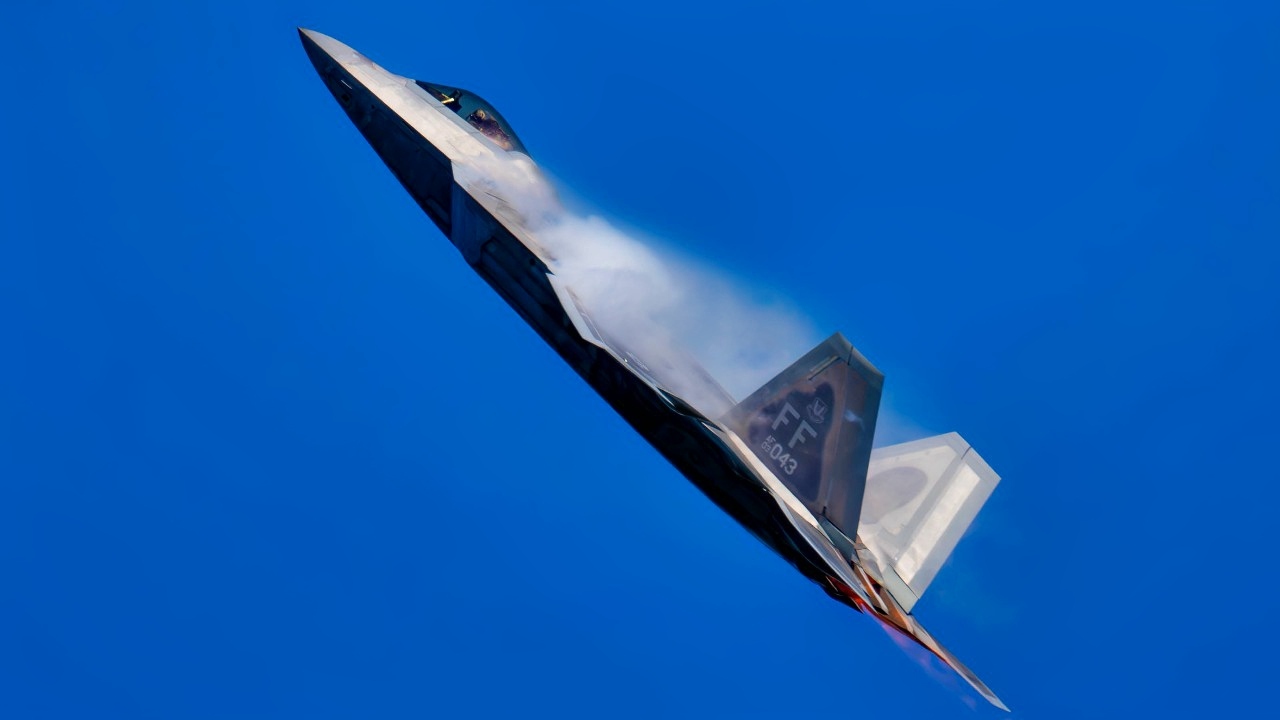
USAF Capt. Nick “Laz” Le Tourneau, F-22 Raptor Aerial Demonstration Team pilot and commander, performs a practice demonstration at Joint-Base Langley-Eustis, 17 March, 2025. Laz is the only F-22 Raptor pilot in the world certified to fly the demonstration. (U.S. Air Force photo by Staff Sgt. Michael Bowman)
This kind of ultra-stealth technology, built into a high-speed, maneuverable stealth fighter jet, is a major conceptual foundation for the now-emerging F-47 6th-gen aircraft.
US Air Force renderings of the F-47 depict tailless, full-horizonal, stealthy airframes consistent with these initial conceptual visions of the X-44 MANTA.
Of course, a fully horizontal, bomber-like blended wing-body is much stealthier than a plane with vertical structures, yet the possibility of building one able to “thrust vector” and maneuver in an F-22-like fashion without vertical structures aligns with the kinds of “huge” breakthroughs now built into 6th-gen.
Was the conceptual work for current 6th-gen aircraft explored or anticipated as far back as 1999, with visions and conceptual work on the X-44 MANTA?
Simply put, the MANTA was envisioned as an airframe that could fully pitch, yaw, and roll without any vertical structures or tailpipes.
Although the project was canceled due to budget constraints, its conceptual existence has had a long-term impact.
The influence of this vision suggests that the X-44 MANTA should never have been canceled in retrospect.
Perhaps the US Air Force could have had a 6th-generation stealth fighter decades earlier than it did?
New Aerodynamic Breakthrough
The ability to vector without vertical structures and fin stabilizers represents a paradigm-changing aerodynamic breakthrough, given that tails and fins are known to be critical for directing the airflow around the plane needed to turn sharply and maneuver at high speeds. The largest advantage of a fully horizontal aircraft, just to the observer’s eye, would exist in the realm of stealth.
Vertical structures are easier for air defenses and enemy radar to detect because they offer objects and sharp angles that electromagnetic “pings” can bounce off, providing a return signal.
Specifically, should massive amounts of electromagnetic signals, traveling at the speed of light, bounce off different angles, structures, and protruding areas of a fuselage, an enemy radar is much more likely to get a clear picture or “rendering” of an object.

Boeing NGAD F/A-XX Fighter Rendering. Image Credit: Boeing.

Shown is a graphical artist rendering of the Next Generation Air Dominance (NGAD) Platform. The rendering highlights the Air Force’s sixth generation fighter, the F-47. The NGAD Platform will bring lethal, next-generation technologies to ensure air superiority for the Joint Force in any conflict. (U.S. Air Force graphic)
Fully horizontal blended wing-body designs, such as the B-2, are considered the stealthiest aircraft in existence because they appear like a “bird” to enemy radar.
There are no sharp structures off of which electromagnetic pings can bounce, yet “broadband” stealth kinds of platforms cannot maneuver like an F-22. A B-2 would rely upon altitude, speed, and the highest available stealth configuration to elude air defenses.
With vertical structures, however, an F-22 might appear less stealthy than a B-2, meaning it would need to use speed and maneuver to supplement its stealth configuration to avoid being target locked by enemy ground radar.
Broadband Stealth
Broadband stealth, such as that built into a B-2 or B-21, for example, is engineered to elude lower frequency “surveillance” radar as well as high-frequency “engagement” radar.
The idea is to conduct clandestine missions without an enemy ever knowing the aircraft is there.
An F-22 or F-35, for example, might elude “engagement radar” but potentially still be picked up by long-range, low-frequency “surveillance” radar able to determine that something is “there.” Surveillance radar may be able to see that there is a “threat” somewhere in a large area, but it cannot engage, lock on, or fully “engage” a target.
This means an F-22 can use its speed, maneuverability, and stealth to destroy enemy air defenses without being successfully targeted or hit.
Narrowly configured, high-speed, high-frequency radar detection is necessary to actually “hit” a target. In contrast, lower frequency surveillance radar may blanket an area yet remain unable to establish a target lock on an aircraft.
Stealth and Maneuver
What about combining both of these attributes, broadband stealth and maneuverability, into a single platform? The idea would be to create the stealthiest configuration possible, yet “retain” an ability to maneuver, vector, and hit speeds comparable to an F-22.
This is the basis of the 6th-Gen, and it appears to trace back to Lockheed’s X-44 MANTA in 1999.
About the Author: Kris Osborn
Kris Osborn is the President of Warrior Maven – Center for Military Modernization. Osborn previously served at the Pentagon as a highly qualified expert in the Office of the Assistant Secretary of the Army—Acquisition, Logistics & Technology. Osborn has also worked as an anchor and on-air military specialist at national TV networks. He has appeared as a guest military expert on Fox News, MSNBC, The Military Channel, and The History Channel. He also has a Master’s Degree in Comparative Literature from Columbia University.
More Military
The Army’s AbramsX Tank Boils Down to 1 Word
China’s Big Plan To Sink U.S. Navy Aircraft Carriers Comes Down to 4 Words
The New Air Force B-21 Raider Isn’t Just a Stealth Bomber
The F-22 ‘Super’ Stealth Fighter Is Coming
The Real Reason U.S. Air Force Recruiting Numbers Are Surging


