

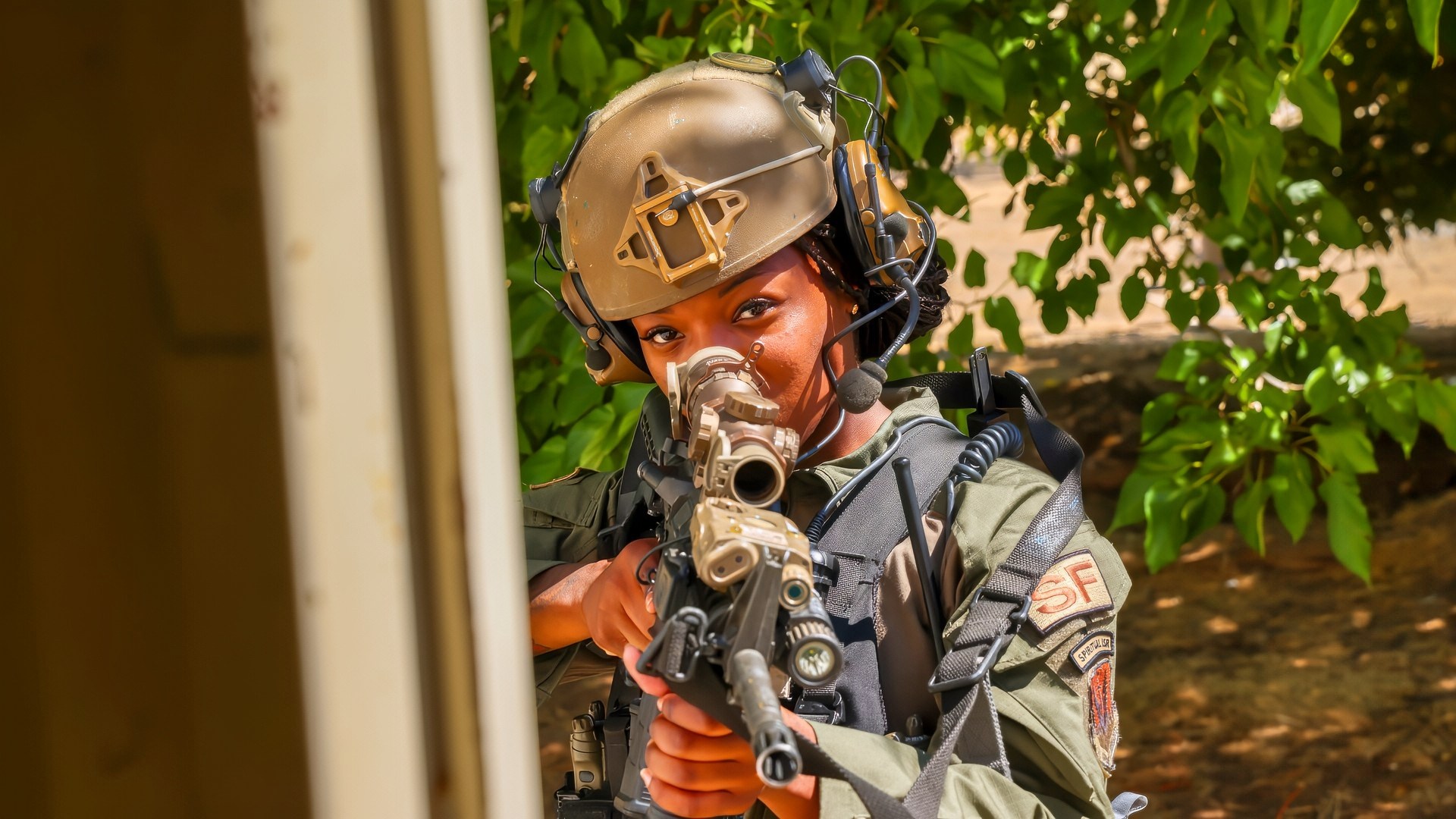
Key Points and Summary – U.S. Air Force recruiting is surging, with its delayed entry program hitting its highest level since 2012, setting the service up to meet its FY2026 goals early.
-This success is attributed to several key advantages over other branches.
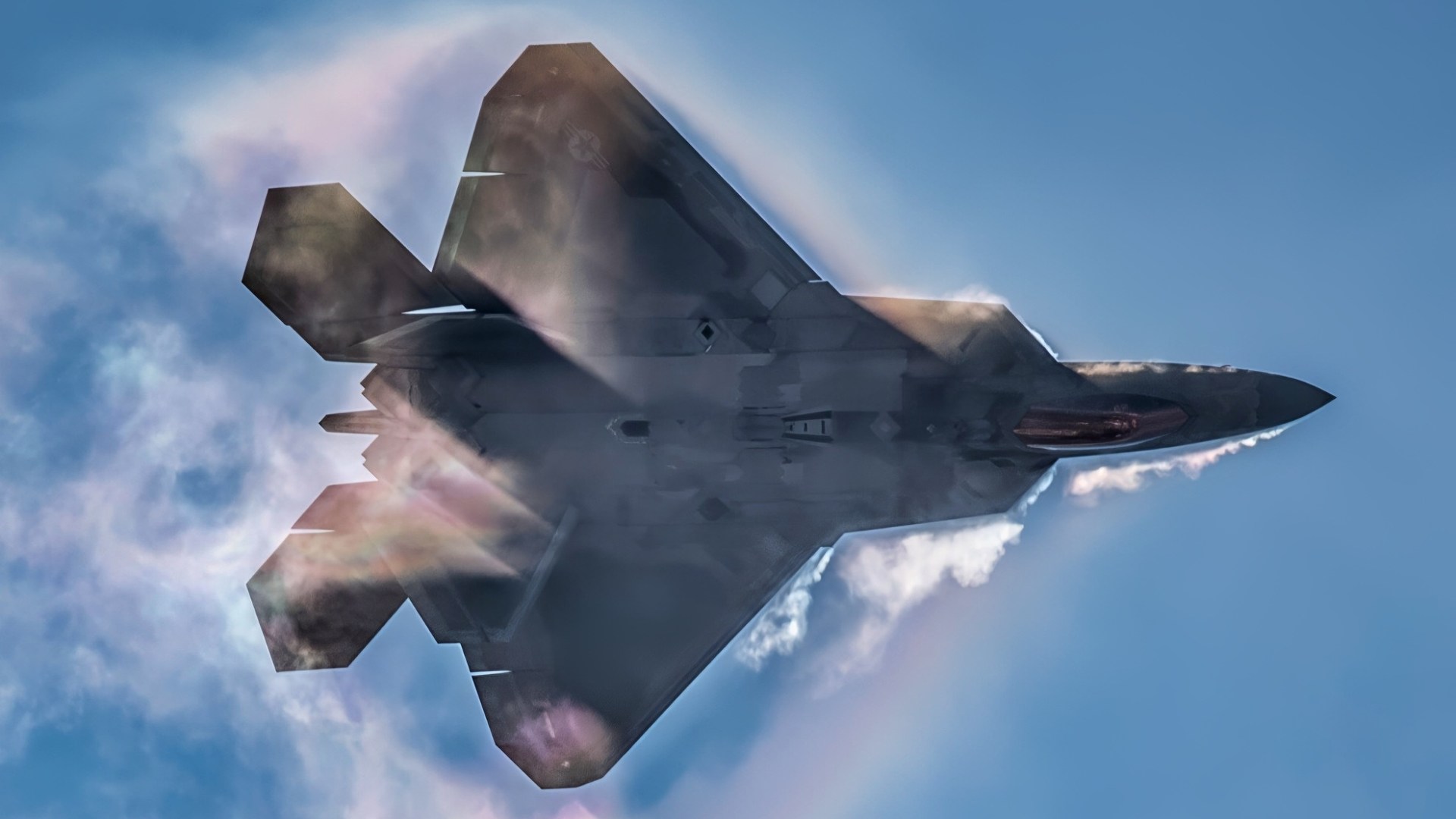
U.S. Air Force Maj. Josh ‘Cabo’ Gunderson, F-22 Raptor Demonstration Team commander, performs during an air show in Fort Worth, Texas, Oct. 17, 2020. The F-22’s raw power and thrust vectoring technology gives the aircraft super maneuverability in the air-to-air battlespace. (U.S. Air Force photo by 1st Lt. Sam Eckholm)
-The Air Force is widely perceived as offering a higher quality of life, including better base amenities (“dorms,” not barracks), family services, and shorter deployments.
-A primary draw for high-scoring recruits is the vast array of technical jobs that provide skills (aviation, engineering) that translate directly into high-paying civilian careers. The “cool factor” of flying, an elite special operations pipeline, and strong educational benefits also make it a desirable service.
Why the Air Force Is Improving Its Recruiting Numbers
The U.S. Air Force has good news for the brass and the higher-ups at the Department of Defense.
Recruiting is up, surpassing prior years, as 19,000 enlistees have already volunteered for the service branch’s delayed entry program, the highest number since 2012.
That means these recruits, mainly from high schools, have already committed to the Air Force months before shipping off to basic training.
This will allow the Air Force to meet its FY2026 goals early if the delayed entry recruits honor their early commitment to serve.
Why Choose the Air Force?
The Air Force has long been seen as a branch with interesting, technical military occupational specialties that translate well into civilian careers post-service.
Air Force personnel can pursue aviation jobs in manufacturing, engineering, testing and evaluation, and other high-paying positions in aerospace industries after service.

U.S. Air Force Maj. Joshua “Cabo” Gunderson, F-22 Raptor Demonstration Team commander and pilot, performs during the Orlando Air and Space Show at the Orlando Sanford International Airport, Florida, Oct. 30, 2022. The F-22A is a fifth-generation fighter incorporating fourth-generation technology, radical maneuvering capabilities, the ability to fly at supersonic speed without afterburners and unprecedented pilot situational awareness. (U.S. Air Force photo by Airman 1st Class Joshua Hastings)
This often attracts recruits who score high on the ASVAB military entrance exam and are highly motivated to serve in a branch with strong prospects for civilian employment and challenging, mentally engaging jobs during military service.
Is It a ‘Safer’ Service Branch?
The Air Force also has a few frontline airmen who could be killed or wounded in combat, which grants less worry from parents who are concerned about death or injury for their loved ones.
Air Force Special Operations Is Made for Those Seeking Adventure
For those more adventurous types who are not afraid of danger, there is Air Force Special Operations Forces.
The elite members of the Air Force include combat controllers, tactical air controllers, special reconnaissance, and pararescue operators. These personnel are widely appreciated in the special operations community and are growing in stature and prestige.
There are jobs for all kinds in the Air Force, and it is considered a fun and valuable branch.
The United States maintains bases around the world for those who are interested in traveling.
Opportunity to Be a Pilot
Plus, the opportunity to be a pilot is irresistible for some, and working on fighter jets and bombers, especially stealth airplanes, is seen as a highly selective and desirable service. Recruiting videos are easy to produce.
Just show some fast fighter jets streaking through the air and get people hooked early.
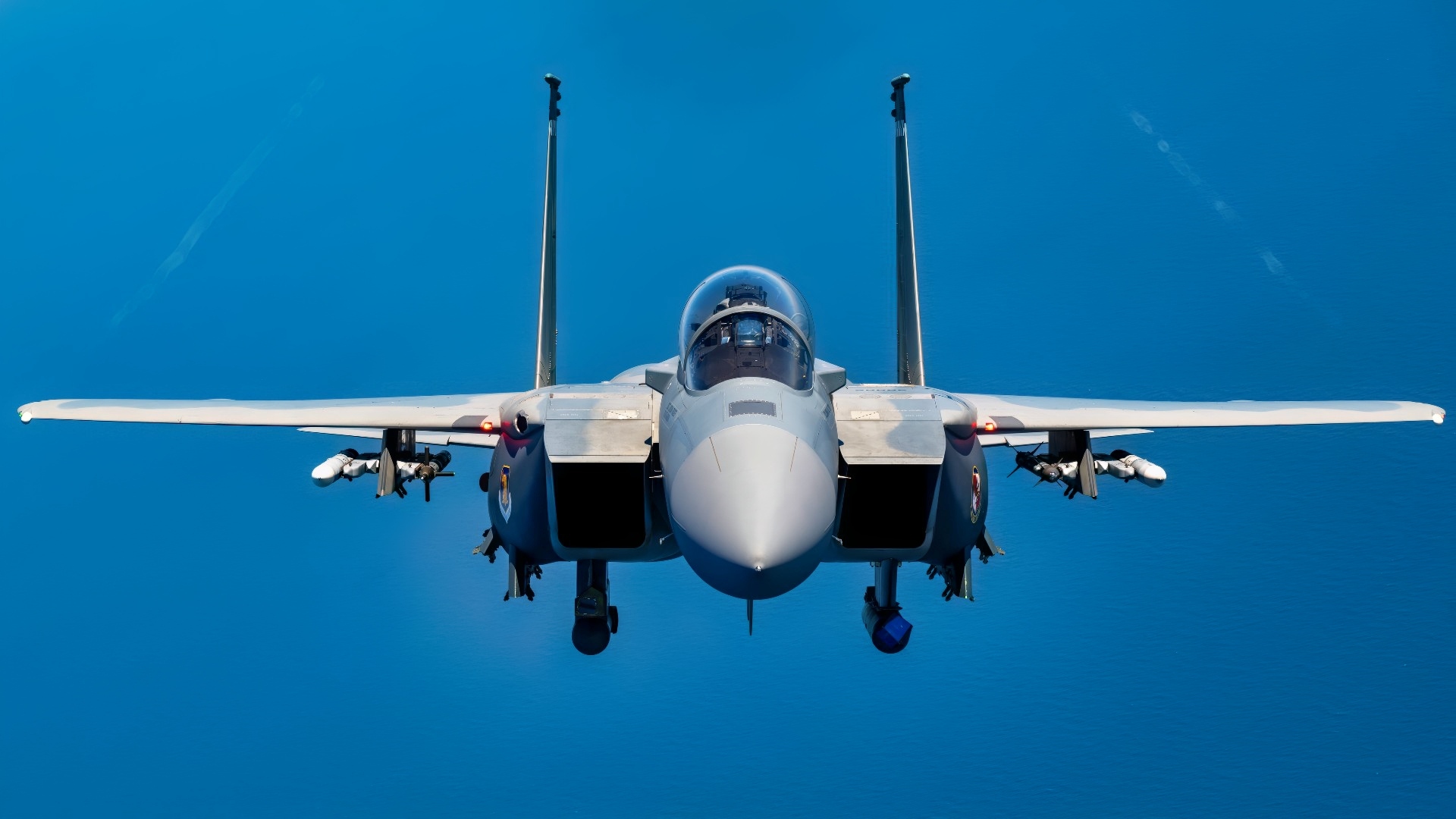
A U.S. Air Force F-15EX Eagle II flies over the Gulf of America, September 16, 2025. The F-15EX, from the 40th Flight Test Squadron at Eglin Air Force Base, Florida, is one of the first F-15EXs in the Air Force, and is going through developmental and operational test series at Eglin to confirm its operational capabilities before it is delivered to the combat Air Force. (U.S. Air Force photo by Staff Sgt. Blake Wiles)
Being a reservist or National Guard member in the Air Force helps recruiting, too.
Air Force members can maintain their civilian aviation jobs and have a similar MOS in the service. Or they can enter reserve duty with no skills, acquire a fascinating job, and use that experience for a quality resume for the civilian world.
This is great for college students who are considering careers in aviation. They also have the advantage of being able to switch to active duty for full-time service in the Air Force.
There are around 200 different job options in the Air Force – that’s something to consider when enlisting or taking the officer path. Air Force veterans are then often recruited by civilian businesses after serving.
Many receive security clearances when working on various aircraft, which makes them especially valuable.
For current and future college students, there are tuition assistance programs, student loan repayment, and the Post-9/11 GI Bill.
High Quality of Life for Singles and Families
Air Force bases are known in the military (at least when I was in the Army) as having some of the best creature comforts.
The barracks, the Air Force calls them dorms, have free wi-fi. On-base detached housing is nicer (according to some). The commissaries and base exchanges are more plentiful.
There are numerous things to do off-duty. Many bases are newer, or, if older, more modernized. The quality of life for families may be better.
Each Air Force base is like its own city. There are hiking trails, swimming pools, bowling alleys, gyms, social clubs, and more. Sports leagues for kids abound. Day care is available for pre-K children, and schools for older children are high-quality. There are also many employment opportunities for spouses.
The Air Force recruiters emphasize that you will have an eight-hour workday and weekends off during peacetime. Deployments in conflict zones can sometimes last only 4 months. Wi-Fi connections are always in place overseas for communicating with friends and loved ones back home.
However, working on the flight line and being a pilot can be dangerous or even hazardous to your health. Airmen working on airplanes are subjected to jet fuel and other chemicals that could be carcinogenic.

An F-15C Eagle assigned to the 44th Fighter Squadron returns from a training sortie at Kadena Air Base, Japan, Dec. 20, 2022. The 44th FS maintains combat readiness through daily training, ensuring the ability to provide superior airpower capabilities in support of a free and open Indo-Pacific. (U.S. Air Force photo by Senior Airman Jessi Roth)
Pilots deal with radiation in the cockpit that has been attributed to cancer. This is anecdotal, but one of my close relatives developed colon cancer, allegedly from his contact with jet fuel and other chemicals while serving as an avionics technician on F-16s and F-117s.
But the service branch is now aware of these hazards and is taking better precautions. In all, the Air Force may have a higher quality of life than other branches.
The jobs lend themselves to a better transition into the civilian world, with the potential for high-paying roles in the aviation and aerospace industries.
Air Force bases are nice and modernized. Sometimes installations are in parts of the country where there is no city nearby, and overseas service can be difficult. But a job in the Air Force is often similar to what you would find in the civilian world, and the positions are challenging, require highly technical skills, and are mentally stimulating.
About the Author: Brent M. Eastwood
Brent M. Eastwood, PhD is the author of Don’t Turn Your Back On the World: a Conservative Foreign Policy and Humans, Machines, and Data: Future Trends in Warfare plus two other books. Brent was the founder and CEO of a tech firm that predicted world events using artificial intelligence. He served as a legislative fellow for US Senator Tim Scott and advised the senator on defense and foreign policy issues. He has taught at American University, George Washington University, and George Mason University. Brent is a former US Army Infantry officer. He can be followed on X @BMEastwood.
More Military
The Air Force Only Has 19 B-2 Spirit Stealth Bombers
Why the U.S. Navy Needs Lasers for an ‘Infinite Magazine’
U.S. Navy F/A-18 Super Hornet Fighter: How Hard Is It To Fly?
Unstoppable: Delta Force Is the Very Best Special Forces Unit on Planet Earth
Could a U.S. Navy Nuclear Aircraft Carrier Tip Over In a Storm?


JohnnyBaseball
October 25, 2025 at 12:41 pm
Not all AF jobs are cushy. I enlisted in 1969. During basic, recruiter asked if I’d volunteer for a top secret job serving away from military bases. Hmm…sounds good. So far – not much different from dormitory life. I was wrong.
I was a seismic analyst. My two year-long deployments were to 30-man detachments in the jungles and always 100 miles distant from the nearest airport or city. AC was optional. Chow was same as the locals ate. Worst thing? I couldn’t tell a civilian employer what skill I had. My bad…Exxon and Shell would have paid handsomely for my skillset.