

The exact purpose of the American Central Intelligence Agency (CIA) Director John Ratcliffe’s 25 August trip to Moscow has become clearer in the days since his return.
The main objective was to deter Putin from attacking NATO. At least, that is what is being widely reported.
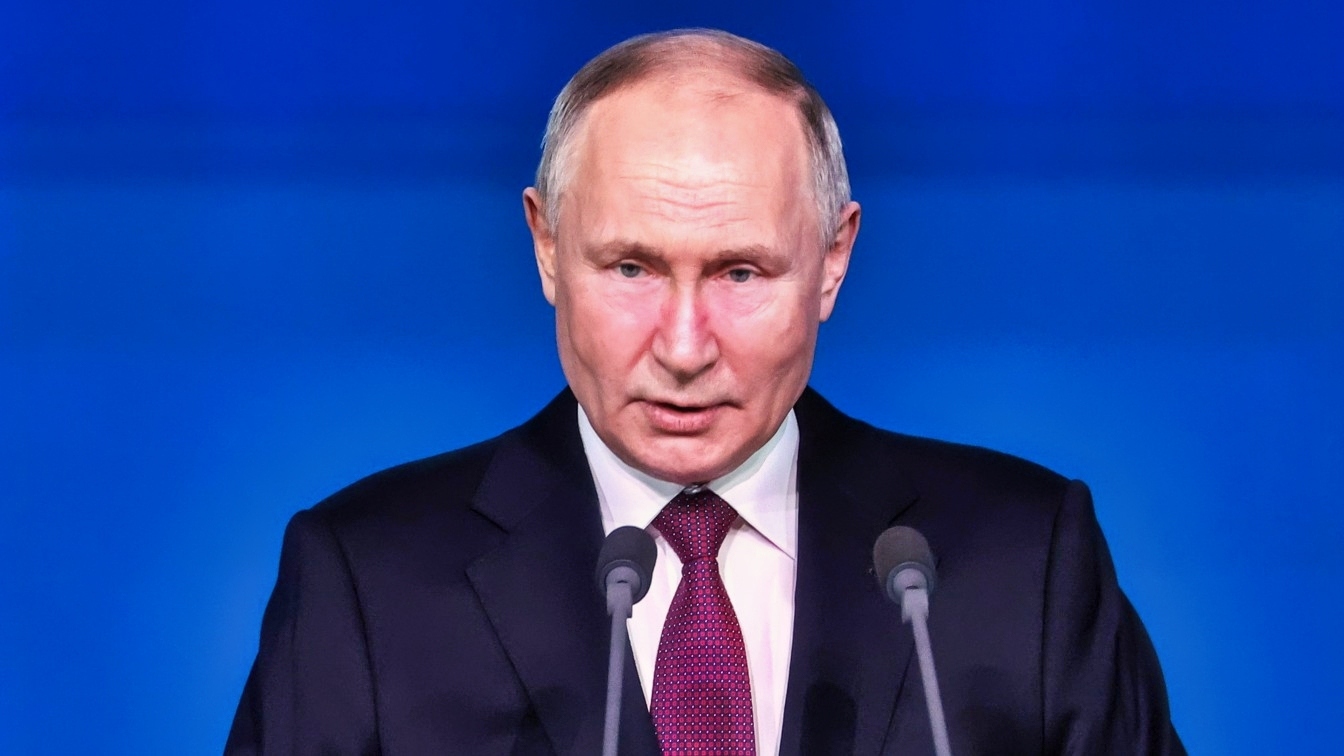
Putin At a Conference Creative Commons Photo
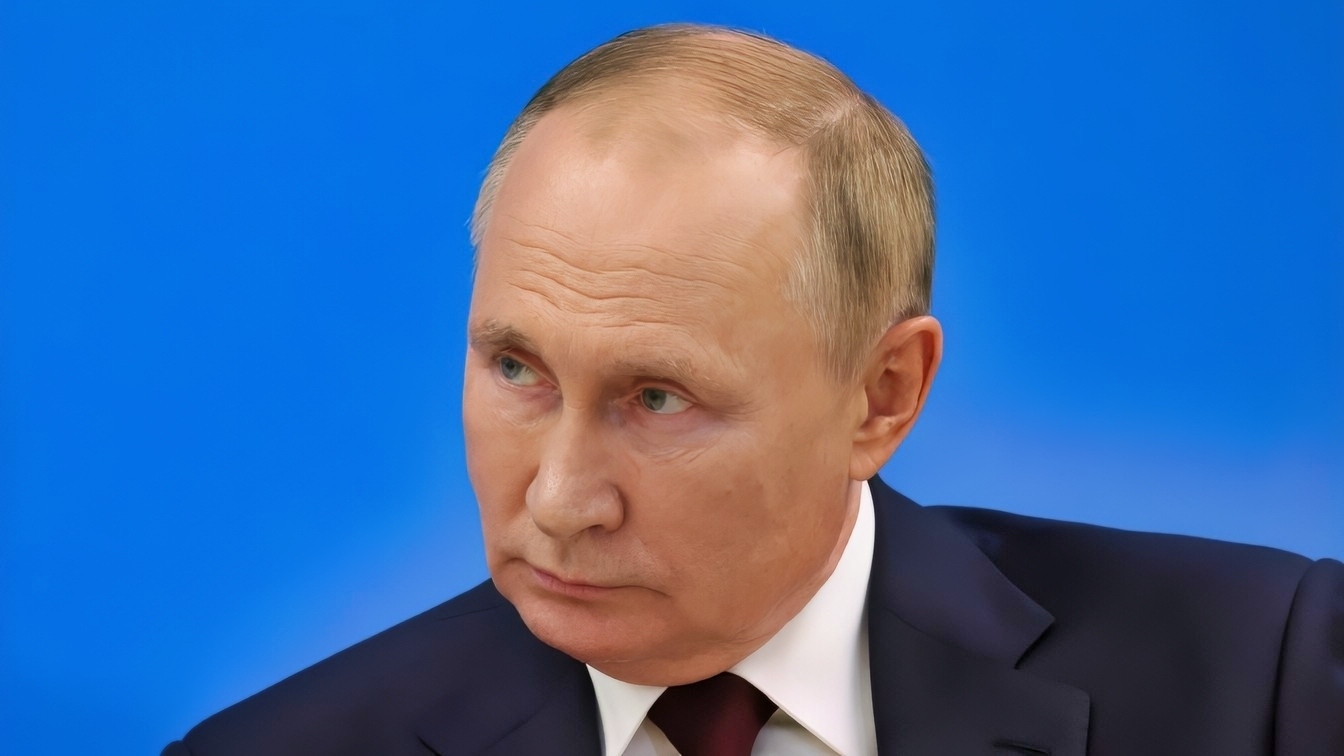
Putin In September of 2022 Creative Commons Photo
His visit was so short – at least 4 hours but no more than 8 hours in length- that it falls somewhere between the categories of a drive-by and a cameo appearance.
US President Donald Trump has characterized the trip as “semi-routine”, but if we believe that description, you would be forced to ask what makes a trip just “a plain, ordinary routine”.
The last such visit by the head of the Agency was by then-President Joe Biden’s choice for the job, William Burns, nearly five years ago in November 2021. It was less than a spectacular success.
His mission lasted two days and culminated in a session with then-head of the Russian Security Council Nikolai Patrushev.
Burns had hoped the messages he imparted to the Russian Security chief would dissuade Russian President Vladimir Putin from his plans to invade Ukraine.
Three months and three weeks later, Putin did just as the Biden White House had feared and launched his “three-day Special Military Operation” (SVO). It has now instead lasted four years and six months.
Why Putin Was Not Convinced
Part of the reason Putin ignored Burns’s warnings, long-time Washington reporter Bob Woodward wrote, was the debacle that became the disastrous US pullout from Afghanistan in August 2021.
Woodward interviewed Eric Green in 2024 for his book “War”, which was released just prior to the presidential election.
Green, a former senior director for Russia and Central Asia on the US National Security Council (NSC), told Woodward he believed Russian leaders were unconvinced Washington would do anything to save Ukraine based on how Afghanistan was left in a lurch by US forces and then soon fell to the Taliban.
“I think it reinforced Putin’s conceptions about how easy it would be,” Green told Woodward. “Here’s a military force that’s been supported by the US for decades at that stage. They just collapsed. The Americans didn’t back them up.”
Given US President Donald Trump’s decision to end US taxpayer-funded military assistance to Ukraine and his frequent, open disdain for NATO, it is worth asking whether Ratcliffe will have any more luck influencing Putin’s behavior than his predecessor.
The CIA official’s message is thought to have included not just warnings about Russia attacking a NATO country, but also Putin using a nuclear weapon against Ukraine and demanding that Moscow cease providing Iran with targeting data that could be used against US troops operating in the Middle East.
Since Ratcliffe’s departure, Trump told reporters that he’s had “good talks” with Russian president Vladimir Putin, and he also insisted that “he’s not going to be attacking a NATO territory”. Subsequent reporting is that setting a red line for Putin regarding the alliance was the main reason for Ratcliffe’s interactions with Russian officials.
What History Teaches Us on Putin
To be fair to Burns, his chances of persuading Patrushev to then force Putin to call off his Ukraine invasion were probably dead on arrival.
Former KGB Lt. Col. Putin and Patrushev have known one another since 1970, and more than 50 years of association have given the latter a good deal of influence over the Russian President.
Patrushev has been described by experts on the Russian security services as a man whose “barking mad conspiracy theories” make Putin’s ravings about “Ukrainian Nazis” and the grandiose plans of the West to destroy Russia seem almost sane by comparison.
As a colleague in Moscow, a military and security specialist, described it, asking Patrushev to hold Putin back from his invasion plans was like speaking “cherez isporchenniy telefon” (through a broken telephone).
There are also those who today blame Trump’s NATO-bashing for emboldening Putin to a point where the alliance must worry about an attack from Russia. But looking back, recent US administrations have a sad history of offering inadequate support for the alliance.
Some of Putin’s more egregious acts against both Ukraine and NATO’s interests occurred under the presidency of Barack Obama (2008-2016).
In 2010, Viktor Yanukovych, an openly pro-Russian candidate supported by Moscow, became Ukraine’s president. He quickly re-oriented Ukraine’s national policy towards Moscow and away from the EU and NATO.
Yanukovych’s widely unpopular actions culminated in the 2013-14 Maidan revolt that forced him to flee the country, but not before his security services shot and killed more than 100 protestors in Kyiv’s main Independence Square. Putin then invaded and occupied the Crimea region of Ukraine.
At the time, Ukraine had become one of the most important NATO partner nations, but the Obama White House nonetheless turned down repeated appeals by Kyiv for US military aid.
Two years later, Obama’s Ukraine policy was described as being in shambles.
“Putin has paid no price,” Foreign Relations Committee Chairman Republican Sen. Bob Corker said at the time. He added that European leaders had told him Putin says “there is just no push back” from the US.
One year earlier, a former senior US military commander said privately that inside of the Obama White House he had heard the 44th president say that if Lithuania were attacked by Putin, Washington would lend air power, but no US troops would be sent into battle against Russian units.
Regardless of which CIA Director travels to Moscow to warn Putin from taking some hostile act, the bar to convince him that the US will back up NATO if he attacks is awfully high.
About the Author: Reuben F. Johnson
Reuben F. Johnson has thirty-six years of experience analyzing and reporting on foreign weapons systems, defense technologies, and international arms export policy. Johnson is the Director of Research at the Casimir Pulaski Foundation. He is also a survivor of the Russian invasion of Ukraine in February 2022. He worked for years in the American defense industry as a foreign technology analyst and later as a consultant for the U.S. Department of Defense, the Departments of the Navy and Air Force, and the governments of the United Kingdom and Australia. In 2022-2023, he won two awards in a row for his defense reporting. He holds a bachelor’s degree from DePauw University and a master’s degree from Miami University in Ohio, specializing in Soviet and Russian studies. He lives in Warsaw.


