

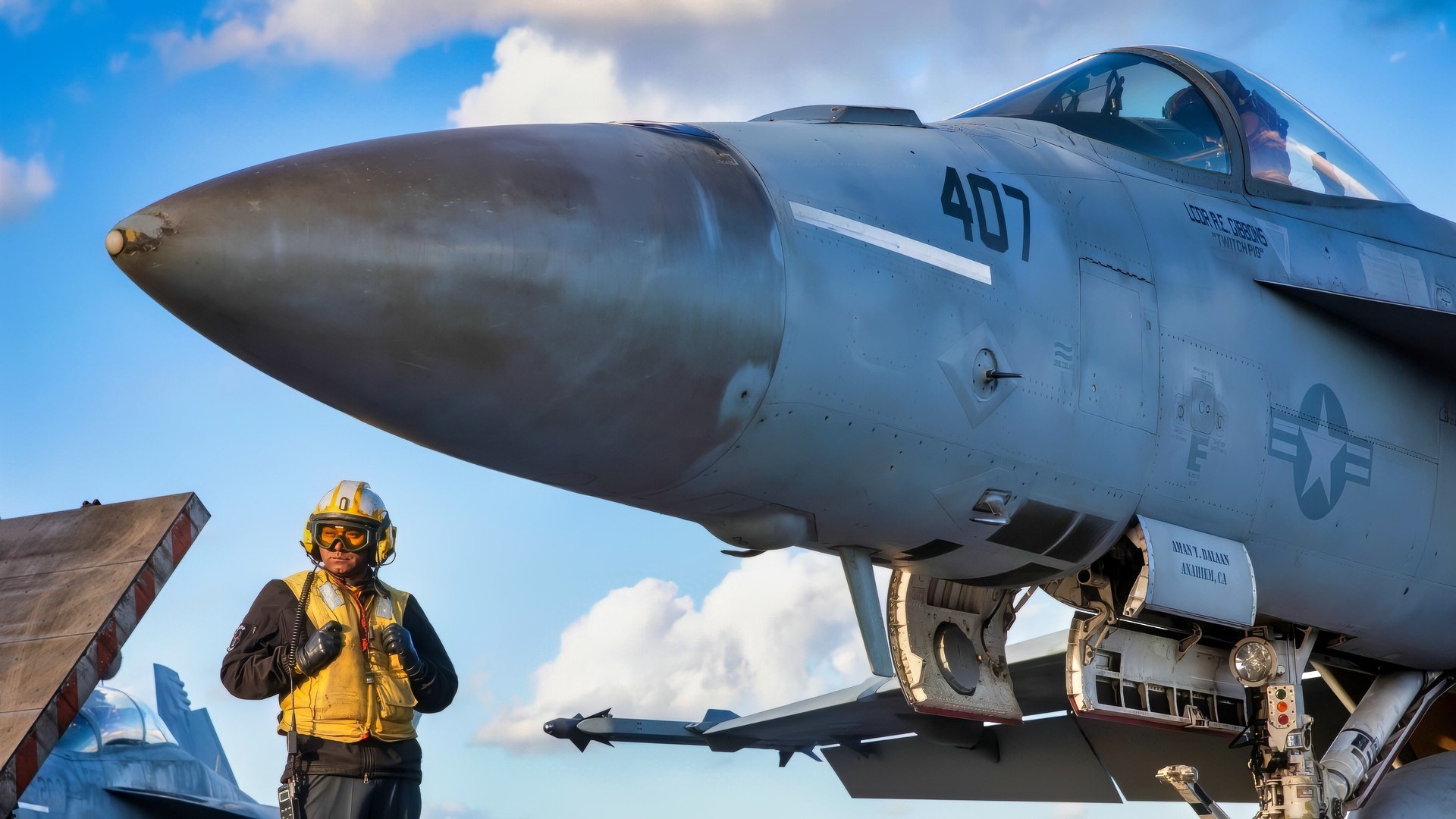
Key Points and Summary – The Long-Range Anti-Ship Missile (LRASM) is a stealthy, precision cruise missile that is a key part of the U.S. Navy and broader U.S. military’s strategy to counter China’s naval power.
-Deployed from F/A-18s and B-1B bombers, with F-35 integration coming soon, the LRASM is a primary tool for the Navy’s “Distributed Lethality” doctrine.
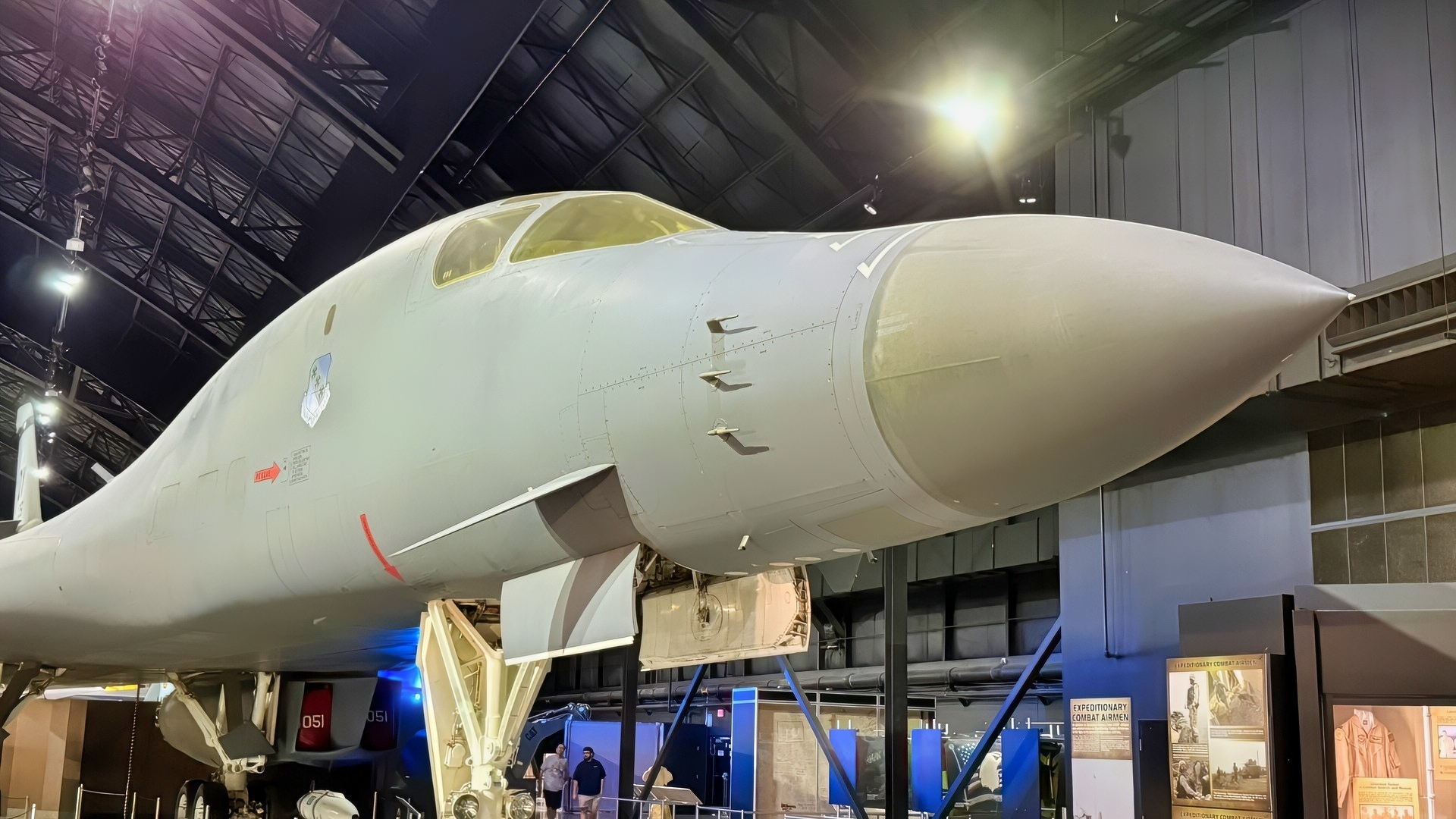
B-1B Lancer 2025 National Security Journal. Image Credit: Harry J. Kazianis/NSJ.
-This strategy aims to create “more power in more places” by equipping numerous platforms with potent ship-killing capabilities.
-In a potential conflict over Taiwan, the LRASM provides the U.S. with a credible way to turn the tables on China’s own anti-ship strategy.
Making the Chinese Pay the Price With the LRASM Missile Fired by U.S. Navy
China has been looking for ways to destroy American aircraft carriers and ships as far back as 2003, when it employed the Russian-built MACH 3 Sunburn missile that was meant to create the first strategy of anti-access/area denial.
The DF-21D later became an early Chinese carrier-killer, and many others followed it.
Indeed, if there is a war between the United States and China, it will devolve into a missile fight, and the United States must create new ways to take out Chinese ships with their own projectiles.
That’s why a 2024 test during RIMPAC (Rim of the Pacific Exercise) of a new American missile called the LRASM (Long-Range Anti-Ship Missile) was so important.
Successful Test By Super Hornet Navy Launch
The LRASM engaged in blowing up a surplus decommissioned target vessel called the USS Tarawa amphibious assault ship during a “SINKEX.”
An F/A-18 E/F Super Hornet launched the LRASM at the ex-Tarawa to devastating effect.

An F/A-18 Super Hornet from Naval Air Station Oceana, Virginia, performs an aerial demonstration over Rickenbacker International Airport, Ohio, June 16, 2024, as part of the Columbus Air Show. This year’s event featured more than 20 military and civilian planes, including a KC-135 Stratotanker from the 121st Air Refueling Wing, which served as the base of operations for military aircraft participating in the show. (U.S. Air National Guard photo by Senior Airman Ivy Thomas)
“As a precise, stealthy, and survivable cruise missile, LRASM provides multi-service, multi-platform, and multi-mission capabilities for offensive anti-surface warfare. Currently, LRASMs are deployed from U.S. Navy F/A-18 and U.S. Air Force B-1B aircraft,” according to a Navy news release.
Soon to Be on the Lightning IIs
The LRASM will soon be deployed on F-35Bs and Cs to make them even more valuable as an instrument that can menace Chinese shipping.
The sixth-generation F/A-XX could employ it too in the 2030s.
This is part of the Navy’s “Distributed Lethality” concept and warfare doctrine. The maritime service branch wants “more power in more places.”
That means additional airplanes and ships that can bring awesome firepower to the enemy anytime, anyplace.
The LRASM is a large part of this strategy to bring the fight to the enemy and counter China’s prowess in anti-ship missiles.

F/A-XX Fighter from Boeing. Image Credit: Boeing.
The Navy’s Doctrinal Shift
There has been a shift in naval strategy that the LRASM helps execute.
Vice Admiral Thomas Rowden, Rear Admiral Peter Gumataotao, and Rear Admiral Peter Fanta wrote for the U.S. Naval Institute about what they believe is the future of seaborne warfare.
“The surface fleet will always defend the high-value and mission-essential units; that is in our core doctrine. However, the emergence of sophisticated sea-denial strategies has driven a need to shift to an offensive imperative to control the seas. Increasing surface-force lethality—particularly in our offensive weapons and the concept of operations for surface action groups (SAGs)—will provide more strike options to joint-force commanders, provide another method to seize the initiative, and add battlespace complexity to an adversary’s calculus,” the authors wrote.
What Will Happen During a Sino-American War?
This is the way that the LRASM will define distributed lethality in the future.
The missile fight will be totally destructive for the Chinese and the Americans.
The U.S. Navy must realize it could lose an aircraft carrier in conflict.
This would have disastrous consequences on the American’s ability to wage war.
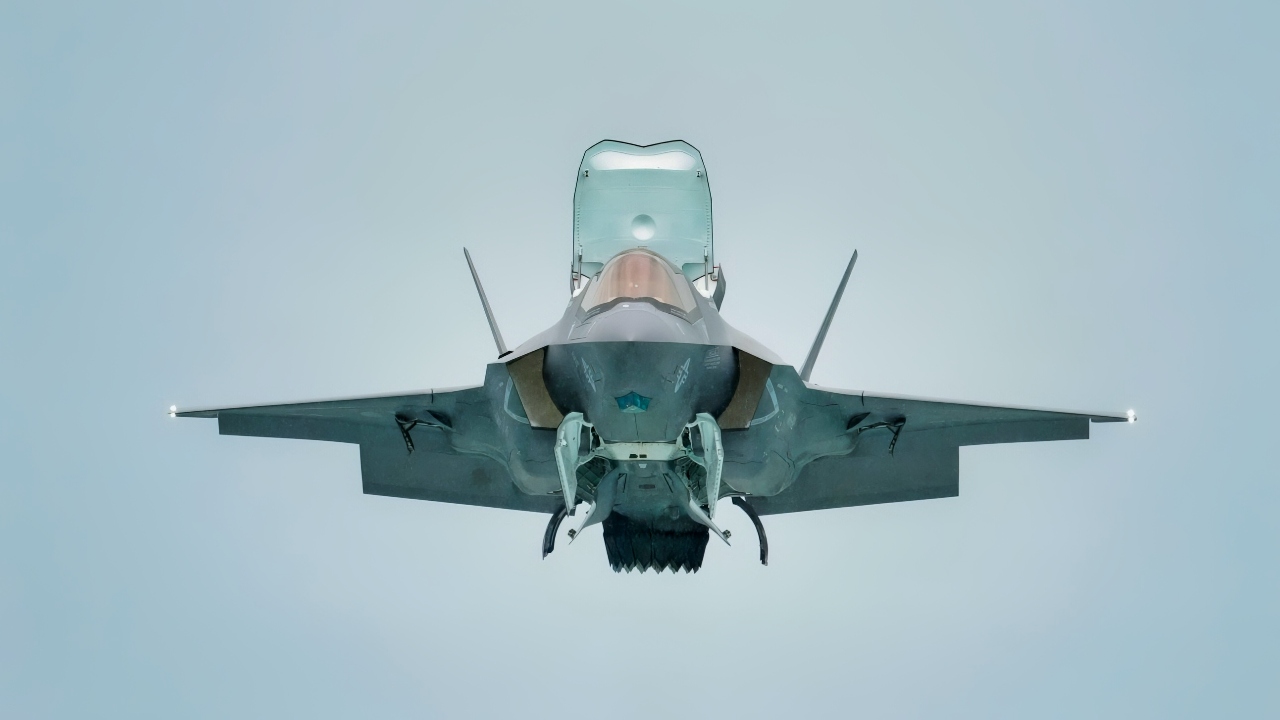
A U.S. Marine Corps F-35B Lightning II assigned to the Marine Fighter Attack Squadron 242, Marine Aircraft Group (MAG) 12, Marine Corps Air Station, Iwakuni, conducts an aerial demonstration during the Singapore Airshow 2022 at Changi Exhibition Center, Republic of Singapore, Feb. 16, 2021. Through participation in regional events like the Singapore Airshow, the U.S. demonstrates its commitment to the security of the Indo-Pacific, promotes interoperability, displays the flexible combat capabilities of the U.S. Military, creates lasting relationships with international audiences, and strengthens partnerships throughout the Indo-Pacific region. (U.S. Air Force photo by Master Sgt. Richard P. Ebensberger).
The civilians and the news media would likely call for the president to stop fighting altogether or even spoil for a nuclear attack. It is difficult to predict the public reaction, but most everyone would have an opinion – whether hawkish or dovish against China.
This means that LRASM would be a key asset for offensive delivery should the worst happen in the Indo-Pacific.
President Donald Trump must figure out whether he would intervene should China try to attack Taiwan – an action many defense analysts predict could come as soon as 2027.
Carrier-borne aircraft, such as the Super Hornet and Lightning II, would use the LRASM to target Chinese ships conducting an amphibious landing if the United States were to intervene.
Will the LRASM Be Mentioned in the Department of Defense Strategy Document?
We will know more soon about the Pentagon’s National Defense Strategy and how it describes a conflict with China.
Under Secretary of Defense for Policy Elbridge Colby is known as a China hawk. He believes that the United States may place too much emphasis on Europe and not enough on the Asia-Pacific.
With the LRASM, the Navy would have another advantage when facing down China.
Colby may not drill down to various missile systems in the document.
Still, he must realize that the United States should develop munitions that can shrink China’s advantage in anti-ship projectiles.
Another interesting aspect of the LRASM is whether it could be exported to other countries.
Japan would be a customer, as would Taiwan.
This military sale would enrage Beijing, but sometimes that is the point – to poke the dragon in the eye by making weapons systems that can be difference makers for U.S. allies.
The National Defense Strategy will undoubtedly emphasize the value of U.S. allies in East Asia and maintaining the latest American tactics, techniques, and procedures with more countries. Offensive and defensive missile operations will be at the top of the list.
The LRASM will be a tool to tip the balance in East Asia. There needs to be more anti-ship missiles in the U.S. arsenal to counter China’s growing presence in the region.
The LRASM is part of the Navy’s Distributed Lethality concept and may be singled out in the new National Defense Strategy from the Pentagon.
The potential of a missile fight is real, and the LRASM may have its coming-out party in combat against enemy vessels executing a battle against U.S. carriers.
Let’s hope there can be more successful tests of the weapon andthat it will be employed judiciously.
About the Author: Brent M. Eastwood
Brent M. Eastwood, PhD is the author of Don’t Turn Your Back On the World: a Conservative Foreign Policy and Humans, Machines, and Data: Future Trends in Warfare plus two other books. Brent was the founder and CEO of a tech firm that predicted world events using artificial intelligence. He served as a legislative fellow for US Senator Tim Scott and advised the senator on defense and foreign policy issues. He has taught at American University, George Washington University, and George Mason University. Brent is a former US Army Infantry officer. He can be followed on X @BMEastwood.
More Military
It’s Official: Boeing Strike Is Delaying New F-15EX Eagle II Fighter Jets
‘Brink of Nuclear War’ if U.S. Sends Tomahawks to Ukraine?
China’s Sixth-Generation White Emperor Fighter Simply Summed Up in 1 Word
A Russian Pilot Defected with a Mach 2.3 MiG-29 Fulcrum Fighter Jet


