


Key Points and Summary – USS Wasp (CV-7) was not a bad carrier so much as a compromised one. Squeezed under the Washington Naval Treaty’s tonnage cap, she lacked the armor, firefighting systems, and survivability of later Essex-class giants.
-After early Atlantic convoy and Malta Spitfire ferry missions, Wasp raced to the Pacific to cover the Guadalcanal landings.
-On September 15, 1942, Japanese submarine I-19 hit her with three torpedoes, rupturing water mains and triggering uncontrollable gasoline fires.
-Abandoned and scuttled that night, Wasp took 193 sailors with her—a victim of treaty politics, bad luck, and brutal early-war realities.
The USS Wasp (CV-7): A ‘Bad Timing’ Aircraft Carrier For The US Navy
The USS Wasp (CV-7) was an aircraft carrier that suffered from bad timing for the Navy and the ship. It was constructed under the terms of the Treaty of Washington, which limited its size and capabilities, ultimately leading to its downfall. Some analysts consider the Wasp the worst aircraft carrier ever built. But that isn’t true.
Due to treaty limitations, she was smaller than the Essex-class aircraft carriers. She carried much less armor and had fewer firefighting capabilities, making her vulnerable against the Japanese Imperial Navy in the early days of World War II.
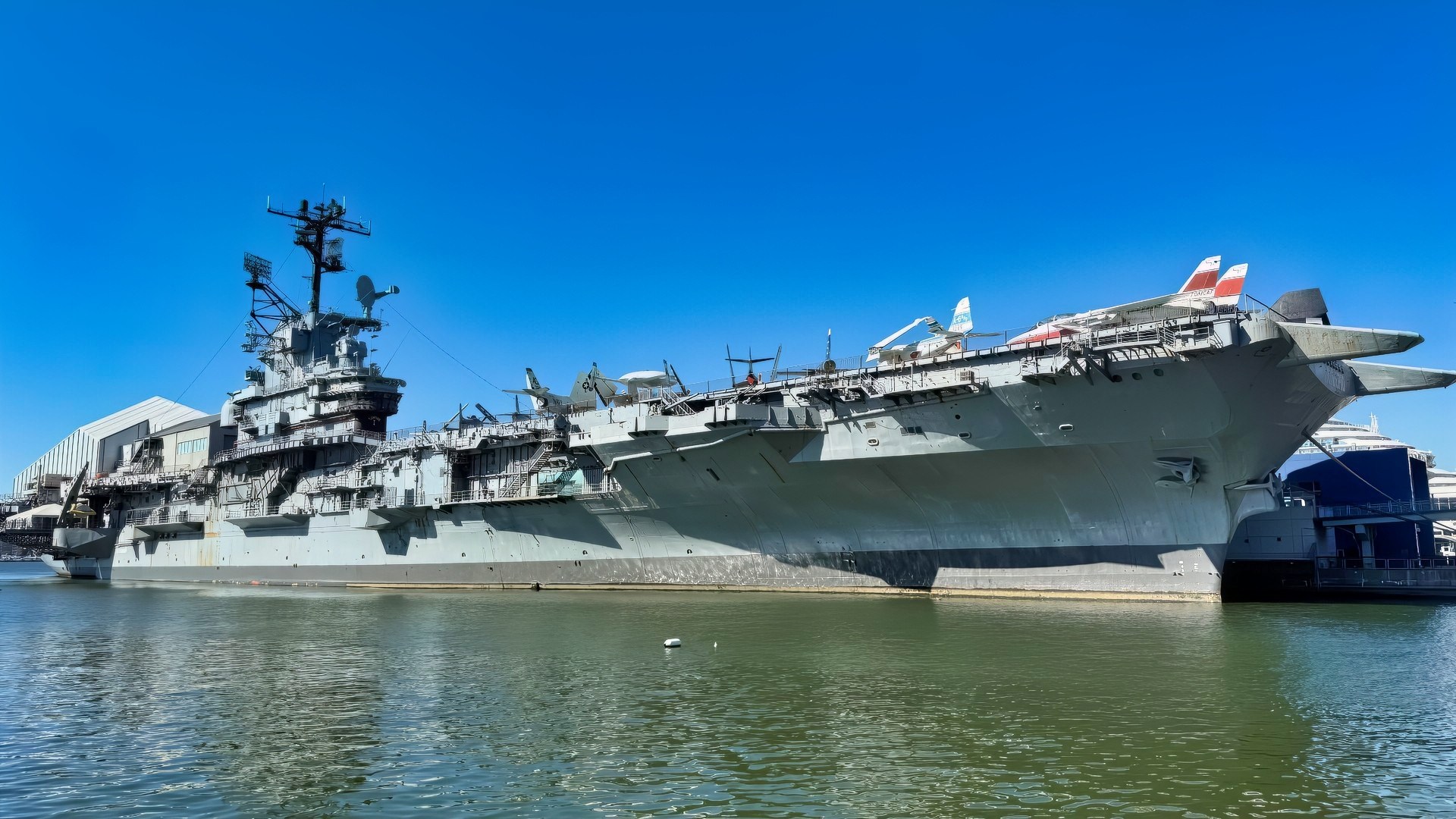
Essex-Class USS Intrepid Aircraft Carrier. Image Credit: National Security Journal.
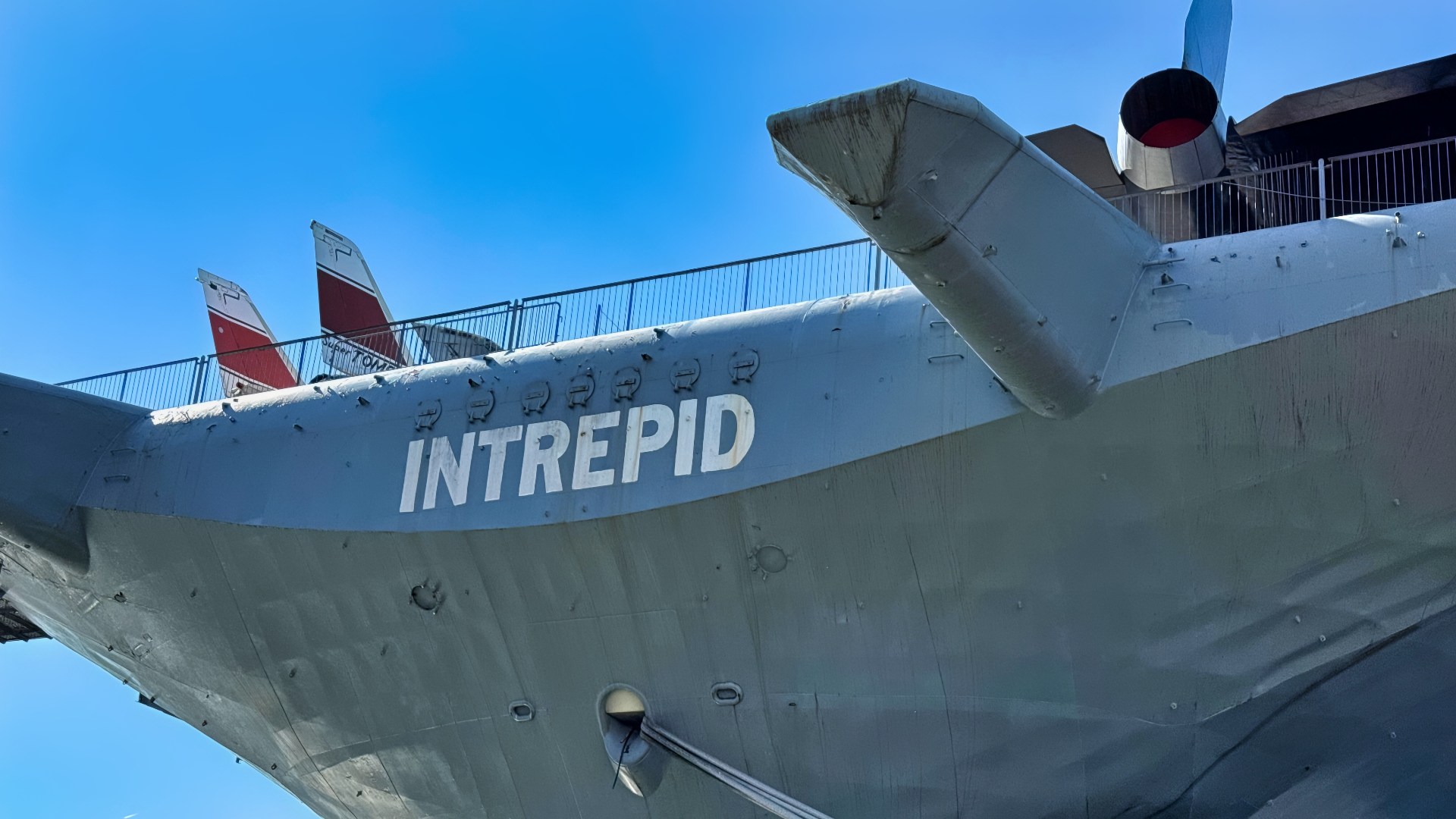
Essex-Class Carrier USS Intrepid NSJ Photo.
She was slammed with three torpedoes from a Japanese submarine off Guadalcanal in 1942, and resultant fires burned out of control, ultimately sinking the ship, and she sank with the loss of 25 officers and 150 crewmen.
The Treaty Of Washington
A few years after World War I, the Wilson administration sought to stop an arms race between the world’s top navies that would have ignited another war.
The treaty, signed in early February 1922, sought to limit the construction of battleships, battle cruisers, and aircraft carriers. The treaty did not limit the number of cruisers, destroyers, or submarines but reduced their displacement to 10,000 tons.
With the US Navy almost at the tonnage allowed in the treaty, they tried to squeeze in a smaller carrier (Wasp) under the allowed tonnage, but tried to cram as much of the Essex-class equipment as possible. So, armor was reduced, and firefighting equipment was lacking in the new ship.
USS Wasp CV-7
The USS Wasp (CV-7) was laid down in April 1936 at the Quincy shipyard in Boston, launched in April 1939, and commissioned in April 1940, when unemployment was still high during the Great Depression.
The Wasp was 714 feet long, with a beam of 80.8 feet. She could make 29.5 knots at top speed and carried 16 five-inch guns, 11 1.1-inch, and 16 .50 caliber machine guns for air defense. She carried 80 planes and had a crew complement of 2,367 officers and sailors.
After she was commissioned, she ran shakedown cruises to Cuba and, in 1941, eventually escorted merchant vessels bound for the UK on convoy duty to protect them from German U-boats, which were already attacking American merchant ships and warships before America entered the war.
She ferried US Army Air Corps P-40 Warhawks to Iceland as the US sought to use it as a base against German U-boats.
Collision With a Destroyer
On patrol from Maine to Virginia on St. Patrick’s Day 1942, just a few months after Pearl Harbor, the Wasp collided with the destroyer USS Stark (DD-406) in thick fog with visibility less than 100 yards.
The ships had been in VHF radio contact, and the Wasp gave the Stark course corrections, but somehow, that went awry. The huge carrier hit the smaller destroyer broadside, tilted at 60 degrees, stuck under the bow, and pushed along at 23 knots. Finally, about 10 minutes later, the Wasp backed up, and the Stark became clear. She was heavily damaged and attempted to sail back to Norfolk, VA, but had to pull into the Philadelphia shipyard for emergency repairs.
The report from the Commander-in-Chief, Atlantic Fleet, blamed the Wasp.
“The record is clear that a report of collision was received on the Bridge almost at the moment of collision, but that its import was not appreciated by the navigator. Prompt and corrective action was not taken.
“Time was wasted in trying to ‘verify’ the fact that there had been a collision. The collision occurred at 0542, and the engines were not ordered stopped until 0548. At this time, they were ordered ahead 15 knots immediately. The engines were not backed until 0553 and then only at two-thirds speed, instead of emergency. It is a wonder that the Stack was not broken in two or capsized by being pushed sideways by the Wasp.”
World War II Service
In April 1942, the USS Wasp was tasked with ferrying British Spitfires to Malta. The garrison there was being pounded by Axis aircraft, and they needed fighters to protect them. Forty-seven Mark V Spitfires were loaded on deck, and they departed Scotland.
Shortly after, Prime Minister Churchill asked if the Wasp and the British carrier HMS Eagle could deliver another ferry of Mark V Spitfires to the British garrison at Malta. They delivered them all without incident. Mr. Churchill sent a message to the Wasp: “Many thanks to you all for the timely help. Who said a Wasp couldn’t sting twice?”
USS Wasp Heads To the Pacific
Shortly after the Malta runs, the Wasp learned of the Battles of the Coral Sea and Midway, where the Americans slowed Japanese expansion to Australia in the first and decimated their attempts to take Midway, and in the ensuing action, sank four of the Japanese fleet carriers.
But the price had been heavy; the US lost the carrier USS Lexington (CV-2) in the Coral Sea and the USS Yorktown (CV-5) at Midway. The Wasp sped through the Panama Canal and joined the USS Enterprise (CV-6) and the USS Hornet (CV-8). The USS Saratoga (CV-3) was in dry dock in Hawaii after taking a torpedo strike in January.
The three carriers supported the first offensive landing of the war as the Marines landed on Guadalcanal on August 7, 1942. The three carriers used their aircraft to pound enemy positions and take on Japanese aircraft that attempted to bomb Henderson Field and the landing ships.
Death of the Wasp
On September 15, 1942, the Wasp supported the landing of Marine reinforcements on Guadalcanal. With refueling of aircraft on the flight and hangar decks taking place after earlier combat patrols, at 1444 hours, a lookout reported “three torpedoes… three points forward of the starboard beam!”
The Japanese submarine I-19 fired a spread of six torpedoes at the Wasp. She turned sharply to starboard, but too late. Torpedoes struck in quick succession. Her armor belt was not as thick as the larger carriers, and the explosions rocked the ship and ignited gasoline fires that proved to be too great to put out.
The torpedoes had ruptured the ship’s water main and pumps, leaving her crew unable to fight the resulting fires.
The Wasp wasn’t the only ship damaged in the attack. The destroyer USS O’Brien was rocked by a torpedo hit to the bow. It raced to Espiritu Santo for temporary repairs. She was then sailing to Pago Pago for more repairs when her seams opened up on October 19, and she finally sank, a month later, from I-19’s torpedo blast.
The battleship North Carolina (BB-55) was also hit and put out of action by the I-19. Counterflooding saved the ship, but she was forced to withdraw.
At 1520 hrs, the Captain ordered the crew to abandon ship. She burned into the night with explosions of gasoline and ammunition continuing. Later that evening, the destroyer USS Landsdowne (DD-486) fired three torpedoes into the burning wreck. She sank at 2100 hrs by the bow. The Wasp sank with the loss of 193 killed and 367 wounded.
The Wasp was not a bad carrier; it was an unlucky one that was forced to be less survivable by circumstances beyond her control. The US had lost bigger fleet carriers, the USS Lexington, USS Yorktown, and the USS Hornet (about a month after the loss of the Wasp).
She was compromised due to treaty limitations, but even the mighty Enterprise may have been sunk by the torpedo hits that the Wasp suffered.
About the Author: Steve Balestrieri
Steve Balestrieri is a National Security Columnist. He served as a US Army Special Forces NCO and Warrant Officer. In addition to writing on defense, he covers the NFL for PatsFans.com and is a member of the Pro Football Writers of America (PFWA). His work was regularly featured in many military publications.


Bill Johnson
February 25, 2026 at 1:52 pm
Great article