

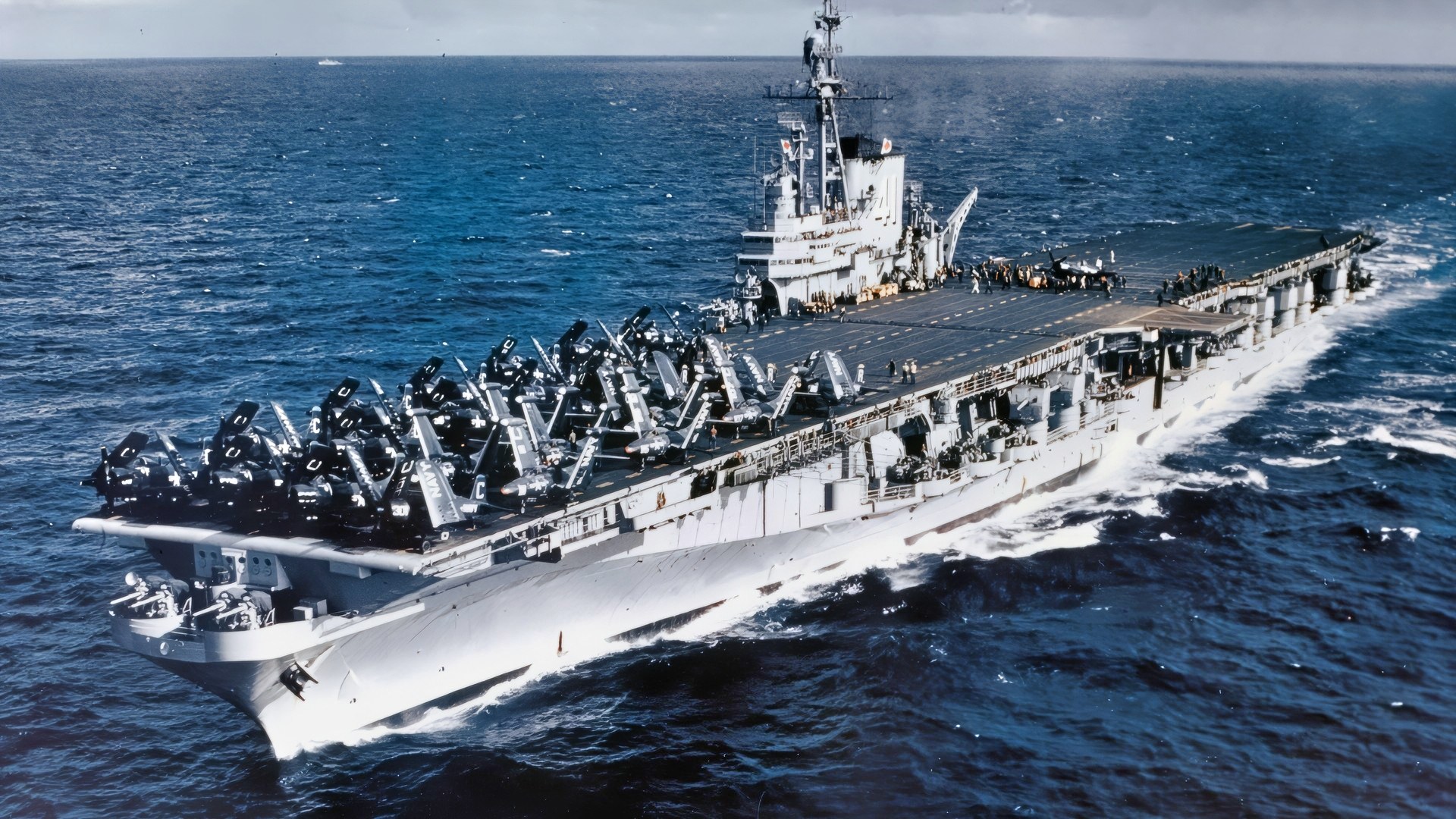
Key Points and Summary – Despite long and distinguished service careers spanning from 1945 to 1992, the Midway-class aircraft carriers were considered a “less than satisfactory design” plagued by fundamental flaws.
-Their most significant issue was a low freeboard, which caused the massive ships to sit too low in the water, making them dangerously “wet” and unstable in heavy seas.
-They were also notoriously cramped internally, and their wide beam prevented them from transiting the Panama Canal, limiting strategic flexibility.
-Later modernizations only worsened their stability, yet the class was kept in service for decades due to the Navy’s “urgent need for large carriers.”
What Were The Flaws Of the Midway-class Aircraft Carriers?
The Midway-class of aircraft carriers proved capable once the issues were ironed out. However, they were far from perfect. They suffered from several early problems, the most significant being that the ships were simply too big.
The Navy only built three of the Midway class (USS Midway CV-41, USS Franklin D. Roosevelt CV-42, USS Coral Sea CV-43), so other than hardcore naval enthusiasts, they probably aren’t as well known as some of the different classes of carriers.
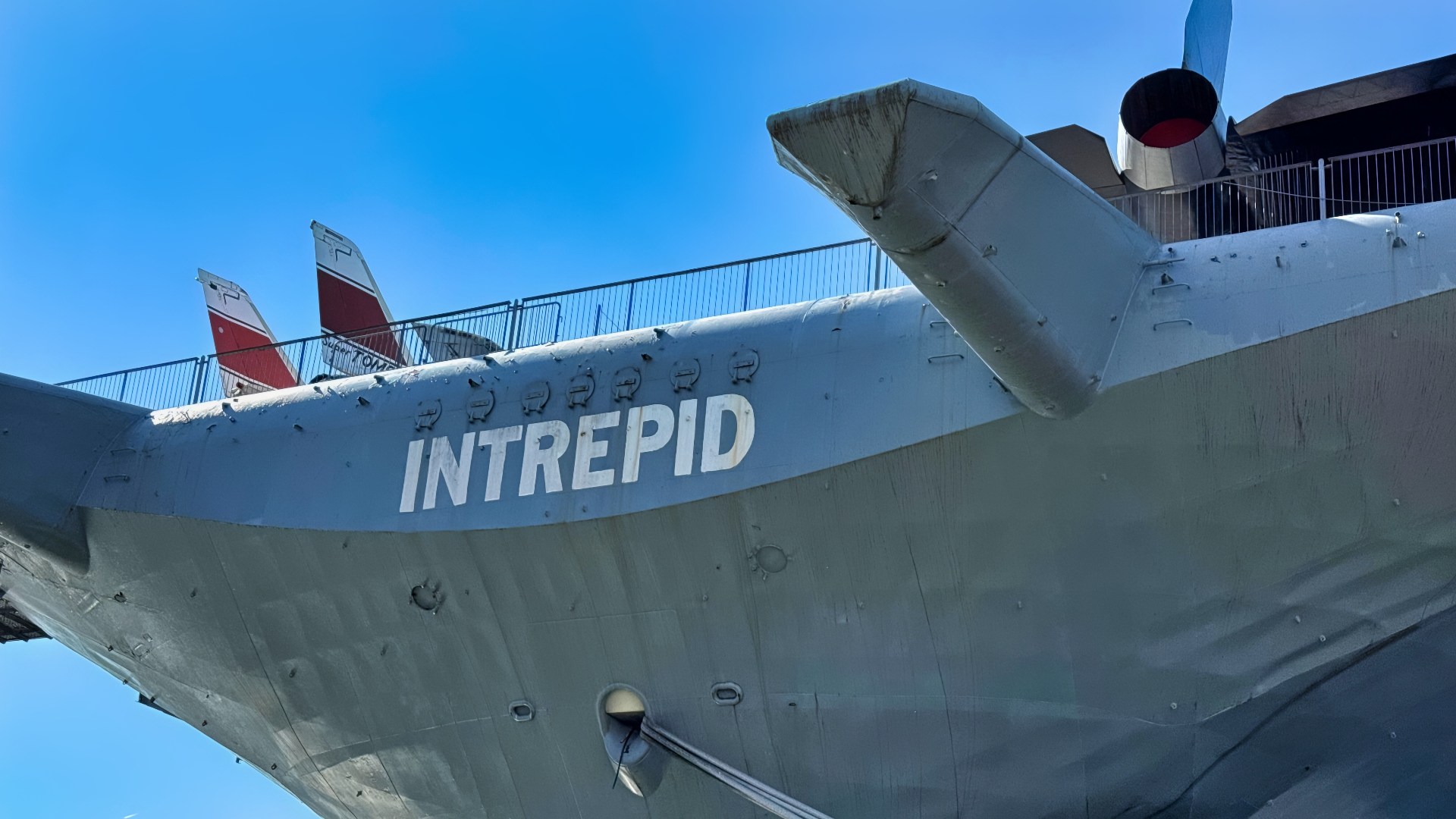
Essex-Class Carrier USS Intrepid NSJ Photo.
But regardless of what is perceived as being wrong with the design, they served ably for many decades—the lead ship in the class, the Midway served from 1945 until 1992. She served in several wars, including the Vietnam War, the Cold War, and Operation Desert Storm.
During the war in Vietnam, F-4 Phantoms bombed North Vietnam, taking off from the angled flight deck, which was added in the 1950s. The last Soviet-built MiG-17 shot down in the war was credited to the Midway’s fighters.
One thing to consider when analyzing the Midway-class is the era in which they were built.
The USS Midway was constructed during World War II. The threat of kamikazes was still very real, which is why the flight decks were armored. And the anti-aircraft guns were increased from 12 five-inch guns to 18 five-inch 52-caliber guns, which were considered by many to be the most effective anti-aircraft guns on board.
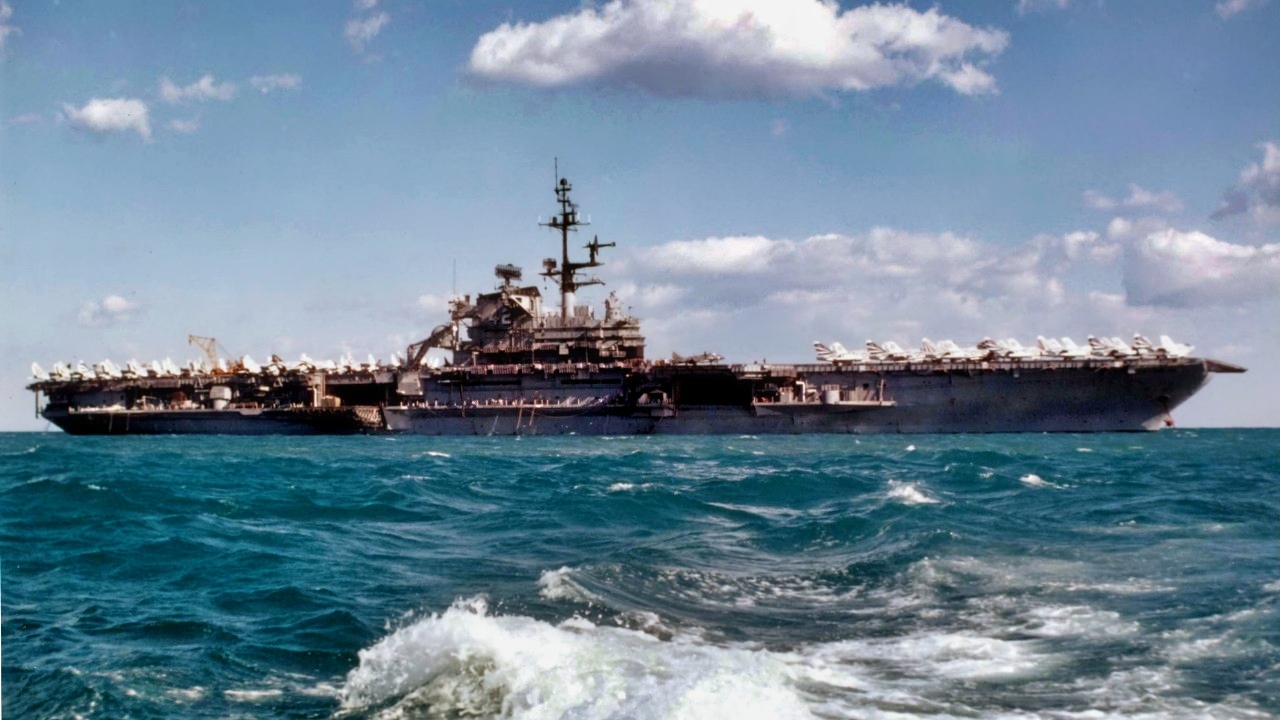
Midway-Class Aircraft Carrier. Image Credit: Creative Commons.
But the carriers did have their issues. What were the major flaws with the Midway class?
Low Freeboard and Seakeeping
The term “freeboard” refers to the distance from the waterline to the upper deck, which was unusually low for the class’s size.
This caused the ships to take on a lot of water, especially in heavy seas, hindering flight operations and making the carriers unstable. The low-riding carriers tended to plow through waves rather than ride above them, once resulting in one of Midway’s aircraft elevators being torn off during a storm.
Post-WWII modernization efforts, such as hull blisters, sometimes worsened stability, leading to severe “rolling” in moderate seas.
Cramped Internal Spaces
Despite the massive hull, the crew quarters and internal spaces were very cramped.
The huge crew required to operate the ship made life on board crowded and uncomfortable.
The Midway class’s design was the subject of extensive critical analysis by Seaforces.org.
“These ships were very wet, very crowded, and quite complex; these problems were never solved. The design made them difficult and expensive to modernize or upgrade. In later years, these ships were limited by low freeboard, severe crowding of crew and equipment, low hangar clearances, poor seakeeping, and extreme age; they were unable to operate the latest and largest aircraft.
“Overall, they must be considered to be a less than satisfactory design, but they had long service lives because of the urgent need for large carriers.”
Too Large Of An Air Wing:
The initial design could initially accommodate an air wing of up to 130 aircraft, which was too large to be effectively controlled by naval doctrine at the time.
The air wing size was eventually reduced to a more manageable number (100 aircraft), but the excess space was used to accommodate the larger, heavier jet aircraft that would soon join the fleet.
Width Precluded Panama Canal Transit:
The Midway class’s beam was wider than the maximum width of the Panama Canal’s locks.
This, along with how low the carrier rode in the water, prevented them from transiting the canal, which hampered their operational flexibility for rapid redeployment.
Poor Stability After Modernization
Modernization efforts in the 1960s and 70s were intended to keep the class competitive, but the modifications worsened the ships’ stability.
The changes resulted in the ships “corkscrewing” in rough seas, precluding any flight operations until the problem was addressed.
Side of A-6 Intruder. Image Credit: National Security Journal.
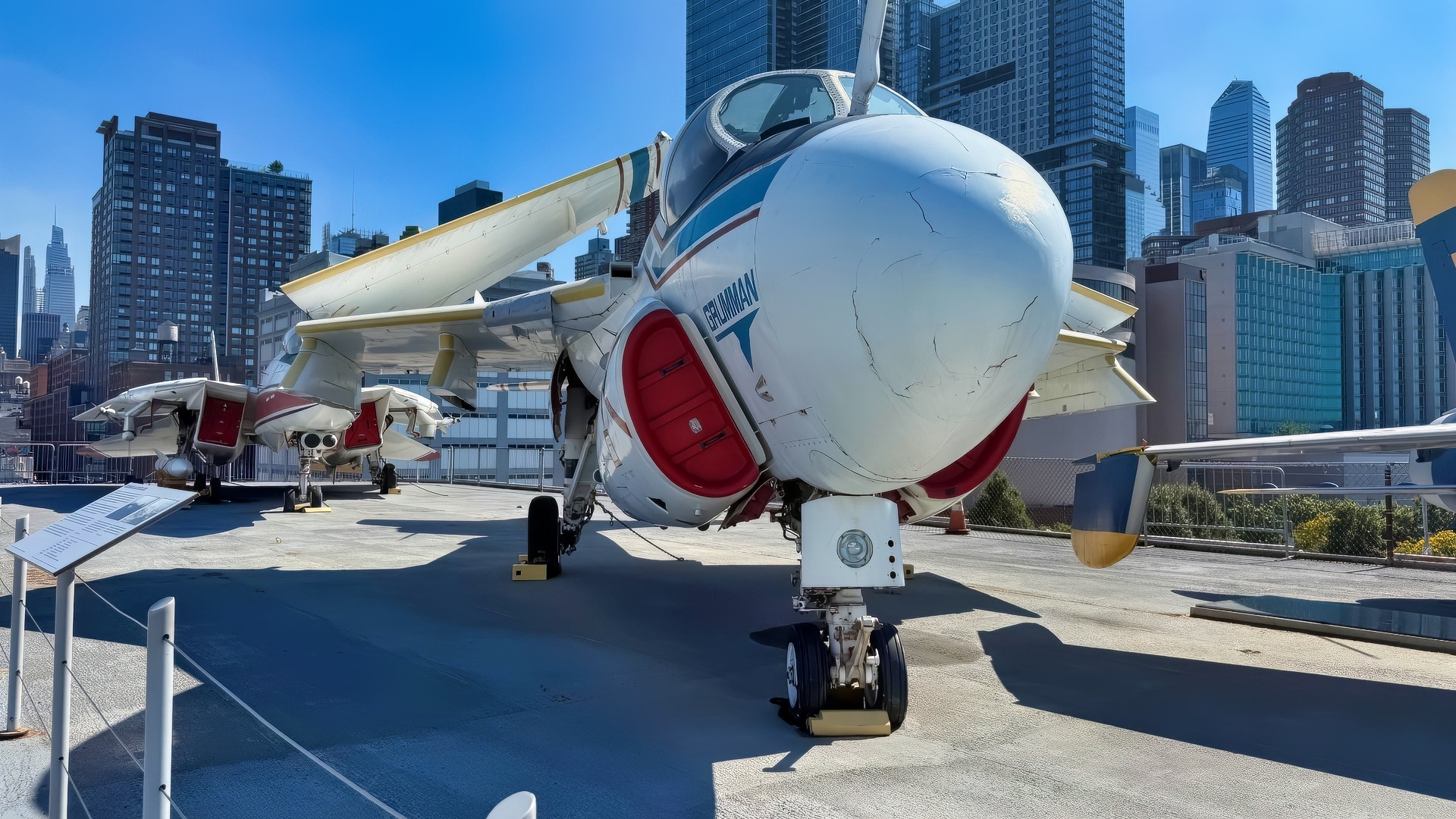
A-6 Intruder National Security Journal Photo. Image By Jack Buckby Taken on September 18, 2025.

A-6 Intruder National Security Journal Photo. Taken on September 18, 2025.
Despite her flaws, the Midway deployed to the 1991 Persian Gulf War and launched 3,339 combat sorties. Midway’s A-6E Intruder jets were among the first to hit Iraqi targets in the conflict, and her helicopters even liberated a Kuwaiti island.
The Midway was the final carrier of the class on active duty, and she was retired in April of 1992. She now serves as a museum ship in San Diego.
About the Author: Steve Balestrieri
Steve Balestrieri is a National Security Columnist. He served as a US Army Special Forces NCO and Warrant Officer. In addition to writing on defense, he covers the NFL for PatsFans.com and is a member of the Pro Football Writers of America (PFWA). His work was regularly featured in many military publications.
More Military
The Air Force Only Has 19 B-2 Spirit Stealth Bombers
Why the U.S. Navy Needs Lasers for an ‘Infinite Magazine’
U.S. Navy F/A-18 Super Hornet Fighter: How Hard Is It To Fly?
Unstoppable: Delta Force Is the Very Best Special Forces Unit on Planet Earth
Could a U.S. Navy Nuclear Aircraft Carrier Tip Over In a Storm?


