
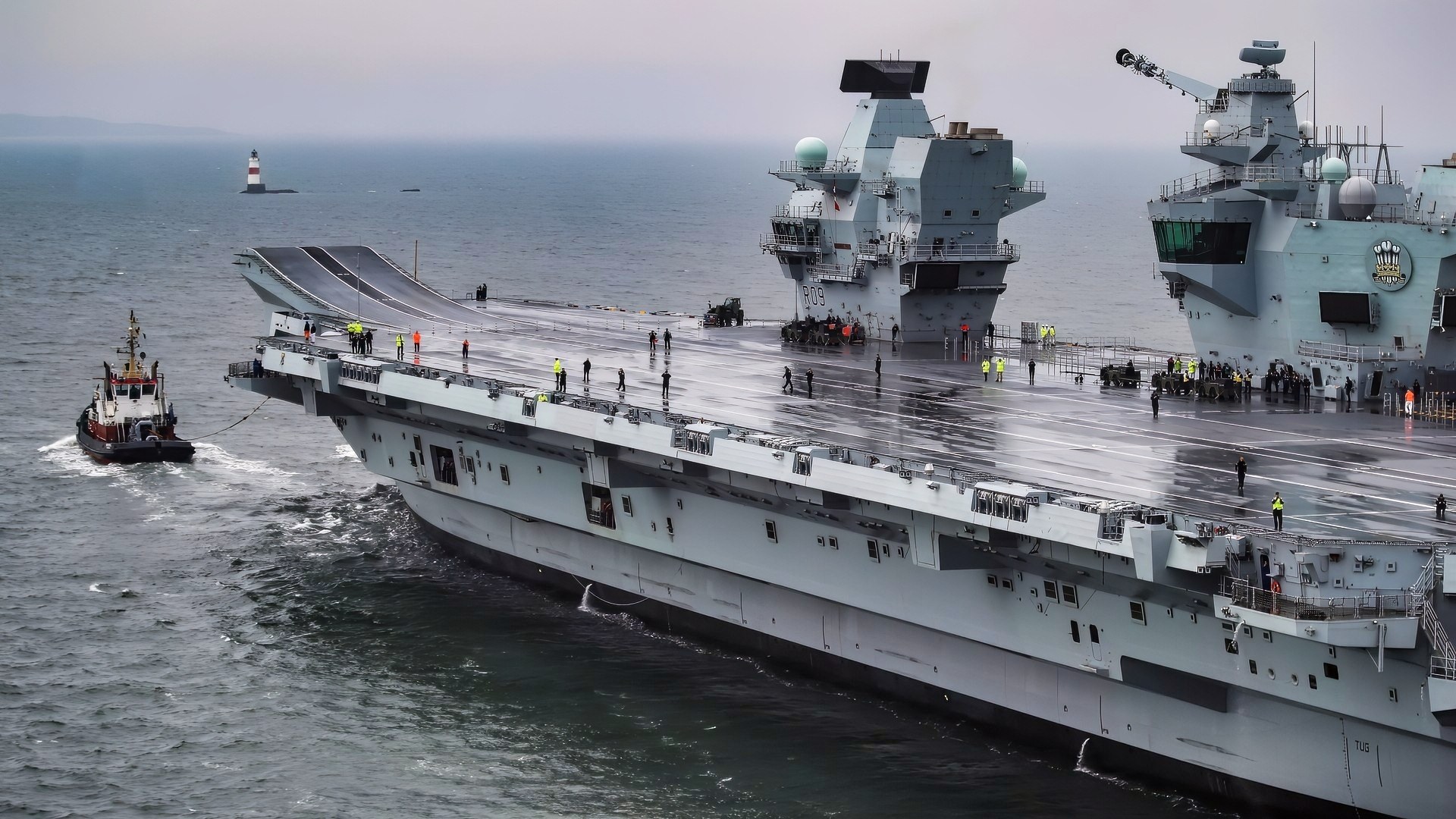
Key Points and Summary – Britain’s Queen Elizabeth-class carriers restored fixed-wing sea power in 2017–2019, built around the F-35B.
-Yet the concept remains conditional: the ships must be mechanically available and the jets must be ready at the same time.
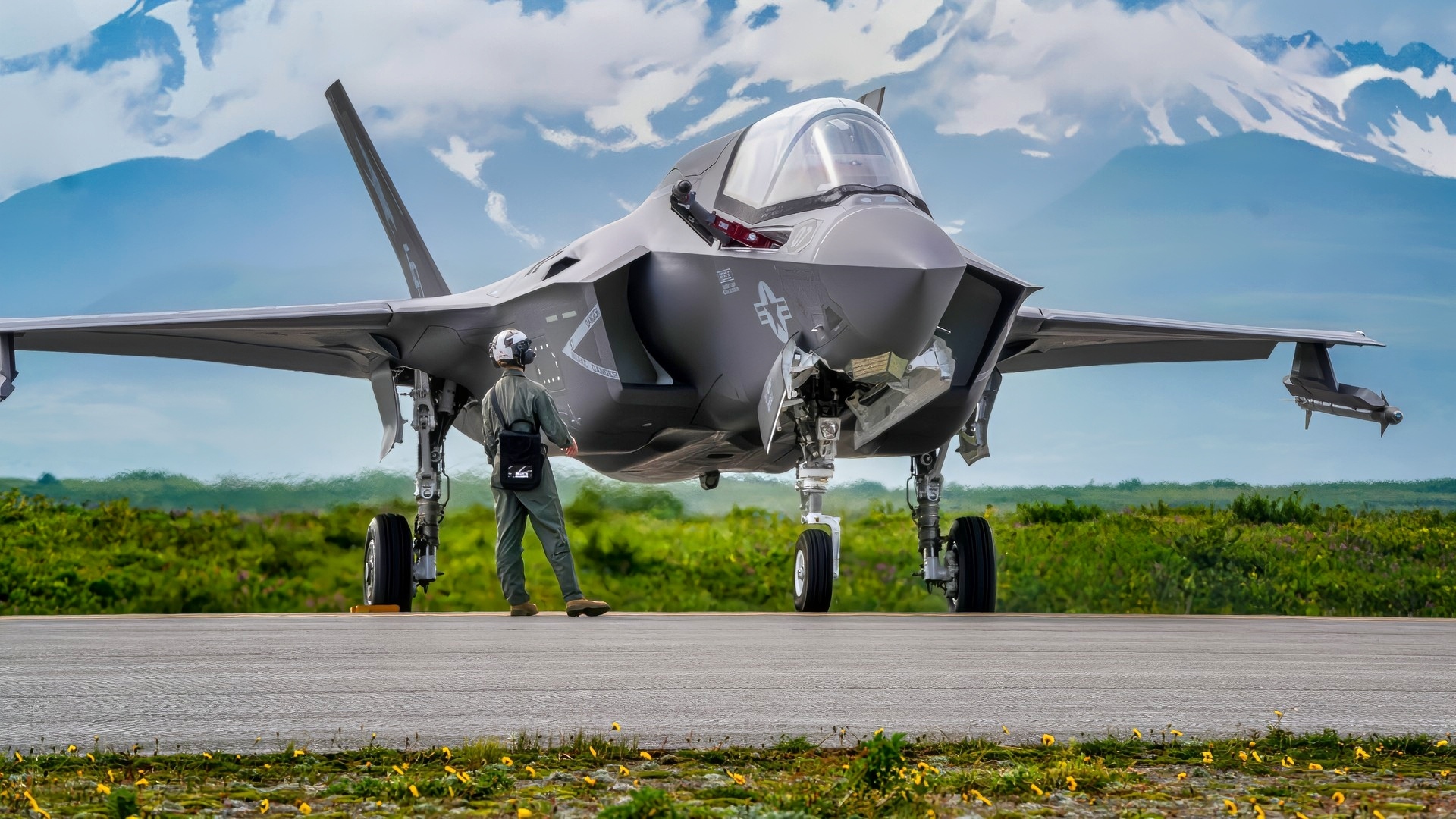
A U.S. Marine Corps F-35B Lightning II Joint Strike Fighter assigned to Marine Corps Air Station Beaufort, parks on a runway for a forward armed and refueling point (FARP) for ARCTIC EDGE 2025, August 18, 2025, at Cold Bay Airfield, Alaska. AE25 provided Special Operations Command North the opportunity to test a range of capabilities and response options to deter, disrupt, degrade, and deny competitor activity in the Arctic in support of globally integrated layered defense of the homeland. AE25 is a NORAD and U.S. Northern Command-led homeland defense exercise designed to improve readiness, demonstrate capabilities, and enhance Joint and Allied Force interoperability in the Arctic. (U.S. Air Force photo by Airman 1st Class Gracelyn Hess)
-Recent coupling and propulsion-related setbacks have disrupted deployments, while the U.K.’s F-35B fleet continues to wrestle with spares, maintainer shortages, and delayed weapons integration.
-A National Audit Office review in 2025 found readiness well below targets, with only about a third of jets able to perform all intended missions. Unless sustainment improves, carrier strike will remain episodic rather than routine. That is a strategic vulnerability.
Queen Elizabeth-Class: Formidable on Paper, Conditional at Sea
When HMS Queen Elizabeth entered service in 2017 – followed two years later by her sister ship HMS Prince of Wales – the Royal Navy regained something it had not possessed for nearly two decades: a large, modern aircraft carrier capable of launching fixed-wing jets.
Designed to serve into the 2060s and commissioned at a combined cost of more than 6 billion GBP, the Queen Elizabeth-class carriers were intended to secure Britain’s return to blue-water global power projection after the retirement of the Invincible-class in 2014.
Their purpose was clear: to field fifth-generation F-35B stealth fighters at sea, giving the UK a strike range and intelligence picture comparable to that of the United States Navy.

A joint team consisting of F-35 Patuxent River Integrated Test Force flight test members, U.S. Sailors and Marines, and the crew of the Japan Maritime Self-Defense Force Izumo-class multi-functional destroyer JS Kaga (DDH-184) are executing developmental sea trials in the eastern Pacific Ocean to gather the necessary data to certify F-35B Lightning II short takeoff and vertical landing aircraft operations. While aboard the MSDF’s largest ship, the Pax ITF flight test team has been gathering compatibility data for analysis in order to make recommendations for future F-35B operational envelopes, further enhancing the Japanese navy’s capabilities. The results of the testing will contribute to improved interoperability between Japan and the United States, strengthening the deterrence and response capabilities of the Japan-U.S. alliance and contributing to peace and stability in the Indo-Pacific region. Japan is an F-35 Joint Program Office foreign military sales customer planning to purchase 42 F-35Bs. The F-35 Joint Program Office continues to develop, produce, and sustain the F-35 Air System to fulfill its mandate to deliver a capable, available, and affordable air system with fifth-generation capabilities.
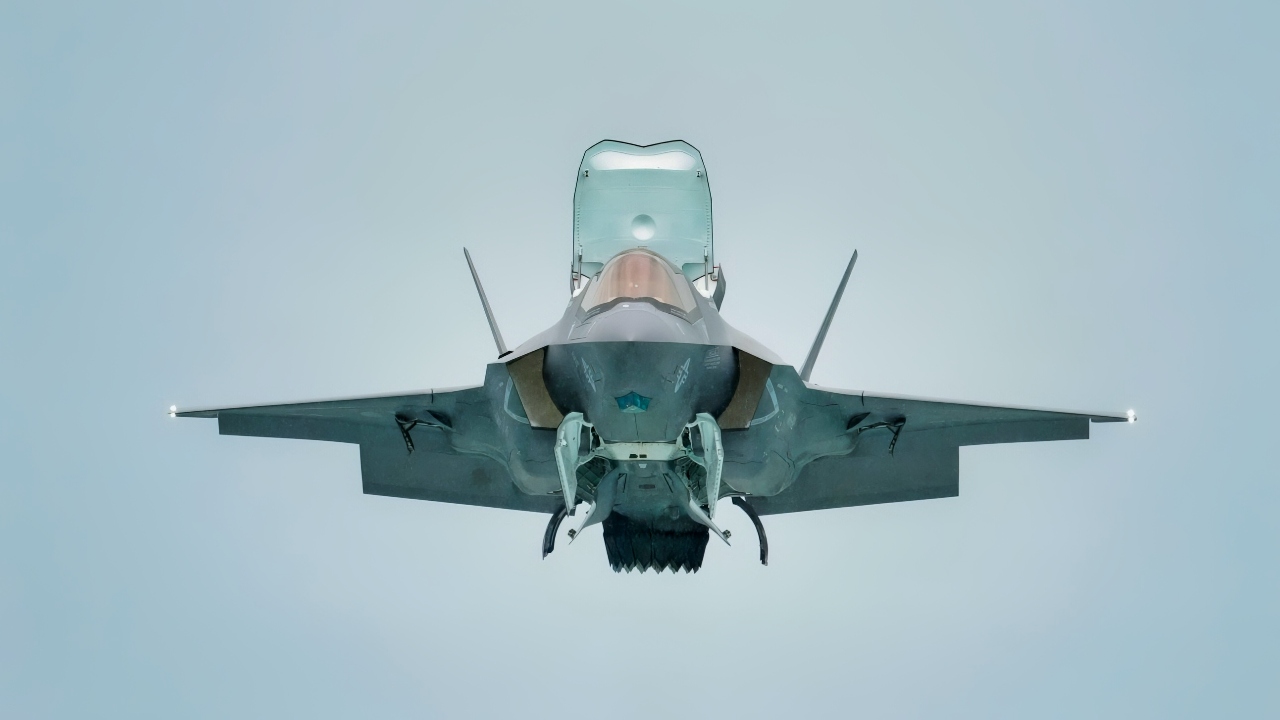
A U.S. Marine Corps F-35B Lightning II assigned to the Marine Fighter Attack Squadron 242, Marine Aircraft Group (MAG) 12, Marine Corps Air Station, Iwakuni, conducts an aerial demonstration during the Singapore Airshow 2022 at Changi Exhibition Center, Republic of Singapore, Feb. 16, 2021. Through participation in regional events like the Singapore Airshow, the U.S. demonstrates its commitment to the security of the Indo-Pacific, promotes interoperability, displays the flexible combat capabilities of the U.S. Military, creates lasting relationships with international audiences, and strengthens partnerships throughout the Indo-Pacific region. (U.S. Air Force photo by Master Sgt. Richard P. Ebensberger).
Now, some eight years later, both ships have been deployed internationally, have hosted NATO exercises, and have frequently embarked British and U.S. Marine Corps Lightning IIs.
The carriers are proof that the United Kingdom can once again operate a real and formidable carrier strike force.
But alongside the good news is the brutal reality that mechanical failures, maintenance delays, and limited fighter availability all risk undercutting the progress that has been made.
Capability for these carriers is more conditional than guaranteed at this point: the concept works only when both ships and aircraft are fully functional (and available) at the same time.
The Queen Elizabeth-class is one of the most formidable the UK has ever built – but only if it works.
Where the F-35B Excels – and Falls Short
If any Navy in the world could choose any fifth-generation fighter jet to field on its carriers, it would be the F-35B.
In this sense, the U.K.’s Queen Elizabeth class already excels. The F-35B jets it is designed to accommodate are short-takeoff and vertical-landing (STOVL) fighters that allow the Royal Navy to operate fifth-generation airpower from carriers without catapults or arrested wires.
Featuring stealth, advanced sensors, and data-linking technologies, these F-35s are much more than bomb droppers: they are incredible tools for surveillance and strike. And because of STOVL and stealth capabilities, the F-35B returns to the U.K. something that was lost when older carriers and their Harrier jump jets were retired.

HMS Prince of Wales. Image Credit: Royal Navy.
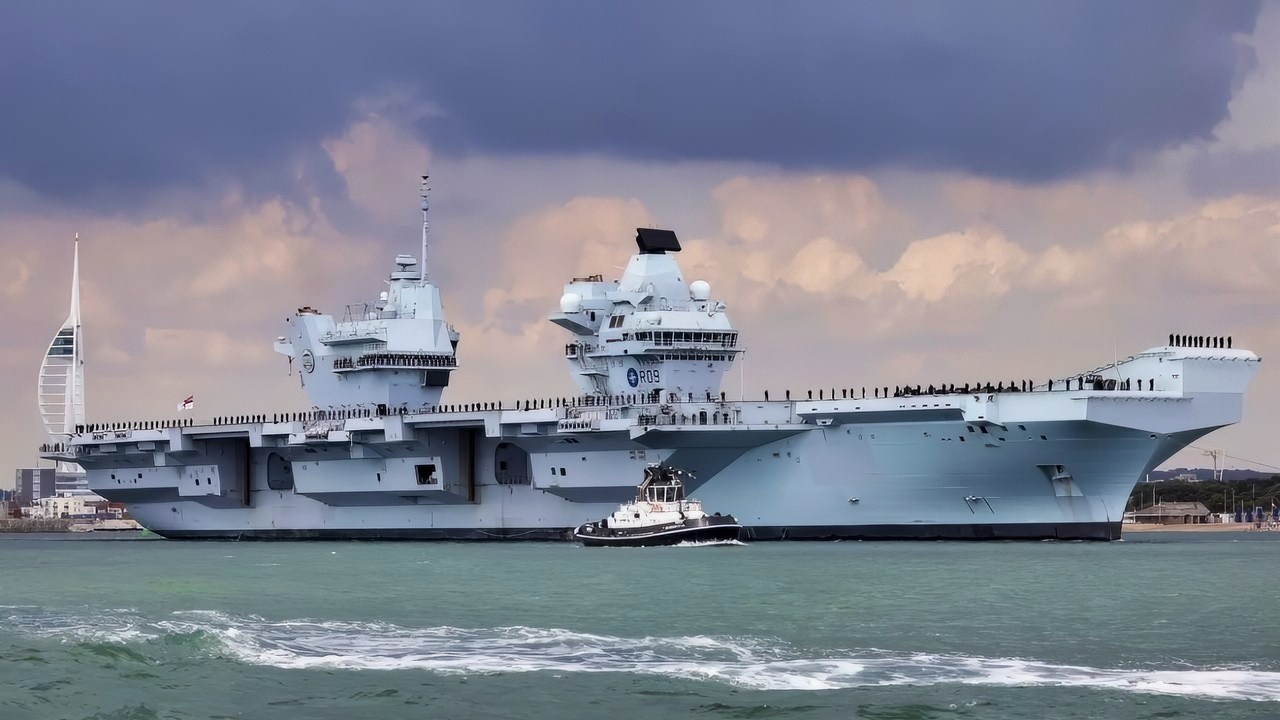
HMS Prince of Wales Aircraft Carrier. Image Credit: Royal Navy.
And yet despite its advanced design, the F-35B fleet in British service has struggled to meet expectations. In 2025, a report from Britain’s National Audit Office (NAO) found that only one-third of the U.K.’s F-35s can perform all of their intended missions, and that only half are mission capable compared with the Ministry of Defence’s target. The NAO described a “disappointing return” on the 11 billion GBP the U.K. has spent on the jets so far, adding that plans to expand the fleet would also cost more than three times what the British MoD had initially forecast.
Underlying the clear readiness problems are chronic personnel and support issues, too. Specifically: a shortage of trained engineers and maintenance staff, difficulties in getting spare parts, and delays integrating vital weapons.
For example, the U.K. has yet to field the long-range standoff weapons that would let the F-35B exploit its stealth and strike from a safer distance.
And capacity remains limited, too. As of mid-2025, the U.K. had received around 38-40 F-35Bs – far fewer than the original total. If that wasn’t bad enough, the carriers themselves are having problems, too.
Recurring Problems On Ambitious Ships
It must first be said that the Queen Elizabeth-class carriers are remarkable ships. The hulls are intended to give the Royal Navy constant global reach and floating airbases capable of launching modern fighters across oceans. Their recent deployments had rekindled hopes for a new era of British naval power projection. But for the carriers, it hasn’t been smooth sailing.
Both carriers have suffered serious mechanical setbacks. For instance, in 2022, HMS Prince of Wales suffered a failure of its starboard propeller shaft coupling – a rare and significant breakdown that forced the ship to anchor and return to dry dock for major repairs. More recently, in 2024, routine pre-sailing inspections found a similar coupling issue on HMS Queen Elizabeth, forcing the cancellation of a major deployment to an extensive NATO exercise.
These failures aren’t great, but they could still be teething problems.
At least, that’ll be the British Royal Navy’s hope. For a carrier strike force to be credible, the ships must be deployable, dependable, and able to sustain long deployments.
Between those incidents and the F-35B’s readiness problems, it’s clear there’s a problem: the carriers can project power, and the jets can work, but the real capability here will only be proven when the Royal Navy demonstrates sustained deployments, high aircraft readiness, and fewer technical failures.
About the Author:
Jack Buckby is a British author, counter-extremism researcher, and journalist based in New York who writes frequently for National Security Journal. Reporting on the U.K., Europe, and the U.S., he analyzes and understands left-wing and right-wing radicalization and reports on Western governments’ approaches to the pressing issues of today. His books and research papers explore these themes and propose pragmatic solutions to our increasingly polarized society. His latest book is The Truth Teller: RFK Jr. and the Case for a Post-Partisan Presidency.


Roland Ward
December 10, 2025 at 8:24 am
The Prince of Wales has just completed an eight months tour to Australia and back, without any mechanical issue. Much of your article is about aircraft issues that can be held to the door of Lockheed Martin, not the Royal Navy
mike muse
December 10, 2025 at 2:14 pm
The concept of aircraft carriers strikes me as utterly absurd in this day and age. Always vulnerable to aerial attack, in an age of sophisticated long range weapons, the risks are now an order of magnitude greater; it’s worth noting that Russia has no aicraft carriers, nor I believe do they have plans to develop and use such. An aircraft carrier may well be useful for putting down an insurrection in Papua New Guinea or Malta, but to engage with militarily sophisticated arsenals? I find it very worrying that there are thoise in positions of UK naval power who seriously believe that the aircraft carrier has a role in modern global scale warfare. Tho’ of course they will not be going down with the 2000 or so crew when one of these archaic behemoths is destroyed.
Steven Wasteney
December 10, 2025 at 4:40 pm
Look further East. China are developing their Aircraft Carriers. They obviously understand the value of using them for forward projection.
I would argue that fixed airfields are far more vulnerable to attack as their coordinates are pre locked in.
The biggest error in my opinion was not making at least one carrier Cat & Trap
Chris robson
December 11, 2025 at 4:56 am
The flight deck steel is to thin n not strong enough to modern VTOL aircraft,thas 1 problem, the propellor shaft is not true, vibration, speed problem especially with electronics, built on cheap by French