

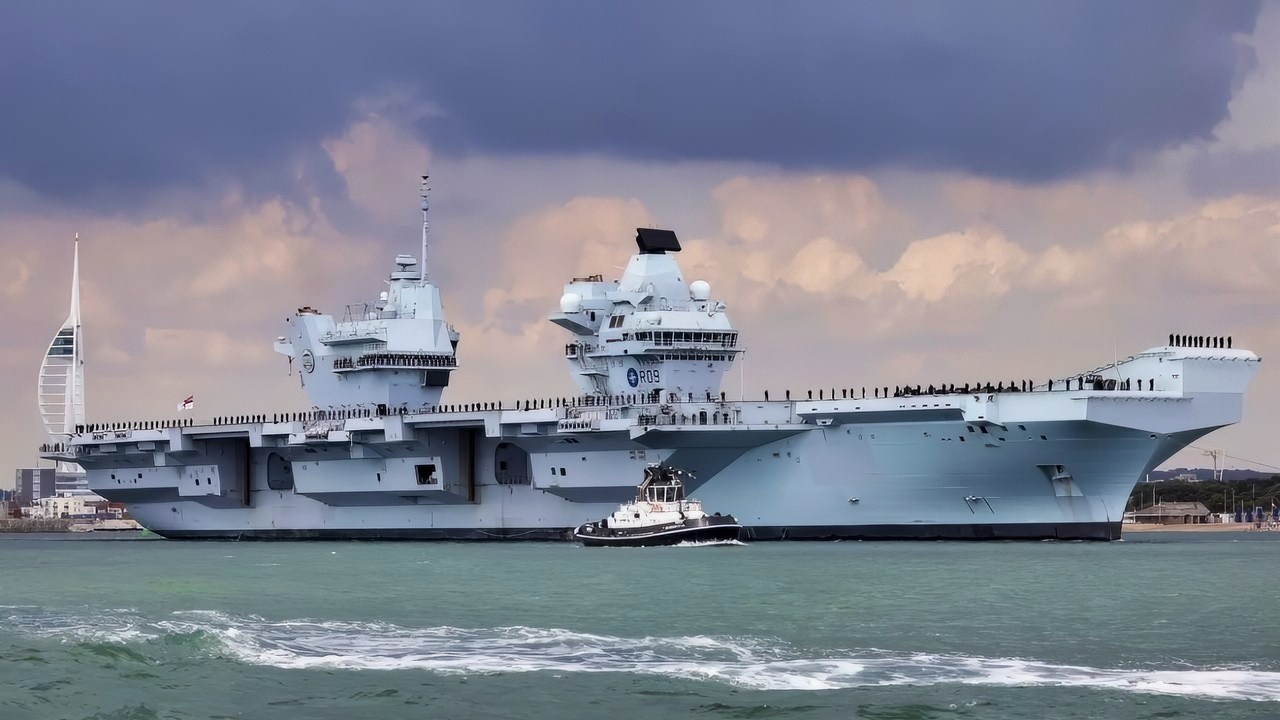
Article Summary and Key Points – The Royal Navy’s two Queen Elizabeth-class carriers were meant to restore British power projection but have been plagued by breakdowns, flooding, shaft failures, and poor availability.
-Chronic shortages of F-35Bs and a shrinking escort fleet mean UK carrier strike groups struggle to generate credible combat power or survive against modern missile threats.
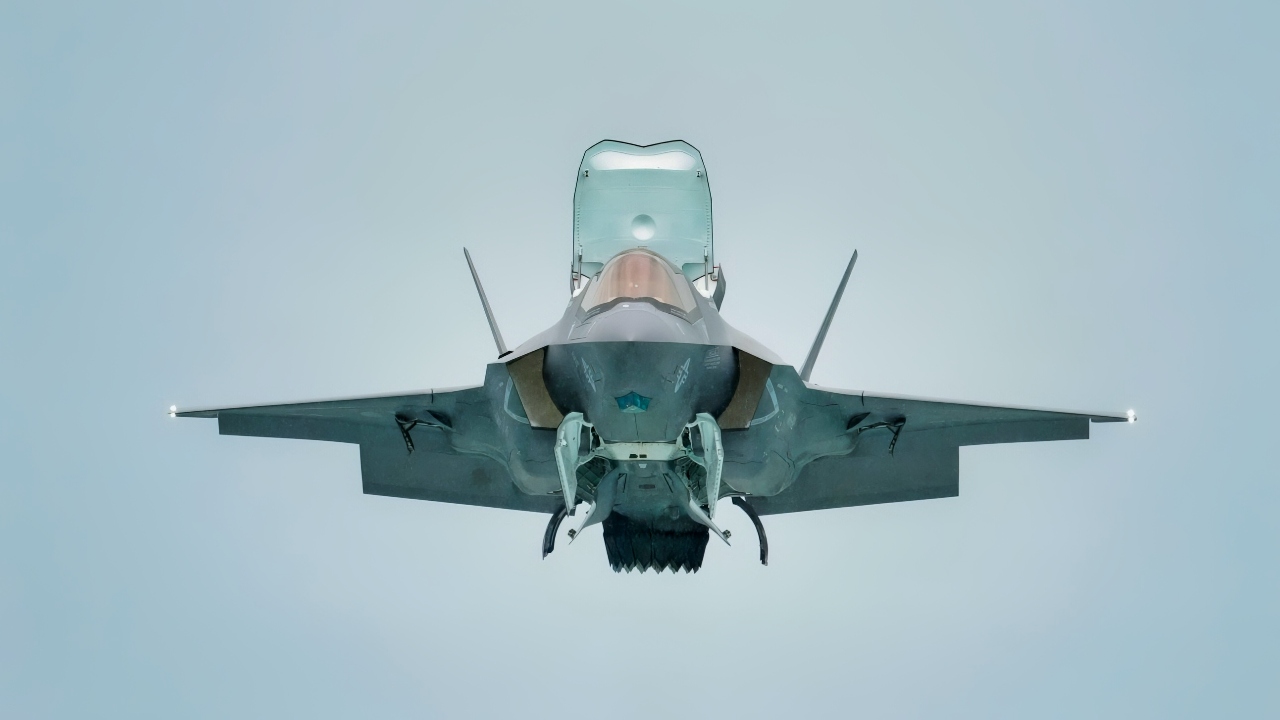
A U.S. Marine Corps F-35B Lightning II assigned to the Marine Fighter Attack Squadron 242, Marine Aircraft Group (MAG) 12, Marine Corps Air Station, Iwakuni, conducts an aerial demonstration during the Singapore Airshow 2022 at Changi Exhibition Center, Republic of Singapore, Feb. 16, 2021. Through participation in regional events like the Singapore Airshow, the U.S. demonstrates its commitment to the security of the Indo-Pacific, promotes interoperability, displays the flexible combat capabilities of the U.S. Military, creates lasting relationships with international audiences, and strengthens partnerships throughout the Indo-Pacific region. (U.S. Air Force photo by Master Sgt. Richard P. Ebensberger).
-With only short-range CIWS for organic air defense and too few destroyers and frigates to screen them, recent exercises have “sunk” the carriers in simulations.
-Analysts now question whether Britain should mothball one ship at a time—or rethink carriers entirely—and shift resources toward submarines and more practical regional capabilities.
Does The UK’s Royal Navy Need To Ditch Its Aircraft Carriers?
The Royal Navy operates two Queen Elizabeth-class aircraft carriers, and both have been disappointing, beset by many difficulties. The big ships (the largest that Britain has ever built) are rarely at sea and have been forced to withdraw from exercises due to breakdowns.
The Royal Navy wanted a pair of carriers for power projection. Still, constant mechanical failures, deployment delays, and a shortage of F-35 aircraft have left the carriers a shell of what they were intended to be.
The Queen Elizabeth-class of Aircraft Carriers: A History of Problems:
Issues have beset the Queen Elizabeth class since her commissioning. The Prince of Wales has only spent 21.3 percent of her time at sea, according to a report by the UK Parliament in May 2023. The carrier had spent 33 percent of its time undergoing repairs.
In 2020, a burst water main in the engine room caused significant flooding, significantly damaging the electrical switchboards.
The HMS Queen Elizabeth was supposed to take part in Exercise Steadfast Defender last year. However, a pre-sailing inspection had identified “an issue with a coupling on [HMS Queen Elizabeth] starboard propeller shaft.” At the time, the Prince of Wales had just returned to sea after its own propeller shaft issues.
The Queen Elizabeth lost a UK-operated F-35B fighter in the Mediterranean in November 2021, thus sparking a recovery effort to ensure that technology did not fall into Russian hands, which operates several vessels in the region.
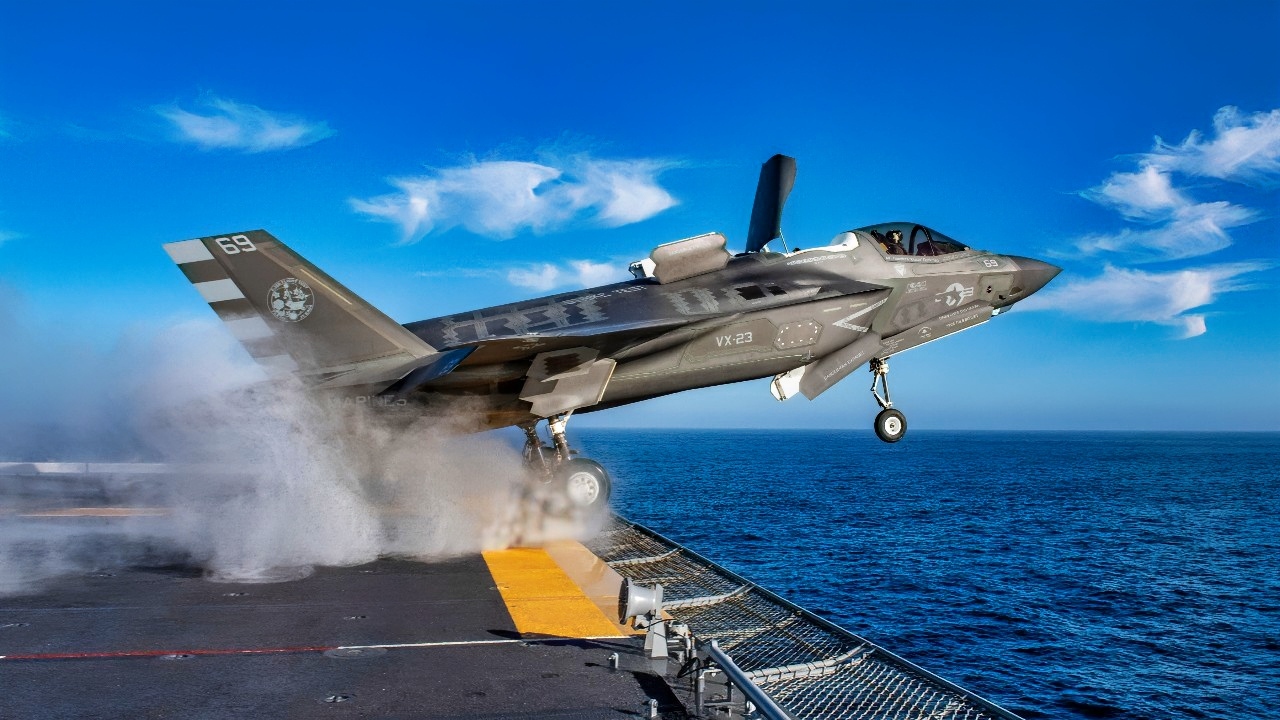
A joint team consisting of F-35 Patuxent River Integrated Test Force flight test members, U.S. Sailors and Marines, and the crew of the Japan Maritime Self-Defense Force Izumo-class multi-functional destroyer JS Kaga (DDH-184) are executing developmental sea trials in the eastern Pacific Ocean to gather the necessary data to certify F-35B Lightning II short takeoff and vertical landing aircraft operations. While aboard the MSDF’s largest ship, the Pax ITF flight test team has been gathering compatibility data for analysis in order to make recommendations for future F-35B operational envelopes, further enhancing the Japanese navy’s capabilities. The results of the testing will contribute to improved interoperability between Japan and the United States, strengthening the deterrence and response capabilities of the Japan-U.S. alliance and contributing to peace and stability in the Indo-Pacific region. Japan is an F-35 Joint Program Office foreign military sales customer planning to purchase 42 F-35Bs. The F-35 Joint Program Office continues to develop, produce, and sustain the F-35 Air System to fulfill its mandate to deliver a capable, available, and affordable air system with fifth-generation capabilities.
After an investigation, it was discovered that the UK F-35B had sucked in a cover that protects the engine air intake when the aircraft is inactive, which had not been removed before take-off.
Carrier Strike Groups Lack Proper Power Projection
There remain serious questions about whether the carrier strike groups provide adequate power projection. Several factors influence this.
Aircraft availability is a persistent issue. The UK has built its carrier designs around the F-35B, focusing on its air superiority and strike capability. However, procurement delays, maintenance issues, and rising costs have impacted the numbers present. Of the 138 F-35Bs ordered, only a handful are fully operational.
Another big issue for the Royal Navy is the supply of support ships required to defend the carrier in the event of an enemy attack. Destroyers and frigates are needed but in short supply, which could impact the carrier’s survivability against a determined near-peer enemy.

HMS Prince of Wales Royal Navy (Queen Elizabeth-Class Aircraft Carrier). Image Credit: Royal Navy.

ATLANTIC OCEAN (Aug. 8, 2017) The Royal Navy aircraft carrier HMS Queen Elizabeth II sails in formation alongside the Nimitz-class aircraft carrier USS George H.W. Bush (CVN 77) during exercise Saxon Warrior 2017, Aug. 8. Saxon Warrior is a United States and United Kingdom co-hosted carrier strike group exercise that demonstrates interoperability and capability to respond to crises and deter potential threats. (U.S. Navy photo by Mass Communication Specialist 3rd Class Tristan B. Lotz/Released)
In 1998, the UK had three small aircraft carriers and an escort fleet of 23 frigates, 12 destroyers, and 12 attack submarines.
Currently, the Royal Navy is down to just 11 aging frigates — two of which are reportedly set to be decommissioned — six destroyers and half a dozen attack submarines, also known as hunter-killers.
And those numbers don’t reflect that many of those ships can’t be sailed quickly.
Anti-Air Defenses Inadequate
The carriers do not have any medium-to-long-range air defense systems. The F-35B aircraft complement can be scrambled for an attack, but for aircraft or missile defense, the carriers carry only three Phalanx CIWS (Close-in Weapons System) systems.
The manufacturer hails it as “the last line of defense”; in other words, once missiles, drones, or aircraft pierce the outer security, this system will take over. The CIWS is highly effective. The US Army has used it in combat to take down artillery, mortars, and drones.
However, the maximum effective range is only about 1,500 meters. That is far too close. And with only three Phalanx weapons, a swarm of drones or missiles could be disastrous.
A recent report in November revealed to The London Times that in several exercises and in multiple scenarios, the two Queen Elizabeth class carriers were sunk due to enemy missiles. That doesn’t bode well for their survival in combat.
Other UK ships fire the excellent Sea-Viper anti-aircraft missile. They have successfully used it against Houthi drones and missiles during commercial shipping protection operations, and it needs to be added to the carriers as well.
In contrast, American carrier strike groups constantly upgrade air defenses to counter Chinese anti-ship missiles. The layered defenses are much thicker than those of our British cousins, yet questions remain about the survivability of the Ford class.
Mothball One Carrier at a Time?
The Royal Navy has struggled with budget issues, maintenance problems, and insufficient support ships. Many analysts believe that the UK, which, truly since the Suez Canal Crisis of 1956, is no longer a dominant military power, should focus on more practical maritime capabilities like submarines and amphibious warships to address regional threats, particularly from Russia.
These developments have also prompted talk of limiting the Royal Navy to deploy only one carrier strike group, transferring all air assets to one carrier, bringing it up to a full complement.
This is expected to happen when the Prince of Wales carrier strike group (CSG) sails to the Indo-Pacific with the bulk of the available F-35Bs, leaving the HMS Queen Elizabeth vulnerable.
The concept of a significant two-ship class of Royal Navy warships taking turns in mothballs is not without precedent. In the RN, the Albion-class amphibious assault ships (comprised of HMS Albion and HMS Bulwark) have been subject to this process since 2010.
This move would reduce operating costs for the Royal Navy and free up the bulk of the crew for other naval assignments.
Can The UK Carriers Survive A Shooting War With China? Doubtful
Last year, many experts were sounding the alarm about the UK carriers surviving a shooting war with a modern enemy. “There is a dissonance between the UK’s military ambitions and its capabilities,” Richard Barrons, a former head of the UK’s armed forces, told the Financial Times.

HMS Prince of Wales and HMS Queen Elizabeth pictured at sea for the first time. Image Credit: Royal Navy.
“The risk is that we get drawn into a conflict and can’t sustain our presence, and this exposes a strategic weakness.”
The Queen Elizabeth class of aircraft carriers has had a poor availability record, and the Royal Navy doesn’t have the assets around them to protect all the F-35B aircraft and the airline itself. Perhaps it is time to revisit the idea of having carriers at all.
About the Author: Steve Balestrieri
Steve Balestrieri is a National Security Columnist. He served as a US Army Special Forces NCO and Warrant Officer. In addition to writing on defense, he covers the NFL for PatsFans.com and is a member of the Pro Football Writers of America (PFWA). His work was regularly featured in many military publications.
More Military
Montana-Class vs. Yamato-Class: It Would Have Been the Ultimate Battleship Battle
The Littoral Combat Ship Might Be the Navy’s Biggest Mistake Ever


