

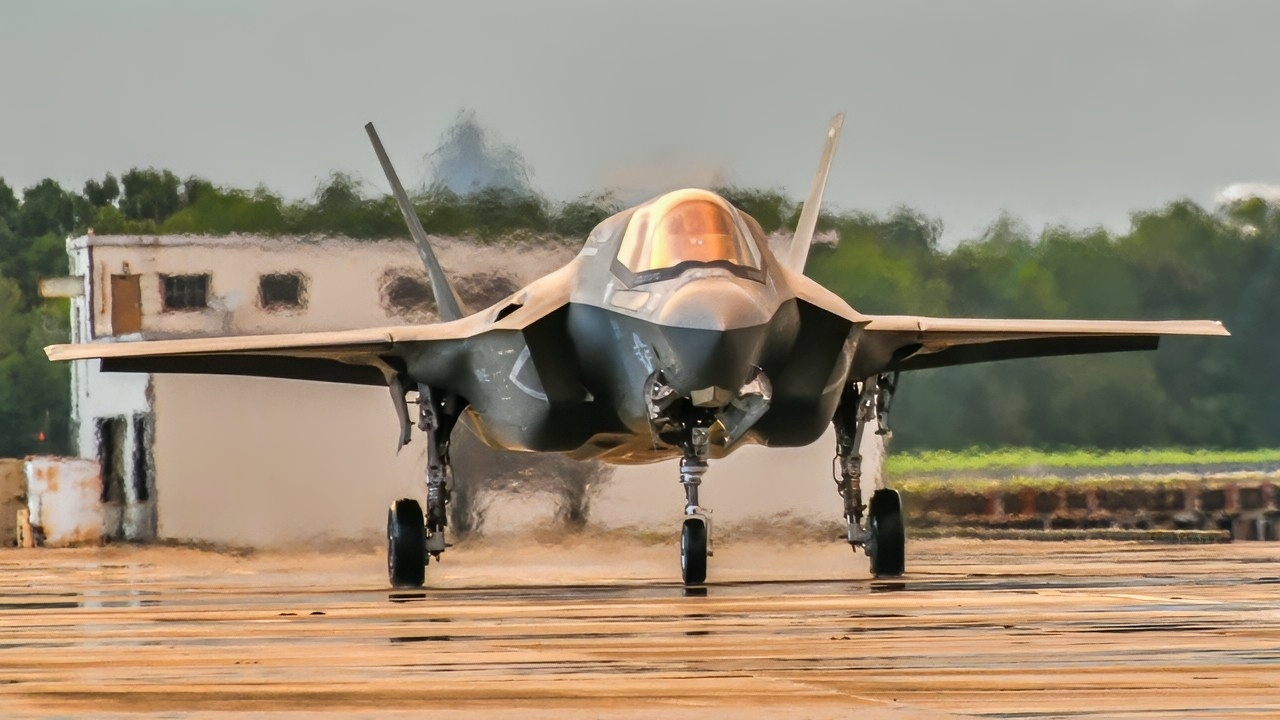
Key Point – Japan reworked two “helicopter destroyers” into F-35B–capable flattops, threading the needle between Article 9 constraints and rising Chinese pressure. Here’s how it became legal—and practical.
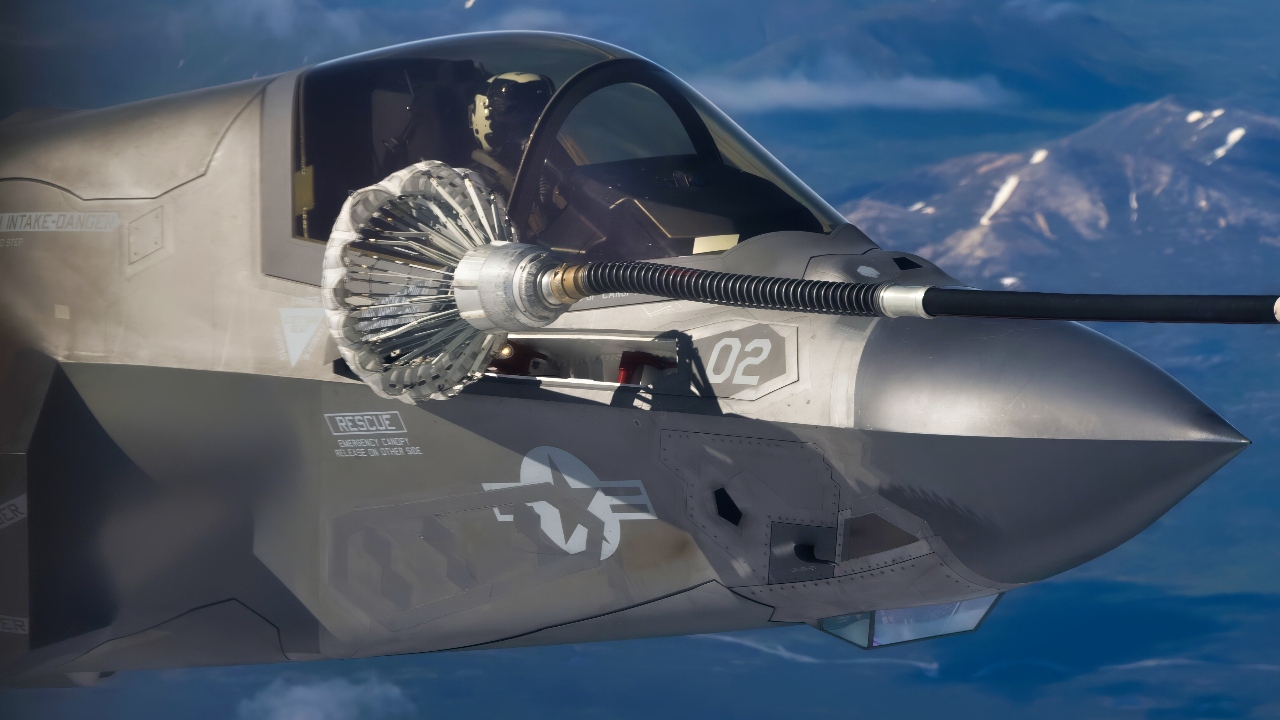
A U.S. Marine Corps KC-130J Super Hercules aircraft with Marine Aerial Refueler Transport Squadron (VMGR) 152 refuels an F-35B Lightning II aircraft with Marine Fighter Attack Squadron (VMFA) 121, both assigned to Marine Aircraft Group 12, 1st Marine Aircraft Wing, during exercise Red-Flag Alaska 25, at Joint Base Elmendorf-Richardson, Alaska, July 21, 2025. VMGR-152 partnered with the U.S. Air Force during Red Flag Alaska to enhance aerial refueling and assault support capabilities. Training in Alaska’s harsh environment sharpened the squadron’s combat readiness and lethality. (U.S. Marine Corps photo Lance Cpl. Cecilia Campbell)
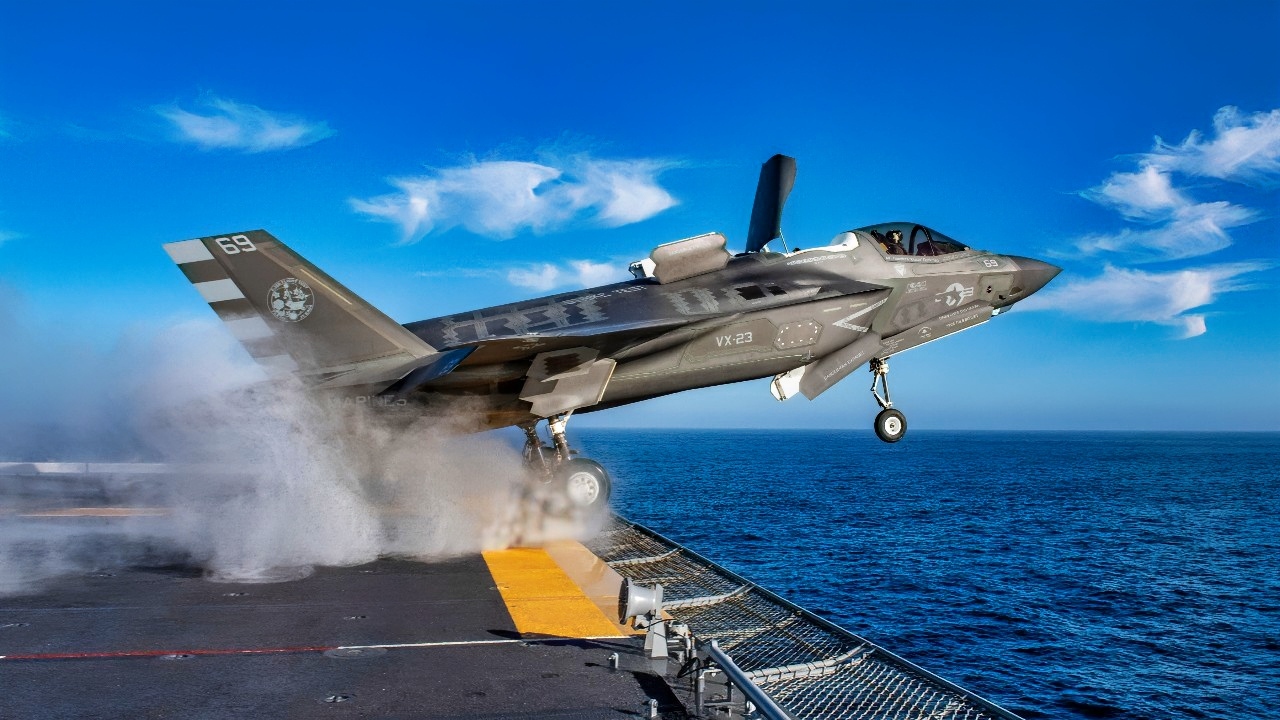
A joint team consisting of F-35 Patuxent River Integrated Test Force flight test members, U.S. Sailors and Marines, and the crew of the Japan Maritime Self-Defense Force Izumo-class multi-functional destroyer JS Kaga (DDH-184) are executing developmental sea trials in the eastern Pacific Ocean to gather the necessary data to certify F-35B Lightning II short takeoff and vertical landing aircraft operations. While aboard the MSDF’s largest ship, the Pax ITF flight test team has been gathering compatibility data for analysis in order to make recommendations for future F-35B operational envelopes, further enhancing the Japanese navy’s capabilities. The results of the testing will contribute to improved interoperability between Japan and the United States, strengthening the deterrence and response capabilities of the Japan-U.S. alliance and contributing to peace and stability in the Indo-Pacific region. Japan is an F-35 Joint Program Office foreign military sales customer planning to purchase 42 F-35Bs. The F-35 Joint Program Office continues to develop, produce, and sustain the F-35 Air System to fulfill its mandate to deliver a capable, available, and affordable air system with fifth-generation capabilities.
How Is It That Japan Now Has Aircraft Carriers Armed with F-35B Fighters?
Back during World War II, the Imperial Japanese Navy (IJN) had an impressive fleet of aircraft carriers, including the world’s first supercarrier, the 59,000-ton Shinano. Shinano had, in turn, converted from a super-battleship (so to speak), namely a sister ship to the behemoths Yamato and Musashi, which displaced 72,000 tons and wielded 18-inch guns.
After Imperial Japan surrendered and thus finally ended WWII, the postwar Constitution of Japan included Article 9, which declared “Aspiring sincerely to an international peace based on justice and order, the Japanese people forever renounce war as a sovereign right,” and “In order to accomplish the aim of the preceding paragraph, land, sea, and air forces, as well as other war potential, will never be maintained. The right of belligerency of the state will not be recognized.”
Japan was ultimately allowed to have a nominal, minimalist military, euphemistically termed a “Self-Defense Force.” For good measure, the Yoshida Doctrine became Japan’s post-WWII foreign policy strategy, emphasizing economic recovery while relying on the United States for security. Therefore, it seemed impossible that Japan would ever have aircraft carriers again. (Intercontinental and intermediate-range ballistic missiles [ICBMs and IRBMs, respectively] and long-range bombers were understood to be verboten as well.)
Yet fast-forward to the present day, and the IJN’s successor entity, the Japan Maritime Self-Defense Force (JMSDF; Kaijō Jieitai [Kaiji]), does indeed have “mini” aircraft carriers, which carry American-made fixed-wing F-35B 5th Generation stealth fighters to boot! How is this logistically possible and legally feasible?
The When, the Why, the Wherefore, and the How of the JMSDF Mini-Carriers
A highly useful source of information is an October 27, 2021, article from Military.com titled “With a Wink and a Nod, Japan Has an Aircraft Carrier Again,” authored by then-Pentagon correspondent Konstantin Toropin.
To wit: “When Navy Secretary Carlos Del Toro returned from his trip to Japan, he fired off a tweet that touted his tour of that country’s ‘Aircraft Carrier Izumo.’ It was a short comment that recognized an important new naval reality for the longtime ally. Japan’s pacifist constitution meant its naval forces have relied on ships carrying helicopters for self-defense, not fighter jets, and it avoided using the term aircraft carrier since the end of World War II. Del Toro, whether intentionally or not, gave a public US acknowledgment of a historic shift by Tokyo toward its past as a carrier power. Late in 2018, the Japanese announced plans to refit two helicopter carriers including the Izumo for US-built F-35B Lightning II fighters, part of an increasingly urgent effort to counter growing Chinese sea power.”
Tokyo approved the fixed-wing accommodation conversion plan for both the JS Izumo (Pennant no. DDH/CVM-183) and her sister ship, the JS Kaga (Pennant no. DDH/CVM-184), in 2018. (Ironically, Kaga shares her moniker with that of one of the WWII IJN’s famous “flattops,” which was sunk during the Battle of Midway.) Izumo was laid down on January 27, 2012, launched on August 6, 2013, and commissioned on March 25, 2015. Meanwhile, Kaga was laid down on October 7, 2013, launched on August 27, 2015, and commissioned on March 22, 2017.
Izumo-Class Carrier Technical Specifications and Vital Stats
Displacement: 19,000 tons baseline, 27,000 tons fully laden
Hull length: 248 meters (813 feet 8 inches)
Beam Width: 38 meters (124 feet 8 inches)
Draft: 7.5 meters (24 feet 7 inches)
Propulsion: 4 x GE/IHI LM2500IEC gas turbine engines
Max Speed: 30 knots (56 km/h; 35 mph)
Crew Complement: Roughly 970 commissioned officers and enlisted seamen
Armament:
2 x Phalanx Close-in Weapon Systems (CIWS)
2 x SeaRAM Close-In Weapon System (CIWS) Anti-Ship Missile Defense Systems
Aircraft Carrying Capacity:
7 x antisubmarine warfare (ASW) helicopters and 2 x search-and-rescue (SAR) helicopters
12 x F-35B
28 x maximum
To put the vessels’ tonnage in perspective, on the one hand, Izumo and Kaga are smaller than the U.S. Navy’s 90,000-ton Nimitz-class carriers or even the Chinese People’s Liberation Army Navy (PLAN) 58,000-ton Liaoning carrier. But on the other hand, they’re bigger than the Italian Navy’s recently retired aircraft carrier, the Giuseppe Garibaldi.
Operational History in Brief
Longtime leeriness of a resurrected warmaking Japan notwithstanding, the JMSDF still hasn’t fired a shot in anger, and neither have its ground and air counterparts (the JGSDF and JASDF, respectively). That said, when two US Marine Corps-owned F-35B Joint Strike Fighters (JSFs) operating from Marine Corps Air Station (MCAS) Iwakuni took off from mainland Japan, refueled in midair, and then landed on the flight deck of JS Izumo on October 3, 2021, it marked Japan’s first time operating fixed-wing warbirds off of a carrier since 1945.
Meanwhile, JS Kaga embarked on her first post-conversion test voyage in November 2023.
The Way Ahead for the JMSDF Mini-Carriers
Izumo is homeported in Yokosuka, Kanagawa Prefecture, whilst Kaga is homeported at Kure, Hiroshima Prefecture.
No additional Izumo-class mini-carriers are currently planned. However, Japan has ordered a total of 42 specimens of the F-35B variant, which will provide a substantial complement to the 105 airframes of the F-35A version ordered for JASDF. Given these numbers, along with the aforementioned ever-increasing threat posed by China, the Izumo carriers won’t be going away anytime soon.
About the Author: Christian D. Orr, Defense Expert
Christian D. Orr is a Senior Defense Editor. He is a former Air Force Security Forces officer, Federal law enforcement officer, and private military contractor (with assignments worked in Iraq, the United Arab Emirates, Kosovo, Japan, Germany, and the Pentagon). Chris holds a B.A. in International Relations from the University of Southern California (USC) and an M.A. in Intelligence Studies (concentration in Terrorism Studies) from American Military University (AMU). He is also the author of the newly published book “Five Decades of a Fabulous Firearm: Celebrating the 50th Anniversary of the Beretta 92 Pistol Series.”
More Military
USS America: The U.S. Navy Failed To Sink Its Own Aircraft Carrier
The Mach 3 SR-71 Blackbird Summed Up in 4 Words
The Russian Military: A Spent Force?
How China Would Decide to Invade Taiwan
Russia’s ‘New’ Su-75 Checkmate Stealth Fighter Looks Like a ‘Fake Out’


