


Summary and Key Words: The USS Gerald R. Ford (CVN-78) is redeploying from the Caribbean to the Middle East, joining the USS Abraham Lincoln to form a massive dual-carrier strike force.
-After supporting the January 2026 capture of Nicolás Maduro in Venezuela, the Ford is now tasked with pressuring Iran amid stalled nuclear negotiations.
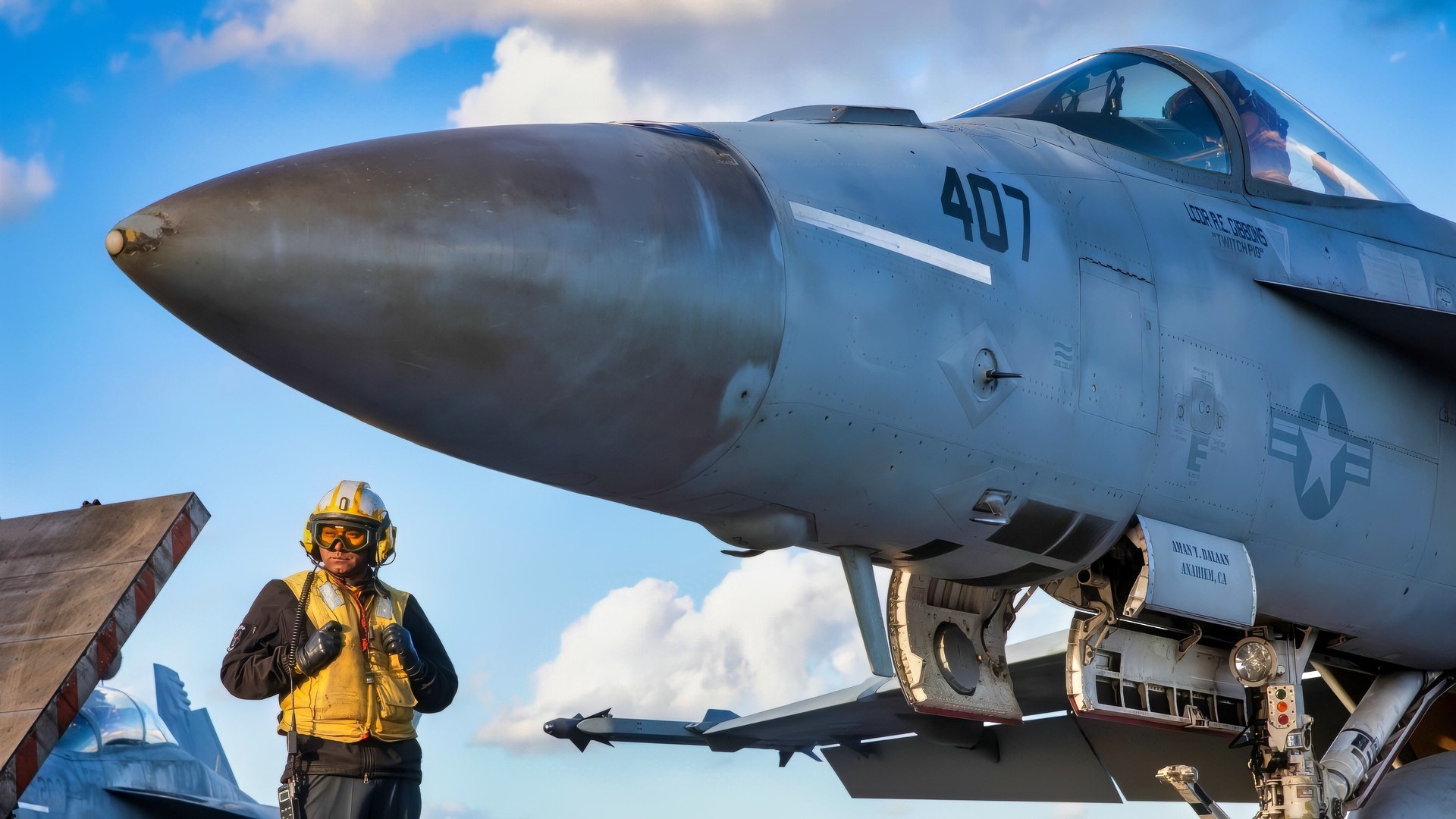
Aviation Boatswain’s Mate (Aircraft Handling) 1st Class Jose Mejiacastro, assigned to Air Department aboard the world’s largest aircraft carrier, USS Gerald R. Ford (CVN 78), prepares to signal to a Carrier Air Wing 8 F/A-18E Super Hornet attached to Strike Fighter Squadron 87 on the flight deck, Sept. 26, 2025. Gerald R. Ford, a first-in-class aircraft carrier and deployed flagship of Carrier Strike Group Twelve, is on a scheduled deployment in the U.S. 6th Fleet area of operations to support the warfighting effectiveness, lethality and readiness of U.S. Naval Forces Europe-Africa, and defend U.S., Allied and partner interests in the region. (U.S. Navy photo by Mass Communication Specialist 2nd Class Mariano Lopez)
-This move is expected to push the Ford’s deployment past 300 days, breaking the post-Vietnam record of 294 days.
-While providing 24/7 air dominance and long-range precision-strike capabilities, the extension raises critical concerns about crew fatigue and the delay of essential shipyard maintenance for the world’s most advanced carrier.
In 2 Words: Big Mistake?
Why the USS Gerald R. Ford Is Set to Smash a Post-Vietnam Deployment Record
According to recent news reports, the USS Gerald R. Ford (CVN-78) and her carrier strike group are heading to the Middle East amidst rising tensions with Iran. This would mark the second carrier strike group posted in the region, as the USS Abraham Lincoln (CVN-72) is already stationed near Iran.
Considering the massive movement of resources towards the Middle East, it looks like war with Iran is pretty much inevitable at this point, even as diplomats attempt to keep talks going.
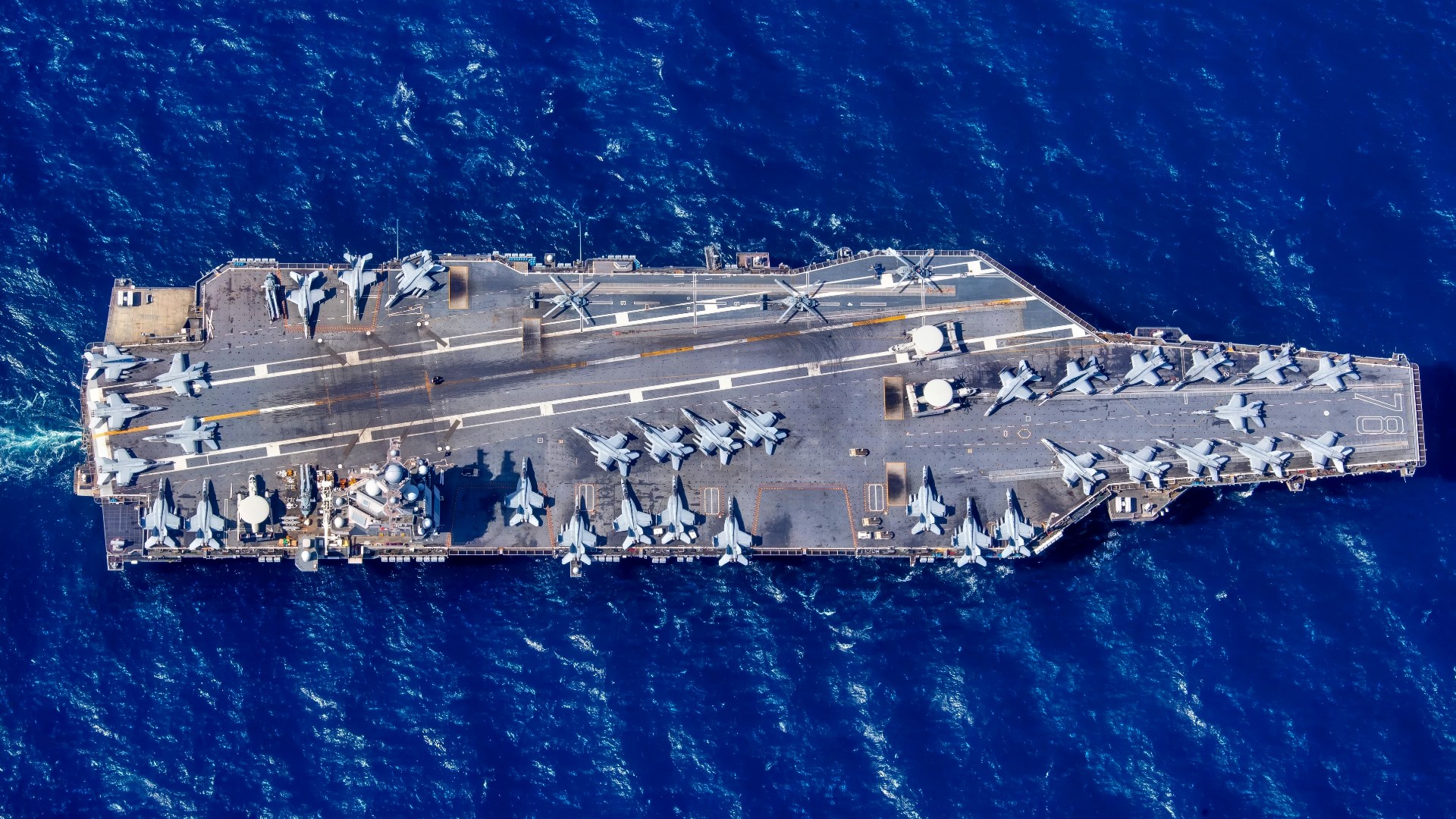
The first-in-class aircraft carrier USS Gerald R. Ford (CVN 78) transits the Atlantic Ocean, March 19, 2023. Ford is underway in the Atlantic Ocean executing its Composite Training Unit Exercise (COMPTUEX), an intense, multi-week exercise designed to fully integrate a carrier strike group as a cohesive, multi-mission fighting force and to test their ability to carry out sustained combat operations from the sea. As the first-in-class ship of Ford-class aircraft carriers, CVN 78 represents a generational leap in the U.S. Navy’s capacity to project power on a global scale. (U.S. Navy photo by Mass Communication Specialist 2nd Class Jackson Adkins)

ATLANTIC OCEAN (Oct. 29, 2019) USS Gerald R. Ford (CVN 78) conducts high-speed turns in the Atlantic Ocean. Ford is at sea conducting sea trials following the in port portion of its 15 month post-shakedown availability. (U.S. Navy photo by Mass Communication Specialist 3rd Class Connor Loessin)
The big concern for Ford, however, is that the carrier has been on deployment for more than two days and has already had its deployment extended. Further extensions risk issues and crew fatigue, which could potentially hinder combat operations should a conflict actually break out.
Aircraft Carrier Ford’s Long Deployment
Ford’s deployment first began when the carrier departed Norfolk, Virginia, on June 24, 2025. In its early months at sea, the ship operated in European waters, participating in NATO-aligned missions and supporting U.S. commitments in the Atlantic theater. After completing this initial stretch, the strike group was unexpectedly retasked and sent across the Atlantic to the Caribbean, arriving on November 16, 2025, where it took part in Operations Southern Spear and Absolute Resolve.
The strike group’s time in the Caribbean became especially notable in January 2026. As per reports, the carrier was stationed in the region. U.S. forces captured former Venezuelan President Nicolás Maduro during an overnight raid in Caracas, a high-stakes operation supported by aircraft from the Ford. The carrier had also been involved in intelligence and operational support for various missions in South America, including regional security and counter-drug activities, which were part of a broader military buildup around Venezuela.
Rising Tensions with Iran
While the Ford was operating in the Caribbean, tensions between the United States and Iran began rapidly intensifying. Throughout January and February 2026, diplomatic talks on Iran’s nuclear program were held in Geneva, with Oman serving as a mediator.

Aviation Boatswain’s Mate (Equipment) 3rd Class Mark Ruiz, assigned to Air Department aboard the world’s largest aircraft carrier, USS Gerald R. Ford (CVN 78), prepares a Carrier Air Wing 8 F/A-18E Super Hornet attached to Strike Fighter Squadron 37 for launch on the flight deck, Aug. 1, 2025. Gerald R. Ford, a first-in-class aircraft carrier and deployed flagship of Carrier Strike Group Twelve, is on a scheduled deployment in the U.S. 6th Fleet area of operations to support the warfighting effectiveness, lethality and readiness of U.S. Naval Forces Europe-Africa, and defend U.S., Allied and partner interests in the region. (U.S. Navy photo by Mass Communication Specialist 2nd Class Mariano Lopez)

The world’s largest aircraft carrier, USS Gerald R. Ford (CVN 78), conducts flight operations in the North Sea, Aug. 23, 2025. Gerald R. Ford, a first-in-class aircraft carrier and deployed flagship of Carrier Strike Group Twelve, is on a scheduled deployment in the U.S. 6th Fleet area of operations to support the warfighting effectiveness, lethality, and readiness of U.S. Naval Forces Europe-Africa, and defend U.S., Allied and partner interests in the region. (U.S. Navy photo by Mass Communication Specialist 2nd Class Maxwell Orlosky)
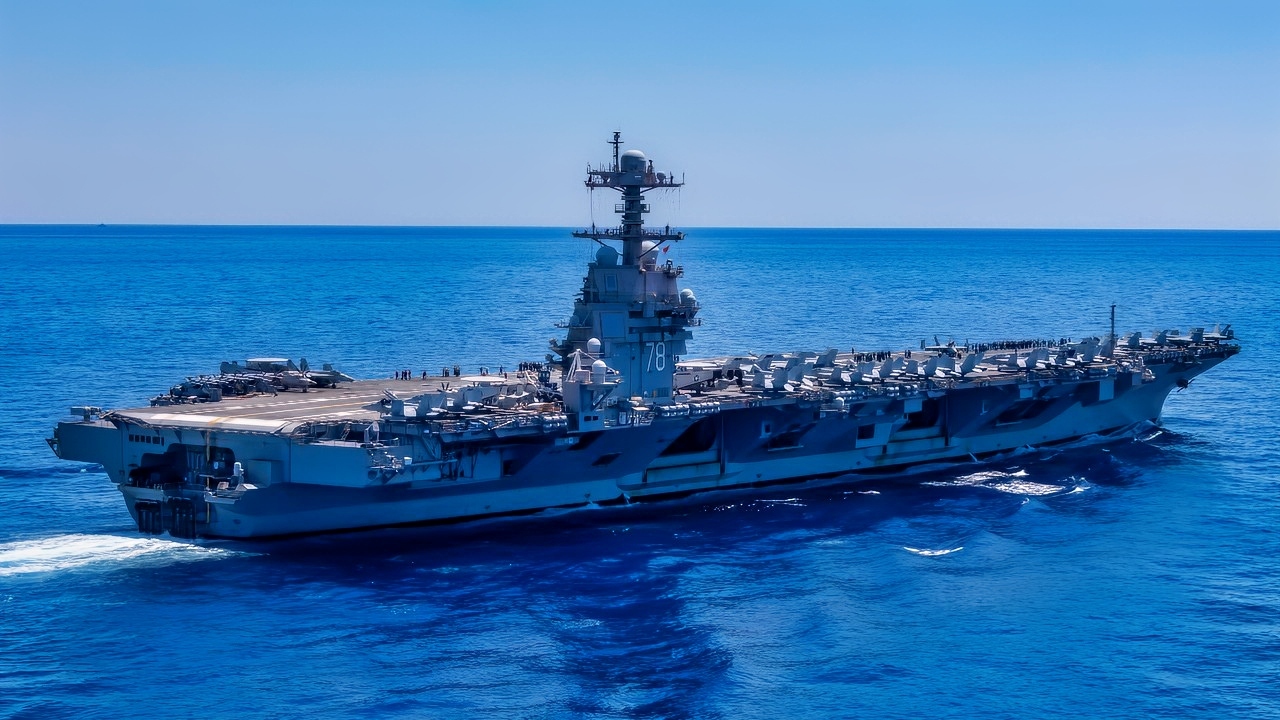
The world’s largest aircraft carrier, USS Gerald R. Ford (CVN 78) transits the Mediterranean Sea, August 1, 2025. Gerald R. Ford, a first-in-class nuclear aircraft carrier and deployed flagship of Carrier Strike Group Twelve, is on a scheduled deployment in the U.S. 6th Fleet area of operations to support the warfighting effectiveness, lethality, and readiness of U.S. Naval Forces Europe-Africa, and defend U.S., Allied, and partner interests in the region. (U.S. Navy photo by Mass Communication Specialist Seaman Brianna Barnett)
President Trump himself stated that the Iranian government’s violent crackdown on anti-regime protesters added further volatility to the situation.
According to reports, the U.S. warned Tehran of potential U.S. military action and emphasized publicly that a “very big carrier group” was being prepared to pressure the Iranian government into renewed nuclear commitments.
Against this backdrop, military planners began to consider the need for a second aircraft carrier in the Middle East.
Between February 13 and 14, 2026, multiple outlets confirmed that the USS Gerald R. Ford had been ordered to redeploy from the Caribbean to the CENTCOM area of responsibility. The carrier would join the USS Abraham Lincoln, which had arrived in the region in January.
The arrival of the Ford would therefore mark the first dual-carrier U.S. presence in the Middle East in nearly a year, forming one of the most formidable naval force packages the region had seen since 2024.
This redeployment was officially communicated to Ford’s crew on February 12, 2026, meaning their originally anticipated early-March return to Norfolk was pushed to late April or early May.
By joining the USS Abraham Lincoln, Ford offers CENTCOM a dramatically enhanced set of capabilities, including 24/7 air dominance, long-range precision-strike capability, broad-area maritime surveillance, and the ability to sustain major operations across the Persian Gulf.
Ford’s Carrier Air Wing included four squadrons of F/A-18 fighters and a squadron of EA-18G electronic attack aircraft, while the Lincoln’s accompanying destroyers carry Tomahawk cruise missiles and ballistic missile defense systems. These combined assets gave Washington significant leverage in its standoff with Tehran.
Navy Aircraft Carrier Deployed for Too Long?
Naval officials have already expressed concern over Ford’s already overextended deployment. Chief of Naval Operations Adm. Daryl Caudle expressed concerns about the human and logistical pressures of delaying shipyard maintenance and extending deployments.
Crew fatigue, equipment wear, and cascading effects on fleet readiness all represent significant challenges. Despite these difficulties, the Ford and its air wing remained fully mission-capable throughout their operations in the Caribbean and their transit to the Middle East.
MORE – Supercarrier Surprises: Multiple Nuclear U.S. Navy Aircraft Carriers Will Soon Be in Iran’s Backyard
MORE – Supercarrier Surge: The U.S. Navy Will Soon Double Ford-Class Aircraft Carrier Total
Gerald R. Ford’s extended deployment raised significant questions about naval readiness and sustainability. USNI News reports that if the carrier remained deployed past mid-April 2026, it would surpass the post-Vietnam War record for the longest modern U.S. aircraft carrier deployment: 294 days, previously set by the USS Abraham Lincoln in 2020.
If Ford stayed on station into May, it could exceed 300 days at sea, reaching deployment lengths not seen since the Vietnam era. Such a stretch would underscore the immense strain on modern carrier strike groups, which are already burdened by maintenance delays and rising operational demands.
War With Iran Coming Up? Looks Likely
The movement of Gerald R. Ford’s CSG is part of a broader movement of assets towards CENTCOM. Reports indicate that a large number of air assets, such as refueling aircraft and strike fighters, have also been moving toward the Middle East. The biggest question on everyone’s mind is whether this will be a repeat of the Twelve-Day war or a larger operation to enact a permanent regime change in Iran.
As the situation continues to develop, it looks like joint Israeli-US strikes on Iran are highly likely. The rest depends on whether Iran chooses to fight back or whether its military dissolves as Venezuela’s did.
About the Author: Isaac Seitz
Isaac Seitz, a Defense Columnist, graduated from Patrick Henry College’s Strategic Intelligence and National Security program. He has also studied Russian at Middlebury Language Schools and has worked as an intelligence Analyst in the private sector.


David Cain
February 18, 2026 at 9:28 pm
Well, Mr. Seitz is quite keen on yet another war of choice in the big sandbox of SW Asia. I am old enough to remember all the times we have tried this since 1991. Each one proved to be a smashing success that left us richer and safer than before. They were all a bargain: two large buildings in lower Manhattan, just over 7,000 dead soldiers, and about $7 trillion in treasury.
A “What if” question, Mr. Seitz. What if, after the initial air strikes, the Iranians begin inflicting casualties on our forces in the region? What happens when the oil prices rise to $100/barrel and the equities markets collapse 25-30%? Can we hold you liable?
Or perhaps you are just a progressive Democrat with a cynical plan to win the mid-term elections in November.