

U.S. President Donald J. Trump has found himself in a mess, or perhaps it is better to say he has created one for himself. America and Iran continue to maintain a shaky ceasefire, characterized by a double blockade and punctuated by occasional airstrikes and missile exchanges. The United States is substantially short of the status quo ante, the position that it enjoyed before the war began. Worse, there is no clear way out of the conflict.
The Military Situation with Iran
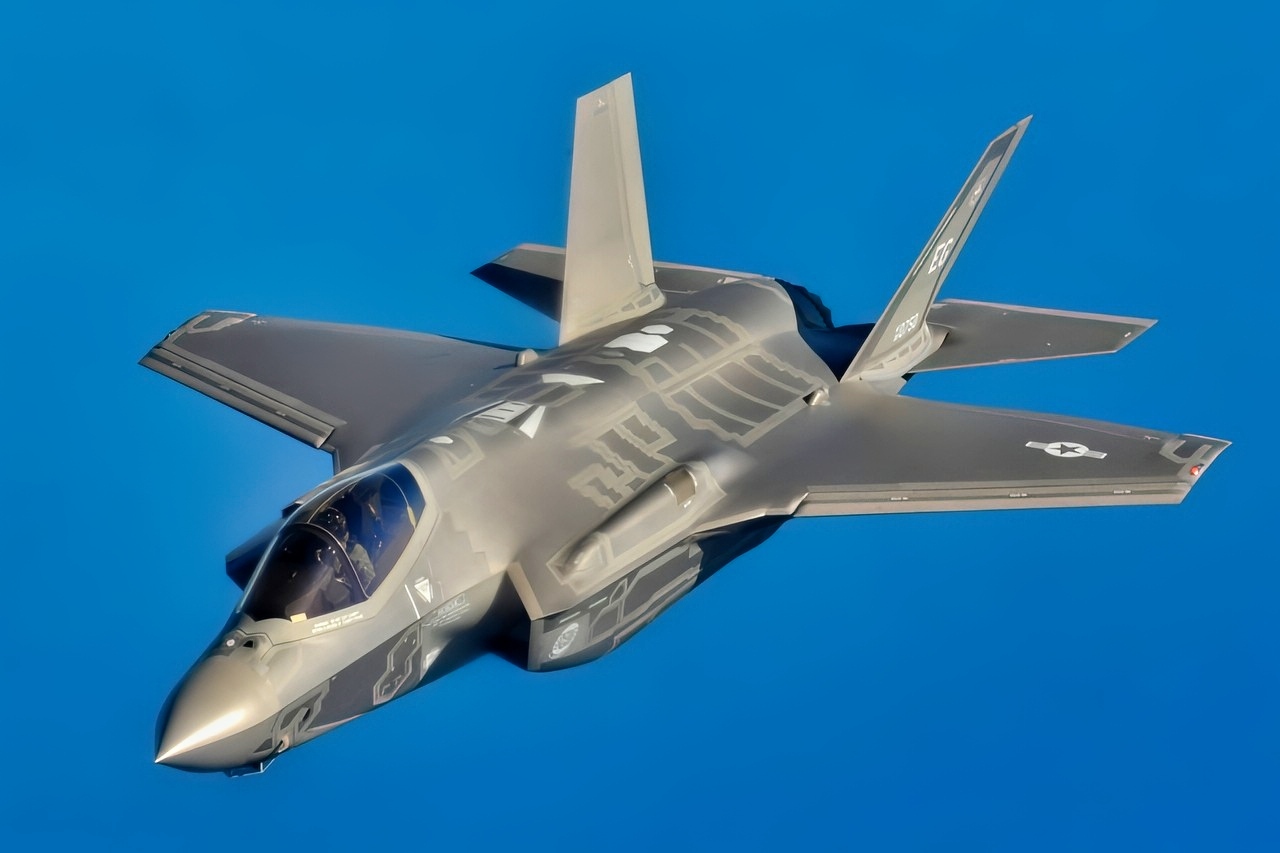
U.S. Air Force F-35A Lightning II Joint Strike Fighters from the 58th Fighter Squadron, 33rd Fighter Wing, Eglin AFB, Fla. perform an aerial refueling mission with a KC-135 Stratotanker from the 336th Air Refueling Squadron from March ARB, Calif., May 14, 2013 off the coast of Northwest Florida. The 33rd Fighter Wing is a joint graduate flying and maintenance training wing that trains Air Force, Marine, Navy and international partner operators and maintainers of the F-35 Lightning II. (U.S. Air Force photo by Master Sgt. Donald R. Allen/Released)

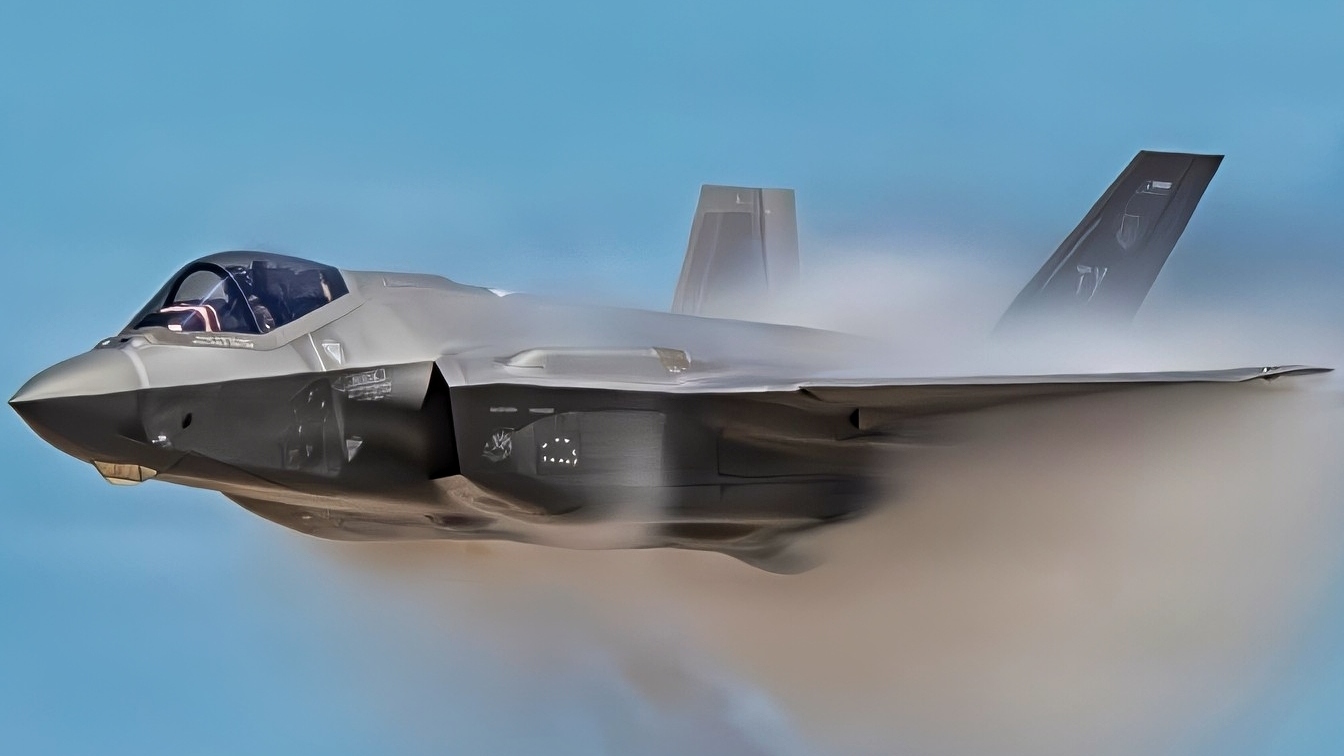
U.S. Air Force Maj. Melanie “Mach” Kluesner, pilot of the F-35A Demonstration Team, performs aerial maneuvers at the Sun ‘n Fun Airshow in Lakeland, Florida, April 1, 2025. The team travels across the country to demonstrate the unmatched capabilities of the F-35A Lightning II and highlight the skill of U.S. Air Force pilots. (U.S. Air Force photo by Senior Airman Nicholas Rupiper)
Despite some military successes, the Strait of Hormuz remains largely closed, with the economic impact steadily mounting amid extraordinary financial maneuvering by the US and Chinese governments.
Anticipation that dual blockades would ease has kept oil prices manageable, but the raw reality of energy markets can’t be held permanently at bay. Iran’s military capabilities have been damaged but by no means destroyed, as indicated by recent Iranian attacks against US Gulf allies.
Perhaps most importantly, little progress has been made regarding Iran’s nuclear program. Of the many things that can be said of Iran’s attachment to its nuclear program, perhaps the most important is that Tehran views the program as a flexible interest.
Iran has been willing to stall, freeze, and roll back the program in the past. In negotiations immediately prior to the US and Israeli attack, Iran offered concessions regarding the future of the program, similar to those that it concluded with the Obama administration in 2015.
But much of the willingness to negotiate seems to have evaporated.
Leverage
Domestic support for the war is low, and Speaker of the House Mike Johnson can no longer hold the GOP House caucus together.
A recent House vote to end the war is largely symbolic in legal terms, but it clearly indicates that the President no longer has the confidence of his own party. Trump is facing attacks from both left and right, with GOP hawks expressing disappointment at the terms of his proposed accords with Iran. The President himself often seems confused about what he wants, vacillating between threats to destroy Iran and expressions of indifference about the course of the conflict.
The international situation is similarly bleak. Demands from President Trump that European and Asian states intervene to open the Strait of Hormuz have been met with silence at best, derision at worst. Hopes that Trump’s meeting with Chinese President Xi Jinping would lead to some kind of breakthrough quickly faded. Israel holds a de facto veto over any accord with Tehran, as many suspect Prime Minister Netanyahu will resume strikes against Iran if he is not pleased with the terms. For their part, the Gulf monarchies are bearing the brunt of the conflict’s military and economic impact and have failed to develop a united front on how and whether to end the war.
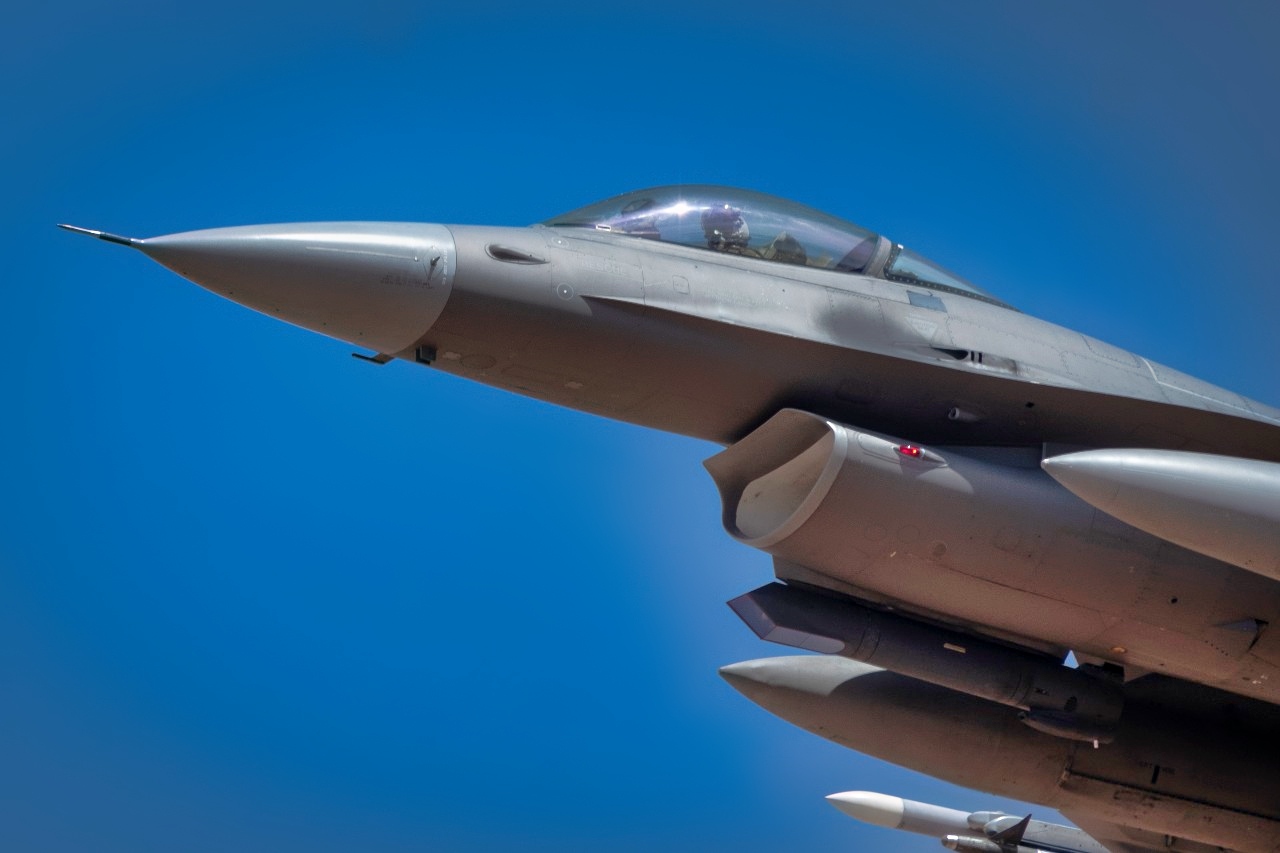
A U.S. Air Force F-16 Fighting Falcon assigned to the 54th Fighter Group soars through the sky over the Oscura Range at Holloman Air Force Base, New Mexico, April 21, 2025. During range operations, F-16 pilots perform munition drops and strafing maneuvers to test their abilities in the aircraft. (U.S. Air Force photo by Senior Airman Nicholas Paczkowski)
And the domestic and international struggles overlap. Iranian negotiators are fully aware of the fact that Trump is a deeply unpopular President, that the war is among his least popular initiatives, and that he faces what could be a crushing defeat in the midterm elections.
Trump has undercut the position of his negotiators by signaling a disinterest in resuming bombing, despite the fact that few of his military objectives have been achieved.
This situation would test the steeliest and most professional of negotiators. Unfortunately, the President’s team of Jared Kushner and Steve Witkoff is not up to the task of negotiating with the professional diplomatic teams available to the Iranians.
They lack experience in international negotiations and subject-matter expertise regarding the military and technological issues necessary to complete a deal. This ineptitude has driven the friction between Trump and the hawkish elements of the GOP, who expect that any deal will permanently resolve the Iranian nuclear conundrum. Worse, no one now expects that an accord will address Iran’s ballistic missile, drone, and militia programs, which together form the core of Israel’s regional security interests.
Outlines of an Iran Deal
The President has no good options. The Iran War is a whirlwind of executive incompetence, embarked upon for no good reason, conducted with no clear strategy, and drawing to no visible endgame. It is difficult at this point to see how an accord will leave the US in a better position than when it started, beyond the unlikely possibility of a sudden collapse of the Islamic Republic. That said, the President’s precarious domestic situation offers an opening for some kind of war termination, if not on terms that the United States would prefer.
A basic deal would involve easing both the US and Iranian blockades in stages. Iran may insist upon a greater degree of control over the Strait than it enjoyed before the war, although any charges will be described as “fees” rather than “tolls.”

An F-16 Fighting Falcon aircraft assigned to the 113th Wing hooks onto the BAK-12 aircraft arresting system at Joint Base Andrews, Md., Aug. 13, 2024. The 316th Civil Engineer Squadron tested the overhauled arresting aircraft system to validate the stability of the emergency brake system. (U.S. Air Force photo by Senior Airman Bridgitte Taylor)
There will be no meaningful controls over Iran’s ballistic missile or drone programs, or a relaxation of its support for militias in Iraq and Yemen. The nuclear program remains the toughest place to find a face-saving compromise for both sides, but as we draw closer to the November midterms, the nature of that compromise is likely to increasingly favor Iran.
A deal along these terms could end the war… for now. It will not, however, eliminate the core issues that led to the conflict in the first place, meaning that war is likely to resume in the not-too-distant future and once again entangle the United States.
About the Author: Dr. Robert Farley
Dr. Robert Farley has taught security and diplomacy courses at the Patterson School since 2005. He received his BS from the University of Oregon in 1997, and his Ph. D. from the University of Washington in 2004. Dr. Farley is the author of Grounded: The Case for Abolishing the United States Air Force (University Press of Kentucky, 2014), the Battleship Book (Wildside, 2016), Patents for Power: Intellectual Property Law and the Diffusion of Military Technology (University of Chicago, 2020), and most recently Waging War with Gold: National Security and the Finance Domain Across the Ages (Lynne Rienner, 2023). He has contributed extensively to a number of journals and magazines, including the National Interest, the Diplomat: APAC, World Politics Review, and the American Prospect. Dr. Farley is also a founder and senior editor of Lawyers, Guns, and Money.


