

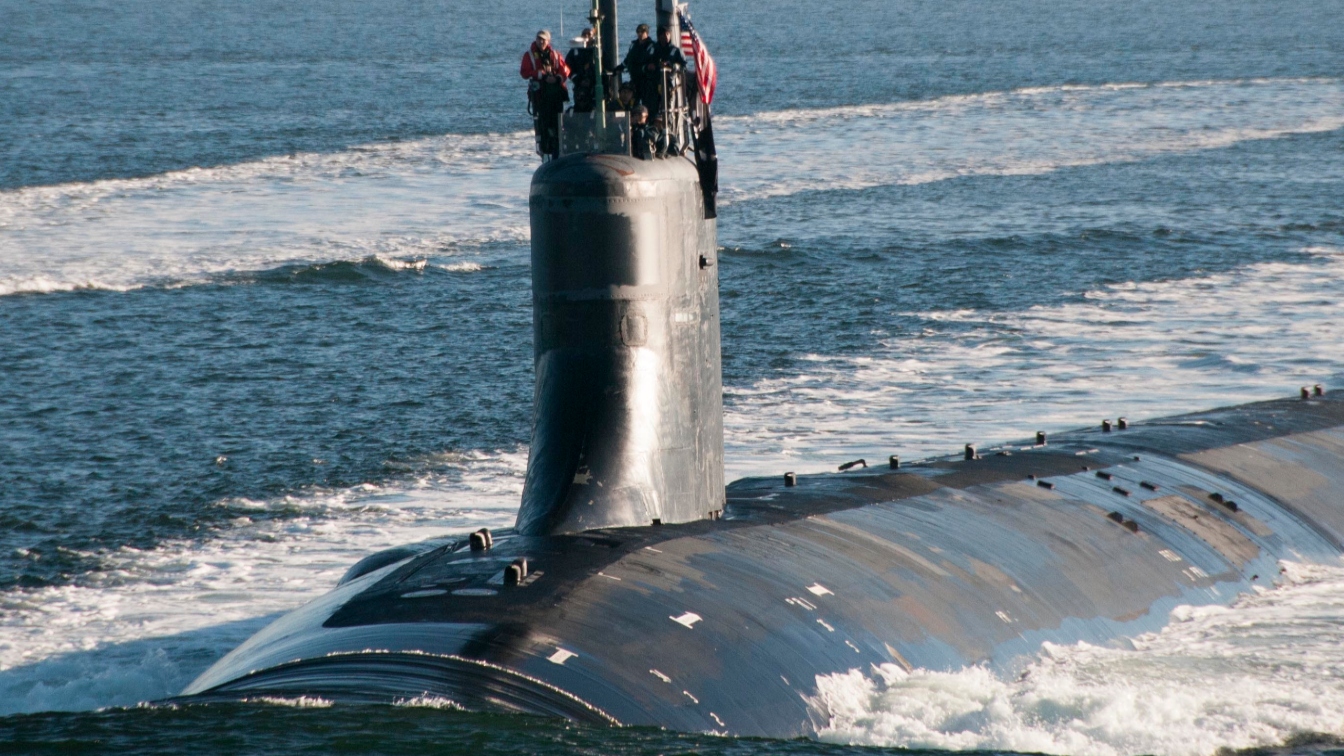
The USS Connecticut (SSN-22), one of only three Seawolf-class submarines ever built, struck an underwater mountain in the South China Sea in October 2021, causing damage severe enough that early speculation suggested it might never return to service. After more than four years of repairs at Puget Sound Naval Shipyard, the boat is now scheduled to rejoin the fleet by the end of 2026. The May 2026 Navy Shipbuilding Plan then confirmed it will be deactivated in 2031 — giving the repaired submarine just four to five more years of operational life before retirement, making it the first Seawolf ever removed from service. That means 33 percent of what many consider the best submarines ever made could soon be retired.
USS Connecticut Should Return to Service This Year – But Retirement Looms in 2031

Seawolf-Class Submarine Damaged in 2021. Image Credit: X Screenshot.
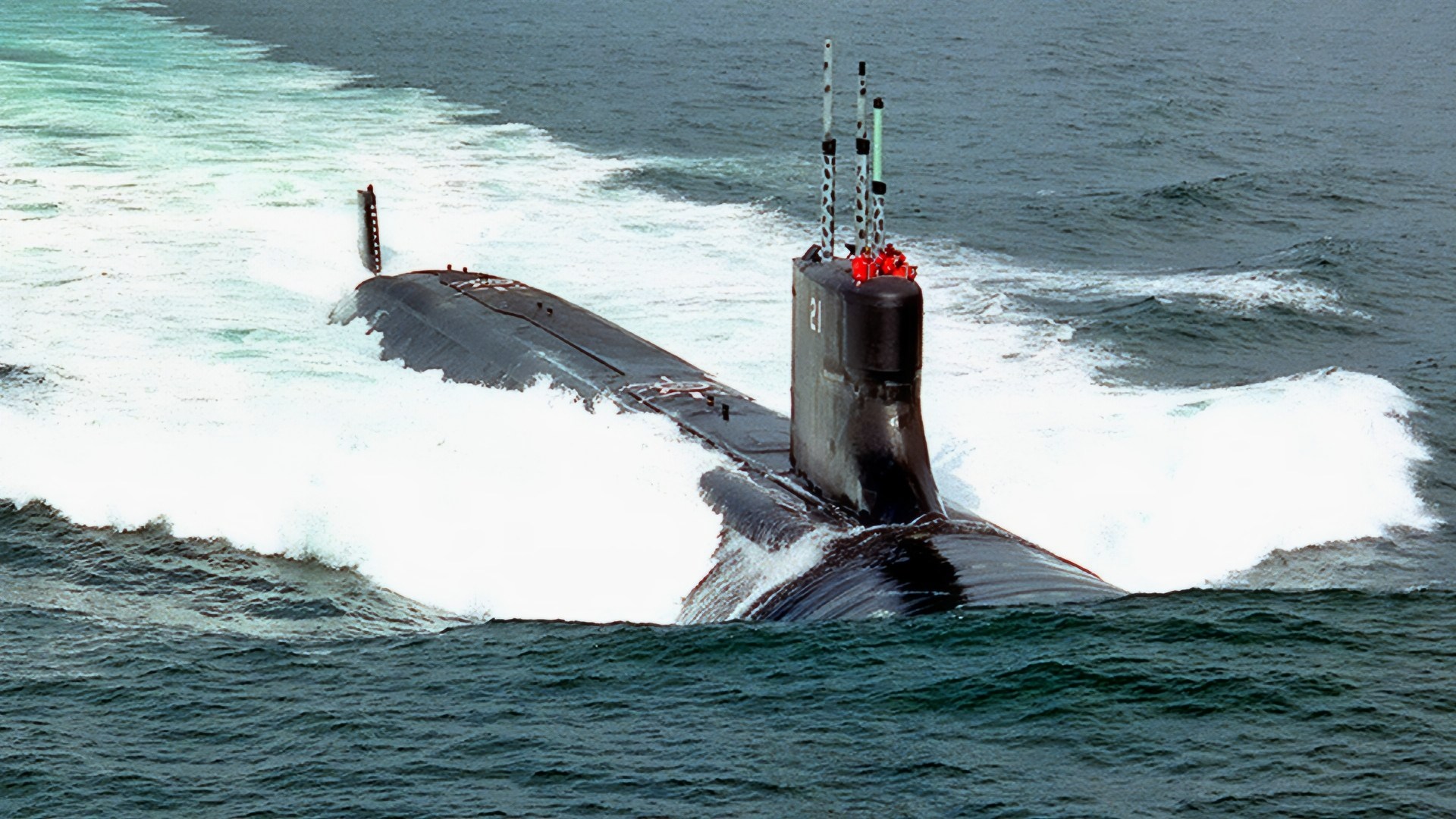
Seawolf-Class Submarine. Image Credit: Creative Commons.
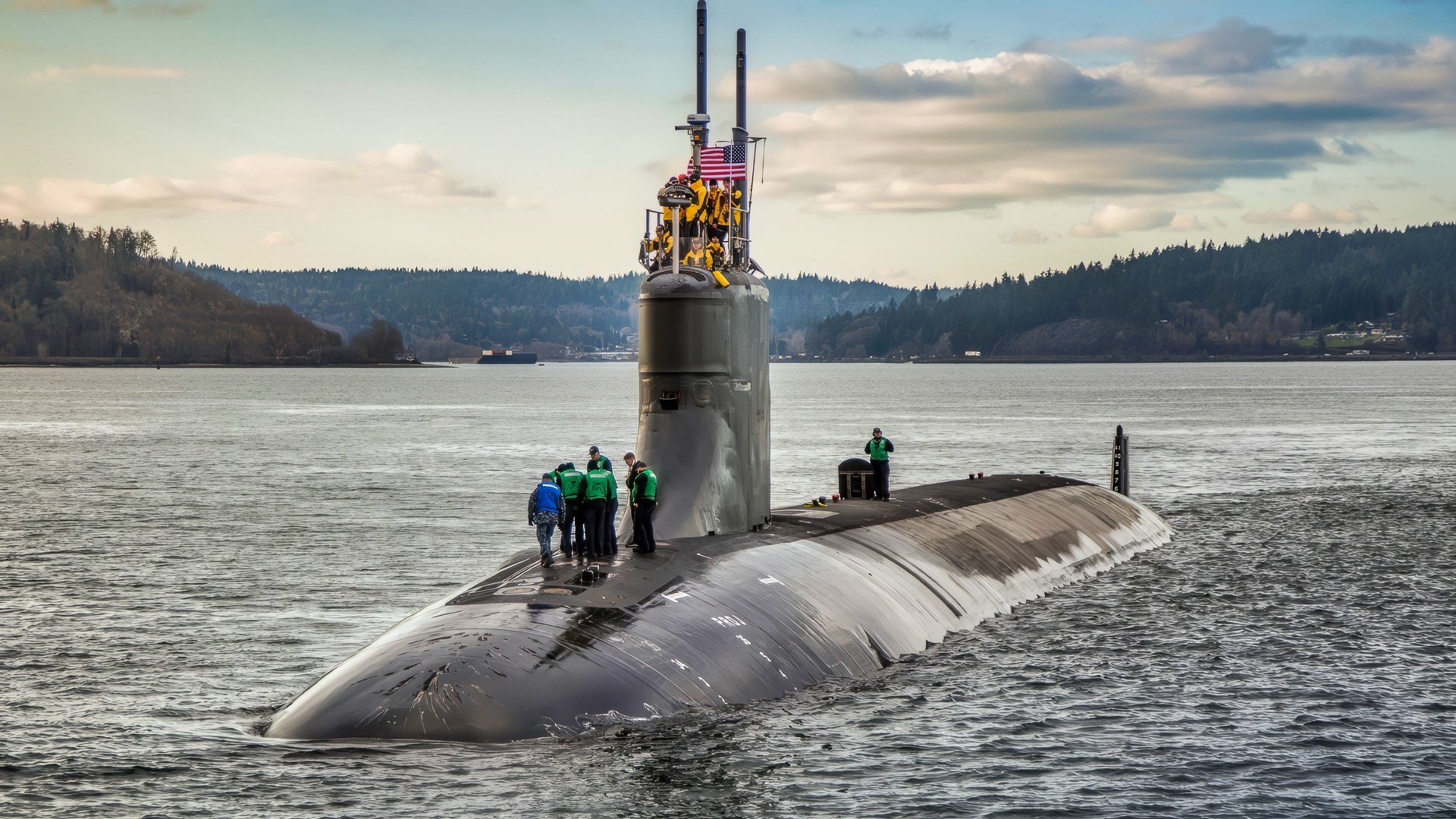
(Dec. 15, 2016) – The Seawolf-class fast-attack submarine USS Connecticut (SSN 22) departs Puget Sound Naval Shipyard for sea trials following a maintenance availability. (U.S. Navy photo by Thiep Van Nguyen II/released)
The USS Connecticut (SSN 22), one of only three Seawolf-class submarines ever built, is scheduled to re-enter service with the US Navy by the end of 2026.
The boat has been out of service at the Puget Sound Naval Shipyard for more than four years now and should be completing a long and complicated repair in dry dock.
But this return to the fleet may not be for long.
Although it was deemed necessary to repair the boat at high cost, it is nonetheless expected to be deactivated in 2031, serving only another 4-5 years before retirement.
This is according to the May 2026 US Navy Shipbuilding Plan.
“It perhaps should be said that this is the plan – for now,” said a retired senior naval intelligence officer who discussed the sub with NSJ. “This would be the first of the three Seawolfs to be taken out of the fleet if it goes away as planned in 2031. Today there is no end of talk about how the US does not have enough naval vessels and cannot build new ships and subs fast enough. We should not be surprised if at some point in the future there is a movement that forms up to extend its time in service.”
The damage to the sub occurred in October 2021 when the USS Connecticut struck an underwater mountain in the South China Sea.
The damage was so significant that the sub was first routed to Guam for temporary repair work and then arrived at the Puget Sound facility in December.
Immediately after the event, very little was known of the extent of the damage to the Connecticut. The state of the sub fell under what was then described as a “virtual news blackout.”
Speculation at the time – partly due to the atmosphere permeating the conversations about its condition, and partly due to estimates of how long it would take to effect repairs- it was clear that the damage was so serious that it might be necessary to withdraw the Connecticut from service altogether.
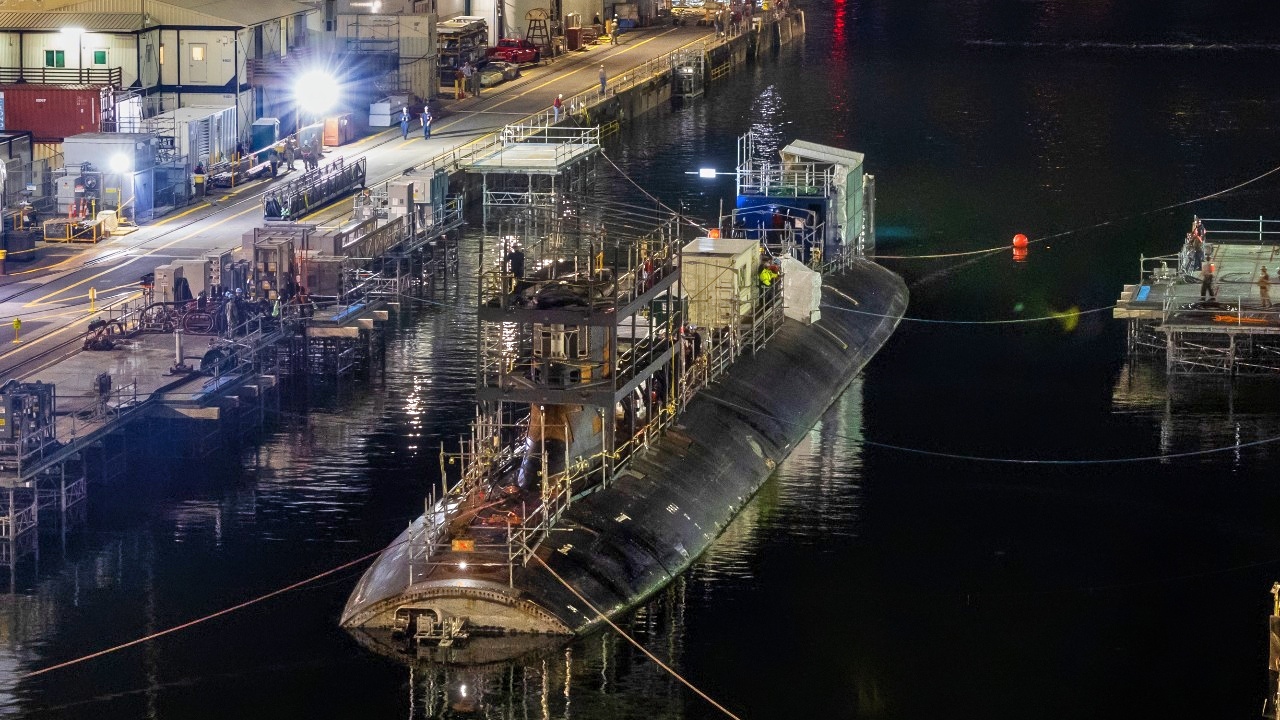
USS Connecticut (SSN 22) is docked for its Extended Docking Selected Restricted Availability July 12, 2023 at Puget Sound Naval Shipyard; Intermediate Maintenance Facility.

USS Connecticut Seawolf-Class Submarine. Image Credit: Creative Commons.

Seawolf-Class. Image Credit: Creative Commons.
Seawolf-Class
When they were first developed, the Seawolf design was a response to the advanced Soviet ballistic missile submarines such as the Typhoon-class, and the Akula-class attack submarines.
They were designed to match those Soviet boats while operating in a deep-ocean environment, but were also equipped with advanced sonar and other systems to permit shallow water operations.
One of the main improvements in the Seawolf-class was that their hulls were constructed from HY-100 steel, which is much stronger than the HY-80 grade of steel that composed the hulls of previous US submarine classes.
The Seawolf-class submarines are larger and faster, but at the same time they are also measurably quieter than the Los Angeles-class submarines they were originally designed to replace.
The Seawolf-class boats also carry more weapons and have twice as many torpedo tubes.
In addition to the larger number of torpedo tubes, the boats are also able to carry up to 50 UGM-109 Tomahawk cruise missiles that are employed for attacking both land and sea surface targets.
The Seawolf boats are so fast, powerful and stealthy that they are sometimes called “the F-22 of submarines.”
The Next-Generation
Despite its lethality, the Seawolf is still supposed to be replaced by the upcoming SSN(X)-class of submarine.
These submarines are supposed to be equipped with quantum technology, an even larger number of torpedo tubes, laser weapons, larger flank arrays, and other capabilities that will be the first use of these technologies aboard any submarine.
According to the official US Navy Budget Justification, “SSN(X) will be designed to increase the counter to the growing threat posed by adversaries in strategic competition for undersea supremacy. It will provide greater speed, increased horizontal [i.e., torpedo room] payload capacity, improved signatures, flexibility to adapt to future threats, and higher operational availability.”
The same Navy document explains that the SSN(X) will – to use another fighter aircraft analogy – will be a next-generation undersea combatant, but it will also be a battle manager.
The same Navy document reads that it will “conduct full spectrum undersea warfare and be able to employ and coordinate with a larger contingent of remote autonomous systems (RAS) and sensors as a force multiplier.”
About the Author: Reuben F. Johnson
Reuben F. Johnson has thirty-six years of experience analyzing and reporting on foreign weapons systems, defense technologies, and international arms export policy. Johnson is the Director of Research at the Casimir Pulaski Foundation. He is also a survivor of the Russian invasion of Ukraine in February 2022. He worked for years in the American defense industry as a foreign technology analyst and later as a consultant for the U.S. Department of Defense, the Departments of the Navy and Air Force, and the governments of the United Kingdom and Australia. In 2022-2023, he won two awards in a row for his defense reporting. He holds a bachelor’s degree from DePauw University and a master’s degree from Miami University in Ohio, specializing in Soviet and Russian studies. He lives in Warsaw.


dooyle
May 26, 2026 at 8:01 am
There has been a lot of duplicity about the submarine, a near-magical vessel designed to put an end to the navies of adversarial nations.
But it hit an underwater mountain.
Impossible, it’s like saying a special forces commando wearing night vision goggles collided with an afghan farmer on his way home from work.
The USS Connecticut was prowling in and around the waters near the south china sea paracel islands just south east of hainan in october 2021 when it allegedly collided with a chinese vessel or submarine that was tracking it.
After the collision, the Connecticut was seen floating on the surface only 150 nautical miles away from hainan.
Around the same time, a chinese submarine was seen sailing through the taiwan strait without submerging, which was odd.
The Connecticut was able to limp back to san diego after a near-two month journey.
That shows the collision damage with the chinese vessel was not too severe, at least not as severe as stated.
The long repair time is not due to the damage itaelf, but due to difficulties encountered for making good a proper repair.
Doyle
May 26, 2026 at 3:10 pm
You do realize that over time undersea mounds shift…right? They’re not mountains. Next conspiracy theory….
David L Faught
May 26, 2026 at 10:04 am
ANY EXCUSE TO RETIRE A STILL GOOD PIECE OF EQUIPMENT.
Doyle
May 26, 2026 at 3:12 pm
except since the submarine was no longer in production there were no spare bows available to repair the sub. It was sort of patched together and may not be nearly as capable as its sisters. Your cynicism is likely unwarranted here.
omega13
May 26, 2026 at 1:11 pm
We already have the Virginia class, which is more advanced than the Seawolf, technologically. But it is smaller and carries a smaller payload. That’s about it.
Also, that stupid headline of “33 percent” was ridiculous. You mean one in three? I have no idea why I keep accessing this site. I blame Whatfinger.