

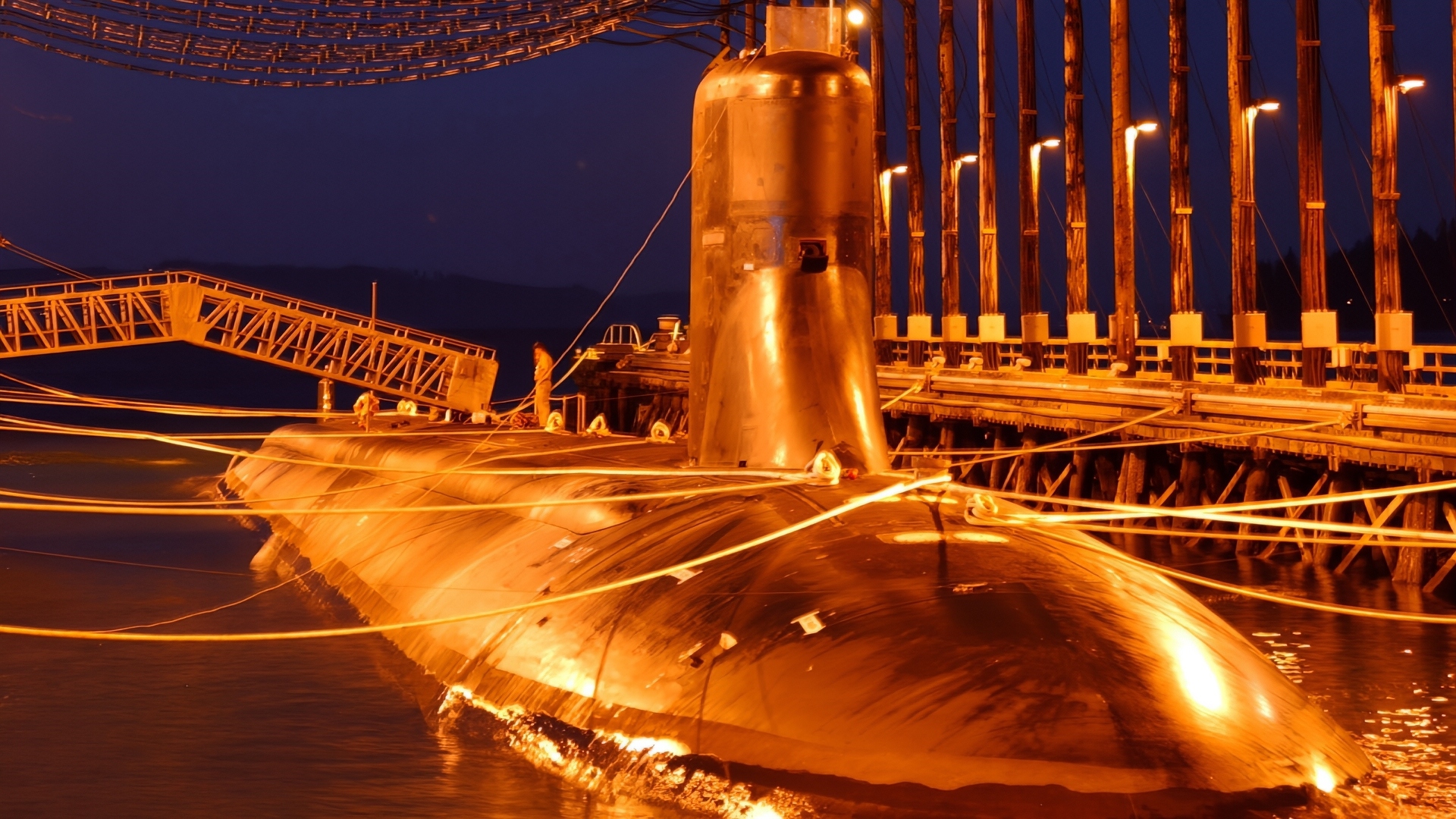
Summary and Key Points: The Seawolf-class submarine, a pinnacle of late Cold War engineering, remains the U.S. Navy’s most lethal and quietest fast-attack platform.
-Designed to counter Soviet “Typhoon” subs, only three—USS Seawolf, Connecticut, and Jimmy Carter—were built due to $3 billion-per-unit costs.

Seawolf-Class Submarine Damaged in 2021. Image Credit: X Screenshot.
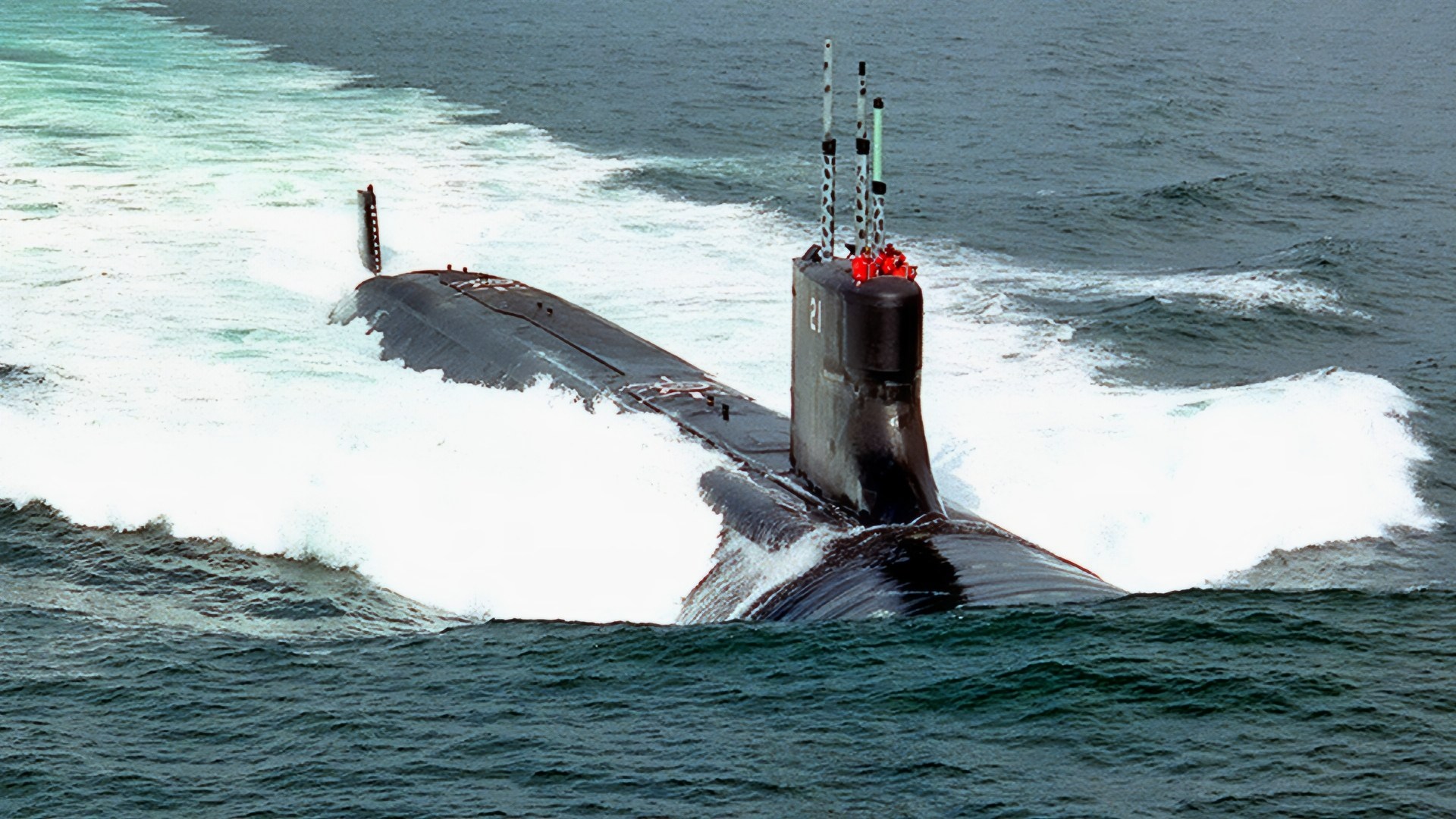
Seawolf-Class Submarine. Image Credit: Creative Commons.
-Constructed with high-strength HY-100 steel for extreme depths and a pump-jet propulsor for acoustic stealth, they outclass their Los Angeles-class predecessors.
-The USS Jimmy Carter features a unique 100-foot hull extension for covert intelligence, ensuring the class remains a primary strategic asset even as the Navy pivots to the cost-effective Virginia-class.
A Strategic Mistake? Why the Cancellation of the Seawolf-Class Still Haunts Undersea Warfare Analysts
The Seawolf-class submarine was a class of advanced, nuclear-powered fast-attack submarines for the U.S. Navy.
They intended to replace the Los Angeles-class attack submarines in response to the Soviet Union’s Typhoon-class submarines. Hailed for their advanced stealth characteristics, the U.S. originally planned to build 29 of these submarines.
However, as the Cold War ended, subsequent budget cuts led the U.S. to cancel any new Seawolf-class ships, leaving the total fleet at three ships: USS Seawolf (SSN-21), USS Connecticut (SSN-22), and USS Jimmy Carter (SSN-23).
These submarines were extraordinarily expensive to build, with Seawolf and Jimmy Carter costing approximately $3 billion each and Connecticut costing about $3.5 billion, making them not only the most expensive fast-attack submarines ever built by the United States but also among the costliest submarines in the world.
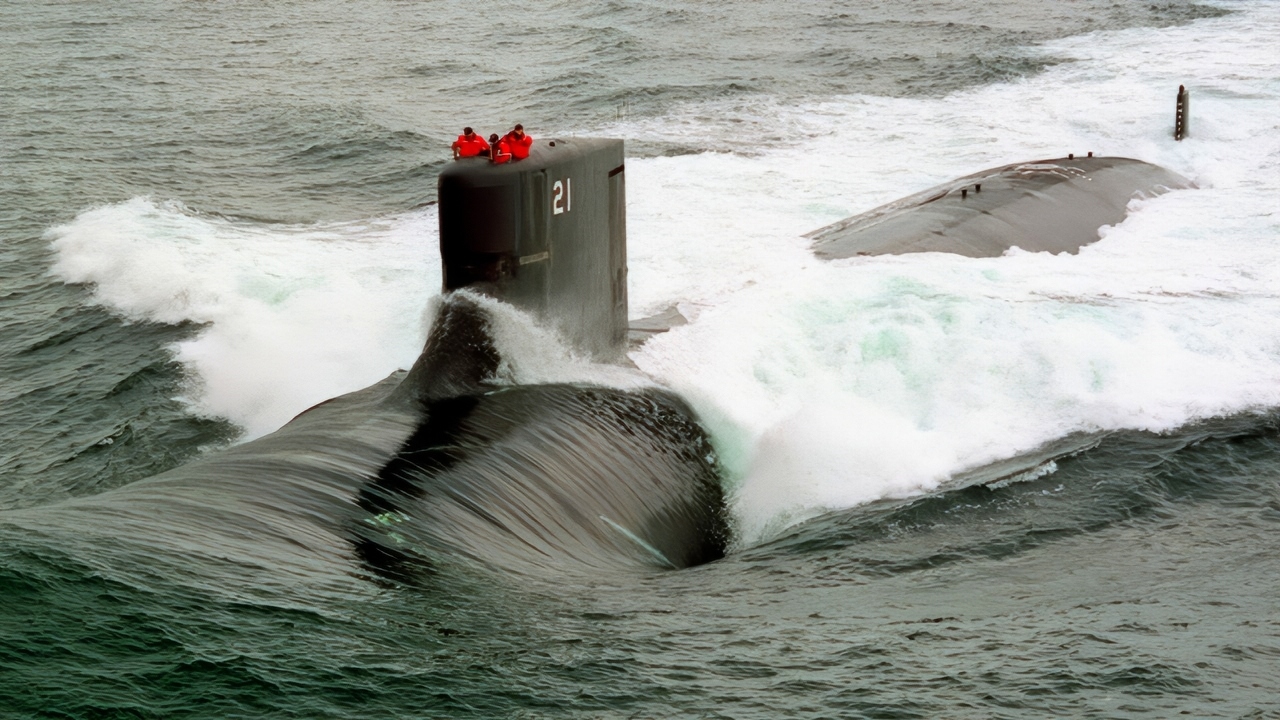
The U.S. Navy attack submarine, USS Seawolf (SSN 21), conducts Bravo sea trials off the coast of Connecticut in preparation for its scheduled commissioning in July 1997. Image Credit: Creative Commons.
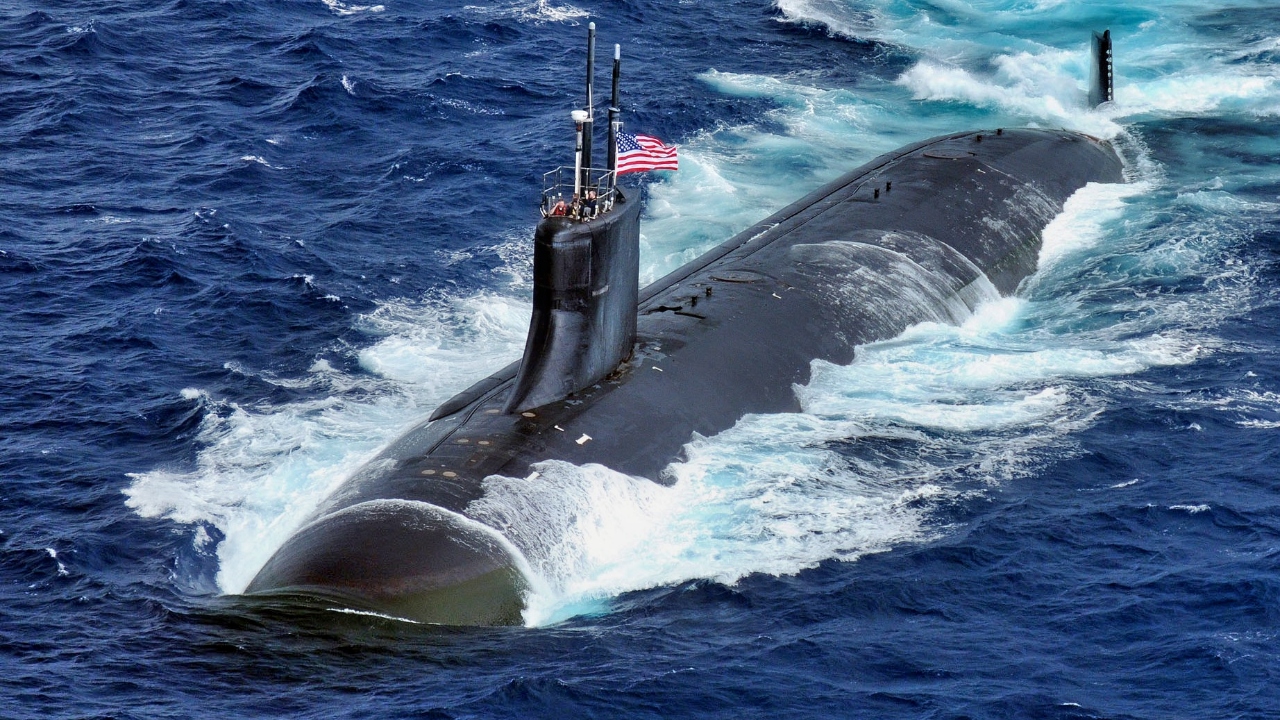
(Nov. 17, 2009) USS Connecticut (SSN 22) steams through the Pacific Ocean after participating in a 26 ship formation photo exercise. George Washington, the Navyís only permanently forward-deployed aircraft carrier participated in a photo exercise which was the culmination of ANNUALEX 21G, the largest annual bilateral exercise with the U.S. Navy and the Japan Maritime Self Defense Force. (U.S. Navy photo by Mass Communication Specialist Adam K. Thomas/RELEASED)
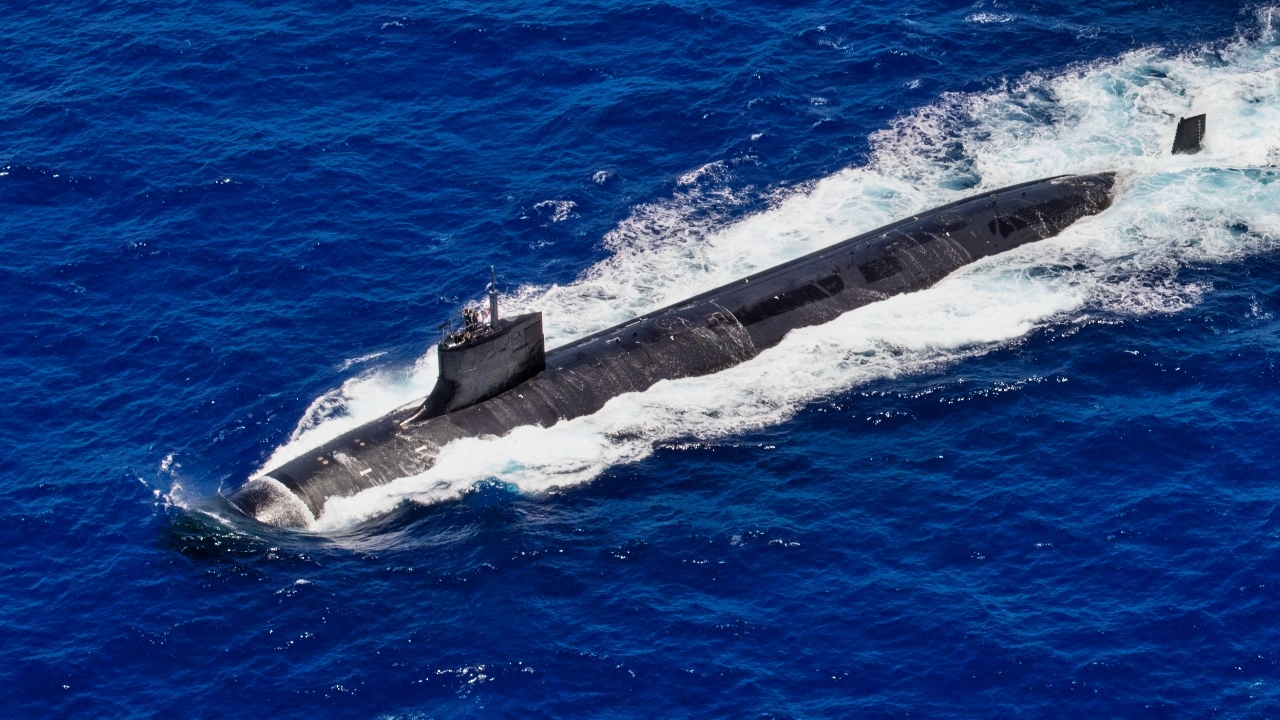
(June 22, 2021) Seawolf-class fast attack submarine USS Seawolf (SSN 21) transits the Pacific Ocean, June 22, 2021. Seawolf is currently underway conducting routine maritime operations in U.S. 3rd Fleet. (U.S. Navy photo by Mass Communication Specialist 3rd Class Olympia O. McCoy)
Seawolf-Class from U.S. Navy: Submarine Design and Construction
Construction of the Seawolf-class submarines took place at the General Dynamics Electric Boat shipyard in Groton, Connecticut. Modular construction techniques were employed to reduce assembly time while ensuring precise structural alignment, which is critical for maintaining acoustic stealth. The keel of USS Seawolf was laid on February 25, 1989, with sea trials beginning in the mid-1990s to validate the submarine’s exceptionally demanding design standards. On July 19, 1997, USS Seawolf officially entered service, followed by USS Connecticut in 1998 and USS Jimmy Carter in 2005.
One of the defining features of the Seawolf class is its advanced structural engineering. These submarines are constructed from HY-100 steel, a high-strength alloy that is significantly more durable than the HY-80 steel used in earlier classes. This enables safe operations at far greater depths, with test depths cited at around 1,600 feet and design depths exceeding 800 feet, providing a critical tactical advantage in deep-ocean environments. The hydrodynamically efficient teardrop-shaped hull further reduces drag and minimizes wake turbulence, enhancing both speed and stealth. Internally, the design incorporates shock-resistant mountings and rack-mounted equipment to improve survivability against near-miss detonations.
Why the Seawolf-class is so Stealthy
The Seawolf-class is widely regarded as one of the quietest submarine classes ever developed, incorporating advanced acoustic stealth technologies. Machinery is raft-mounted to minimize structural transmission of vibrations, while auxiliary systems like pumps, motors, and generators are engineered specifically to reduce their acoustic signatures.
The exterior hull is coated with anechoic tiles and acoustic cladding that absorb incoming sonar pulses and dampen the submarine’s own noise emissions, greatly reducing detectability by passive and active sonar systems.
Additionally, the pump-jet propulsor, a major advancement at the time of the Seawolf’s design, provides ultra-quiet thrust and reduces cavitation across a wide range of speeds thanks to variable-pitch blades. Together, these measures give Seawolf-class submarines an acoustic profile far below that of earlier U.S. submarines and rivaling or surpassing the most advanced Soviet designs of the era.
At the heart of each Seawolf-class submarine is the S6W pressurized water reactor, capable of producing 220 megawatts of power. This reactor enables a silent running speed of approximately 20 knots and a maximum sprint speed of up to 35 knots when required. The nuclear propulsion system provides effectively unlimited endurance and operational range, limited only by food supplies and crew stamina. The propulsion arrangement employs direct-drive steam turbines connected to a single pump-jet propeller, maximizing both efficiency and stealth.
Weaponry and Other Features
The weapons capabilities of the Seawolf class are equally formidable. Each submarine is equipped with eight 26.5-inch torpedo tubes and can carry up to 50 weapons in its torpedo room. This payload includes Mk 48 advanced capability torpedoes, UGM-109 Tomahawk land-attack cruise missiles, and Harpoon anti-ship missiles, enabling the Seawolf to engage a wide range of targets, from enemy submarines and surface vessels to land-based infrastructure.
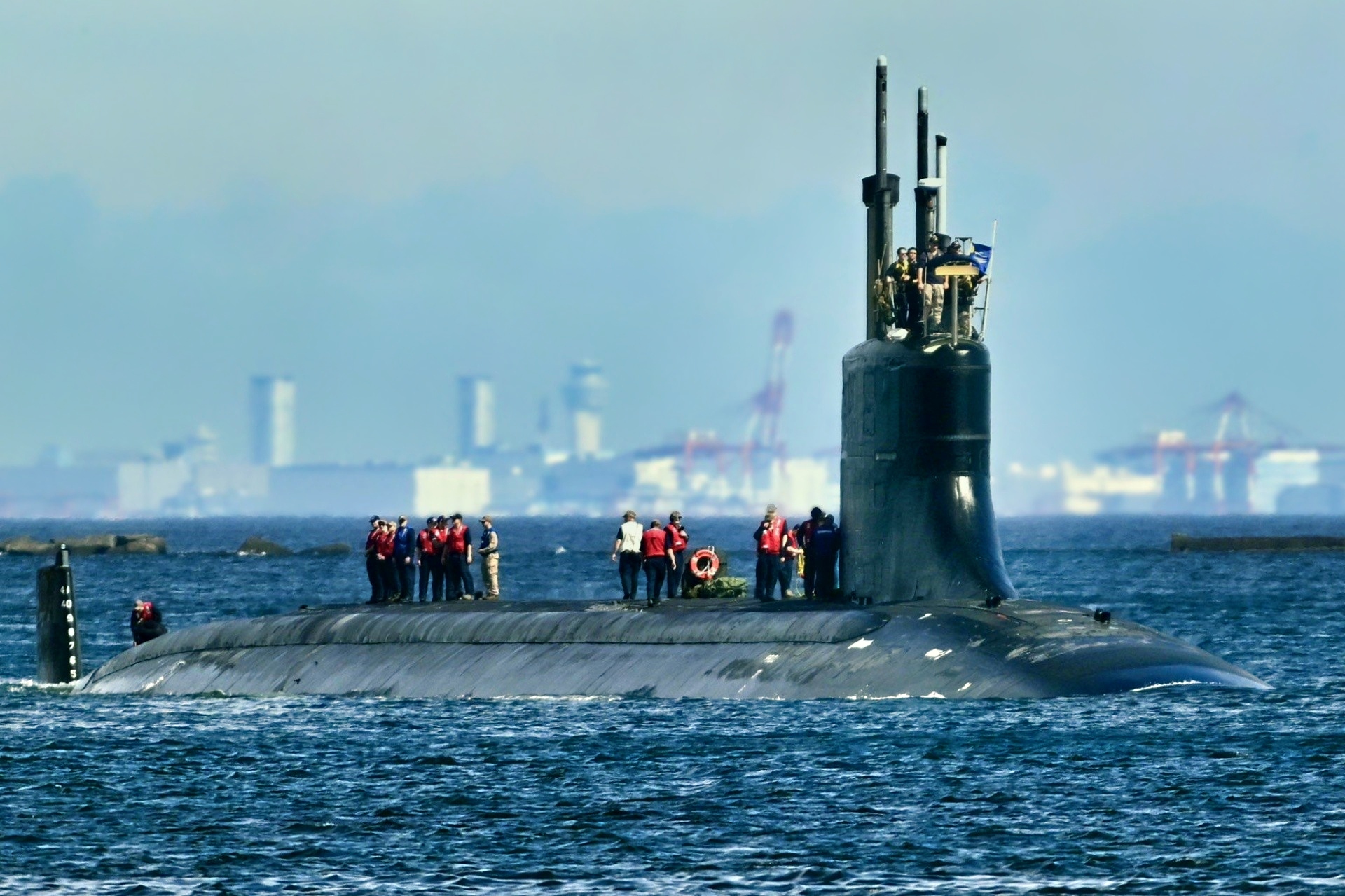
Seawolf-Class Submarine. Image Credit: Creative Commons.
This heavy armament provides the Seawolf-class submarines with overwhelming firepower relative to most other fast-attack submarines in service worldwide. The class also incorporates advanced sonar systems, including wide-aperture arrays that deliver exceptional long-range detection abilities, further enhancing their effectiveness in open-ocean anti-submarine warfare.
Though all three submarines share core design features, USS Jimmy Carter (SSN-23) received a 100-foot hull extension known as the Multi-Mission Platform (MMP). This unique section enables the deployment of unmanned underwater vehicles, remotely operated vehicles, special operations forces, and a variety of undersea sensors, making Jimmy Carter one of the most specialized and versatile submarines in the U.S. Navy. This configuration enables the submarine to support unique intelligence-gathering missions and special operations that other fast-attack submarines cannot perform.
America’s Best Submarines
The Seawolf-class submarines are among the most advanced fast-attack submarines ever produced by the United States. With unmatched stealth, high sprint speeds, deeper diving capabilities, and a massive weapons loadout, the Seawolf-class pushed attack-submarine design to the limits of late Cold War engineering.
However, as the geopolitical environment shifted and defense budgets contracted, the extraordinary costs associated with each submarine made the program unsustainable. The U.S. Navy began to pivot toward the more cost-effective Virginia-class submarines, which retained many advanced technologies developed for the Seawolf but in a smaller, less expensive platform better suited to post–Cold War missions.
Even with only three vessels built, the Seawolf class remains one of the most capable and feared submarine classes ever deployed. Some analysts argue that terminating the program at three hulls was a strategic mistake, one that reduced the U.S. margin of undersea superiority at a time when China and Russia continue to modernize their own submarine fleets.
With its unmatched combination of stealth, speed, weapons capacity, and engineering sophistication, the Seawolf class stands as a rare example of what can be achieved when performance is prioritized over cost.
About the Author: Isaac Seitz
Isaac Seitz, a Defense Columnist, graduated from Patrick Henry College’s Strategic Intelligence and National Security program. He has also studied Russian at Middlebury Language Schools and has worked as an intelligence Analyst in the private sector.


