

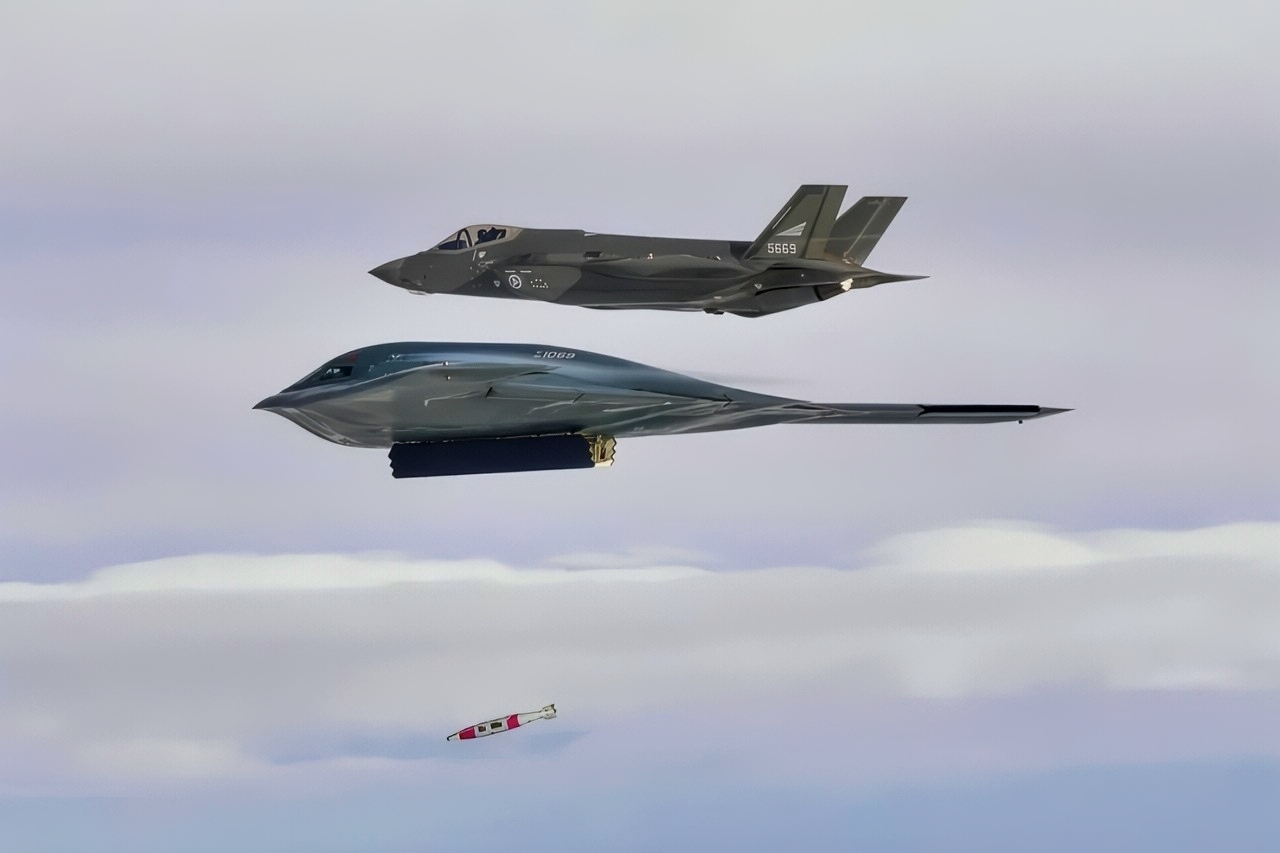
Key Points and Summary – The U.S. Air Force’s 53rd Wing integrated a B-2 Spirit into a long-range scenario over Norway to trial AFRL’s QUICKSINK—an affordable, precision maritime strike weapon.
-Hosted by the Royal Norwegian Air Force, the event validated allied interoperability, provided Northern European range and airspace for realistic tactics, and advanced a lower-cost option for sinking surface targets.
-QUICKSINK’s 500-lb class variant adds flexible loadout choices for stealth bombers and other platforms, complementing high-end anti-ship missiles.
-The demo comes as NATO’s northern flank grows more pivotal amid Russian aggression and as Norway, Sweden, and Denmark deepen support to Ukraine. “We’re shaping tomorrow—together,” said Col. Scott Gunn.
QUICKSINK: The B-2 Bomber Can Now Bomb Warships
The U.S. this week teamed up with the Royal Norwegian Air Force last week on an exercise that the Air Force Global Strike Command described as an opportunity to “test next-generation precision maritime strike capabilities.”
The test entailed the Air Force’s 53rd Wing integrating a B-2 Spirit stealth bomber into what was described as a “long-range strike scenario employing the Air Force Research Laboratory’s QUICKSINK maritime weapon.”
The exercise was called a success, employing what the Air Force called “seamless cooperation and interoperability between the two countries.
“This test is a clear example of how we work with trusted allies to bring new capabilities into play faster and smarter,” U.S. Air Force Col. Scott Gunn, 53rd Wing commander, said in the Air Force’s release.
The Air Force also said that Norway made infrastructure and airspace available to the U.S. during the exercise. It also gave the U.S. access to a new potential operational theater.
“We’re not just preparing for tomorrow; we’re shaping it together,” Gunn added.
About QUICKSINK
What is QUICKSINK? According to the War Zone, which also reported on the Norway exercise, the Air Force has been pursuing QUICKSINK as a more cost-effective way to launch strikes on enemies at sea.
Back in June, the Air Force announced that it had tested a new variant of the QUICKSINK weapon. A B-2 Spirit delivered it at the Eglin Air Force Base Gulf Test Range.
“QUICKSINK offers an affordable, game-changing solution to rapidly and efficiently sink maritime targets,” Col. Dan Lehoski, 53rd Wing commander, said in the release.
It was described as a joint effort among Air Force Materiel Command’s Air Force Research Laboratory, Air Force Test Center, and Air Combat Command’s 53rd Wing.
“AFRL’s 500-pound QUICKSINK variant adds options for the warfighter and enhances operational flexibility.”
The War Zone had noted that a B-2 bomber was spotted flying from Whiteman Air Force Base in Missouri towards Northern Europe last week, which turned out to be headed to the exercise in Norway.
The B-2s had also taken off from Whiteman when they headed to Iran for Operation Midnight Hammer in June, for the fateful strike on Iran’s nuclear facilities.
Why Norway?
Why is the U.S. doing exercises with Norway in the Norwegian Sea?
While nearby Sweden and Finland are relatively new members of NATO, Norway is a founding member of the alliance, going back all the way to 1949.
And with the Russia-Ukraine war ongoing, multiple Russian drones landing in Poland this week, and even Finland being accused by Russia of planning to go to war, northern Europe is a hotter spot than it’s typically been in the post-Cold War era.
Indeed, NATO announced last month that Norway is joining with Sweden and Denmark to fund a $500m package of “equipment and munitions” for Ukraine, as part of the U.S. plan to supply support for Ukraine. This joined an earlier shipment announced by the Netherlands.
“Since the earliest days of Russia’s full-scale invasion, Denmark, Norway, and Sweden have been steadfast in their support for Ukraine,” NATO Secretary General Mark Rutte said in the NATO statement.
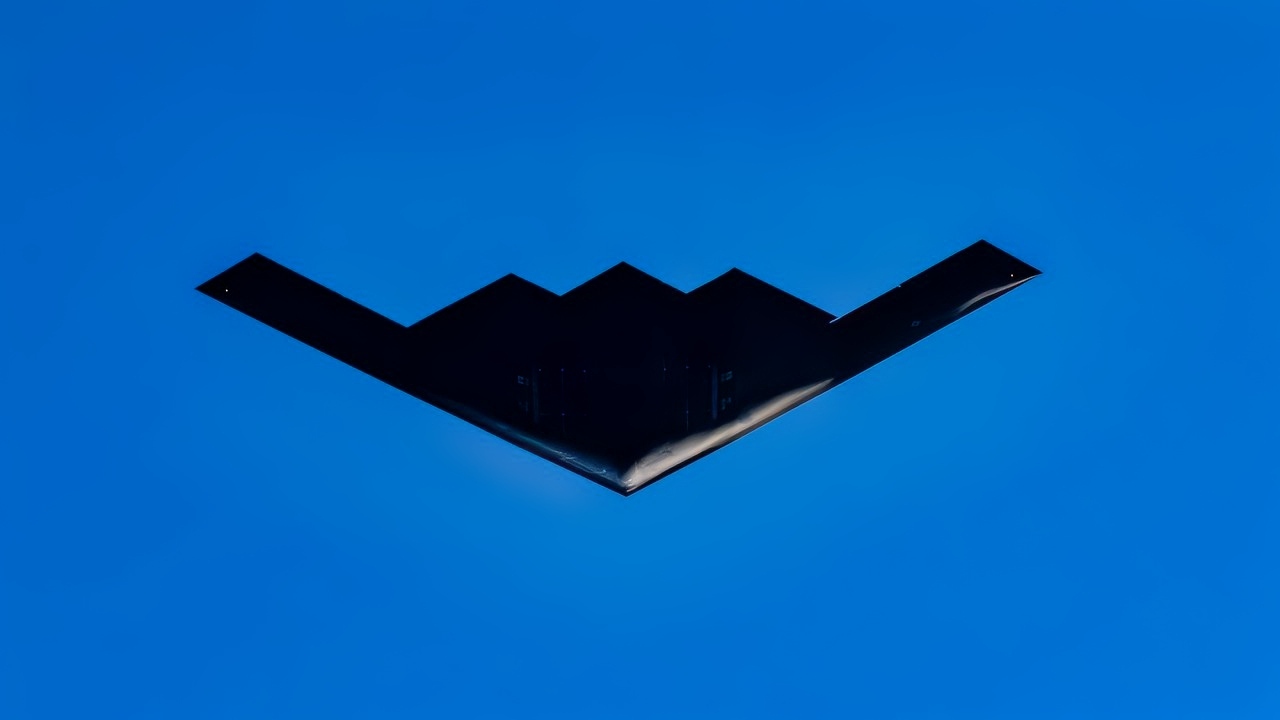
The B-2 Spirit flies over the Rose Parade at Pasadena Ca., Jan. 1, 2024. The Rose Parade is a parade of flower covered floats, marching band, and equestrian units that is produced by the Tournament of Roses. (U.S. Air Force photo by Airman 1st Class Bryce Moore)
“This latest round of funding will deliver life-saving equipment and critical supplies to the front-line, strengthening Ukraine’s hand and helping them deter aggression as they pursue lasting peace,” the secretary general added.
The exercise also took place as the U.S. and Norway are currently at loggerheads over Norway’s sovereign wealth fund’s recent decision to divest from Caterpillar, the U.S. construction manufacturer.
The Trump Administration declared itself “troubled” by the move, while Sen. Lindsey Graham (R-SC) even threatened sanctions.
“U.S. authorities are well aware of the rules surrounding the Norwegian sovereign wealth fund and its ethics guidelines,” Finance Minister Jens Stoltenberg said this week, per Reuters.
About the Author: Stephen Silver
Stephen Silver is an award-winning journalist, essayist, and film critic, and contributor to the Philadelphia Inquirer, the Jewish Telegraphic Agency, Broad Street Review, and Splice Today. The co-founder of the Philadelphia Film Critics Circle, Stephen lives in suburban Philadelphia with his wife and two sons. For over a decade, Stephen has authored thousands of articles that focus on politics, national security, technology, and the economy. Follow him on X (formerly Twitter) at @StephenSilver, and subscribe to his Substack newsletter.
More Military
How Do You Replace the Aircraft Carrier?
SR-72 Son of Blackbird Could Transform the U.S. Military
The Navy’s Big Super Tomcat 21 Fighter Mistake Still Stings


