

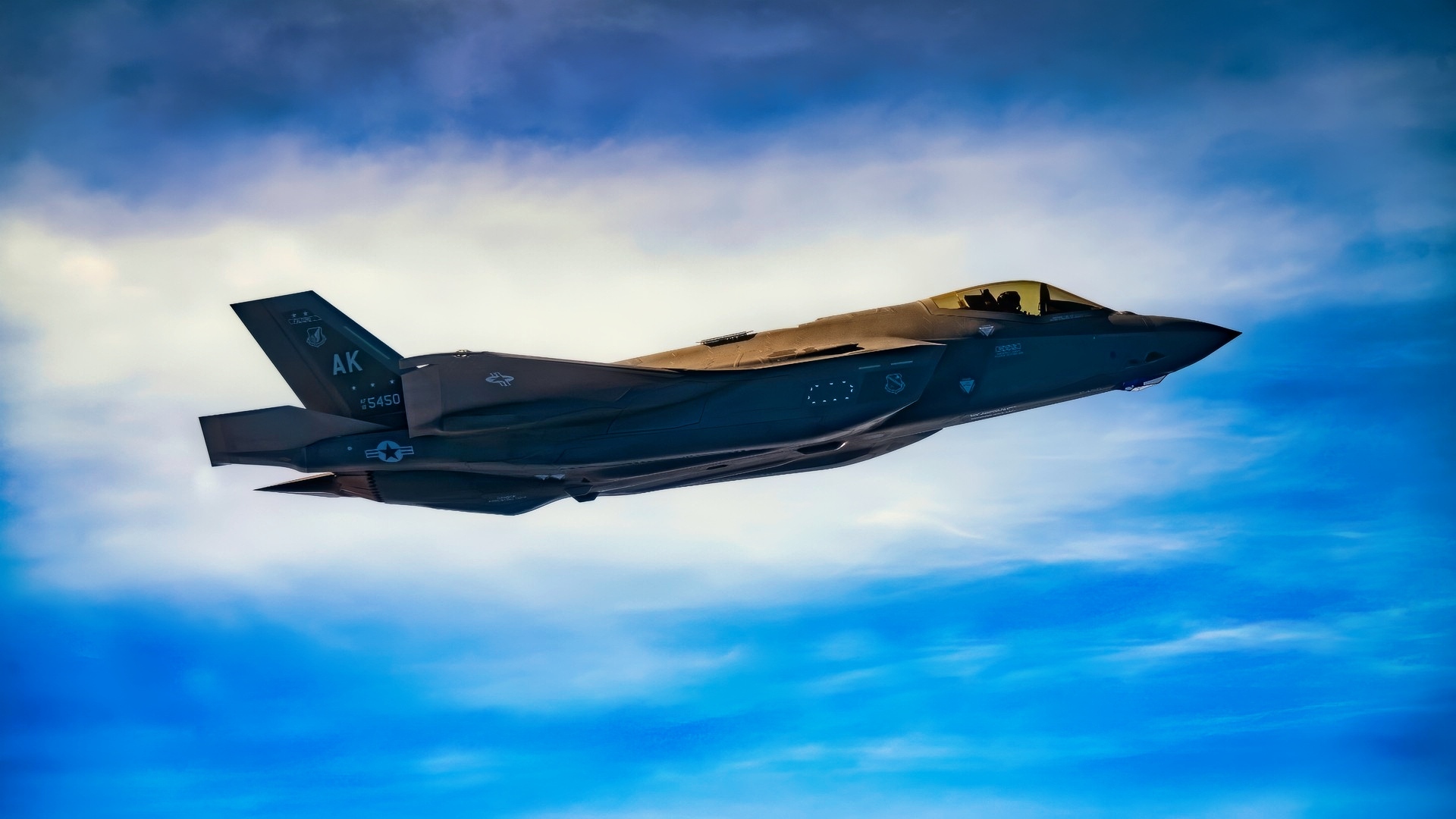
Key Points and Summary – The GAO says the F-35’s Block 4 modernization is five years late and $6 billion over budget, prompting the Pentagon to scale scope and restructure the effort.
-A major culprit is Technology Refresh-3, the computing baseline Block 4 needs. Delays push key capabilities—AIM-260 JATM, AARGM-ER, StormBreaker SDB II, expanded internal “Sidekick” carriage, and broader sensor-fusion—toward 2031 or later, affecting over 800 allied jets as well.
-While Lockheed Martin stresses ongoing deliveries and incremental Block 4 fielding, analysts warn that lagging upgrades risk ceding advantage to China and Russia as they improve fighters and missiles—especially in beyond-visual-range combat.
The Block 4 Upgrades For the F-35 Are Years Behind
The F-35 Joint Strike Fighter program is scaling back its Block 4 upgrades amid struggles with production delays, cost overruns, and supply chain issues, according to the Government Accountability Office (GAO).
The downgrading of plans for F-35 upgrades was revealed in the GAO’s “F-35 Program: Actions Needed to Address Late Deliveries and Improve Future Development” report. The program is now five years late and $6 billion over budget.
The Block 4 modernization is now anticipated to be complete in 2031 at the earliest, representing a five-year slip from original timelines and a two-year delay from the 2029 estimate.
The War Department is reorganizing the effort, focusing on a reduced scope to accelerate delivery of essential capabilities. That reorganization strategy is influenced by a 2023 congressional mandate to improve program execution.
What Is At Stake?
Air superiority is in danger of slipping away to Chinese aircraft, especially concerning weapons. The Block 4 upgrades are meant to boost the stealth fighters’ weapons capabilities, sensors, and sensor-fusion capabilities.
Problems with an update known as Technology Refresh 3, or TR-3, are a big part of the reason Block 4 is now at least $6 billion over budget and years behind schedule.
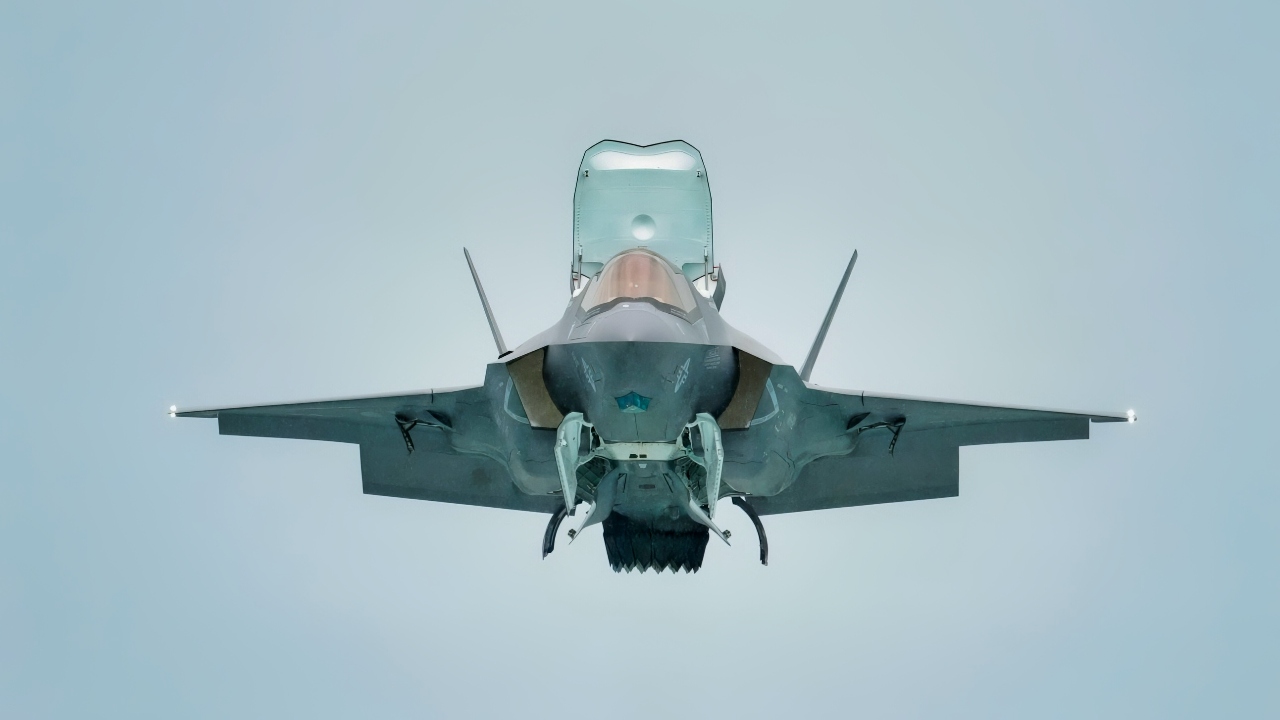
A U.S. Marine Corps F-35B Lightning II assigned to the Marine Fighter Attack Squadron 242, Marine Aircraft Group (MAG) 12, Marine Corps Air Station, Iwakuni, conducts an aerial demonstration during the Singapore Airshow 2022 at Changi Exhibition Center, Republic of Singapore, Feb. 16, 2021. Through participation in regional events like the Singapore Airshow, the U.S. demonstrates its commitment to the security of the Indo-Pacific, promotes interoperability, displays the flexible combat capabilities of the U.S. Military, creates lasting relationships with international audiences, and strengthens partnerships throughout the Indo-Pacific region. (U.S. Air Force photo by Master Sgt. Richard P. Ebensberger).
Block 4 enables the F-35 to fire weapons such as the new ultra-high-tech, long-range AIM-260 Joint Advanced Tactical Missile.
This air-to-air and air-to-ground attack weapon is more precise, less detectable, and more lethal than its alternatives. It has a longer range than the existing AIM-120 AMRAAM, as it was engineered specifically to address the changing threat equation in modern conflict. Namely, it was designed to take on the latest Chinese and Russian fighters.
The delayed upgrade also affects partner nations that now operate the F-35.
Anti-Radiation Guided Missile And Stormbreaker
Block 4 upgrades will also enable the F-35 to fire the AGM-88G Advanced Anti-Radiation Guided Missile Extended Range, a significant air-attack weapon engineered to identify and destroy ground-based enemy air defenses that emit an electronic signature. The missile system is designed for the Destruction of Enemy Air Defenses mission. Its capabilities include autonomous detection, target identification, and the destruction of surface-to-air missile systems.
The Extended Range component of this munition is highly significant. It is designed to enable a manned fighter jet to target and attack air defenses from safer stand-off ranges, reportedly doubling its range.
The F-35 Block 4’s most significant upgrade is the integration of the GBU-53/B Stormbreaker Small Diameter Bomb II.
The Stormbreaker is a network-enabled glide bomb that uses a tri-mode seeker to engage moving and stationary targets in adverse weather conditions. The modes include millimeter-wave radar, infrared, and laser.
The weapon is also engineered with a two-way data link enabling retargeting and in-flight adjustments.
The GBU-53/B Stormbreaker can track and hit a moving target from 45 miles, through fog and bad weather, and adjust course as needed. This much-anticipated weapon will greatly multiply and expand the F-35’s attack capabilities in more dynamic modern threat environments. It can hit stationary targets at 70 miles. The U.S. has already used stormbreakers against Houthi rebels in Yemen.
Block 4 also increases the number of weapons the F-35A and F-35C can carry in flight, due to the addition of the Sidekick weapons rack, expanding the internal weapons-carrying capacity of the jets from four to six missiles.
Reducing The Block 4’s Capabilities
The F-35 program originally aimed to have Block 4 integrated by 2026. That deadline first slipped to 2029, and now it extends to 2031.
A 2024 Defense Department review found the program was not on pace to start delivering the bulk of Block 4 upgrades until the mid-2030s, partly due to technical challenges, according to the GAO.
Despite the increased delays and skyrocketing costs to the Block 4 upgrades, Lockheed Martin has continued to stand by its work.
“The F-35 is combat proven, offers the most advanced capability and technology, and is the most affordable option to ensure America and its allies remain ahead of emerging threats,” Lockheed Martin said in a release.
“In partnership with the F-35 Joint Program Office, we will deliver 170 [to] 190 F-35s this year and continue fielding Block 4 capabilities to ensure the F-35 maintains its unmatched dominance in the skies.”
In the event of a conflict with China and/or Russia, the capabilities promised by the Block 4 upgrades will be crucial to granting air superiority to the U.S. as well as its allies and partners, who operate about 800 F-35s.
With F-35s operating globally, the deterrence level is high, but China and Russia continue to upgrade their air forces. Without the Block 4, air superiority could be at risk.
About the Author: Steve Balestrieri
Steve Balestrieri is a National Security Columnist. He served as a US Army Special Forces NCO and Warrant Officer. In addition to writing on defense, he covers the NFL for PatsFans.com and is a member of the Pro Football Writers of America (PFWA). His work was regularly featured in many military publications.
More Military
The U.S. Air Force Isn’t Ready for What Is Coming
Eurofighter Typhoon vs. China’s New J-20S Stealth Fighter: Who Wins?
The JAS 39 Gripen E/F Fighter: Best Fighter Not Named F-35


