

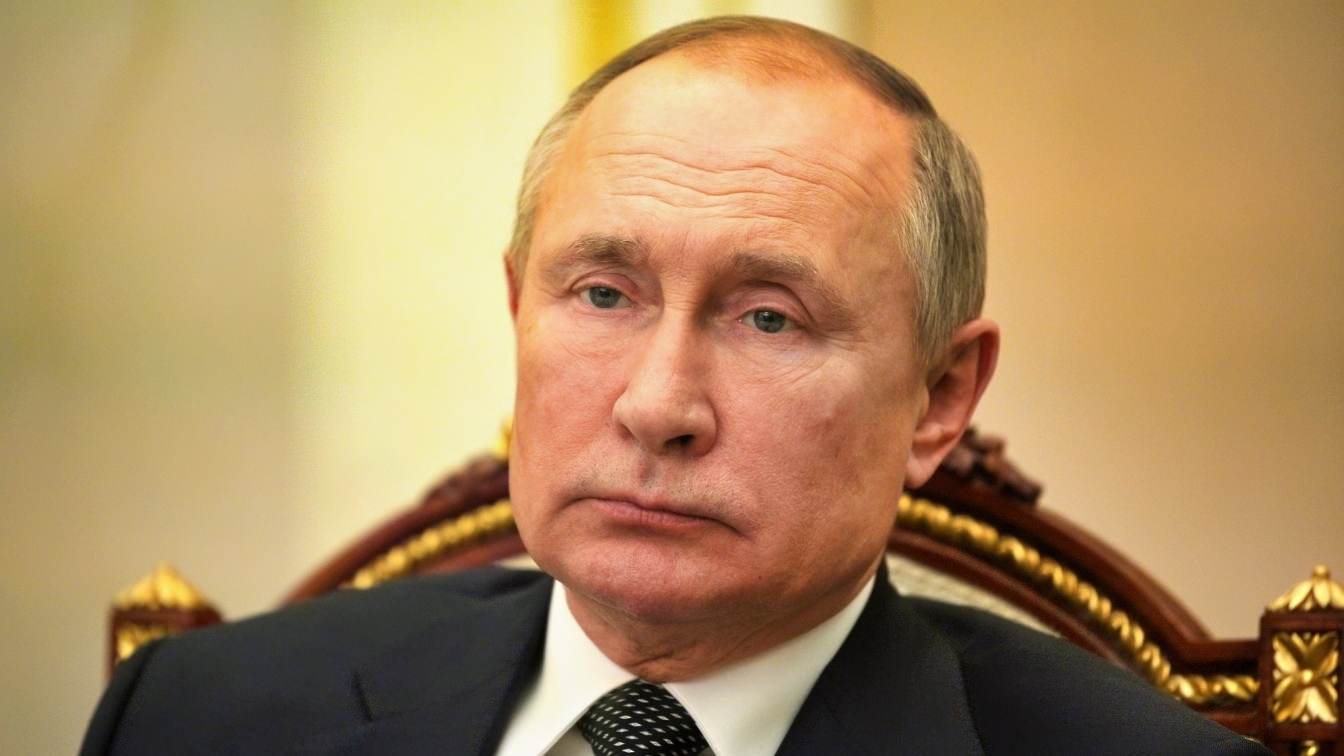
Summary and Key Points: Something shifted on the Russian side of the front line over the winter. After three years of feeding fresh recruits into Ukraine faster than they fell, Moscow crossed a line in late 2025 where the casualties began outpacing the sign-ups. The reversal is real, the consequences are mounting, and the Kremlin is scrambling to patch the gap without forcing the question it fears most. But a drained pool is not an empty one.
Putin Has a Manpower Problem in the Ukraine War That Might Not Be Fixable
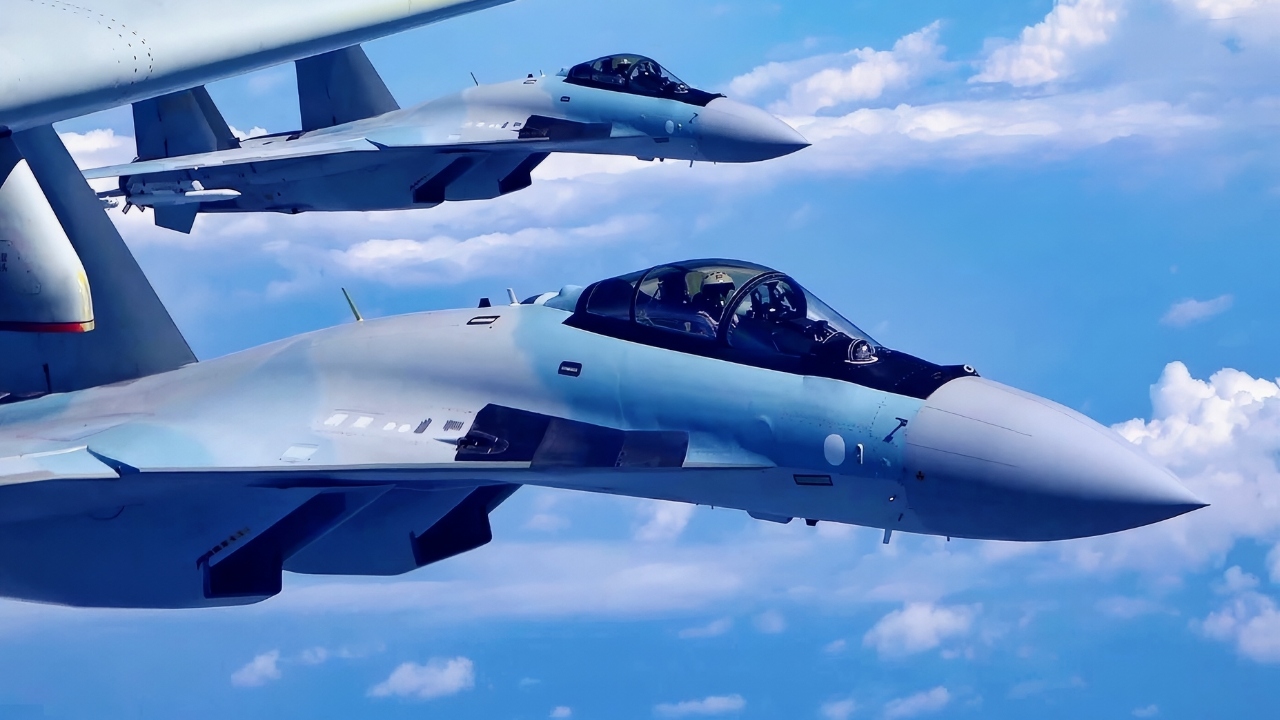
Su-35 from China. Image Credit: Chinese Air Force PLAAF.

Sukhoi Su-35 Fighter. Image Credit: Creative Commons.
“Russia now has a military manpower problem Putin just can’t solve.” That’s what a senior NATO offical told me last week when I plotted out this article. And he is correct.
For the first time since the full-scale invasion began in February 2022, Russia is losing soldiers on the battlefield faster than it can sign up new ones to replace them.
This is the single most important development in the manpower story of the war, and it represents a genuine reversal of the arithmetic that sustained Russian operations for the first three years of the fighting.
According to Ukrainian intelligence assessments, for four consecutive months from December 2025 through March 2026, the arrivals-to-departures balance has remained firmly negative, with Russian losses exceeding the number of soldiers Moscow actually managed to mobilize.
The numbers underneath that reversal tell the story.
The Kremlin reportedly aimed to recruit between 1,100 and 1,150 personnel per day in 2026, but current figures suggest that it has fallen to around 940 per day, a shortfall that becomes critical if it holds.
At the same time, Russian casualties have been running well above that recruitment figure. UK Ministry of Defense reporting, drawing on Ukrainian General Staff figures, placed average Russian losses above 1,500 dead and wounded per day across recent months.
When you lose more men than you bring in, day after day, month after month, the pool drains. That is now happening to Russia for the first time in the war.
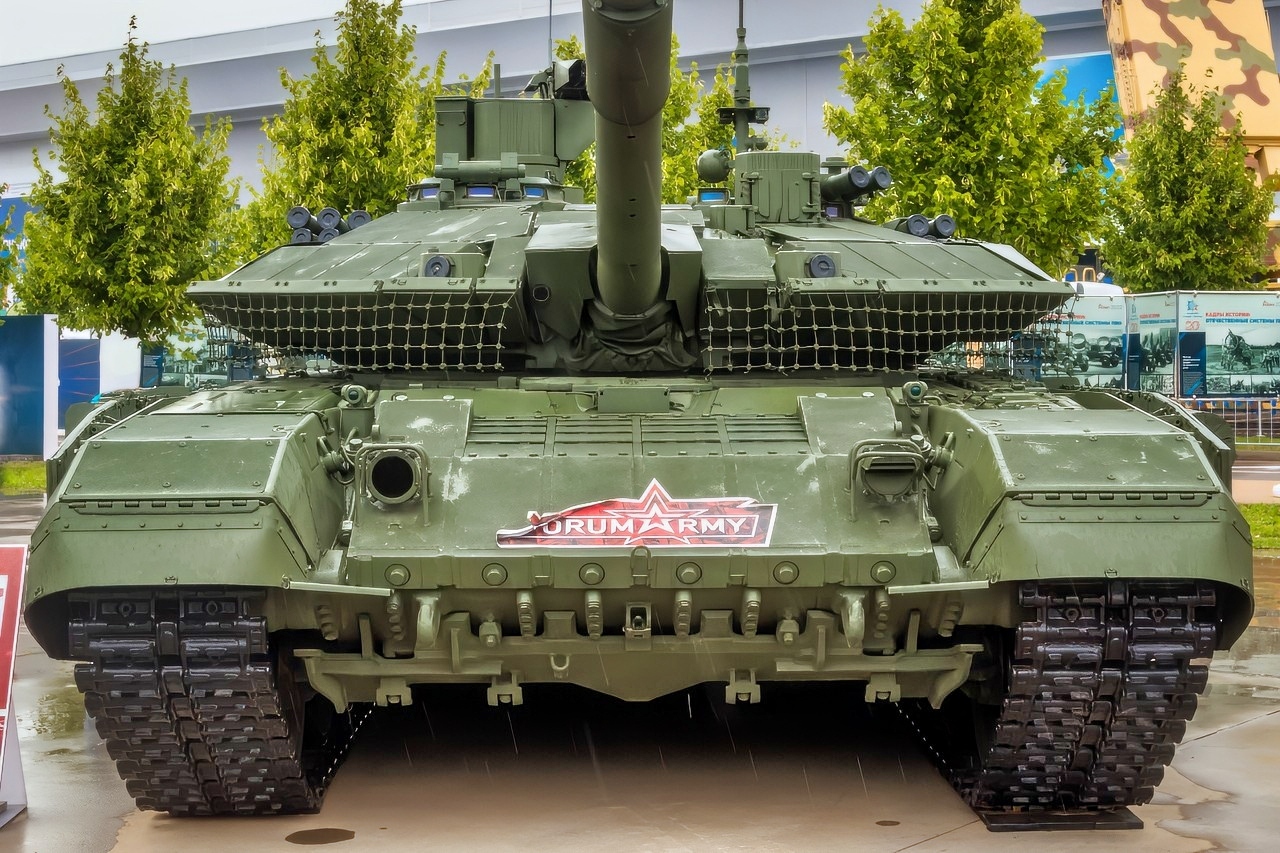
T-90M Russian Army. Image Credit: Creative Commons.
The Price of Ground Has Gone Vertical
The reason the losses have climbed so sharply is not that Russia is fighting more recklessly than before.
It is that the battlefield itself has changed, and the change has made every Russian advance vastly more expensive in human terms.
Drones now dominate the front, and they have turned the cost of captured territory into something no army can sustain.
Ukrainian estimates suggest Russian forces lost around 120 personnel per square kilometer of captured territory in 2025, rising to as many as 316 killed and wounded per square kilometer in 2026 as first-person-view drones and loitering munitions increasingly dominate the fighting.
On some stretches of the front, the loss ratios have become almost unimaginable, with reports indicating up to three Russian soldiers killed for every one wounded, an inversion of the normal casualty pattern that points to just how lethal the drone-saturated battlefield has become.
Russia is still gaining ground in some areas. It is simply paying a rate for that ground whose recruitment pipeline can no longer cover.
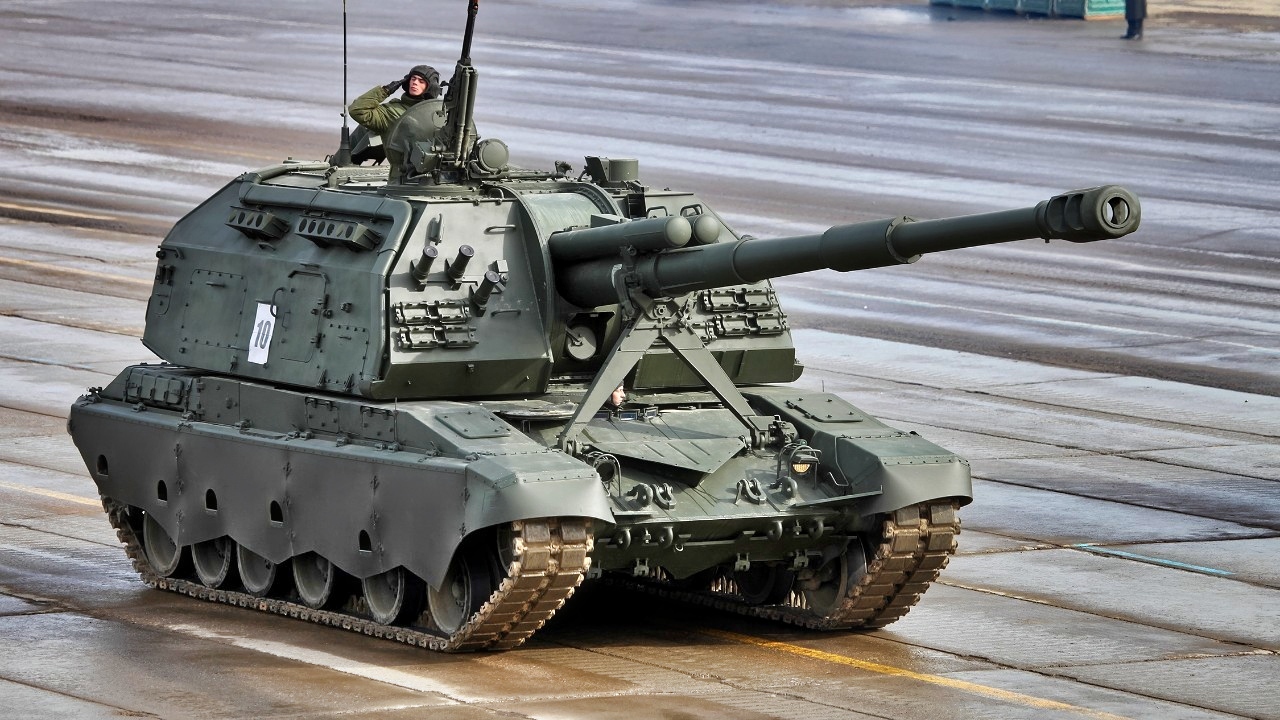
Msta-S Russian Army. Image Credit: Creative Commons.
The Quality Is Collapsing Faster Than the Quantity
The headcount is only part of the problem, and arguably not the most damaging part. The deeper issue is who Russia is losing and who it is replacing them with.
The Congressional Research Service has noted that many of Russia’s casualties have fallen among its elite and professional soldiers, as well as its junior officer corps, and that the new recruits replacing them arrive with less training than the men they are stepping in for.
An army can hold its total numbers steady on paper while still hollowing out, because a trained professional soldier and a freshly recruited replacement are not interchangeable parts.
The composition of the new recruits underscores the decline. Roughly 40 percent of new Russian personnel are now drawn from what Ukrainian intelligence describes as vulnerable population groups, including prisoners and people in significant debt, often incentivized through amnesties or financial relief.
A force increasingly built from convicts and the desperate, led by junior officers with less training than those who came before, is degrading in capability even when the raw numbers appear to hold.
The Russian army of 2026 is larger on paper in some sectors than it was a year ago, and meaningfully less capable man for man.

FORT MOORE , Ga. Maneuver Center of Excellence hosts the 2024 Armor Week media day on Harmony Church Mar. 14, 2024. The event featured live-fire demonstrations with the M1 Abrams Main Battle Tank, and an opportunity to get up close and hands-on with M1 Abrams and M2 Bradley Fighting Vehicle. Armor Week, April 29 to May 3, and the 2024 Sullivan Cup competition requires mastery of individual tasks, technical and tactical competence, and the ability to demonstrate an array of maneuver, sustainment, and gunnery skills. The competition focuses primarily on the performance of the Soldiers functioning as a crew. (U.S. Army photo by Patrick A. Albright)
Why Putin Won’t Reach for the Obvious Solution
The clean fix for a manpower shortage is a national mobilization, and the most telling fact in the entire story is that Putin will go to almost any lengths to avoid one.
Just before the new year, the Russian leader signed laws expanding military conscription, allowing year-round drafting and authorizing the use of reservists to guard critical infrastructure, all carefully designed to scrape up additional manpower without triggering the political shock of full mobilization.
The reason for that caution is seared into recent Russian memory.
The partial mobilization of 2022, the first since World War II, triggered nationwide protests and drove more than 261,000 men out of the country in the months that followed.
The Kremlin has no appetite to repeat that experience, particularly as the share of ethnic Russians and the number of recruits drawn from Moscow and St. Petersburg, the cities the regime has long tried to shield from the war’s costs, continue to climb.
Putin would rather double enlistment bonuses, lean on regional quotas, pressure universities, and recruit from prisons than ask the Russian heartland to send its sons.

A U.S. Army driver assigned to Alpha Company, 1st Battalion, 67th Armor Regiment, 3rd Brigade Combat Team, 1st Armored Division standbys in the drivers hull of an M1A2 SEPv2 Abrams waiting for further guidance prior to the start of Table VI Tank Gunnery at McGregor Range, New Mexico, Sept. 29, 2023. Gunnery Table VI evaluates crews on engaging stationary and moving targets while utilizing all weapons systems in offensive and defensive positions, ensuring our crews are trained and ready for any mission. (U.S. Army photo by Spc. David Poleski)
That preference reveals how politically fragile the manpower situation actually is beneath the surface.
The Caveat That Keeps This Honest
None of this means Russia is about to run out of soldiers, and any analysis that promises an imminent collapse is getting ahead of the evidence.
Russia is a country of more than 140 million people, it has so far sustained its deployed force by drawing on strategic reserves rather than fresh recruitment, and the most rigorous individually-verified count of confirmed Russian dead, compiled from obituaries and registry records, had reached roughly 168,000 names by February 2026 rather than the inflated million-casualty figures that mix the dead together with the wounded who return to the fight.
There is also a hard asymmetry that the optimistic framing tends to ignore.
Ukraine faces its own acute manpower crisis. Ukraine’s defense minister estimated in January 2026 that 200,000 soldiers were absent without official leave and 2 million men were avoiding draft notices. Some analysts warn that if the war grinds on long enough, Russia’s larger population could mean its numerical advantage widens rather than narrows over time. The math turning against Putin right now does not guarantee it stays that way.
What the current data does show is a real and meaningful shift. Russia is losing men faster than it can replace them, the replacements are worse than the men they replace, the cost of every advance has gone vertical, and the Kremlin is contorting itself to avoid the one measure that would solve the problem because it fears the political consequences.
The pool is draining slowly and expensively, with no easy way to refill it. Putin has time, but for the first time in this war, time on the manpower question is no longer working in his favor.
About the Author: Harry J. Kazianis
Harry J. Kazianis (@Grecianformula) was the former Senior Director of National Security Affairs at the Center for the National Interest (CFTNI), a foreign policy think tank founded by Richard Nixon based in Washington, DC. Harry has over a decade of experience in think tanks and national security publishing. His ideas have been published in the NY Times, The Washington Post, The Wall Street Journal, CNN, and many other outlets worldwide. He has held positions at CSIS, the Heritage Foundation, the University of Nottingham, and several other institutions related to national security research and studies. He is the former Executive Editor of the National Interest and the Diplomat. He holds a Master’s degree focusing on international affairs from Harvard University.


PseudoExpertent
May 31, 2026 at 9:02 am
The belief that russia is running out of men to fight the nazis is a myth spread by nasty NATOists and kyiv media outlets.
It’s actually the ukros who are running out of men, as many ukrainian males are now fleeing to other countries, particularly to germany.
What russia needs today, are not more soldiers, but MORE MISSILES and GLIDE BOMBS.
Russia doesn’t appear to be short of drones. The current war against the nazis reveals ya need b, m, d (bombs, missiles and drones), not more soldiers, jets or tanks.
megiddo
May 31, 2026 at 7:43 pm
Vlad Putin must go, he must leave the scene.
Russia today is being confronted by a bevy of super duper power-powerful fascists-nazis, more powerful and infinitely more dangerous than the dreaded 1941 nazists.
Therefore, Russia now, urgently needs a leader with real cojones, or real balls of steel.
Putin, what has he got. Putin has balls of jelly, of the low-cost kind they dish out to well-fed fat servicemen in US Army.No wonder hegseth is seething.
Russia must get rid of Putin.
waco
June 1, 2026 at 2:53 am
Russia today must be prepared to accomplish three (3) objectives if it wants to defeat the nazis and secure genuine peace on its western border for the next five hundred years.
1) Get rid of Putin.
2) Use tactical nukes against the nazis, or at least burevestnik missiles on them.
3) Russia must be prepared to compel xi jinping to confront Donald trump in a critical life-changing china-US showdown over Taiwan if things truly get hot over (2).
Xi is totally treacherous and unreliable, while trump is a certified double-crossing double-dealer, even triple-crossing triple-dealer.