

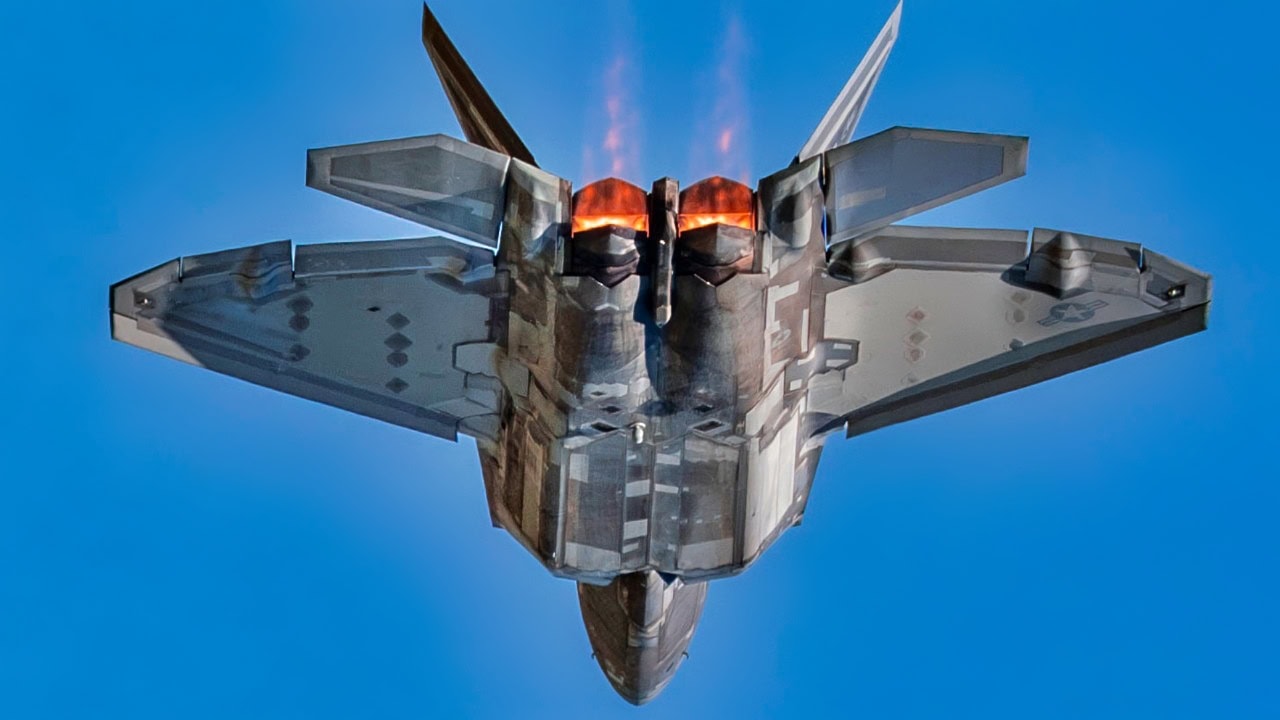
Key Points and Summary – The U.S. Air Force is undergoing a “radical retooling” to win a future war against a peer adversary.
-This new doctrine involves “divesting” (retiring) legacy aircraft to shrink its fighter fleet from seven types to just two (F-35, F-47) and its bomber fleet from four to two (B-21, B-52J).
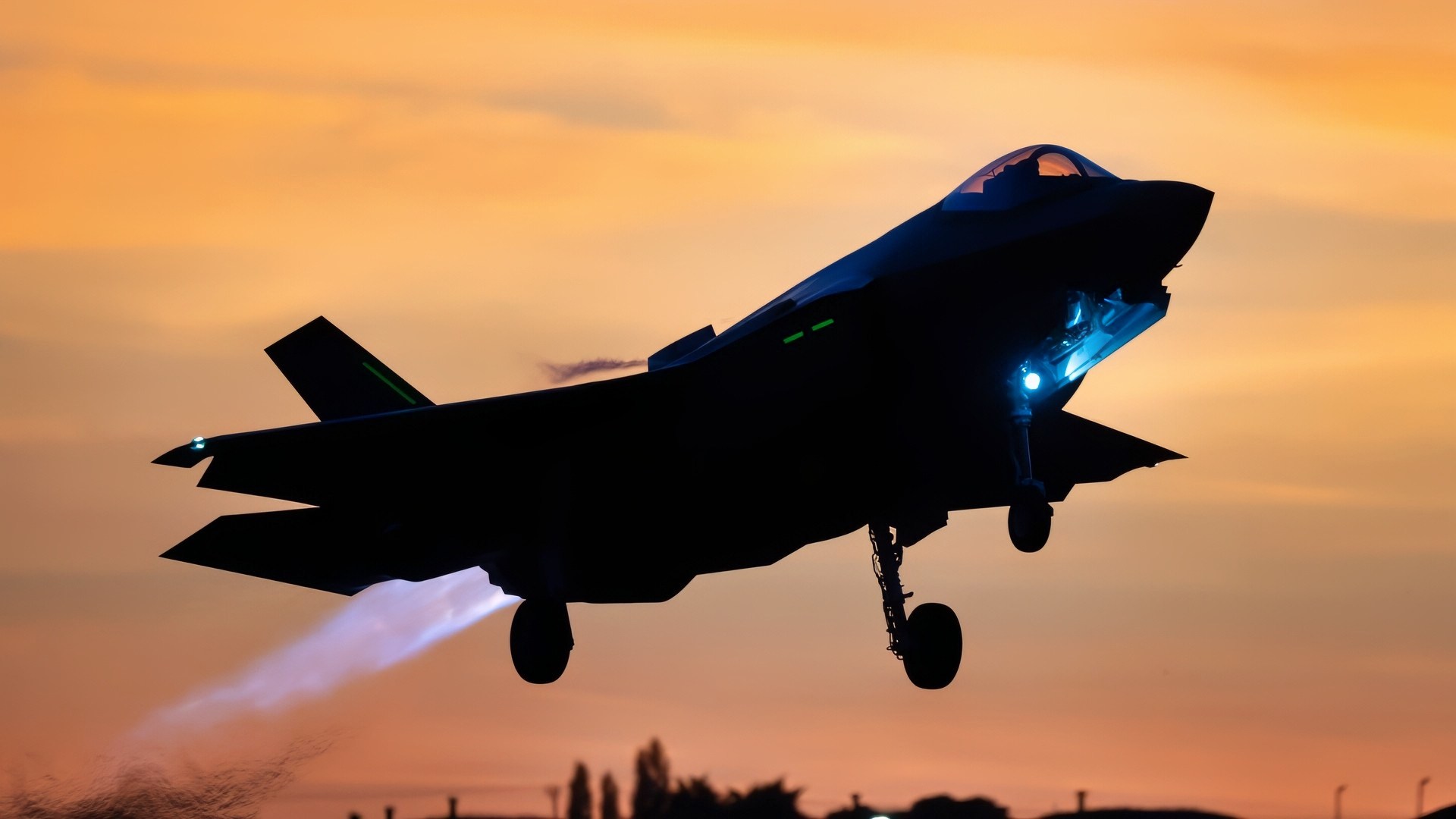
A U.S. Air Force F-35A Lightning II takes off at RAF Lakenheath, England, Sept. 16, 2024. The 48th Fighter Wing dedicates allotted flying hours during hours of darkness to ensure Airmen are prepared to deter potential adversaries and defend NATO territory anytime, anywhere. (U.S. Air Force photo by Airman 1st Class Alexander Vasquez)
-As Lt. Gen. Moore stated, the goal is to field “only things that are relevant,” as 4th-gen jets cannot be modernized to 5th-gen standards.
-This strategy hinges on manned-unmanned teaming (like the B-21’s proposed 1-pilot/1-WSO crew) and next-gen hypersonic missiles, though the GAO has warned these missile programs are “behind schedule.”
The U.S. Air Force Has Big Plans for the Future
The Air Force is in the throes of significant reorganization, adjusting its force structure and how it prototypes and acquires both weapon systems and aircraft platforms.
The ongoing retooling has a singular objective: prepare to fight — and win — against a peer or near-peer rival.
Out with the Old, in with the New
One of the most concrete changes the U.S. Air Force is implementing is a shift away from operating and maintaining multiple aircraft fleets toward fewer, more capable fleets.
As the Air Force’s Deputy Chief of Staff for Plans and Programs, Lieutenant General Richard G. Moore, Jr. noted, “The fighter enterprise will go from seven fleets down to two, and the bomber enterprise will go from four down to two, and the tanker enterprise will go from three down to two… not with the purpose of getting rid of airplanes, but… only fielding things that are relevant.”
The Air Force has also announced plans to shrink and reorganize its major commands, reducing them from nine to four, and to stand up a new Integrated Capabilities Command. The reorganization timeline is murky, and whether it can be implemented remains to be seen.

Capt. Kristin “Beo” Wolfe, F-35A Lightning II Demonstration Team pilot and commander, banks hard left making vapor trails over and behind the wings during a practice demonstration at Hill Air Force Base, Utah, Mar. 23, 2021. The demonstration team is part of Air Combat Command and is assigned to the 388th Fighter Wing at Hill AFB. Capt. Wolfe grew up a military child as the daughter of retired Col. Jon Wolfe and has flown the T-6 Texan II, T-38 Talon, F-22 Raptor and now the F-35A Lightning II. (U.S. Air Force photo by Alex R. Lloyd)
Part of the impetus for shrinking the Air Force’s fleets has been the limited potential to upgrade legacy aircraft.
In a statement given to the House Armed Services Committee, several of the Air Force’s top airmen offered a degree of clarity.
“Extensive gaming and analysis using the most difficult problem and the most difficult scenario, shows that the Air Force must adjust the future fighter force structure mix by changing investment priorities to provide the capability, capacity, and affordability required to defeat any peer threat,” the men explained. “The threat will not allow the Air Force to just retain and modernize our current fleets. Modernization programs cannot transform our current fourth-generation fighters into fifth-generation fighters, or our current fifth-generation fighters into Next Generation Air Dominance (NGAD).”
One trend in combat aviation that the U.S. Air Force wants to harness is the increasing sophistication of unmanned platforms that allow them to fly alongside human pilots in manned-unmanned teaming.
And while the overwhelming majority of aircraft in the Air Force today are manned, that ratio will presumably shift in the future toward greater parity, given the potential for unmanned platforms to reduce risk.
Recent reporting has hinted that the crew makeup for new platforms could radically shift as well.
The B-21 Raider, the Air Force’s upcoming sixth-generation stealth bomber, may depart from bombers’ typical two-pilot arrangement and opt instead for one pilot and one Weapon Systems Officer, potentially in part due to anticipated Loyal Wingmen-type aircraft that will fly with the bomber. But the crew makeup decision — still provisional — also hints at a high degree of automation, as well as the possibility of integrating artificial intelligence to reduce crew workload.

B-2 Bomber. Image Credit: Creative Commons.
The bomber has recently achieved low rate initial production, and though it will initially fly alongside the other bombers in Air Force service — the B-2 Spirit, B-1B Lancer, and B-52J Stratofortress — the Air Force will eventually divest themselves of the Sprit and Lancer bomber, opting instead to fly a two-bomber fleet of high-end Raider stealth bombers and the early Cold War-era Stratofortress, leveraging its extreme range and payload capacity.
But in addition to retiring legacy platforms and manufacturing their modern replacements, the Air Force is also investing in next-generation hypersonic missiles: the Hypersonic Attack Cruise Missile (HACM), an air-launched and air-breathing hypersonic, and the AGM‑183A Air‑Launched Rapid Response Weapon (ARRW), a boost-glide hypersonic platform.
The future of those two programs is opaque. In its annual report to the United States Congress, the Government Accountability Office said that the HACM missile project is “behind schedule.”
The GAO added that the HACM program is “working with the prime contractor to develop a new schedule baseline that still adheres to the 5-year time frame for rapid prototyping efforts.”
Still, it remains unclear if that is realistic or achievable.
But that program’s struggle might be a boon for the AGM-183 ARRW, in development by Lockheed Martin. Though the aerospace firm’s initial flight tests were considered satisfactory, the Air Force paused funding for ARRW in its Fiscal Year 2025 budget.
And while the Air Force indicated it would put the kibosh on the program reveal years ago, then-Air Force Chief of Staff General David Allvin told lawmakers this summer that the Air Force would pursue two hypersonic weapon projects — including ARRW.
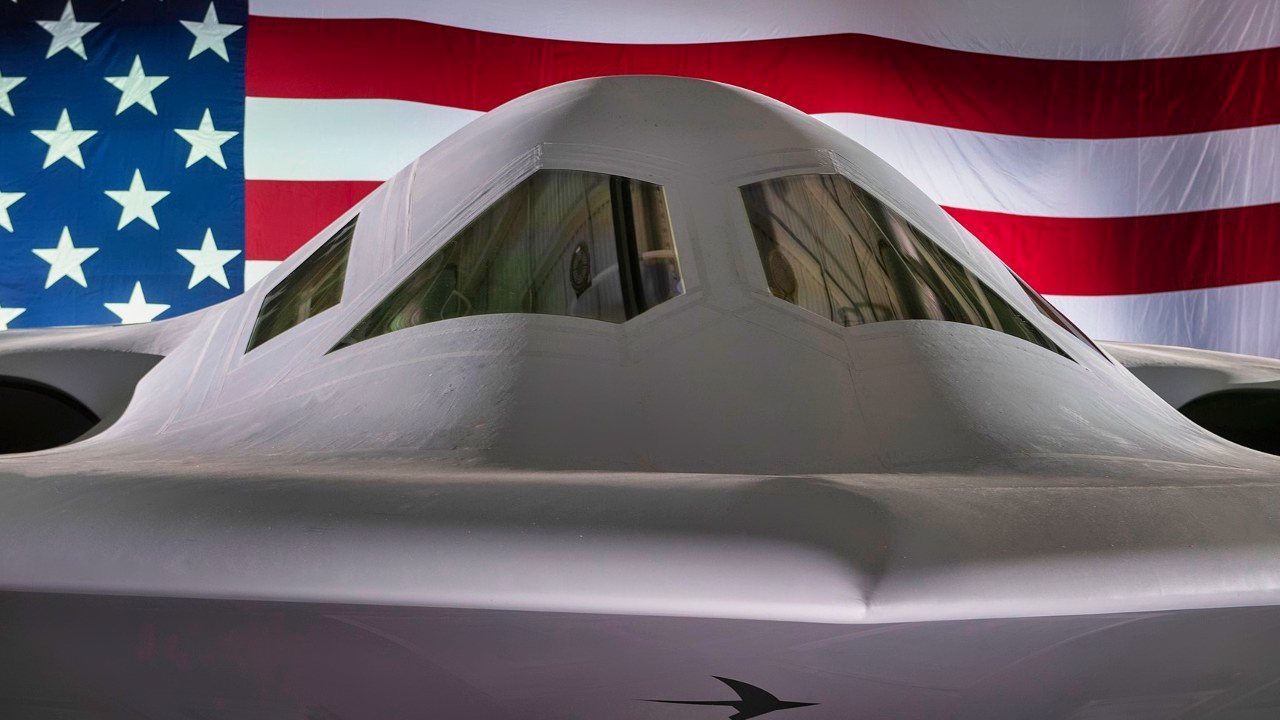
The B-21 Raider was unveiled to the public at a ceremony December 2, 2022 in..Palmdale, Calif. Designed to operate in tomorrow’s high-end threat environment, the B-21 will play a critical role in ensuring America’s enduring airpower capability. (U.S. Air Force photo)
What Happens Next for the U.S. Air Force?
The Air Force’s revamped transformation strategy is less “buy the next high-performance fighter” and more “build the network, the software, and the scaffolding necessary to plug in new platforms as they come online.”
Divesting legacy aircraft will be a significant part of the Air Force’s transformation — and perhaps its most obvious. But operationally, the Air Force will shift to greater distribution, better resiliency, and survivability in contested environments.
About the Author: Caleb Larson
Caleb Larson is an American multiformat journalist based in Berlin, Germany. His work covers the intersection of conflict and society, focusing on American foreign policy and European security. He has reported from Germany, Russia, and the United States. Most recently, he covered the war in Ukraine, reporting extensively on the war’s shifting battle lines from Donbas and writing on the war’s civilian and humanitarian toll. Previously, he worked as a Defense Reporter for POLITICO Europe. You can follow his latest work on X.
More Military
Europe and Canada Are Finally Saying No to the F-35 Stealth Fighter
The Exact Day Navy Battleships Became Obsolete Is Clear
The X-44 Manta Has a Message for Every Air Force on Earth


