

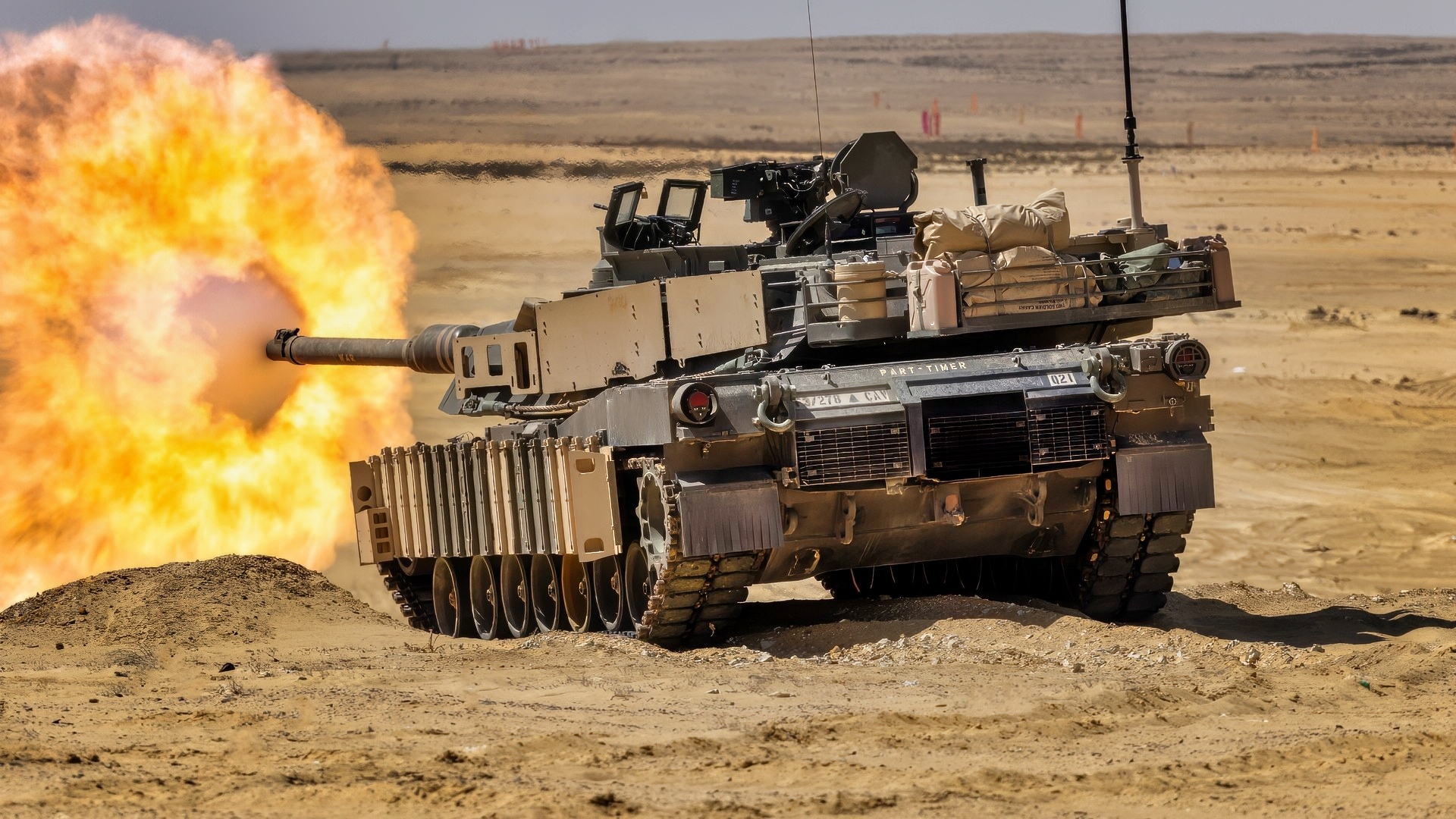
Summary and Key Points: The U.S. Army’s pivot to the M1E3 Abrams is a radical acknowledgement that the era of the 70-ton “iron giant” is over.
-By stripping the legendary tank down to a 60-ton expeditionary frame, the Army is replacing traditional bulk with a hybrid-electric engine and an AI-driven C-UAS shield.
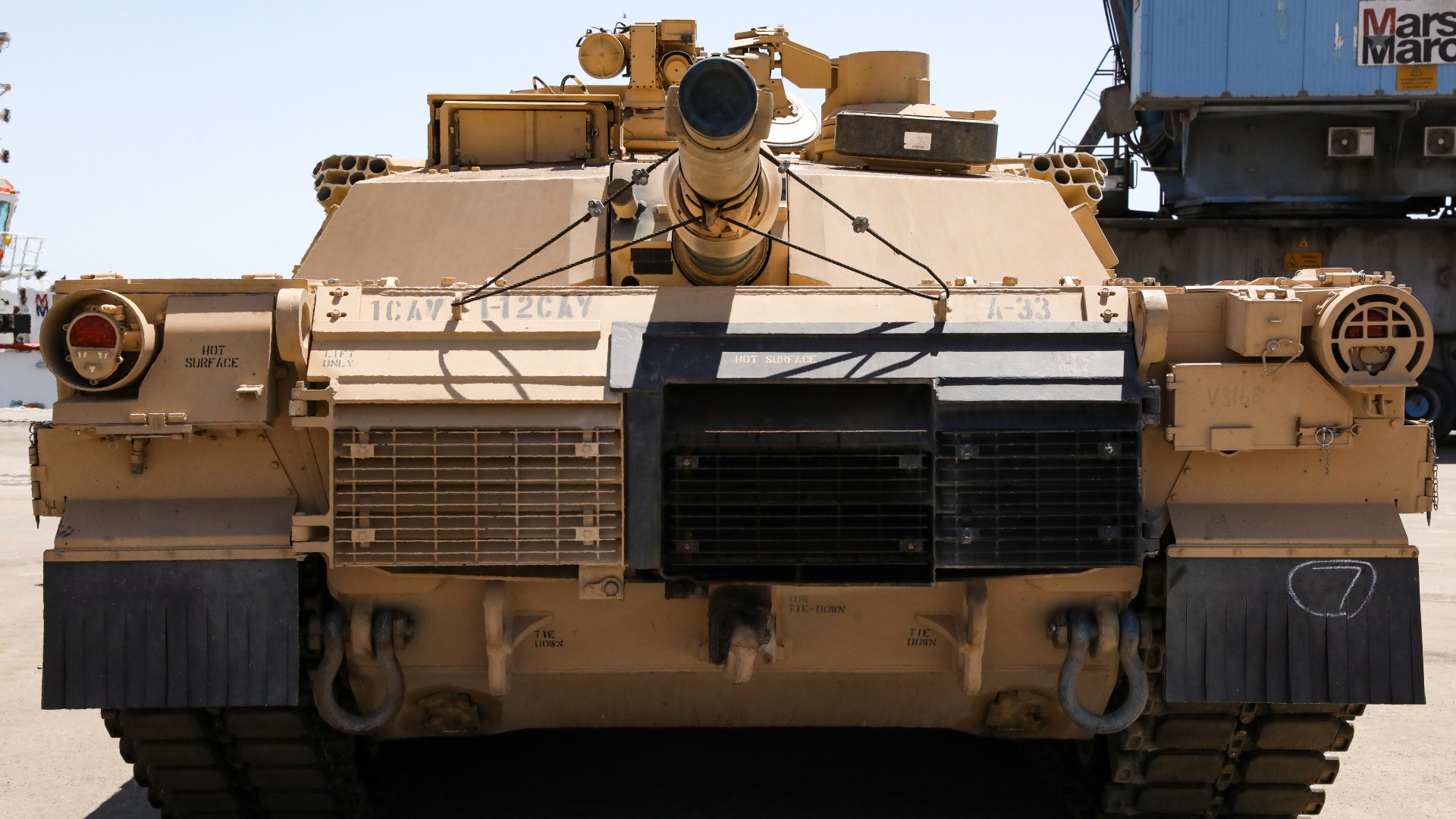
A U.S. Army M1A3 Abrams Tank from the 1-12 Cavalry Squadron, 1st Cavalry Division waiting to be guided onto a loading vehicle and secured for transport at the Port of Agadir, June 3, 2022, Agadir, Morocco. African Lion 2022 is U.S. Africa Command’s largest, premier, joint, annual exercise hosted by Morocco, Ghana, Senegal and Tunisia, June 6 – 30. More than 7,500 participants from 28 nations and NATO train together with a focus on enhancing readiness for U.S. and partner nation forces. AL22 is a joint all-domain, multi-component and multinational exercise, employing a full array of mission capabilities with the goal to strengthen interoperability among participants and set the theater for strategic access. (U.S. Army photo by PFC Donald Franklin)
-Designed specifically to survive the “drone graveyard” conditions seen in Ukraine, this next-gen platform integrates robotic teaming and hemispheric active protection.
-By sacrificing weight for silent mobility and massive onboard power, the Army is betting that a lighter, smarter Abrams is the only way to avoid obsolescence.
From 70 Tons to 60: Why the M1E3 Abrams Is the Army’s Ultimate Gamble
The U.S. Army’s future M1E3 tank will need to address a bevy of new threats. The 60-ton tank will have to deal with drone attacks from the air, top-down anti-tank guided missiles, hit-and-run ambushes from dispersed groups of armed soldiers, and long-range enemy missiles and tank rounds, among other dangers.
To counter these threats, the platform will require new sensors and countermeasures. Several key areas of focus could include on-board electrical power; weight and mobility; vulnerability to anti-armor weapons; obstacles to deployability; and measures to counter the drone threat.

A U.S. Army M1A3 Abrams tank fires a round during a live fire training exercise at Smardan Training Area, Romania, April 19, 2017. The combined exercise had U.S. and Romanian armored crewmen taking commands from a Romanian commander to prove the cohesion between units in support of Operation Atlantic Resolve, a NATO mission involving the U.S. and its European Allies and partners in a combined effort to promote regional stability and deter aggression in Europe. (U.S. Army photo by Army Pvt. Nicholas Vidro)
Abrams Upgrades
The Abrams tank is an invaluable armored asset that has achieved numerous historic battlefield successes. It first showed its power when it dominated Iraqi T-72s during the Gulf War. The tank wields a massive psychological deterrent effect. In general, heavy tanks are a key platform for taking and holding enemy territory, as was again demonstrated in Ukraine.
The Abrams has also shown its versatility. Its auxiliary power units (APUs) are designed to increase on-board power to support sensing, computing, and intelligence, surveillance, and reconnaissance (ISR). Add-on armor kits improve survivability, and the Abrams can now fire an advanced multi-purpose 120-mm round able to combine multiple blast effects into a single munition.
For these and many other reasons, the Abrams tank is likely here to stay for many years. Its growing ability to network with unmanned systems and improve survivability with top-down protections, drone launching, and AI-enabled sensing, targeting and computing, is especially significant. Tanks are often distinguished by the range and fidelity of their thermal sights, which and the Abrams’ allowed them to target Iraqi tanks before they were ever detected themselves

U.S. Soldiers assigned to the 2nd Armored Brigade Combat Team, 1st Cavalry Division supporting the 4th Infantry Division maneuver an M1A2 Abrams tank and M2 Bradley Fighting Vehicle past a simulated opposing force’s Leopard 2A6 tank during exercise Arrow 23 in Niinisalo, Finland, May 5, 2023. Exercise Arrow is an annual, multinational exercise involving armed forces from the U.S., U.K., Latvia, Lithuania and Estonia, who train with the Finnish Defense Forces in high-intensity, force-on-force engagements and live-fire exercises to increase military readiness and promote interoperability among partner nations. (U.S. Army National Guard photo by Sgt. John Schoebel)
The later M1A2 SEP v3 was engineered with third-generation forward-looking infrared targeting technology, which brought breakthrough range and resolution to the platform.
The Abrams, in short, has been continually updated over the course of many years to address deficits, new liabilities, and emerging technical challenges. The M1E3’s development no doubt integrates the latest lessons learned from battlefields such as that in Ukraine.
The upcoming platform is expected to be much faster—it is lighter, at 60 tons—and therefore better suited for expeditionary operations. A smaller, lighter, faster tank could maneuver through urban areas, transit over bridges existing Abrams cannot handle, and pass through narrowly configured passageways. Ideally, the M1E3’s lighter weight can be achieved without comprising the classic survivability of the Abrams tanks—perhaps using lightweight composite armor materials or a new generation of active protection systems (APSs).
C-UAS on Tanks
Speed itself is a survivability-enhancing characteristic, and it’s likely the M1E3 is engineered with advanced, hemispheric APS better positioned to counter drone attacks and top-down anti-armor strikes.
Counter-unmanned aerial system (C-UAS) capabilities must be a leading priority while designing the M1E3—tanks have been decimated in Ukraine by drones able to loiter then attack from the air. C-UAS technologies under consideration likely include kinetic interceptor missiles, APS-fired rounds to stop incoming munitions, and possibly lasers designed to incinerate or disable drones.
It is nearly certain that the M1E3 also will operate with new generations of electronic warfare. Advanced systems can now help deconflict the spectrum, identify enemy signatures and radio frequency signals, and jam, disable, or even take over attacking drones.
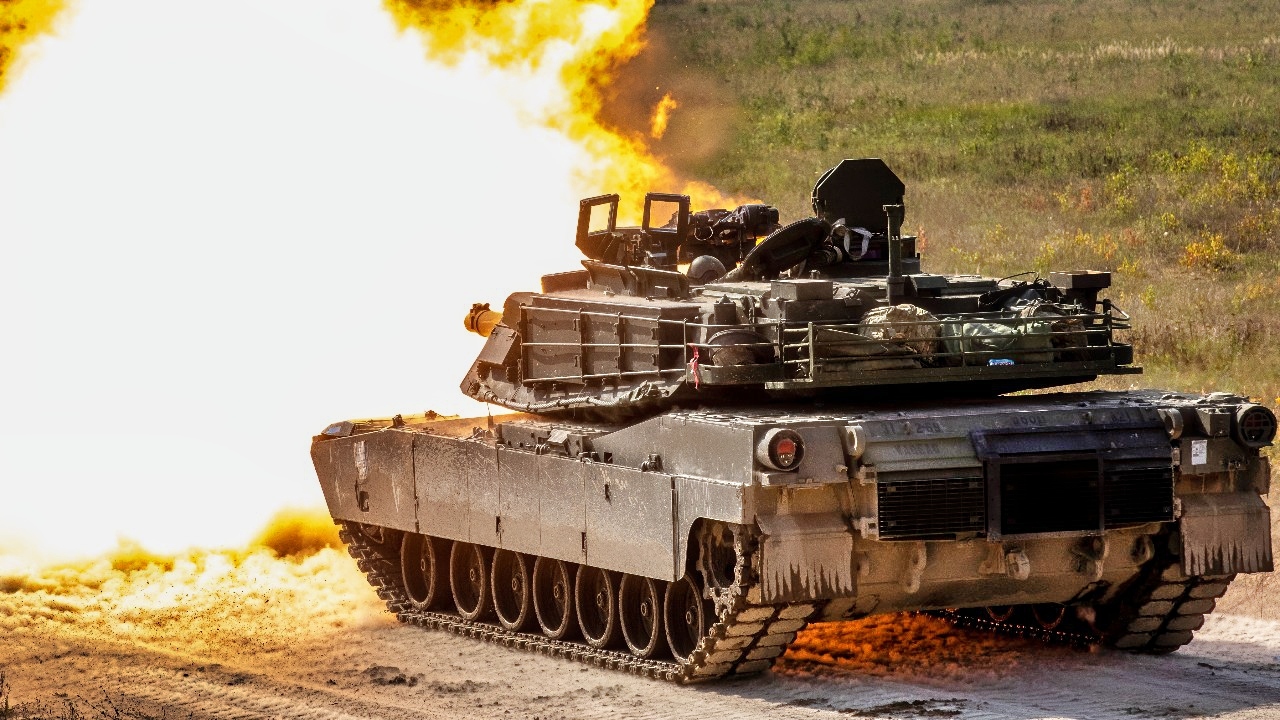
U.S. Army tank crews with Alpha “Animal” Company and Bravo “Barbarian” Company, 2nd Battalion, 69th Armor Regiment, 2nd Armored Brigade Combat Team, supporting 3rd Infantry Division, fire rounds from M1A2 Abrams tanks at Bemowo Piskie Training Area, Poland Sept. 12. The 3rd Infantry Division’s mission in Europe is to engage in multinational training and exercises across the continent, working alongside NATO allies and regional security partners to provide combat-credible forces to V Corps, America’s forward-deployed corps in Europe. (U.S. Army photo by Alex Soliday)
High-powered microwave weapons are also emerging as a key area of counter-drone research. It would not be surprising to learn that the M1E3 operates with AI-enabled C-UAS and threat-oriented computing able to find, verify, and validate targets, then instantly matches the data with a countermeasure or effector. During the recent unveiling of the tank in Detroit, Army Chief of Staff General Randy George said AI figures prominently in the M1E3.
Hybrid Electric Tank
By operating with a diesel-electric hybrid engine, the M1E3 will not only be more fuel-efficient and silent, but it also will benefit from added on-board electrical power generated by the diesel-electric engine. This will bring added power to support electronics, sensors, targeting, and AI-enabled computing without needing to add APUs.
Manned-Unmanned Teaming
Perhaps the most significant upgrade for the M1E3 will be its ability to operate with robotic unmanned platforms and drones able to deliver ammunition, conduct highly critical reconnaissance and ISR in hostile areas, and even launch attacks when directed by a human to do so. This would greatly improve survivability and could enable the M1E3 to operate as an extremely lethal, forward-operating, multi-domain command and control platform.
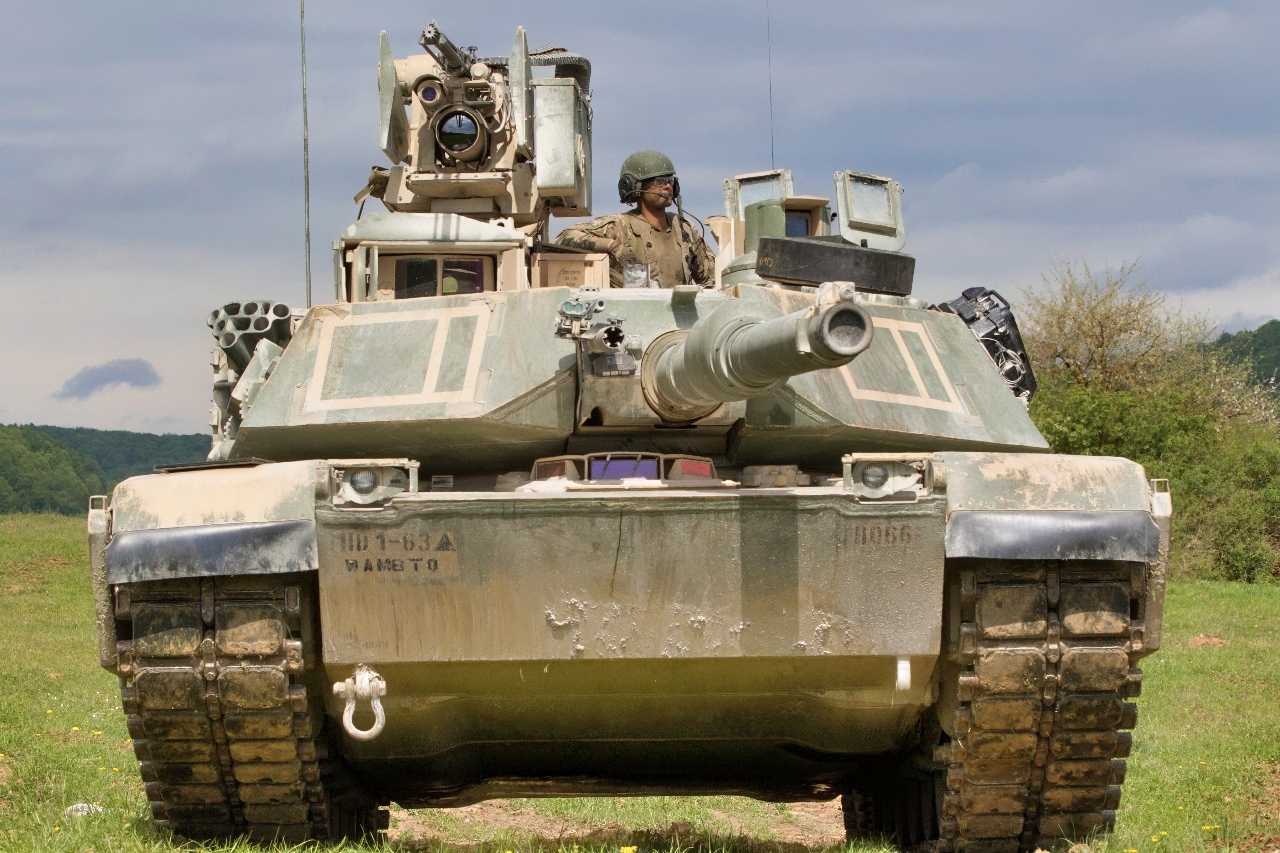
An M1A2 Abrams tank from 1st Battalion, 63rd Armor Regiment, “Dragons,” 1st Infantry Division, Fort Riley, Kansas, pulls during Combined Resolve X at the Hohenfels Training Area, Germany, May 1, 2018. Exercise Combined Resolve X is a U.S. Army Europe exercise series held twice a year in southeastern Germany. The goal of Combined Resolve is to prepare forces in Europe to work together to promote stability and security in the region. (U.S. Army photo by Spc. Andrew McNeil / 22nd Mobile Public Affairs)

A U.S. Army tank crew assigned to 2nd Battalion, 5th Cavalry Regiment, 1st Armored Brigade Combat Team, 1st Cavalry Division, maneuvers an M1A2 Abrams tank at a railhead in preparation to transport it to Hohenfels, Germany during a railhead operation, Corbu, Romania, October 24, 2018. The Battalion has deployed to Europe in support of Atlantic Resolve, an enduring training exercise between NATO and U.S. Forces. (U.S. Army National Guard photo by Sgt. Jamar Marcel Pugh, 382nd Public Affairs Detachment/ 1st ABCT, 1st CD/Released)
About the Author: Kris Osborn
Kris Osborn is the President of Warrior Maven – Center for Military Modernization. Osborn previously served at the Pentagon as a highly qualified expert in the Office of the Assistant Secretary of the Army—Acquisition, Logistics & Technology. Osborn has also worked as an anchor and on-air military specialist at national TV networks. He has appeared as a guest military expert on Fox News, MSNBC, The Military Channel, and The HistoryChannel. He also has a Master’s Degree in Comparative Literature from Columbia.


