

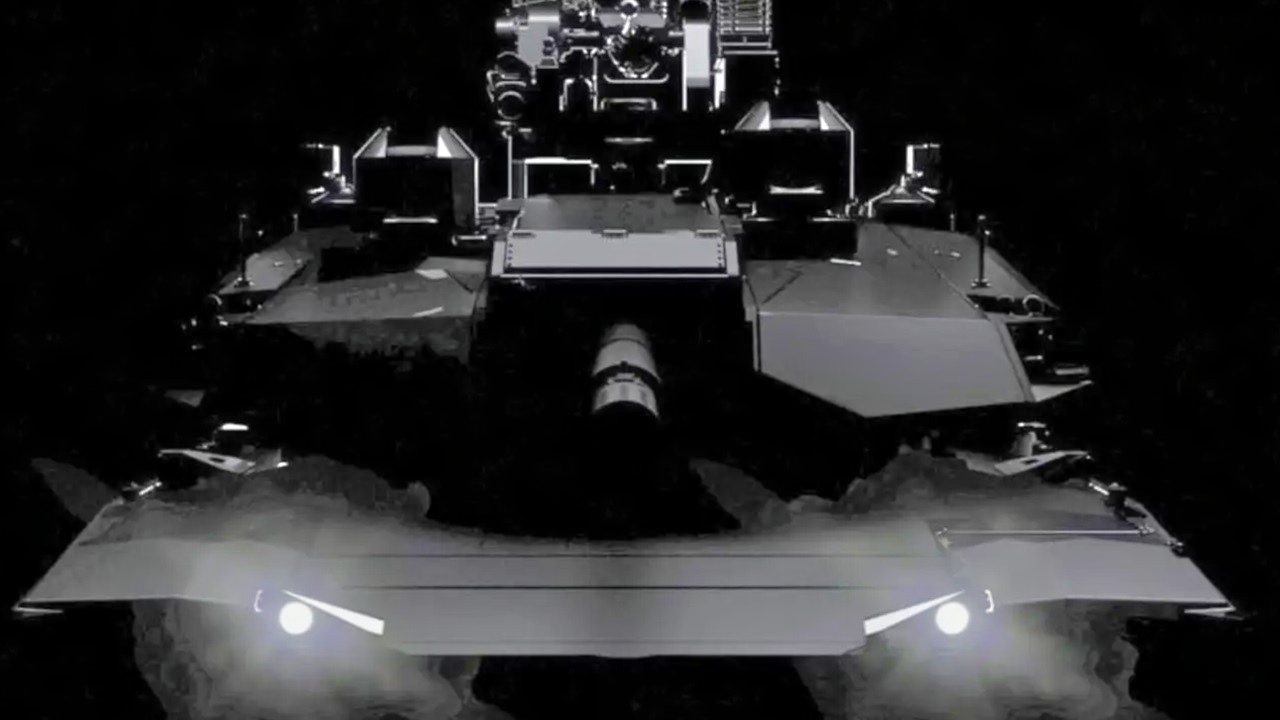
Key Points and Summary – Cheap FPV drones and loitering munitions have turned the sky into a kill zone, forcing the U.S. Army to rethink heavy armor. Instead of the ambitious AbramsX, the service is betting on the M1E3—an evolutionary, lighter, more modular Abrams built for a drone-saturated battlefield.
-The piece argues that armor still matters, but only if tanks are wrapped inside a wider counter-drone ecosystem of sensors, jammers, drones, and AI-enabled networking.
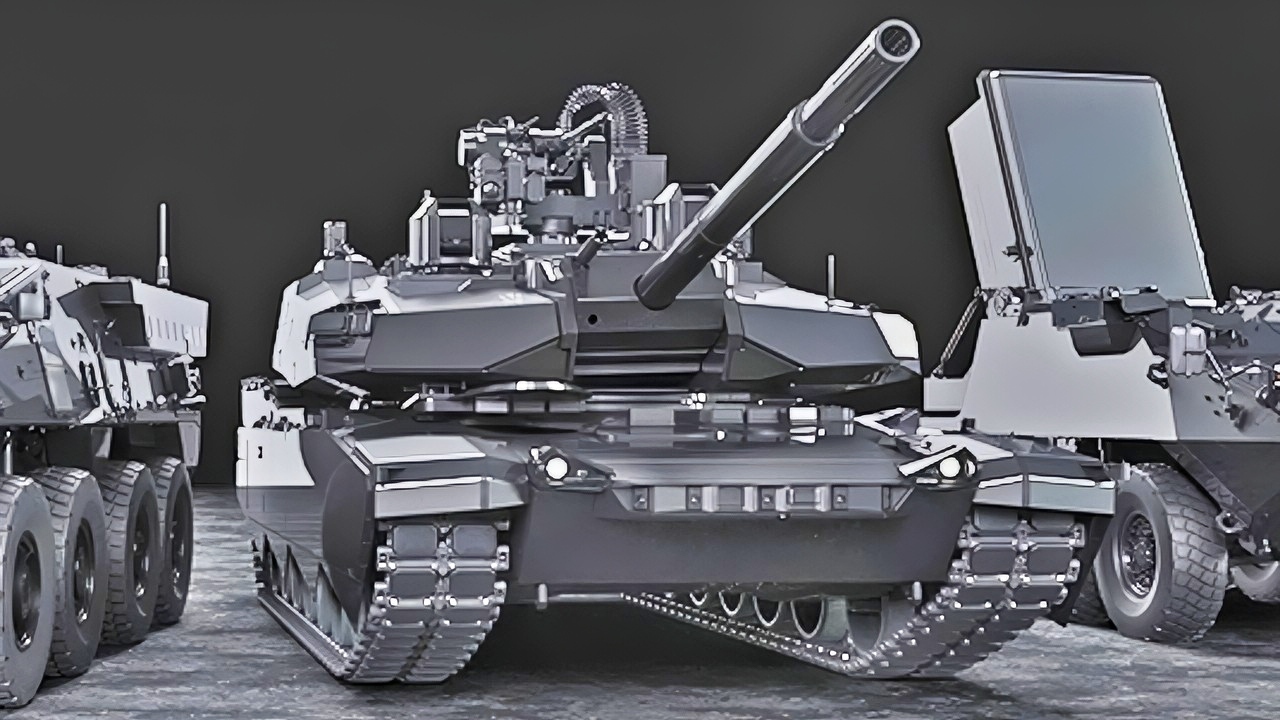
AbramsX Tank U.S. Army Image.
-The M1E3’s fate, it concludes, will depend less on its gun and armor than on whether the Army truly modernizes the combined-arms team around it.
AbramsX Is Out, M1E3 Is In: Will America’s Next Tank Actually Last in Combat?
The battlespace has changed faster than the American heavy armor community ever imagined. Over Ukraine, Gaza, and the Caucasus, cheap drones have turned the sky into an all-encompassing kill zone.
Tanks once designed to shrug off artillery and missiles now face swarms of quadcopters costing less than a family dinner.
In this new environment, the AbramsX—touted only a few years ago as the future of American armor—looks increasingly like a technology demonstrator, not a war-ready platform.
The Army has now signaled that the M1E3, a lighter, more modular evolution of the Abrams line, will take its place.
The hook is simple but stark: the M1E3 must survive a battlespace where the air is the enemy. And the urgent question now is whether a redesigned tank can hold ground in the drone age—or whether the age of the main battle tank is quietly ending.
Why the M1E3 Survived While AbramsX Faded
The AbramsX promised a generational leap. Its hybrid drive, unmanned turret, and sensor fusion architecture were aimed at making the tank lighter, quieter, and more survivable. But it was always an experiment first and a fieldable solution second.
The M1E3, by contrast, is evolutionary rather than revolutionary. It keeps the proven hull and automotive base of the Abrams family while shedding weight, simplifying maintenance, and integrating the Army’s most viable near-term survivability upgrades. In an era when the industrial base is stretched and timelines are shrinking, evolutionary beats revolutionary every time.

U.S. Army soldiers assigned to Bravo ‘Bad Bet’ Company, 2nd Battalion, 12th Cavalry Regiment, 1st Armored Brigade Combat Team, 1st Cavalry Division, conduct Table V exercises with the M1A2 Abrams Tank at Bemowo Piskie Training Area, Poland, July 12, 2024. The purpose of the training is to ensure the Abrams were fully functional and fit to fight. The 1st Cavalry Division’s mission is to engage in multinational training and exercises across the continent, strengthening interoperability with NATO allies and regional security partners, which provides competent and ready forces to V Corps, America’s forward-deployed corps in Europe. (U.S. Army photo by Spc. Kali Ecton)
The Army’s calculus is brutally practical. The AbramsX was a bet on a future where crews could fight from inside a digital cocoon and where hybrid drives and unmanned turrets could be fielded at scale. But the service needs a tank now—one it can produce, support, and upgrade without reinventing the entire logistics train.
The M1E3 offers precisely that: a transitional platform bridging today’s hard lessons with tomorrow’s operational concepts. The AbramsX showed what could be. The M1E3 is what can actually be delivered.
Tanks Still Matter—But Only If They Adapt
The problem is not the tank itself.
The problem is the sky. Drones have made the vertical axis—the once-empty space above the battlefield—the most lethal domain of modern land warfare. FPV kamikazes, loitering munitions, and improvised quadcopters have created a form of aerial attrition that no tank, however armored, can simply “tank” its way through.
The M1E3’s success, therefore, will not be measured by armor thickness or main-gun performance, but by whether it can survive long enough to deliver its firepower.
The Army understands this. The M1E3’s redesigned armor suite, improved active protection system, and modular sensor architecture are explicitly meant to defeat top-attack threats. But even the best hard-kill and soft-kill systems cannot stand alone against the sheer volume of drones seen in modern combat.

A M1 Abrams Main Battle Tank in 1st Battalion, 18th Infantry Regiment, 1st Infantry Division fires at a prop target during a live fire exercise on Feb. 17, 2023 in Petrochori Training Area, Greece. American armored units along with Greek armored units spent the past couple days training force-on-force and other combat simulation exercises.
This is why the M1E3 must be integrated into a broader counter-drone ecosystem: tethered drones for overwatch, electronic warfare packages for suppression, and C-UAS systems pushed down to the company and platoon level. The tank cannot be an isolated platform anymore. It must be the spearhead of a combined digital-aerial-armored formation built around mutual protection.
The New Logic of Armored Warfare
In practice, that means the M1E3 will live or die by how well it manages the cognitive bandwidth of the crew. The modern tank operator is no longer just a gunner or driver but the conductor of a small orchestra of sensors, drones, active defenses, and supporting fires.
The M1E3’s ability to fuse data, automate threat detection, and offload cognitive burdens will determine whether crews can keep pace with drone-saturated environments. That, more than raw lethality, is what separates survivable armor from doomed armor.
This is also why the Army’s renewed emphasis on signature reduction matters. Tanks are magnets for drone reconnaissance because they are easy to find. Heat, noise, electromagnetic emissions—all are invitations for operators with FPVs. The M1E3’s redesign reduces these signatures, making it harder to detect, hunt, and target. Survivability in the drone age begins not with armor but with not being seen.
Will the M1E3 Hold Ground?
A tank’s purpose has never changed: hold ground, break lines, and blunt offensives. Those missions remain essential. But holding ground in 2025 and beyond will look radically different. The tank platoon of the future will not advance alone.
It will advance behind a curtain of drones, electronic warfare, and AI-enabled reconnaissance. It will maneuver under the protection of layered defenses, from vehicle-mounted jammers to company-level interceptors. It will fight within a network where seeing first and striking first matter more than even the tank’s own survivability.
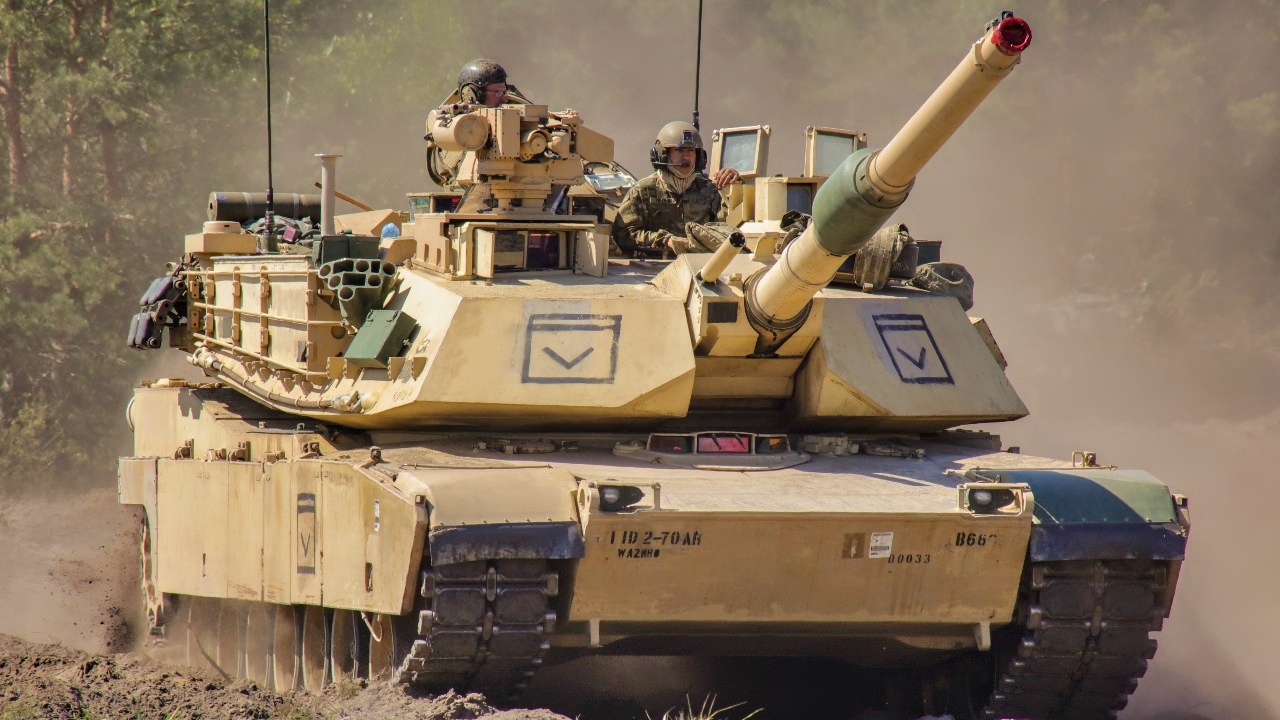
U.S. Soldiers assigned to 2nd Battalion, 70th Armor Regiment, 2nd Armored Brigade Combat Team, 1st Infantry Division supporting the 4th Infantry Division, maneuver an M1A2 Abrams tank while participating in a combined arms rehearsal during Anakonda23 at Nowa Deba, Poland, May 14, 2023. Anakonda23 is Poland’s premier national exercise that strives to train, integrate and maintain tactical readiness and increase interoperability in a joint multinational environment, complimenting the 4th Inf. Div.’s mission in Europe, which is to participate in multinational training and exercises across the continent while collaborating with NATO allies and regional security partners to provide combat-credible forces to V Corps, America’s Forward deployed corps in Europe. (U.S. Army National Guard photo by Sgt. 1st Class Theresa Gualdarama)
The M1E3 can do this. It is lighter, more adaptable, and more digitally integrated than any previous Abrams. It is designed for repeated upgrades rather than once-a-generation redesigns. And it reflects the Army’s mature understanding that tanks are not obsolete—they are simply unprotected if left unchanged.
The Future of the Tank Is the Future of Combined Arms
If the M1E3 fails, it won’t be because the tank is obsolete. It will be because the Army failed to reimagine the ecosystem around it. In the drone age, armor cannot be the center of gravity. It must be one node in a dispersed, resilient, multi-domain force. The M1E3 is the first serious attempt to build a tank for that world, not the world of Desert Storm or Baghdad.
The real test, then, is not technological but conceptual: whether the Army can build doctrine, formations, and sustainment pipelines that treat the tank as part of an integrated kill-web rather than a standalone sledgehammer.
The drone age has exposed the vulnerabilities of heavy armor, but it has also confirmed its enduring value when properly shielded and intelligently employed.
The M1E3 embodies that lesson. Whether it survives the drone age will depend on whether the Army does too.
About the Author: Dr. Andrew Latham
Andrew Latham is a non-resident fellow at Defense Priorities and a professor of international relations and political theory at Macalester College in Saint Paul, MN. You can follow him on X: @aakatham. He writes a daily column for the National Security Journal.
More Military
The U.S. Navy’s Constellation-Class Frigate Crisis Keeps Getting Worse
China’s New H-20 Stealth Bomber Might Have a 10,000 km Range
Even Mach 3 Speeds Could Not Save the Titanium SR-71 Blackbird
The U.S. Navy’s New DDG(X) Destroyer Is Sailing Into Stormy Waters


