

Summary and Key Points: The YF-118G “Bird of Prey” was a secretive technology demonstrator that redefined stealth manufacturing in the 1990s.
-Developed by McDonnell Douglas (now Boeing), this “flying laboratory” tested digital design tools and composite construction to make stealth more affordable and maintainable.

The Boeing YF-118G “Bird of Prey” was a low-cost, 1990s experimental aircraft built at Area 51 that successfully tested advanced stealth concepts and manufacturing techniques later used in other programs. Image Credit: Boeing.
-While never intended for combat, the YF-118G’s smooth, blended contours validated the aerodynamic shaping now found on the F-35 and the newly testing B-21 Raider.
-As modern air defenses challenge low-observability in 2026, the Bird of Prey’s legacy endures in the digital engineering and sensor fusion essential to the Next Generation Air Dominance (NGAD) program.
BONUS: National Security Journal visited the only YF-118G still in existence last July at the National Museum of the Air Force. We have included photos we took of the plane in this article below.
The YF-118G “Bird of Prey” Stealth Fighter That Helped Reshape Stealth Design
When the U.S. Air Force unveiled the B-21 Raider in December 2022, it marked the first public reveal of a new American stealth aircraft in more than three decades. Today, the B-21 is moving through the flight testing phase as the service prepares it for operational service later in the decade.
At the same time, the Air Force is developing its Next Generation Air Dominance (NGAD) family of systems, designed to ensure air superiority against advanced adversaries with next-generation networking and stealth.
These are just the latest in a series of stealth projects that, over the years, have made dramatic technical advances behind a veil of secrecy.
In the 1990s, Boeing revealed a strange, birdlike jet that had already flown dozens of times in secret. Officially designated the YF-118G and known as the “Bird of Prey,” the aircraft was not a fighter or bomber.

YF-118G Bird of Prey at USAF Museum 2025. Image Credit: Harry J. Kazianis/National Security Journal.
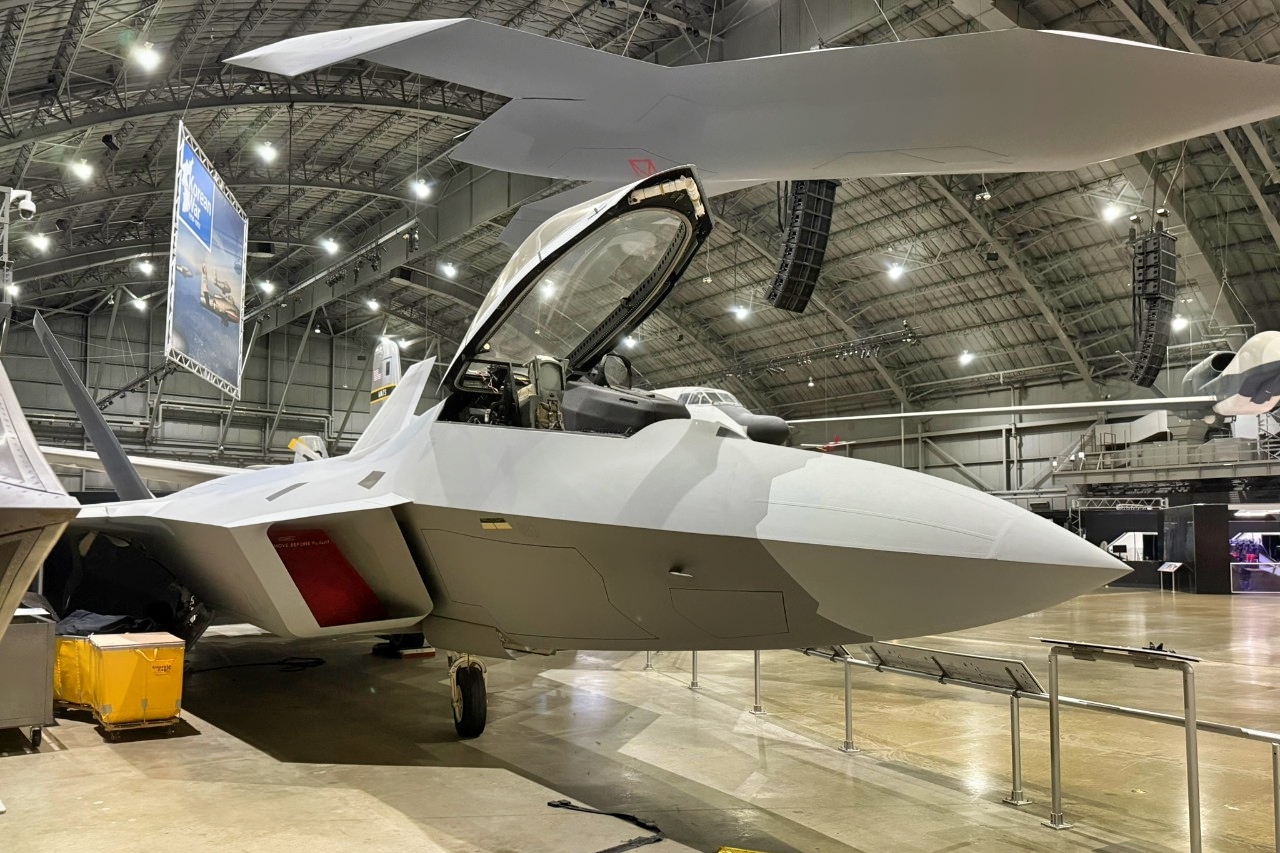
F-22A Raptor with YF-118G Overhead. Image Credit: National Security Journal.
It was a technology demonstrator built to address a Cold War dilemma: making stealth more affordable, easier to manufacture, and easier to maintain over the long term. It’s a problem that engineers are still grappling with today.
Meet the YF-118G
The YF-118G was a single-seat stealth technology demonstrator developed by McDonnell Douglas, which later merged with Boeing. The program ran from 1992 to 1999, with the aircraft making its first flight in the autumn of 1996. In total, it completed 38 test flights before the program concluded in 1999.
The aircraft remained classified until October 2002, when Boeing publicly unveiled it and confirmed its existence. By the time of the reveal, many of the manufacturing techniques and design concepts tested on the aircraft had already become standard practice in the aerospace industry, enabling declassification.
The YF-118G was never intended to enter operational service. Instead, it served as a flying laboratory to test advanced low-observable shaping, new composite construction methods, and digital design tools. Today, the aircraft is on display at the National Museum of the U.S. Air Force in Dayton, Ohio.
Why It Was Needed in the 1990s
The Bird of Prey is a product of the aftermath of the Cold War, when stealth had already proven its value. During Operation Desert Storm in 1991, the F-117 Nighthawk demonstrated that low-observable aircraft could penetrate heavily defended airspace and strike high-value assets with reduced risk. The B-2 Spirit soon followed, providing intercontinental stealth strike capability, albeit with a very high cost per aircraft.
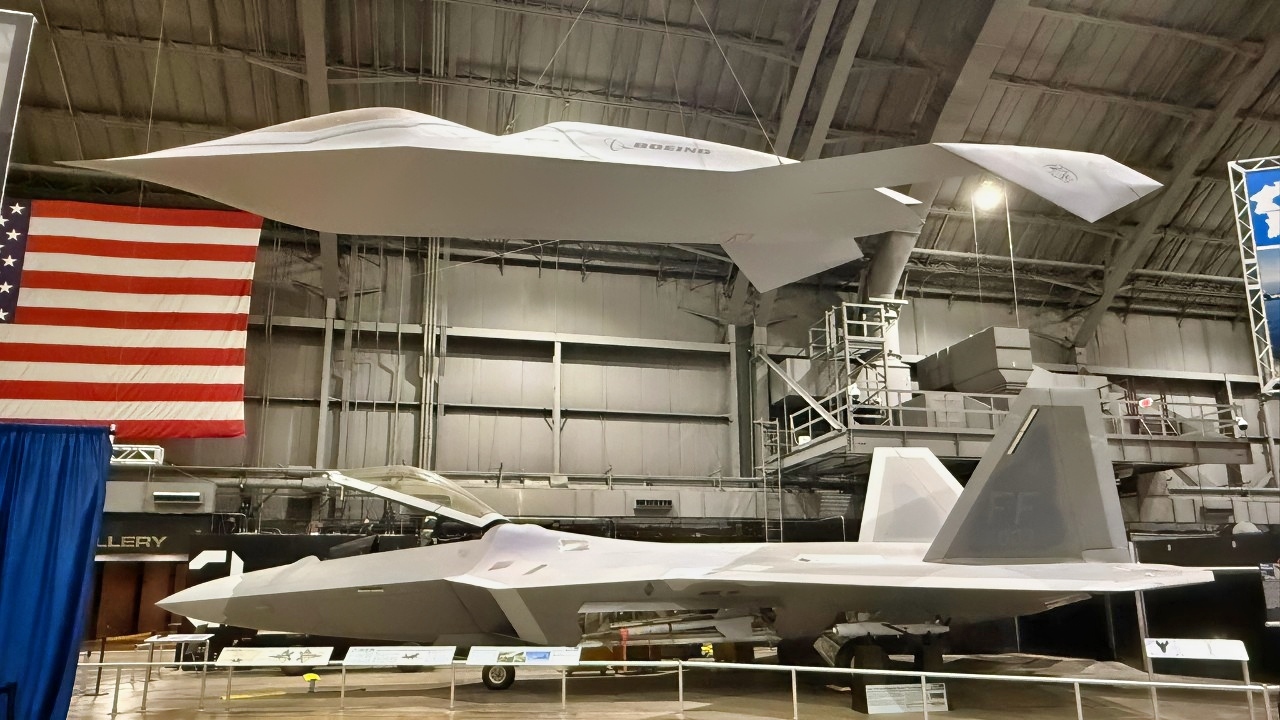
YF-118G above and F-22 Raptor Below. Image from National Security Journal.
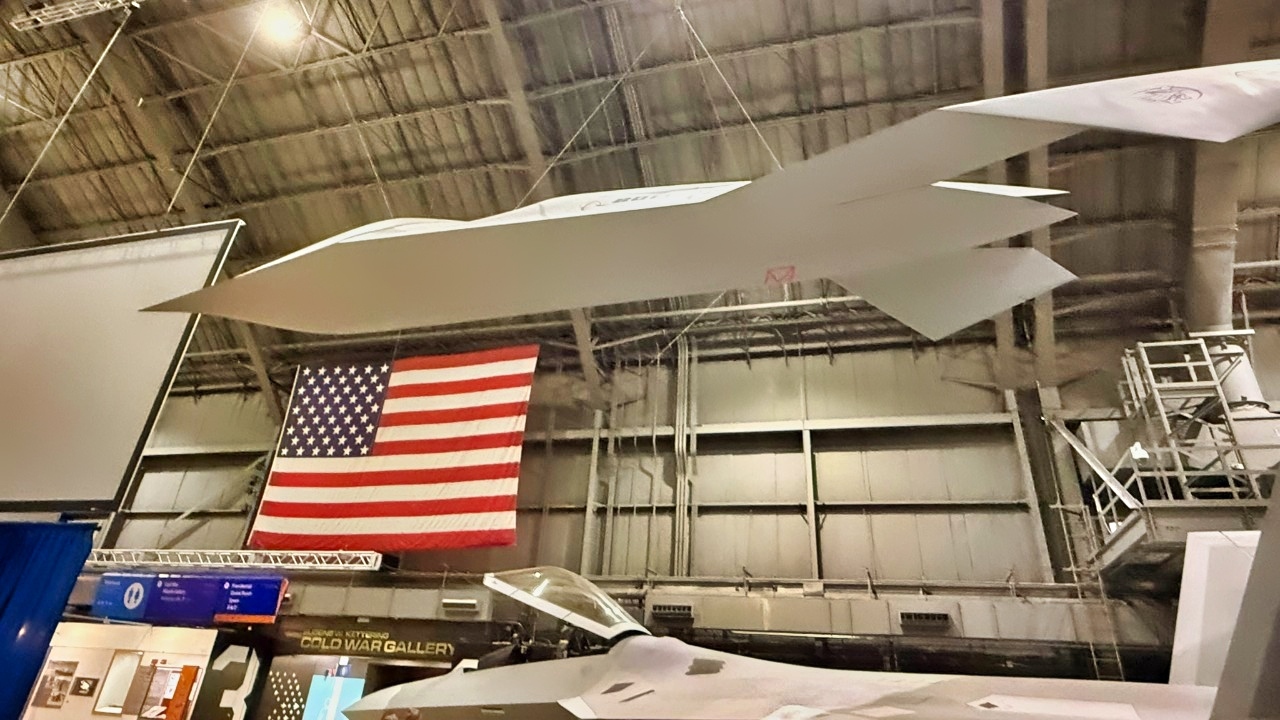
YF-118G Flying High July 2025. Image Credit: National Security Journal.
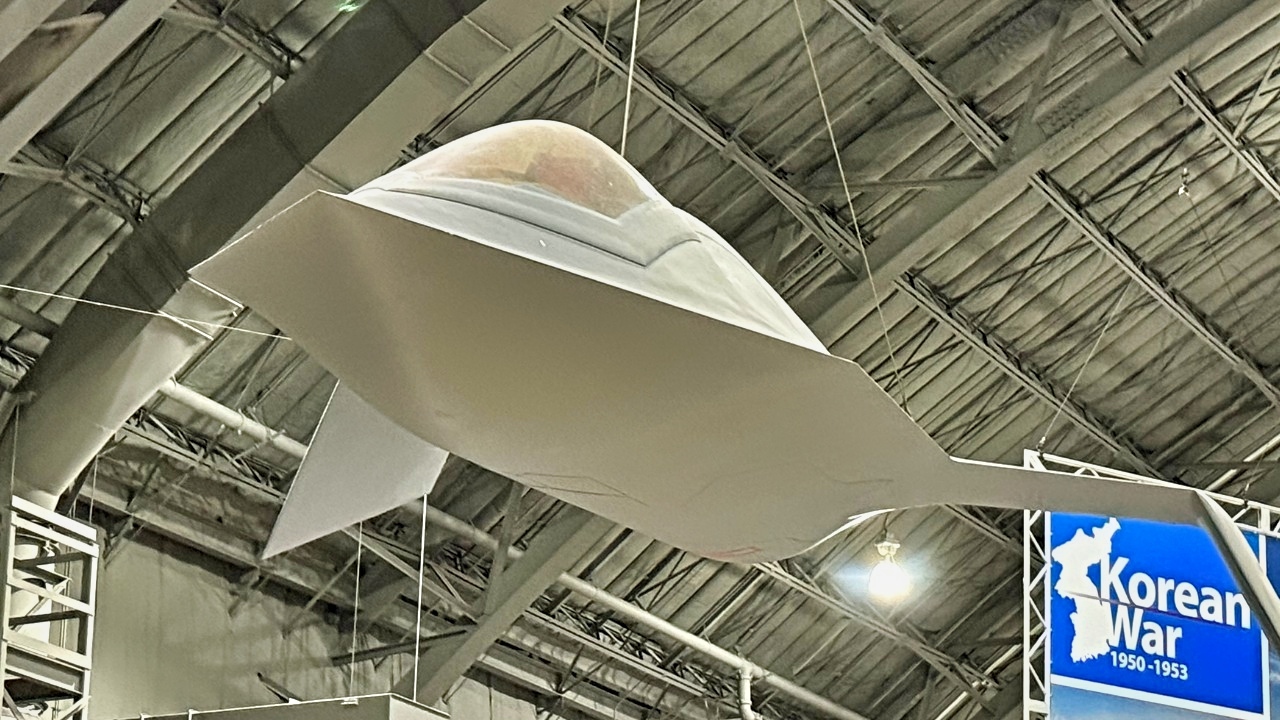
YF-118G Bird of Prey Hanging Above F-22. Image Credit: National Security Journal.
As defense budgets declined in the 1990s, the Pentagon faced a dilemma. Stealth was strategically necessary, but its development and sustainment were expensive and complex. The Bird of Prey program was designed to assess whether advanced, low-observable aircraft could be built using simpler manufacturing techniques and digital engineering tools, potentially reducing overall cost and production time.
According to Boeing, the program relied heavily on computer-aided design and virtual reality modeling – new technology for the time – that allowed engineers to refine the aircraft digitally before it was fabricated. The demonstrator also incorporated large composite structures and disposable tooling to reduce production costs. So, in that sense, the YF-118G was an experiment in manufacturing techniques and aerodynamic shaping.
‘Bird of Prey’: What It Did and Didn’t Prove
The aircraft featured an unusual shape resulting from evolving stealth design philosophies. Unlike the F-117, which featured sharp lines and relied on flat surfaces to scatter radar waves, later stealth designs adopted smoother, blended contours to improve aerodynamic performance while maintaining low radar signatures.
The Bird of Prey project explored aspects of that design transition and helped validate key shaping concepts in modern production methods, such as in stealth fighters like the F-35.
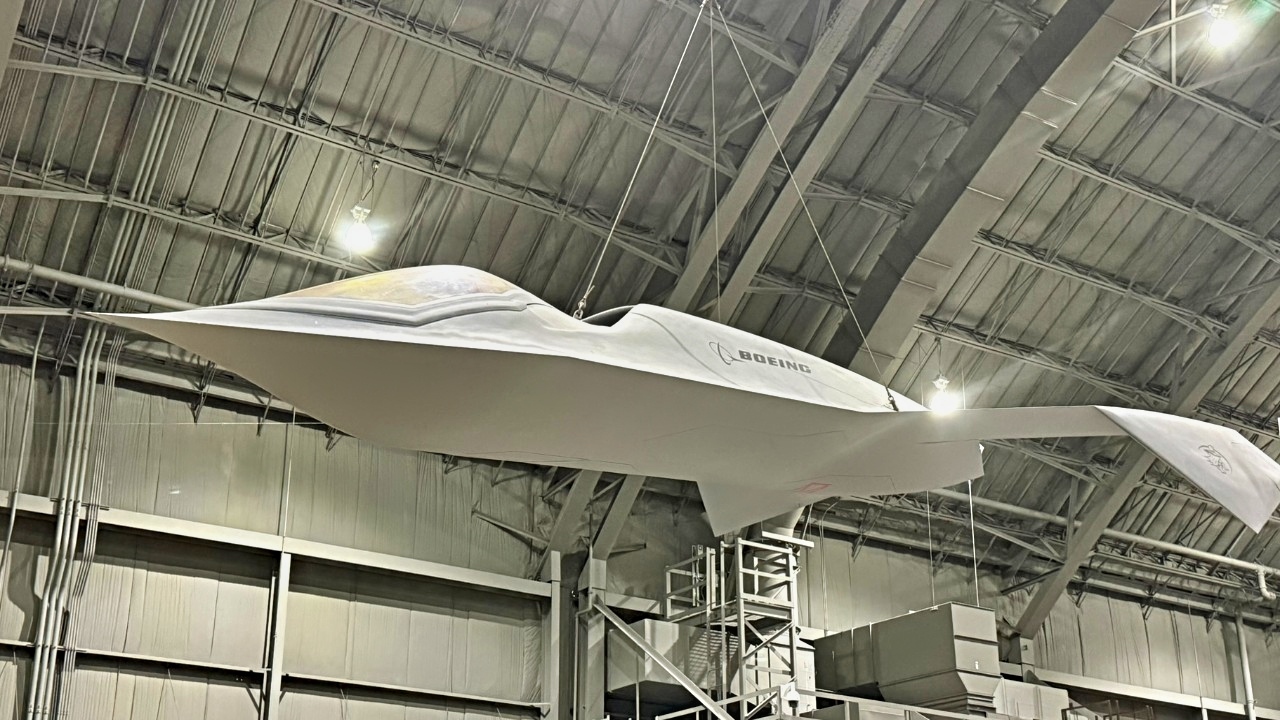
YF-118G Bird of Prey. Image Credit: National Security Journal.
It also demonstrated that advanced low-observable platforms could be developed through limited flight testing rather than massive procurement efforts. The program met its objectives in fewer than 40 flights and proved its worth over that period, even though it did not become an operational combat aircraft nor was it ever considered a true predecessor to the B-21 Raider or F-35 Lightning II.
While some of the F-35’s shaping and stealth designs may have been validated by the YF-118G, the program had a complex multinational development path.
Where We Stand Today: A Message for Russia About Stealth
Today, engineers are grappling with how well stealth technology performs against rapidly advancing detection networks. The B-21 Raider is now in flight testing after its first flight in November 2023, and the Air Force plans to procure at least 100 aircraft to replace aging B-1 and B-2 bombers.
Unlike earlier stealth platforms, the B-21 was designed from the outset with digital engineering and more maintainable coatings, intended to reduce sustainment burdens that plagued aircraft such as the B-2.
MORE – China’s Stealth J-35A Might Be Much More Than Some F-35 Fighter Copycat
MORE – The Largest Air Force On Earth Will Soon Have a B-52 Bomber Firing Hypersonic Missiles
MORE – China’s New J-35A Stealth Fighter Has 1 Mission That Has the U.S. Air Force A Little Worried
At the same time, adversaries are investing heavily in multi-band radar systems and upgraded air defense architectures designed to complicate stealth operations.
China’s rapid development of advanced air defense systems and long-range radars, along with Russia’s fielding of the S-400 and S-500 systems, shows that stealth is being challenged more than ever.
Survivability today, therefore, depends increasingly on sensor fusion, electronic warfare, networking, and other operational tactics layered on top of the low-observability technology the Bird of Prey helped perfect.
About the Author:
Jack Buckby is a British researcher and analyst specialising in defence and national security, based in New York. His work focuses on military capability, procurement, and strategic competition, producing and editing analysis for policy and defence audiences. He brings extensive editorial experience, with a career output spanning over 1,000 articles at 19FortyFive and National Security Journal, and has previously authored books and papers on extremism and deradicalisation.


Michael Morgan
February 13, 2026 at 8:45 am
How ludicrous. A psyop with nothing actually real. Russia must be terrified. Rofl 🤣 😂 🤣
Brad
February 18, 2026 at 1:55 am
The program cost $100M about $200M today.