

According to Trump administration officials, we are about one day away from getting a deal to reopen the Strait of Hormuz (SoH). Of course, there is no word on whether–or when–the Strait of Bab El-Mandeb is reopening.
And that’s a problem because both the maritime security situations in these two key waterways are deteriorating, as is the global shipping crisis.

A U.S. Navy F/A-18F Super Hornet, attached to Air Test and Evaluation Squadron (VX) 9, takes off from Naval Air Station Point Mugu during Gray Flag, Sept. 12, 2025. Gray Flag 2025 is the naval aviation test community’s premier large force test event, providing unique venues for large-scale integration of new capabilities across services and platforms. Working with the Joint Force, industry, and our nation’s allies to ensure seamless integration and interoperability is key to ensuring warfighters have a decisive advantage in the field. (U.S. Navy photo by Mass Communication Specialist 2nd Class August Clawson)

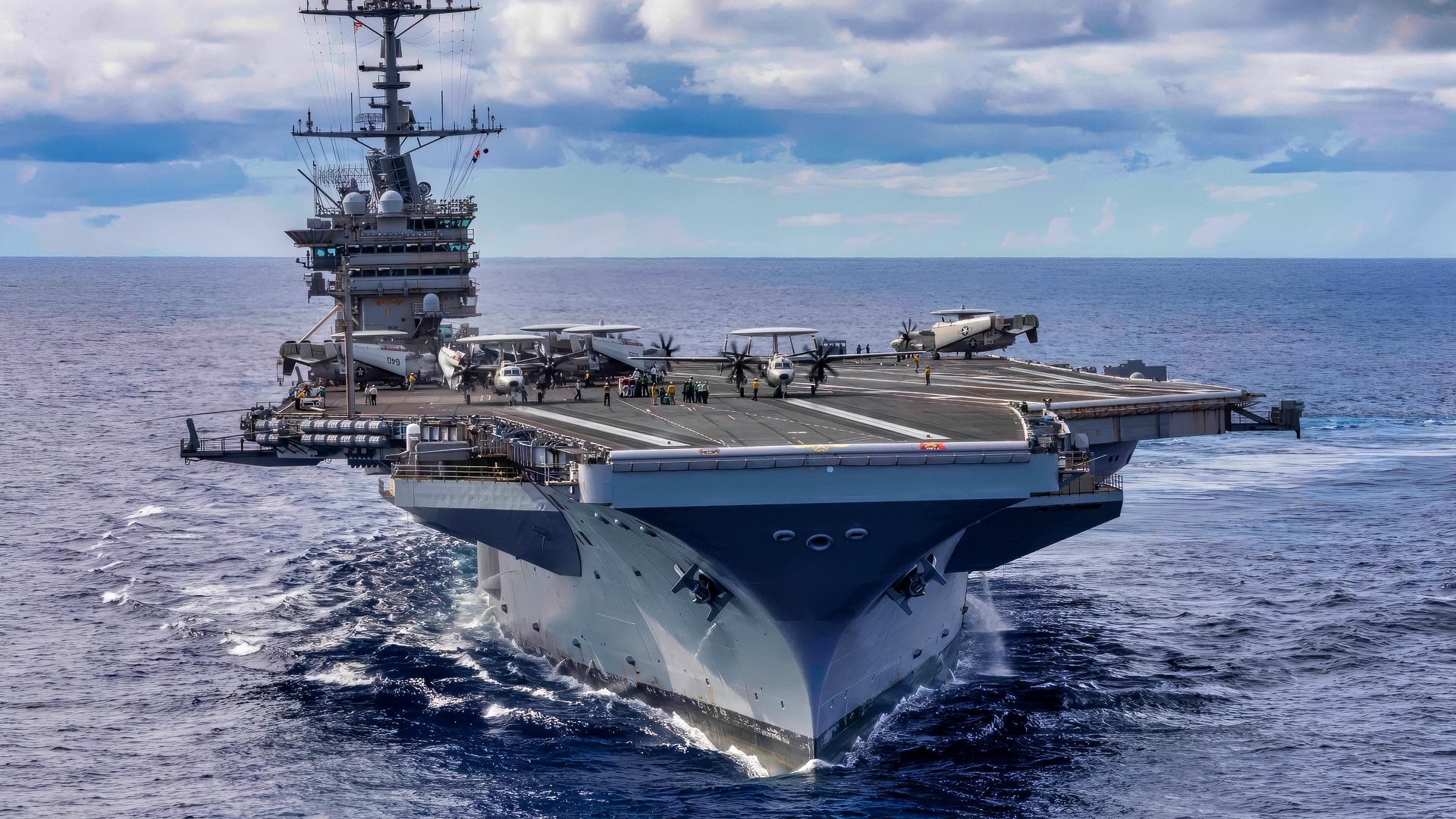
EAST CHINA SEA (Dec. 06, 2010) Sailors assigned to the Eagles of Strike Fighter Squadron (VFA) 115 move an F/A-18E Super Hornet on the flight deck aboard the aircraft carrier USS George Washington (CVN 73). George Washington is participating in Keen Sword 2010 with the Japanese Maritime Self-Defense Force through Dec. 10. (U.S. Navy photo by Mass Communication Specialist 3rd Class David A. Cox/Released)
Shippers require open and easy access to these two waterways to move critical goods in large quantities and in a relatively short time to the rest of the world.
The war has effectively blocked both waterways, causing all manner of dislocations in the global trading system.
Commercial shipping has been so severely impacted by these twin closures that the shipping crisis is becoming a broader economic crisis, as energy, agriculture, and industrial markets that rely on Middle Eastern inputs are disrupted.
Markets have tried to adapt to the circumstances while governments, especially Washington, use all their power to influence the market, preventing a total collapse under the weight and duration of the shipping crisis the war has caused.
At some point, though, one must pay the piper.
According to the ship-tracking firm Kpler, vessel traffic through the SoH has collapsed. Only eight ships transited the Strait on Sunday, compared to an average of 140 ships daily before the war began.
Markets breathed a sigh of relief in June when the United States and the Islamic Republic of Iran signed a Memorandum of Understanding (MoU) set to last 60 days.
The ceasefire, however, lasted only about 18 days. Once that ceasefire ended, the Americans and Iranians resumed fighting, and the Iranians closed the SoH.
Red Sea Alternative Is Gone
For much of the war, tankers carrying Saudi crude oil bypassed the SoH by using the Red Sea route. That alternative, though, has become hazardous after the Iranian-backed Houthis of Yemen announced a blockade of the Strait of Bab El-Mandeb. That blockade was selective. It targeted only Saudi-flagged vessels.
Although once the blockade was announced, shipping insurance for vessels employing the Red Sea alternative route became impossibly expensive.
Non-Saudi-flagged ships expressed timidity at the prospect of using the Red Sea route, too, unsure if the Houthis would hold their fire on non-Saudi ships.
Kpler reports that crude oil shipments bound for Asia have fallen to about four vessels per day in the Red Sea region, the lowest level recorded since the Iran War began on February 28.
Shipping Industry Raises the Red Flag
Many shipping executives believe the security environment in the region is too difficult right now.
The Red Sea release valve, which had been opened due to pressure from the Iranian closure of the SoH, is now closed to global shipping in the Middle East.
Thus, the industry is taking measures to protect itself. Shipping insurers are necessarily raising their insurance costs for ships operating in both the SoH and Bab El-Mandeb.
In some cases, Lloyd’s of London is refusing to insure any ship operating in these high-risk areas until normal operations can be restored and all parties can ensure the security of those ships.
Under current circumstances, the risk is too high. Shipping insurance operates on a risk-analysis model.
If the risk is assessed as too high, shippers’ prices increase because insurance rates skyrocket. Those costs are deferred onto customers globally — and, in many cases, shipping companies reduce their movements or switch to longer, safer routes, thereby increasing the cost of goods globally.
Whither Diplomacy?
The ongoing maritime crisis occurs even as diplomacy reaches a fever pitch between the Iranians, the US, and its allies.
Indirect talks between Tehran and Washington–with nations like Oman and Pakistan serving as intermediaries–continue.
The Trump administration insists a deal to reopen the SoH is at hand. Despite this, the Iranians continue attacking global shipping in the SoH, and barring large numbers of cargo and container ships from passing through the SoH.
The current deal to reopen the SoH also fundamentally rewrites how that critical waterway has been managed.
What’s more, for there to be a lasting deal—which is what shippers require—the US will need to get more directly involved in talks.
For now, though, oil markets remain positive about the prospects of a deal. Brent crude prices fell sharply following announcements that a deal was imminent.
Whether that deal lasts longer than the previous MoU ceasefire did remains to be seen.
And the shipping industry, because of its risk-model management style, continues to feel the squeeze in ways that not even the global oil markets are experiencing.
About the Author: Brandon J. Weichert
Brandon J. Weichert is Senior National Security Editor. He also manages The Weichert Brief on Substack. Weichert also hosts “National Security Talk” on Rumble. He is the author of four bestselling national security books, the most recent of which is A Disaster of Our Own Making: How the West Lost Ukraine (Encounter Books). Follow him via Twitter/X @WeTheBrandon.


