

Summary and Key Points: In the early 1930s, the U.S. Navy built USS Akron and USS Macon—massive rigid airships designed to function as flying aircraft carriers.
-Each carried up to five Curtiss F9C Sparrowhawk “parasite fighters” inside an internal hangar and launched/recovered them in flight using a retractable trapeze.

A U.S. Sailor prepares an F/A-18F Super Hornet aircraft for launch from the flight deck of the world’s largest aircraft carrier, Ford-class aircraft carrier USS Gerald R. Ford (CVN 78), while underway in the Caribbean Sea, Nov. 25, 2025. U.S. military forces are deployed to the Caribbean in support of the U.S. Southern Command mission, Department of War-directed operations, and the president’s priorities to disrupt illicit drug trafficking and protect the homeland. (U.S. Navy photo)
-The concept aimed to solve a blunt problem: long-range fleet scouting across huge ocean distances, with the airship acting as an endurance platform and the fighters widening the search radius.
-Fleet exercises proved the idea worked tactically, but storms and structural vulnerability ended the program after both airships were lost by 1935.
Akron-Class: America’s Flying Aircraft Carriers Explained
In the early 1930s, the U.S. Navy built two of the most ambitious aviation platforms ever conceived: USS Akron (ZRS-4) and USS Macon (ZRS-5). The two enormous rigid airships were designed not just to be reconnaissance craft but as fully functional airborne aircraft carriers capable of launching and recovering fighter planes while in flight.
At nearly 800 feet long, they were among the largest flying machines ever constructed, and their ability to carry Curtiss F9C Sparrowhawk “parasite fighters” extended the Navy’s reconnaissance range far beyond what conventional aircraft could achieve at the time.

Navy Aircraft Carrier from Above. Image Credit: Creative Commons.
Although both airships were lost in accidents by 1935, recent NOAA expeditions and ongoing archaeological surveys of the USS Macon wreck site have generated new interest in the Akron-class and its role as one of the most innovative – but ultimately short-lived – military aviation experiments in U.S. history.
Why the Navy Built Flying Aircraft Carriers
The Akron-class is the product of a strategic problem that the U.S. Navy grappled with in the 1920s: how to locate enemy fleets across vast ocean distances. Aircraft carriers existed but were still in their infancy, and their aircraft lacked the range needed to conduct sustained long-distance reconnaissance.
Rigid airships offered a potential solution. Unlike aeroplanes, they could remain airborne for days and travel thousands of miles, making them ideal for scouting operations. The Navy designed Akron and Macon specifically as fleet reconnaissance platforms, capable of identifying enemy ships and relaying their positions to battleships.
The carriers’ ability to deploy onboard aircraft dramatically increased their effectiveness. Instead of relying solely on onboard observers, the airships could launch smaller scout planes to search wider areas, dramatically expanding the Navy’s surveillance reach. This concept represented an early form of distributed reconnaissance, decades before satellites or long-range surveillance drones.
How the Akron-Class Worked
The defining feature of the Akron-class was its internal aircraft hangar, which could carry up to five Curtiss F9C Sparrowhawk fighters inside the airship’s massive helium-filled hull.
The aircraft were launched and recovered using a retractable trapeze system that extended from the belly of the airship. Pilots would maneuver beneath the airship, attach a hook on their aircraft to the trapeze, and then be lifted safely into the internal hangar.
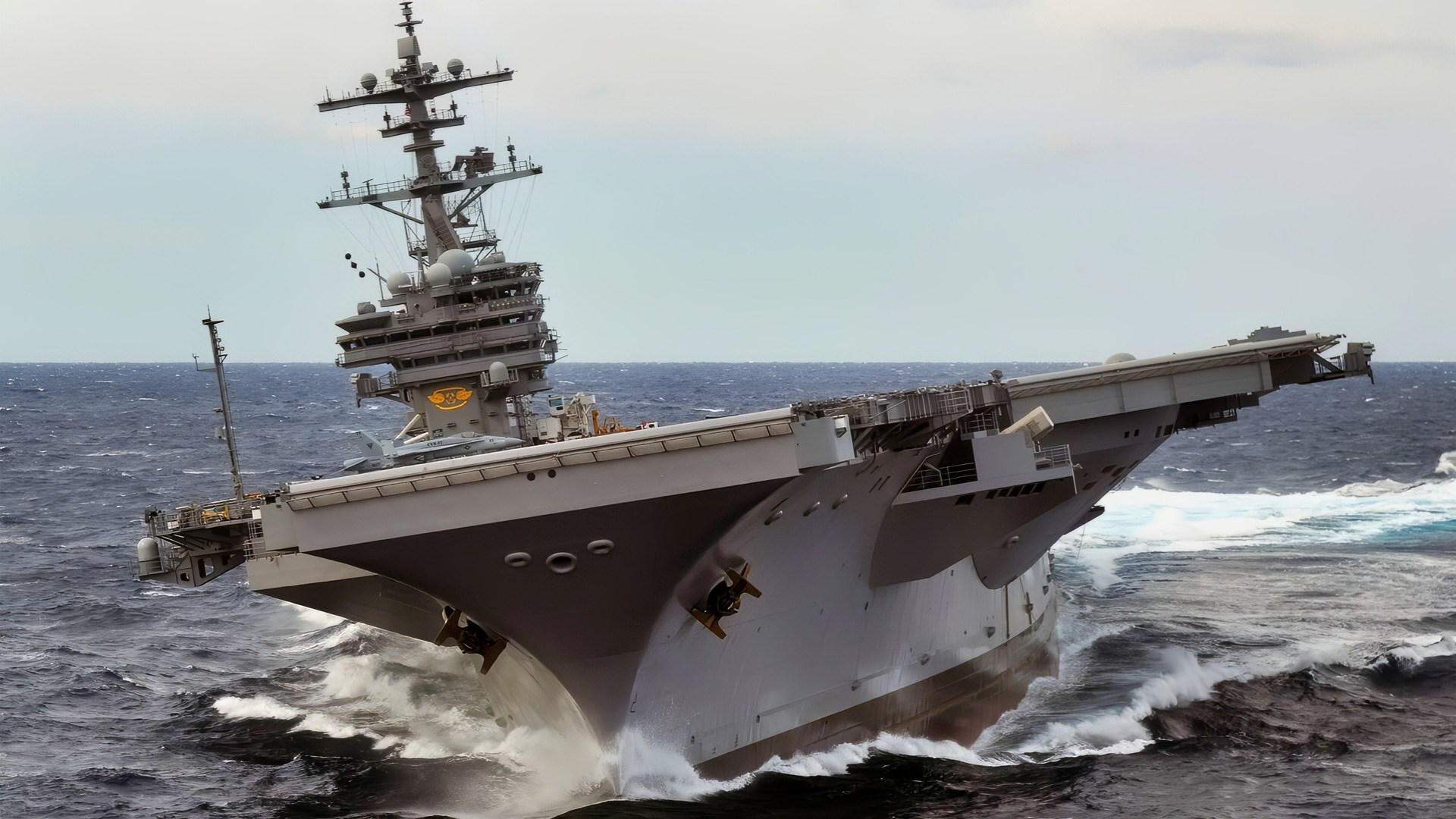
Aircraft Carrier Fast Turn. Image Credit: Creative Commons.
The system allowed the Akron-class to function as a true airborne aircraft carrier, launching and retrieving aircraft while remaining airborne. The Sparrowhawks, meanwhile, served primarily as reconnaissance platforms, scouting enemy fleets and extending the airship’s operational reach.
Technically, the Akron-class was also notable for its scale and design. Each airship measured approximately 785 feet in length and used helium instead of hydrogen, reducing the risk of a catastrophic fire. At the time of its commissioning in 1931, USS Akron was the largest airship in the world and represented the peak of rigid airship engineering.
Operational Service
USS Akron entered service in 1931, followed by USS Macon in 1933. Both airships conducted extensive flight tests, fleet exercises, and demonstrations designed to evaluate the airborne aircraft carrier concept.
The Sparrowhawk fighters proved capable of successfully launching and docking with the airships in flight, validating the Navy’s concept of parasite aircraft operating from airborne carriers.
The clearest demonstrations of USS Macon’s reconnaissance capability occurred during major fleet exercises in 1934 and early 1935 off the U.S. West Coast. Operating from its base at NAS Sunnyvale, California (later Moffett Field), Macon conducted long-range scouting missions over the Pacific, deploying its Curtiss F9C Sparrowhawk aircraft to locate elements of the U.S. fleet during simulated wartime conditions.
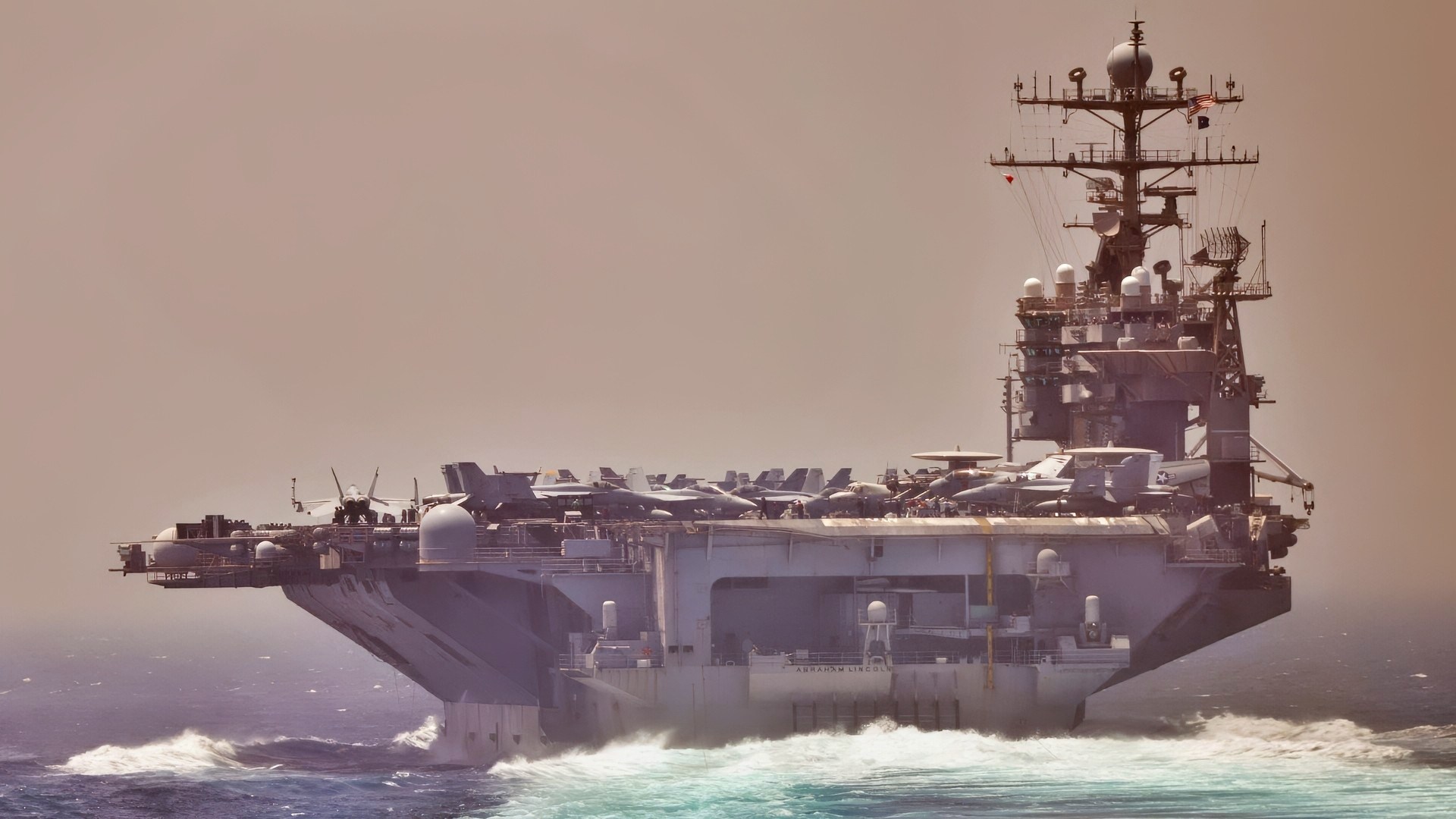
120501-N-WO496-013
STRAIT OF HORMUZ (May 1, 2012) The aircraft carrier USS Abraham Lincoln (CVN 72), left, and the guided-missile cruiser USS Cape St. George (CG 71) transit the Strait of Hormuz. Abraham Lincoln and Cape St. George are deployed to the U.S. 5th Fleet area of responsibility conducting maritime security operations, theater security cooperation efforts and support missions as part of Operation Enduring Freedom. (U.S. Navy photo by Mass Communication Specialist 3rd Class Alex R. Forster/Released)
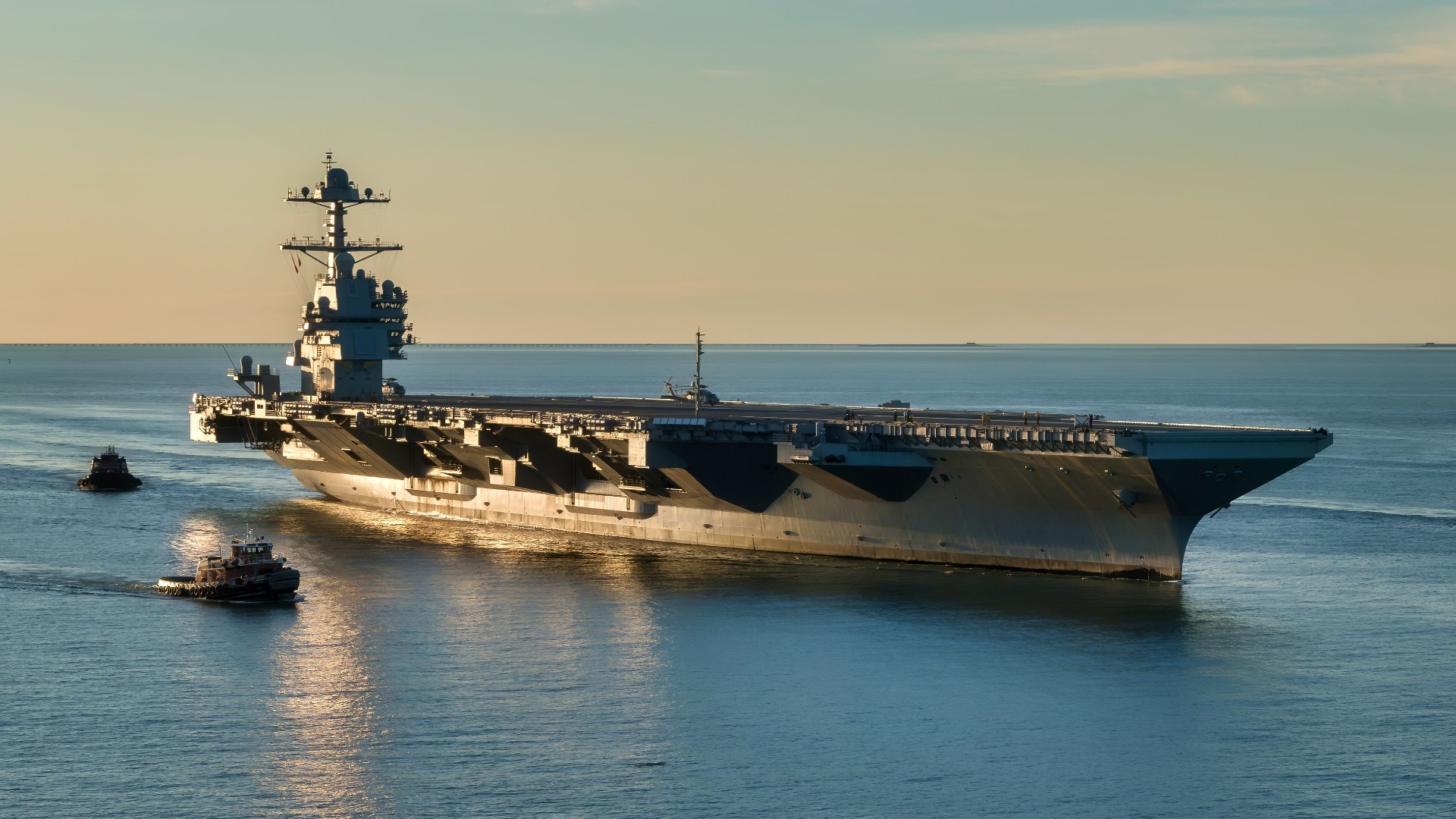
(April 14, 2017) The aircraft carrier Pre-Commissioning Unit (PCU) USS Gerald R. Ford (CVN 78) pulls into Naval Station Norfolk for the first time. The first-of-class ship – the first new U.S. aircraft carrier design in 40 years – spent several days conducting builder’s sea trails, a comprehensive test of many of the ship’s key systems and technologies. (U.S. Navy photo by Matt Hildreth courtesy of Huntington Ingalls Industries/Released)
During one notable Fleet Problem exercise in January 1935, Macon launched Sparrowhawk fighters that successfully located Navy warships at distances exceeding 100 miles from the airship’s position – far beyond the visual scouting range of surface ships. The parasite aircraft were able to relay the fleet’s location back to Macon, demonstrating that airborne aircraft carriers could significantly extend naval reconnaissance coverage.
The exercises also validated the Navy’s original concept when planning the airships. Rather than relying solely on ship-based scout planes with limited endurance, the airship could remain safely outside a potential enemy’s detection range while deploying its onboard aircraft forward to search vast areas of ocean.
Weather Brings the Project to an End
Despite their clear promise, the Akron-class suffered from a critical vulnerability that could not be controlled: weather.
USS Akron was destroyed in a storm off the New Jersey coast in April 1933, killing 73 of the 76 people on board – including Rear Adm. William Moffett, one of the Navy’s leading aviation advocates.
USS Macon, commissioned shortly afterward, suffered a similar fate. In February 1935, structural damage to its tail caused the airship to lose helium and crash into the Pacific Ocean off California. Although most of its crew survived, the loss marked the end of the Navy’s rigid airship program.
The Navy ultimately abandoned airborne aircraft carriers in favor of conventional aircraft carriers, which were more resilient and less vulnerable to the weather. Nonetheless, the Akron-class airships represented one of the boldest experiments in aviation in American history.
About the Author: Jack Buckby
Jack Buckby is a British researcher and analyst specialising in defence and national security, based in New York. His work focuses on military capability, procurement, and strategic competition, producing and editing analysis for policy and defence audiences. He brings extensive editorial experience, with a career output spanning over 1,000 articles at 19FortyFive and National Security Journal, and has previously authored books and papers on extremism and deradicalisation.


