

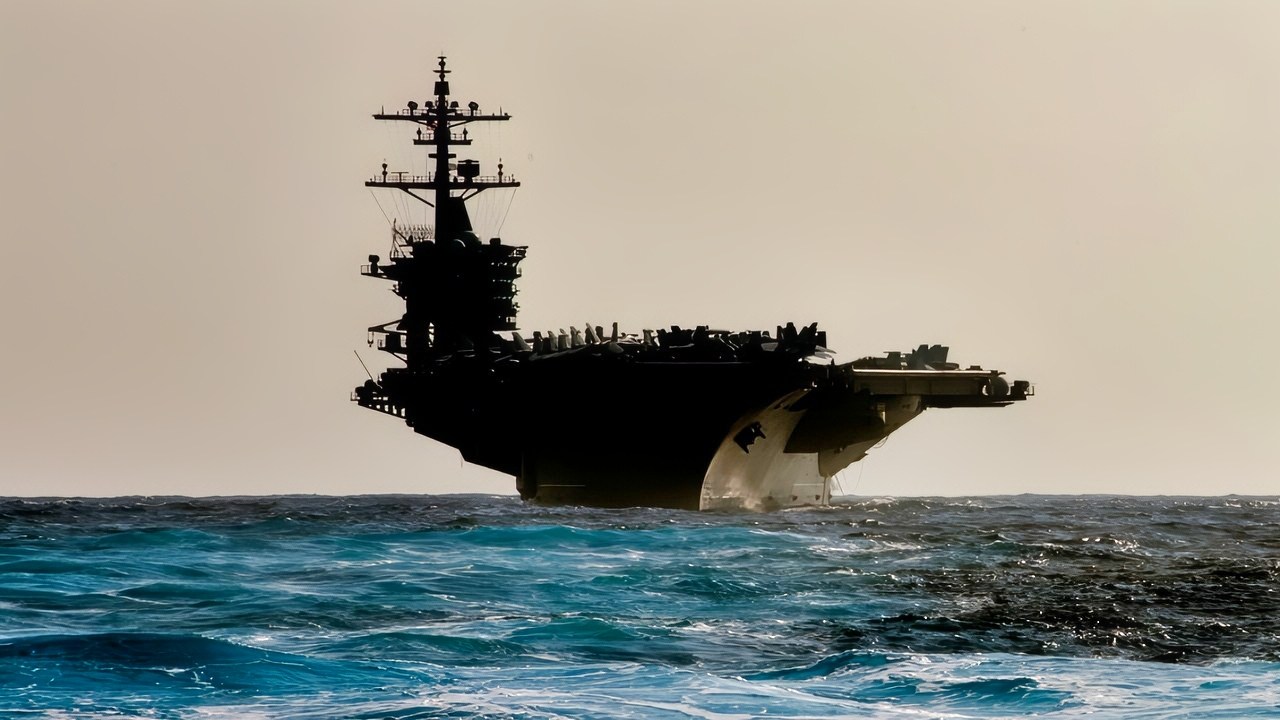
Summary and Key Points: The U.S. Navy is set to retire the USS Nimitz (CVN-68) in May 2026, marking the end of a legendary 51-year career.
-However, this decommissioning will drop the fleet to just 10 active carriers, violating the legally mandated minimum of 11 set by Title 10 of the U.S. Code.

Aircraft Carrier USS Nimitz Coming Home. Image Credit: Creative Commons.
-With the replacement USS John F. Kennedy (CVN-79) delayed until at least March 2027, experts warn of a critical “carrier gap” that could compromise readiness against China’s growing naval power.
-Critics argue the move prioritizes short-term budgeting over global strategy, leaving the Navy overstretched during escalating international tensions.
USS Nimitz Retiring: U.S. To Defy Legal Requirement of Aircraft Carriers For Years To Come
The USS Nimitz, one of the biggest warships in human history, has been sailing on the seven seas for more than half a century.
But the United States Navy’s decision to retire it is generating backlash from some quarters.
The aircraft carrier is currently the oldest active nuclear-powered aircraft carrier in the world.
In December 2025 it was returned to Naval Base Kitsap in Washington for the final time after a lengthy, nine-month deployment.
Since being commissioned at the height of the Cold War in 1975, the Nimitz has taken part in the vast bulk of important U.S. military operations.
The carrier played its part in the Iran hostage crisis and lengthy Indo-Pacific patrols. Throughout its final deployment, the carrier logged over 8,500 sorties and 82,000 nautical miles. Still, the carrier’s forthcoming decommissioning seems risky.
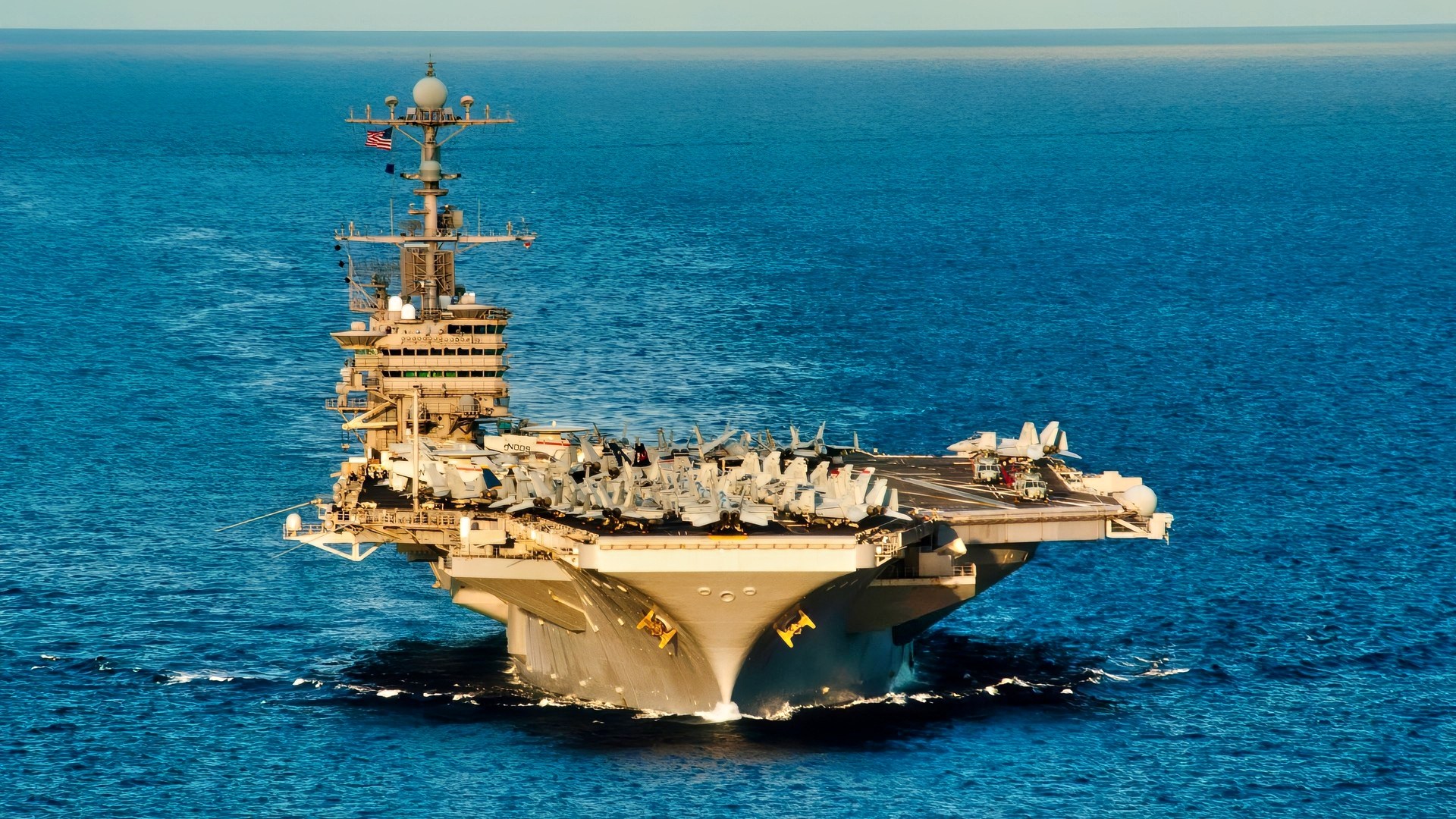
ANDAMAN SEA (Oct. 12, 2012) The Nimitz-class aircraft carrier USS John C. Stennis (CVN 74) moves into formation in the Andaman Sea. Ships and aircraft of the George Washington and John C. Stennis carrier strike groups are conducting exercises to increase interoperability, readiness, and the capability to respond quickly to various potential crises in the region, ranging from combat operations to humanitarian assistance. The U.S. Navy is constantly deployed to preserve peace, protect commerce, and deter aggression through forward presence. Join the conversation on social media using #warfighting. (U.S. Navy photo by Mass Communication Specialist 3rd Class Kenneth Abbate/Released)
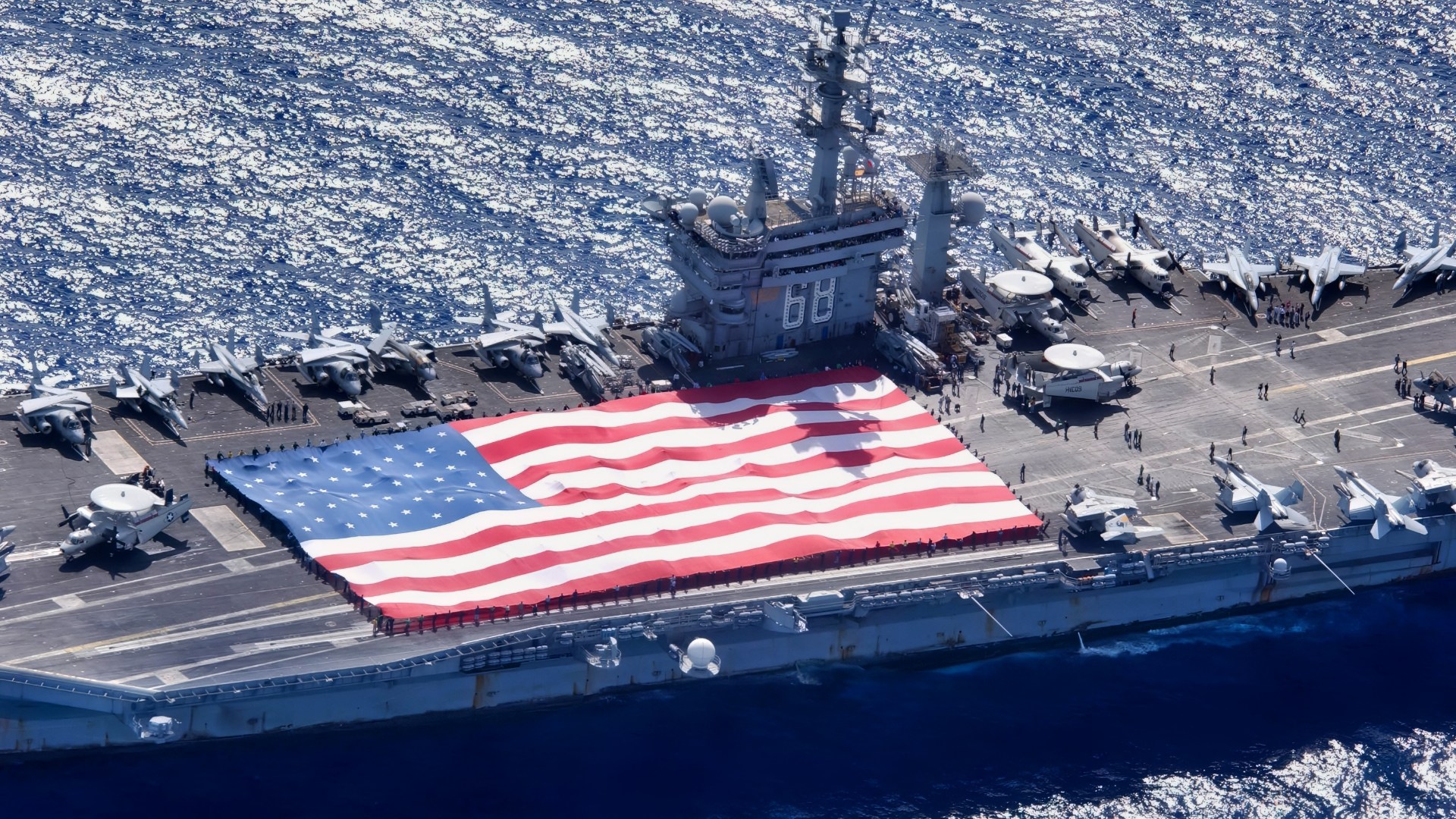
Pacific Ocean (November 3, 2003) — During Tiger Cruise aboard USS Nimitz (CVN 68), Nimitz and Carrier Air Wing Eleven personnel participate in a flag unfurling rehearsal with the help of fellow tigers on the flight deck. The Nimitz Carrier Strike Force and Carrier Air Wing Eleven (CVW-11) are in route to Nimitz homeport of San Diego, California after an eight-month deployment to the Arabian Gulf in support of Operation Iraqi Freedom. U.S. Navy photo by Photographer Mate 3rd Class Elizabeth Thompson
Writing for The Hill magazine, political analyst Gordon G. Chang warned that retiring the carrier at this moment could weaken U.S. readiness amid soaring tensions with China.
The veteran conservative columnist referenced Pentagon estimates that Beijing was planning to be capable of defeating Taiwan as soon as next year.
Scrapping the Nimitz now would also reduce the fleet below the legally mandated minimum of eleven aircraft carriers at any one time.
Chang complains that the time between the delivery of the new Ford-class carrier, USS John F. Kennedy, will leave the Navy with just ten carriers for multiple years.
He said that erstwhile naval strategist Paul Giarra explained the change was about budgeting issues rather than strategy.
While this could certainly help the military get closer to balancing the books, it does not necessarily bode well for the U.S. naval readiness.
Moreover, decommissioning such a large, complex carrier is an expensive process that can take up to 10 years. Operational strain is also a genuine problem. Last October, a pair of aircraft operating from the Nimitz crashed into the South China Sea during a routine flight.
While every crew member involved in the accident was quickly rescued, this mishap no doubt heightened anxieties about maintenance issues when deployments exceed six months.
Even in its twilight years, the Nimitz was a key, dependable part of the U.S. Navy’s sprawling global presence.

ATLANTIC OCEAN (June 14, 2011) The Nimitz-class aircraft carrier USS Dwight D. Eisenhower (CVN 69) conducts rudder turns during sea trials. Dwight D. Eisenhower completed a nine-month planned incremental availability at Norfolk Naval Ship Yard on June 10 and is scheduled to resume underway operations this summer. (U.S. Navy photo by Mass Communication Specialist 1st Class Christopher Stoltz/Released)
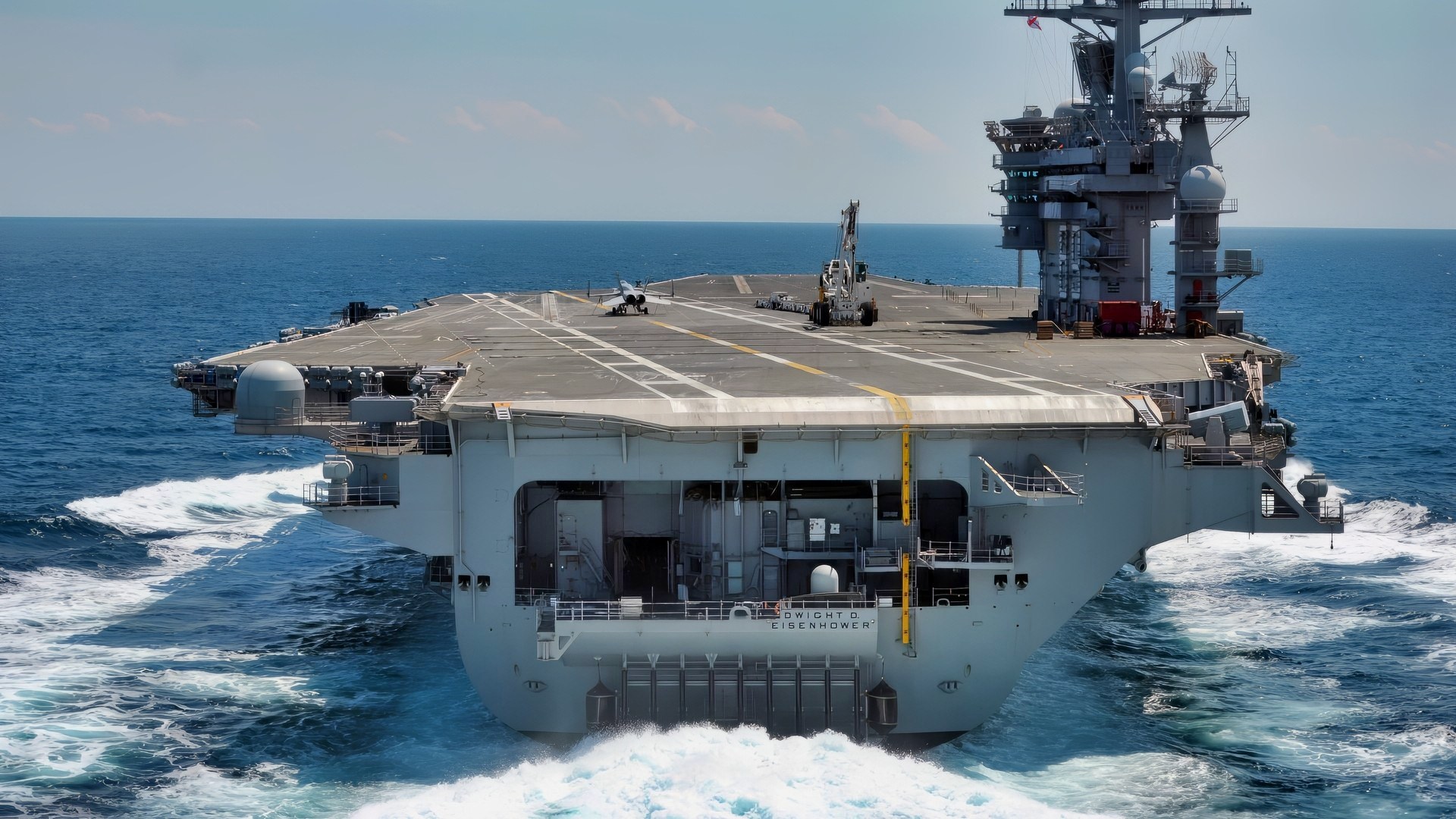
ATLANTIC OCEAN (June 14, 2011) The Nimitz-class aircraft carrier USS Dwight D. Eisenhower (CVN 69) conducts rudder turns during sea trials. Dwight D. Eisenhower completed a nine-month planned incremental availability at Norfolk Naval Ship Yard on June 10 and is scheduled to resume underway operations this summer. (U.S. Navy photo by Mass Communication Specialist 1st Class Christopher Stoltz/Released)
The carrier was sometimes even the sole U.S. carrier afloat in strategic regions such as the Persian Gulf and the Indo-Pacific.
This historic yet powerful carrier will surely be missed, especially if its replacement is not expected to be operational anytime soon.
Chang’s point is a salient one: what the navy may make up for in short-term funding, it could easily lose in vital preparedness.
About the Author: Georgia Gilholy
Georgia Gilholy is a journalist based in the United Kingdom who has been published in Newsweek, The Times of Israel, and the Spectator. Gilholy writes about international politics, culture, and education. You can follow her on X: @llggeorgia.


yor uncle bob
February 19, 2026 at 8:06 pm
The next war, or the next taiheiyo senso, won’t be fought with aircraft carriers, most totally out of the ‘end-of-the-tip-of-your-nose’ view of bloodthirsty warmongers like Gordon Chang.
So, what will it be fought with.
With nuclear weapons, naturally beginning with use of tactical nukes, what else.
Afterward, stratcom will consider the use of strategic nukes, like the nukes on Ohio subs.
Whatever it is, finito for the victim. Finito’s finito, it is.