
Newly released U.S. government estimates reveal that China entered the 2026 Iran War with one of the largest strategic stockpiles on Earth, underscoring Beijing’s aggressive preparations for a potential global energy crisis. New data published by the U.S. Energy Information Administration estimates that China ended 2025 with nearly 1.4 billion barrels of oil in strategic inventories, compared to roughly 1.2 billion barrels held collectively by the 32 members of the International Energy Agency, including just over 400 million barrels in the U.S. Strategic Petroleum Reserve. The figures come as the conflict with Iran continues, Washington mulls over a return to direct hostilities, and the ceasefire has yet to help facilitate a deal.
The new data suggests Beijing spent years preparing for exactly the kind of prolonged global energy disruption now unfolding across the Persian Gulf. China is the world’s largest crude importer and among the countries most dependent on Gulf oil shipments.
Yet while the United States and Europe increasingly rely on emergency reserve releases to stabilize prices, China appears to have entered the crisis with far deeper stockpiles and a better long-term energy resilience strategy already in place.
China Built One of the World’s Largest Oil Stockpiles: Iran War Cushion?
Oil Platform. Image Credit: Creative Commons.
Oil fields. Image Credit: Creative Commons.
According to an EIA analysis cited by Yahoo Finance, China added an estimated average of 1.1 million barrels per day to strategic inventories throughout 2025. The report also stated preliminary government data indicates China continued building reserves into 2026 before the Iran War escalated further.
Unlike the United States, China does not publicly disclose the size of its strategic petroleum reserves.
Analysts can instead estimate Chinese stockpiles by observing satellite imagery, refinery throughput, oil imports and exports, and expansion of storage infrastructure.
Over the past several years, Beijing has rapidly expanded underground storage caverns and massive coastal tank farms while also increasing purchases of discounted Russian and Iranian crude.
The buildup comes as no surprise, either; China fears losing access to its oil suppliers and understands the threat it poses to its long-term economic and military plans. Chinese strategists have spent decades warning about the country’s dependence on narrow shipping chokepoints such as the Strait of Hormuz and Strait of Malacca. Roughly 20% of global oil supplies normally transit through the Strait of Hormuz, and China remains heavily dependent on Middle Eastern oil imports.
That concern has become far more serious since the war began on February 28, when U.S. and Israeli strikes on Iran began a regional conflict and caused severe disruption across Gulf shipping lanes. Iran subsequently imposed restrictions on maritime traffic through the Strait of Hormuz, blocking as much as 95% of traffic, using a combination of threats and mines.
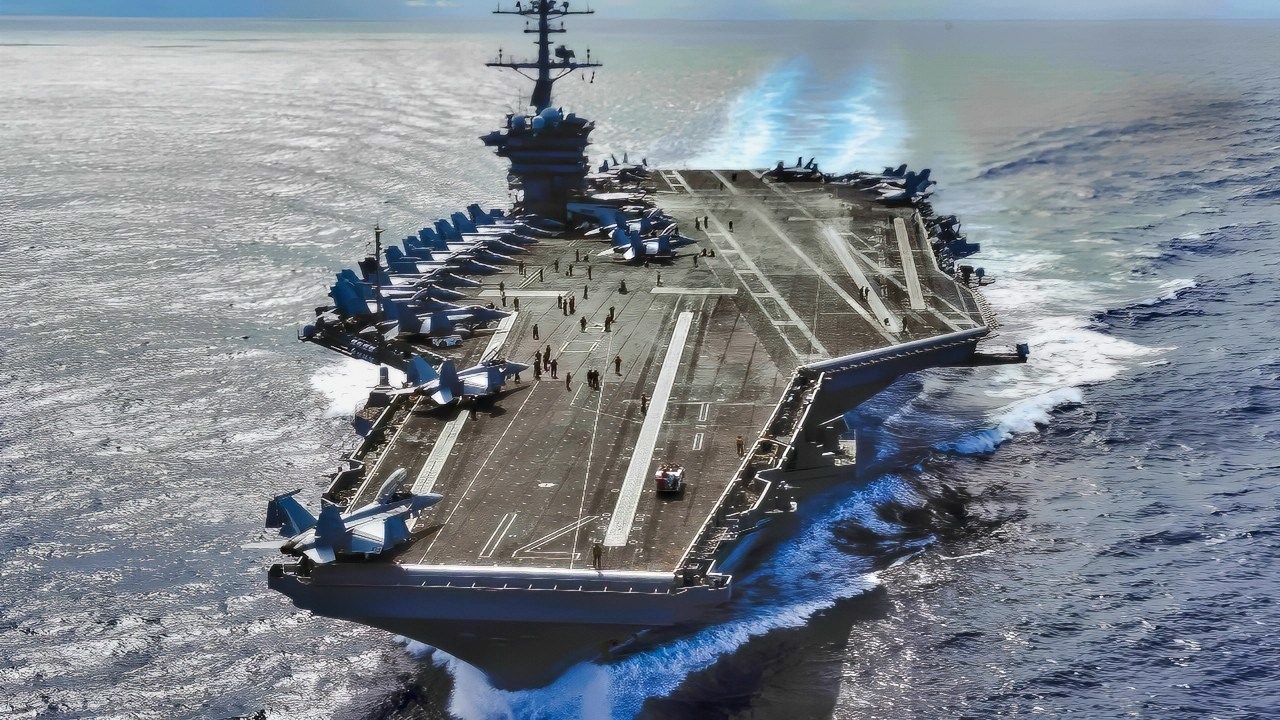
PHILIPPINE SEA (Sept. 24, 2024) The Nimitz-class aircraft carrier USS Theodore Roosevelt (CVN 71) transits the Philippine Sea, Sept. 24, 2024. Theodore Roosevelt, flagship of Carrier Strike Group 9, is underway conducting routine operations in the U.S. 7th Fleet area of operations. U.S. 7th Fleet is the U.S. Navy’s largest forward-deployed numbered fleet, and routinely interacts and operates with allies and partners in preserving a free and open Indo-Pacific region. (U.S. Navy photo by Mass Communication Specialist 3rd Class Adina Phebus)
Is America’s Strategic Reserve Too Small?
While the United States was not entirely unprepared, the U.S. Strategic Petroleum Reserve (SPR) has declined significantly after years of emergency releases triggered by the post-Ukraine energy shock and the Iran conflict. America’s SPR once held more than 700 million barrels of oil.
This week, Reuters reported that the Trump administration is loaning another 53.3 million barrels from the SPR to major energy companies, including Exxon Mobil, Marathon Petroleum, and Trafigura, as part of a broader international effort to stabilize prices and supply.
The administration had also announced plans to release a total of 172 million barrels under a coordinated agreement with more than 30 IEA member countries. At present, the SPR holds roughly 384 million barrels, which is less than 4 days of global oil consumption.
That shrinking reserve has been a hot political issue for some time. President Joe Biden was roundly criticized by Republicans for his massive reserve drawdowns following the Russian invasion of Ukraine in 2022, including the historic release of 180 million barrels that were intended to stabilize gasoline prices as Biden sought to minimize criticism of his support for Ukraine.
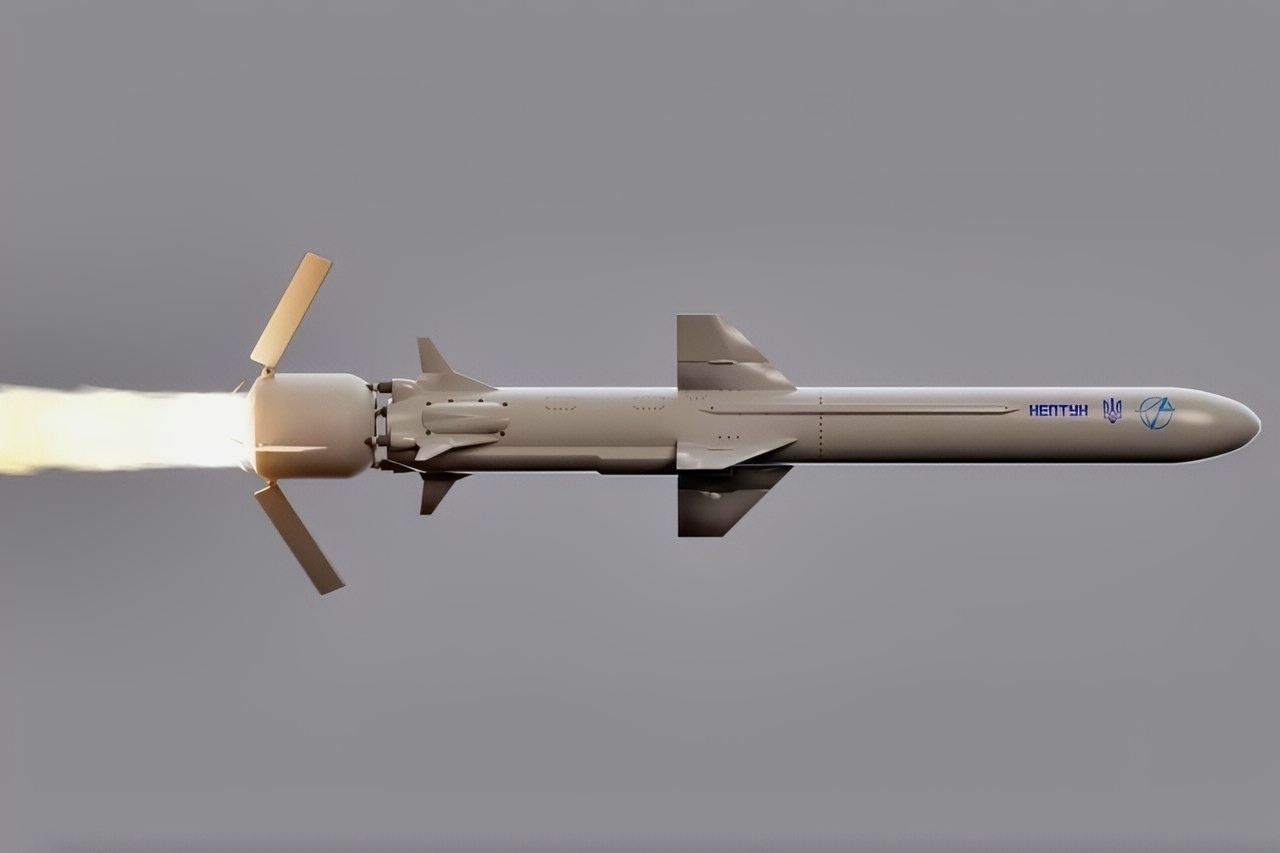
Neptune Missile. Image Credit: Government of Ukraine.
Now, the Trump administration is itself relying heavily on emergency reserves as the Hormuz crisis continues to drive volatility across global energy markets. Withdrawing or lending the remaining strategic supply means the United States has less flexibility to respond to multiple simultaneous global crises involving oil supply disruptions and military conflicts.
So, is the reserve too small? It could certainly be argued – and Trump himself has made the case for restoring and expanding it – although refilling it would likely take years and cost tens of billions of dollars at current oil prices.
The Department of Energy previously estimated that simply replacing the 180 million barrels released during the Biden administration could take several years due to budget constraints and the physical limitations on how quickly oil can be pumped back into the underground salt caverns used by the reserve.
Recent reports have suggested that the administration is currently prioritizing emergency price and supply stabilization over long-term replenishment of the SPR, suggesting that any major refill effort will not begin until the Hormuz crisis subsides and oil prices fall substantially. Whether that proves sufficient may ultimately depend on what Washington believes future wars – or energy conflicts – may look like.
China spent years preparing for a prolonged global supply shock by building massive stockpiles and expanding infrastructure.
Trump, meanwhile, may now be betting that America’s vast domestic oil production capacity – rather than enormous strategic reserves alone – will ultimately be the country’s best energy security advantage.
And as the oil crisis continues, the U.S. could find new long-term customers, making expansion of production viable.
About the Author: Jack Buckby
Jack Buckby is a British researcher and analyst specializing in defense and national security, based in New York. His work focuses on military capability, procurement, and strategic competition, producing and editing analysis for policy and defense audiences. He brings extensive editorial experience, with a career output spanning over 1,000 articles at 19FortyFive and National Security Journal, and has previously authored books and papers on extremism and deradicalization.


Swamplaw Yankee
May 13, 2026 at 1:40 pm
The data from World War Xi is just so Hilarious. Yuk, yuk, funny!
The PRC has a Han Intelligence army that has out “Thunk” the MAGA POTUS Trump Deal Maker elite!!
And, Trump + Nutty Yahoo both viciously demand the right to deny sale of anti-ballistic defence to Ukraine at the very same time. And, both have exported tens of thousands of vulnerable Yankee kids to the Muslim GULF miasma where Trump knows not how to protect them from death wrought by Islamic Terrorist Theocrats in Tehran.
And, there Ukrainians protect US + Jewish kids from Islamic terrorists while the Trump/Nutty Yahoo Cabal refuse the military missiles to protect Ukrainian kids.
Got the MAGA made problem with too, too, too much oil in Xi land Trump elite!
Chuan the nation builder
May 13, 2026 at 4:22 pm
This article implies china, or PRC, has a ‘headstart’ or advantage over chuan jianguo during their current high level talks in Beijing.
If that’s so, china must insist that chuan disawow all support for the dreaded ukro nazists if he wants concessions from china and wants china to truly open up.
That’s extremely vitally important to avoid sowing the seeds of ww3 in Europe.
chuanpu
May 13, 2026 at 6:08 pm
President trump has arrived in Beijing to start talks with xi jinping,the US-agent-in-china.
But the talks aren’t going to be easy, unlike what western media outlets are predicting.
China is in no need for American goods or agricultural or sports products.
What china needs, despite the presence of agent xi, is the stopping of US arms supplies to Israel, kyiv and Taipei.
All other things are negotiable, except the supply of military weapons.No ww3.